Review · ROME TOURS
Rome: Illuminati Trail Angels & Demons Tour
Rome hides clues in plain sight. This four-hour Illuminati Trail tour turns familiar monuments into pieces of a puzzle, following Robert Langdon’s route through churches, piazzas, and Vatican landmarks. I like the way it connects Dan Brown’s story with real art and Roman history, especially Bernini’s sculptures and the four elements. I also like the small-group format, which gives you room to ask questions instead of listening to a speech from the back of a crowd.
The main drawback is simple: this is a serious walking tour. You cover a lot of central Rome, and summer heat can make the route tiring. Castel Sant’Angelo admission is not included, and access to some church interiors can change during Mass or private services.
In This Review
- Key points to know before you book
- Why the Angels & Demons route works in Rome
- Starting at Santa Maria della Vittoria
- Walking from Bernini’s Rome to Castel Sant’Angelo
- The Pantheon and the route’s changing rhythm
- Santa Maria del Popolo and the Chigi Chapel
- Piazza Navona and the four elements
- Saint Peter’s Square and the finale
- What the small group adds
- Four hours on foot: the practical reality
- Is $79 a fair price?
- Who should choose this tour?
- Should you book the Illuminati Trail tour?
- FAQ
- How long does the Rome Illuminati Trail tour last?
- Where does the tour begin?
- Where does the tour finish?
- Which languages are available?
- Is Castel Sant’Angelo admission included?
- Is this a walking tour?
- Can wheelchair users join?
- Can I cancel for a refund?
Key points to know before you book
- Bernini takes center stage: See the sculptures and chapels that give the fictional trail its visual power.
- The route covers major Rome sights: Santa Maria della Vittoria, the Pantheon, Santa Maria del Popolo, Saint Peter’s Square, and Castel Sant’Angelo all feature.
- The guide adds much more than movie trivia: The strongest tours explain what belongs to the novel, what appears in the film, and what is historically true.
- Small groups make a difference: You get more personal attention and a better chance to ask about art, religion, and Roman legends.
- Expect four hours on foot: Wear firm walking shoes and carry water, especially from late spring through summer.
- The price is $79 per person: That is fair if you want context and storytelling, less so if you only want quick photo stops.
Why the Angels & Demons route works in Rome
Dan Brown’s Angels & Demons gives Rome a ready-made trail. Fire, air, earth, and water become clues, while churches and sculptures turn into evidence in a thriller. The clever part is that the real city is already full of dramatic symbols, competing religious traditions, grand gestures, and artwork made to impress.
This tour uses the novel as a framework rather than treating it as a history lesson. You follow the fictional trail, then hear where the book takes liberties. That distinction matters. Rome is more interesting when fiction opens the door to real stories, not when a guide presents every plot point as fact.
The guides also add background on Roman art, architecture, religion, and daily life. Luisa has been especially well regarded for her command of medieval history and her lively delivery. Other guides praised for their warmth and clear explanations include Elisa, Felice, Irene, Giorgia, Estefania, and Anestis. Guide assignments can vary, but the repeated pattern is clear: the quality of the experience depends heavily on the person leading it.
The tour has a rating of 4.3 from 414 bookings, which suggests a strong overall experience without pretending every group has the same day. Churches may be closed for a service, crowds can affect the pace, and some parts of the story work better for Dan Brown fans than for visitors who have never read the book or seen the film.
A few more reviews worth comparing before you book
- Vatican: Museums & Sistine Chapel Entrance Ticket
★ 4.5 · 144,003 reviews - Vatican Museums & Sistine Chapel Tour with Optional Basilica
★ 4.3 · 67,413 reviews - Colosseum, Roman Forum & Palatine Guided Tour
★ 4.7 · 63,148 reviews
Starting at Santa Maria della Vittoria
The meeting point is in front of Santa Maria della Vittoria on Via Venti Settembre 17. This is a practical starting point because the church supplies one of the tour’s most memorable art moments right away.
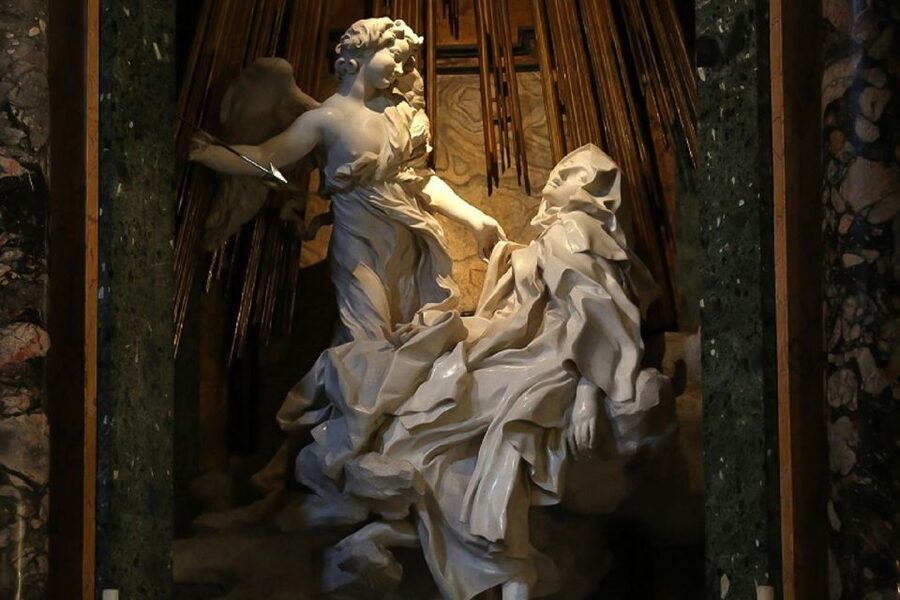
Inside, the focus is Bernini’s Ecstasy of Saint Teresa. You get the chance to examine the sculpture’s theatrical lighting, expressive movement, and carefully staged setting. The artwork is not just a stop connected to the story. It is a compact lesson in how Baroque artists used architecture, sculpture, light, and emotion to involve the viewer.
The opening section lasts about 30 minutes. That is enough time for the guide to establish the Illuminati plot, explain the first clues, and give you an art foundation for the rest of the walk. If a service is taking place, access or viewing time may be limited. One booking group missed Ecstasy of Saint Teresa because of a private Mass, so keep your expectations flexible.
This first stop is best for you if you enjoy looking closely at sculpture. If you mainly want movie locations, it may feel more art-focused than expected, but that is also part of the tour’s value.
Walking from Bernini’s Rome to Castel Sant’Angelo
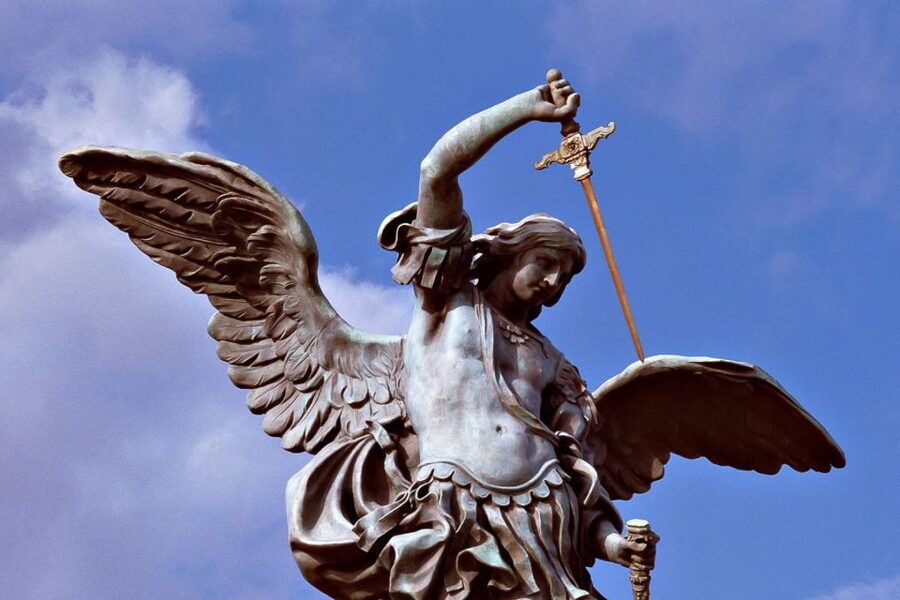
The route continues across central Rome toward Castel Sant’Angelo. The walking between stops is not dead time. Guides use it to explain the streets, buildings, Roman customs, and other sights along the way.
That extra commentary is one reason this works as more than a film-location checklist. You may arrive knowing only the plot of Angels & Demons, then find yourself listening to stories about Rome’s political and religious past, the artists who shaped the city, and the difference between a novel’s version of events and the evidence around you.
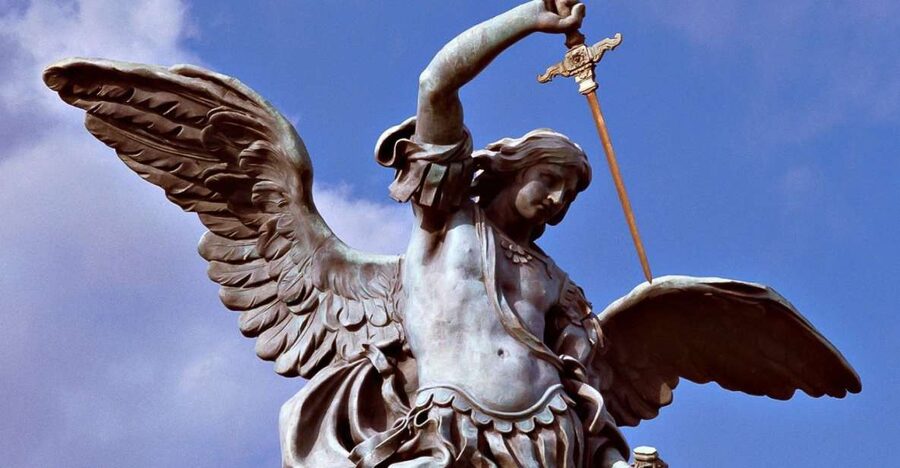
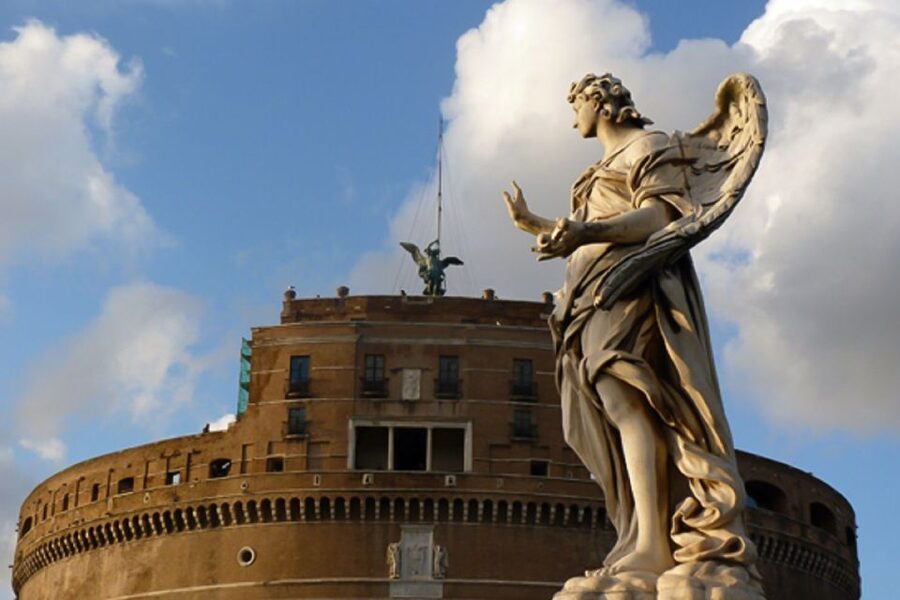
Castel Sant’Angelo receives about 30 minutes of sightseeing time. In the novel, it is linked to the Illuminati and serves as a dramatic meeting point. The castle’s heavy profile and position near the Vatican make it a natural setting for suspense.
Admission is not included in the $79 price. That does not necessarily mean the tour includes a full interior visit, so you should check the day’s arrangements before paying for separate entry. The confirmed experience is the guided stop and the surrounding story, with the admission fee listed separately.
The route also brings the Passetto into the narrative. This historic passage connects Castel Sant’Angelo with Vatican City and is one of the most intriguing places connected with the tour. It gives the story a physical sense of secrecy: a fortified escape route, a wall, and a direct link between military power and the Vatican.
The Pantheon and the route’s changing rhythm
The Pantheon is another 30-minute stop. It is one of Rome’s most recognizable buildings, but the tour gives you a reason to look beyond the usual photograph.
Here the story shifts from secret clues to the relationship between ancient Roman building traditions, later Christian use, and the city’s changing identity. The Pantheon’s scale and engineering provide a strong contrast to the Baroque interiors elsewhere on the route.
This is also where the guide’s wider Roman knowledge matters. The best explanations do not force every detail into the Angels & Demons plot. They use the novel as a thread, then let the monument speak for itself.
You may appreciate this stop most if you want a broad introduction to Rome. It does not have the same direct Bernini connection as Santa Maria della Vittoria or Santa Maria del Popolo, but it keeps the tour from becoming too narrow.
A different sort of day out around Rome:
- Vatican Museums, Sistine Chapel & St Peter’s Basilica Guided Tour
★ 4.5 · 39,149 reviews - Rome: Colosseum, Palatine Hill and Roman Forum Guided Tour
★ 4.8 · 32,814 reviews - Rome: Guided Tour of Colosseum, Roman Forum & Palatine Hill
★ 4.7 · 27,897 reviews - Rome: Colosseum & Forum with Audio Guide App -Optional Arena
★ 4.2 · 24,770 reviews
Santa Maria del Popolo and the Chigi Chapel
Santa Maria del Popolo receives the longest single church visit, about one hour. For many people, the Chigi Chapel is the artistic high point of the tour.
The chapel links the fictional clues to real Renaissance and Baroque art. It is a place where you can see how Dan Brown used actual works, spaces, and symbols to build tension. A guide can point out the visual details that are easy to miss if you enter alone, then explain which parts of the novel are based on the site and which belong to fiction.
One booking group singled out the Chigi Chapel as a particular highlight. That makes sense: it is not simply a location with a famous name. It rewards close looking, especially when the guide explains the art in relation to the story.
Santa Maria del Popolo is also a useful reminder that Rome’s major treasures often sit in ordinary city streets. You do not need a grand museum entrance to find important sculpture and architecture. The tour helps you notice these places and gives them a storyline you can remember.
Because the church is an active religious space, the visit can be affected by services or closures. If you want the full art experience, listen carefully to the guide and be ready to view some elements from a different position if access changes.
Piazza Navona and the four elements
Piazza Navona is part of the broader Illuminati Trail described for this experience, even though it is not listed as a separate timed stop in the condensed itinerary. The route uses the square as one of the story’s dramatic locations.
This is where the four elements become especially useful as a way to read Rome. Water, air, earth, and fire are not just plot devices. They give the tour a pattern, helping you connect fountains, sculptures, churches, and the movement of the story across the city.
Piazza Navona also gives you a welcome change in pace. After church interiors and dense historical explanation, the open square lets you step back, take photographs, and see how Rome’s public spaces function as stages.
The timing may vary depending on the group and the guide’s route. Do not expect every location to receive the same length of stop. Some places are meant for detailed explanation, while others work as visual markers along the walk.
Saint Peter’s Square and the finale
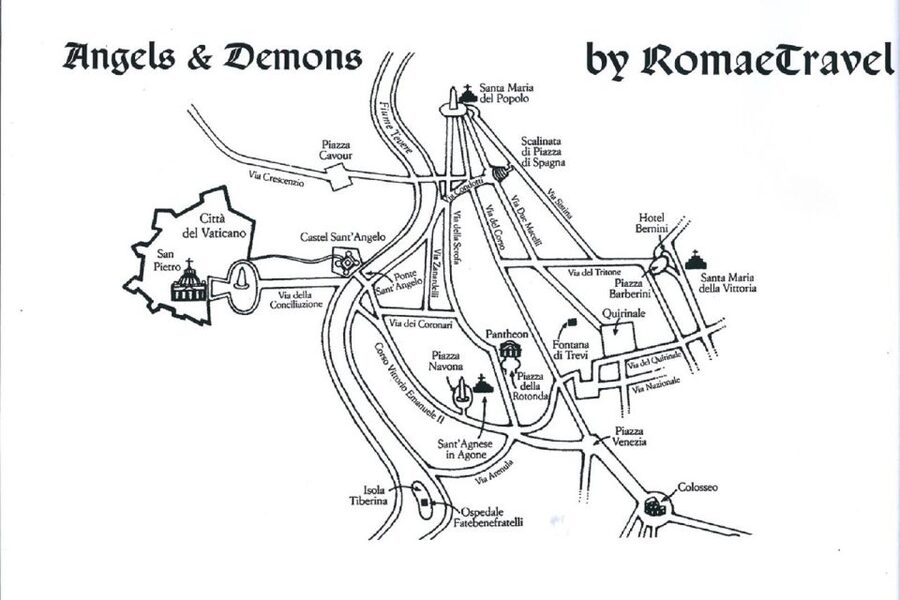
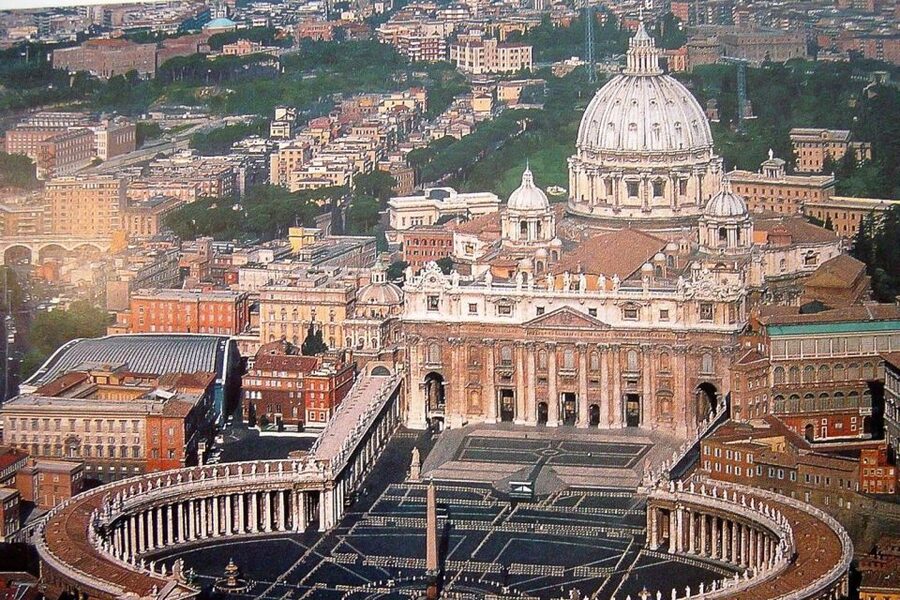
The route finishes at Saint Peter’s Square, with about one hour devoted to St. Peter’s Square and the Vatican setting. This is the natural climax of the story and one of the most impressive places to end a Rome walk.
The square gives the tour its grandest scale. Bernini’s colonnades, the obelisk, the open space, and the view toward Saint Peter’s Basilica create the kind of setting that makes a thriller plot feel possible, even when you know the fictional elements are fictional.
Several people found the ending especially memorable, including one group that finished around sunset and found the square beautiful. If your starting time allows for late afternoon, the changing light can make the final stop even more enjoyable, though exact timing depends on availability.
The tour ends at Piazza San Pietro. It does not include a Vatican Museums visit, and it is not a substitute for a detailed tour of Saint Peter’s Basilica. Its purpose is to place the final story scenes in context and show you the square as a key part of Rome’s art and religious identity.
What the small group adds
The experience is sold as a limited-size walking tour, and that detail matters. In a small group, you can stand closer to the guide, ask about a sculpture, and pause when a detail catches your eye. You are less likely to lose the thread when the route moves through noisy streets.
The personal element has been a repeated strength. Guides such as Luisa and Elisa have been praised for answering questions, adjusting explanations to the group, and bringing in extra stories about Rome. One family with teenagers and a Dan Brown fan found that the guide kept everyone involved, even though they wanted different things from the tour.
Small groups do not guarantee a private tour. Group size can change, and languages offered are English and Italian. Still, this format is a better fit than a large coach-style outing if you like conversation and questions.
The guide also appears to adjust the balance between fiction, film, art, and history. If you have read the book, you can ask about details and differences. If you have not, you should still be able to follow the plot because the guide explains the connection at each location.
Four hours on foot: the practical reality
The tour lasts four hours and involves substantial walking. Firm shoes are essential. Rome’s streets can be uneven, and the route moves between separate landmarks rather than keeping you in one compact site.
Carry water. A past group described a coffee and pastry stop as a welcome break, and another noted that the guide chose a route with opportunities for views and rest. Those pauses are useful, but you should not treat them as guaranteed refreshments included in the booking.
Morning is a smart choice during warm months. One experienced booking group specifically recommended starting early because the city becomes hot and the walking adds up. In cooler weather, the route may feel comfortable, but four hours still requires a reasonable fitness level.
The tour is not suitable for wheelchair users. No transportation is included or indicated, so plan on walking from the meeting point to the finish. If you have a young child, the route can still work, but the pace and distance deserve thought. One guide was praised for being patient with a toddler, though that is a personal strength of the guide rather than a promise of childcare or a shortened route.
Is $79 a fair price?
At $79 per person, this is not the cheapest way to see Rome’s churches and squares. You can walk past most of the locations for free, and some churches do not charge entry. The price pays for the guide’s time, the four-hour route, the storytelling, and the effort of connecting the sites into one clear experience.
I think the price is fair if you value interpretation. A good guide can show you details in Bernini’s work, explain the Chigi Chapel, separate novel invention from Roman fact, and add useful advice about the city. That is difficult to reproduce with a guidebook and a phone.
The value is weaker if you have limited stamina, dislike fiction-based tours, or want full interior access to every landmark. Castel Sant’Angelo admission is extra, and church access may change. You are buying a guided city walk, not an all-inclusive ticket package.
Free cancellation up to 24 hours before the start and the option to reserve now and pay later make the booking less rigid. Still, check the available start times and bring a plan for reaching the Via Venti Settembre meeting point.
Who should choose this tour?
You are a strong match if you have read Angels & Demons or seen the film and want to see the real places behind the story. You will get the most from it if you enjoy asking how much of a thriller is based on fact.
It also suits art and history fans who are not especially interested in Dan Brown. The route includes important churches, sculptures, the Pantheon, Saint Peter’s Square, and Castel Sant’Angelo. Several guides have made the history and art engaging enough for people who joined mainly for a companion.
Families can consider it if older children or teenagers can manage four hours of walking. The story gives younger visitors a reason to pay attention, while the art and Roman background give adults more to think about.
I would skip it if you need an accessible route, want a short sightseeing session, or prefer to spend several hours inside one museum. It is also not ideal for anyone expecting a full movie-set recreation with clips and props. The tour’s strength is the live explanation at real locations.
Should you book the Illuminati Trail tour?
Book it if you want Rome to feel like a connected story rather than a pile of separate monuments. The route brings together Bernini, the Pantheon, the Chigi Chapel, Piazza Navona, the Vatican, and Castel Sant’Angelo in a way that is easy to remember.
Choose a morning departure in warm weather, wear good shoes, and keep room in your schedule for the walk to run at a comfortable pace. If access to Ecstasy of Saint Teresa or another church interior is especially important to you, be prepared for a service to change the visit.
At $79, the tour makes the most sense for people who want a strong guide and a small group. Dan Brown fans get the full trail, while art lovers receive a useful introduction to the real Rome behind the fiction.
FAQ
How long does the Rome Illuminati Trail tour last?
The tour lasts four hours.
Where does the tour begin?
It begins in front of Santa Maria della Vittoria at Via Venti Settembre 17, 00187 Rome.
Where does the tour finish?
The tour finishes at Piazza San Pietro, also known as Saint Peter’s Square.
Which languages are available?
The live guide is available in English and Italian.
Is Castel Sant’Angelo admission included?
No. Admission to Castel Sant’Angelo is not included in the tour price.
Is this a walking tour?
Yes. It is a small-group walking tour covering several locations across central Rome and the Vatican area.
Can wheelchair users join?
No. The experience is listed as unsuitable for wheelchair users.
Can I cancel for a refund?
Yes. You can cancel up to 24 hours in advance for a full refund. You can also reserve now and pay later.
Just added around Rome
- Rome City, Pantheon, and Trevi Fountain Walking Tour★ 5.0 · 249 reviews
- Rome: Skip the line Vatican Museums & Sistine Chapel Tour★ 4.2 · 251 reviews
- Rome: Tivoli Day Trip with Villa d’Este and Villa Adriana★ 4.5 · 251 reviews
- Transfer Rome center – Ciampino Airport★ 4.5 · 251 reviews
- Rome: Cannondale E-Bike Evening Tour with Optional Dinner★ 4.9 · 251 reviews
- VIP Colosseum, Roman Forum & Palatine Hill & Special Access Sites★ 4.5 · 252 reviews
- Private Vatican Museums Hidden Gems Tour with Optional Pick-Up★ 5.0 · 253 reviews
- Vatican Museums & Sistine Chapel Skip-the-Line Guided Tour★ 4.6 · 254 reviews
Rome Tours, compared.

Vatican: Museums & Sistine Chapel Entrance Ticket
Read our review →
Vatican Museums & Sistine Chapel Tour with Optional Basilica
Read our review →
Colosseum, Roman Forum & Palatine Guided Tour
Read our review →
Vatican Museums, Sistine Chapel & St Peter’s Basilica Guided Tour
Read our review →
Colosseum, Palatine Hill and Roman Forum Guided Tour
Read our review →
Guided Tour of Colosseum, Roman Forum & Palatine Hill
Read our review →
Colosseum & Forum with Audio Guide App -Optional Arena
Read our review →