Review · GUIDED
Rome: Domus Aurea Guided Group Tour
Rome’s buried palace is stranger than its ruins. I like the archaeologist-led storytelling and the clever virtual reality sequence, which helps you picture Nero’s vanished palace instead of staring at bare brick and guessing. The surviving frescoes, tiled floors, soaring vaults, and underground rooms make this a memorable two-hour visit.
The main drawback is that the tour includes steps, staircases, and uneven ground, so it is not suitable for wheelchair users. Some groups have also found parts of the guiding hard to hear, especially when the escorting guide spoke quietly. Still, the small-group setting, limited access, and $55 price make this a strong choice for anyone who wants more than Rome’s usual headline sights.
In This Review
- Key points to know before you book
- Why Nero’s Golden House still matters in Rome
- Meeting at Oppio Caffè near the Colosseum
- Descending into the buried palace
- Frescoes, vaults, and the palace’s surviving details
- Nero’s excesses, explained without cartoon history
- The virtual reality sequence changes the visit
- A two-hour pace that suits curious visitors
- Is the $55 price fair?
- Who will enjoy this most?
- Practical advice for making the visit better
- Should you book the Domus Aurea tour?
- FAQ
- Where does the Domus Aurea tour begin?
- How do I find the guide?
- Where does the tour finish?
- How long does the experience last?
- What language is the tour conducted in?
- Is admission included in the price?
- Is transportation included?
- Is the tour accessible to wheelchair users?
- What should I bring?
- Can I bring luggage or a large bag?
- Can students receive a discount?
Key points to know before you book
- The palace is underground: You descend beneath the Oppian Hill into rooms once buried by Nero’s successors.
- The VR experience is a major asset: It reconstructs the palace and surrounding terrain as they may have appeared in Nero’s time.
- You see an active excavation site: Restoration and preservation work remain part of the setting, not just a footnote in the guidebook.
- An archaeologist guide gives the ruins meaning: Guides such as Valentina, Brandon, Thomas, Elena, and Marco have been praised for clear explanations and lively storytelling.
- The Colosseum connection is powerful: Nero’s artificial lake was filled in, and the Flavian Amphitheatre was built in its place.
- The visit is physically uneven: Wear good shoes, bring water and a warm layer, and leave large bags behind.
Why Nero’s Golden House still matters in Rome
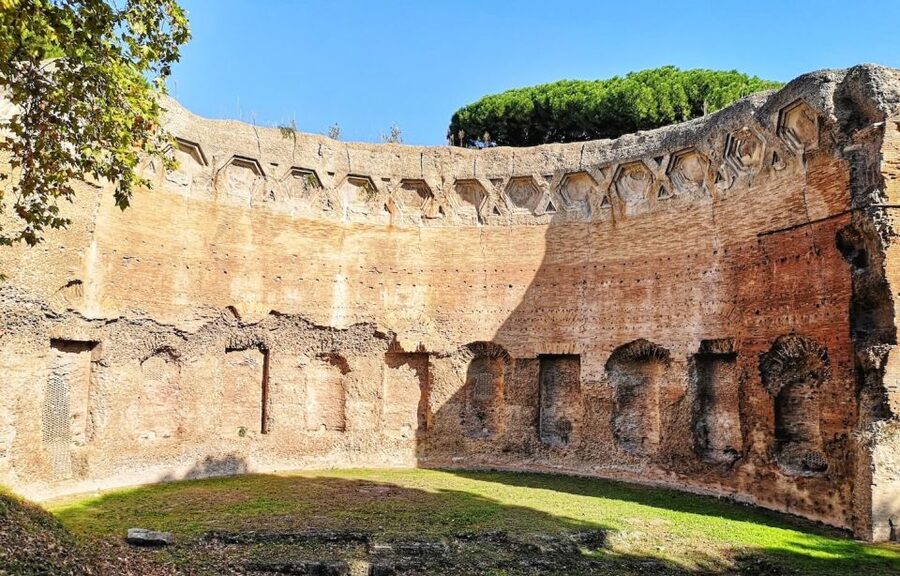
The Domus Aurea, or Golden House, was the vast palace built for Emperor Nero after the great fire of Rome in 64 AD. Nero’s architects created a residence of astonishing scale over areas damaged by the blaze, turning public space into a private imperial playground.
That basic story already makes the site unusual. You are not simply visiting a home or temple. You are seeing the remains of a palace that became a political scandal, then a target for deliberate burial, and later an unlikely source of inspiration for Renaissance artists.
Nero’s reputation was dreadful even in antiquity. His successors wanted to erase his memory, so they filled in the artificial lake and covered the palace with new construction. The Colosseum rose over the former lake only a few years later. The palace itself disappeared beneath earth and masonry, which helped preserve parts of its decoration for centuries.
The result is a strange visit. You enter a dark, excavated world beneath modern Rome, then look at delicate ancient frescoes that survived because the building was buried. The palace feels both grand and wounded. You can sense the original ambition, but you also see how much has been lost.
A few more reviews worth comparing before you book
- Vatican: Museums & Sistine Chapel Entrance Ticket
★ 4.5 · 144,003 reviews - Vatican Museums & Sistine Chapel Tour with Optional Basilica
★ 4.3 · 67,413 reviews - Colosseum, Roman Forum & Palatine Guided Tour
★ 4.7 · 63,148 reviews
Meeting at Oppio Caffè near the Colosseum
The tour begins at Oppio Caffè, on the corner of Via Nicola Salvi and Via delle Terme di Tito. The exact address is Via delle Terme di Tito 72, and the guide carries a Through Eternity sign or flag.
Give yourself enough time to find the corner. The meeting point is close to major Rome sights, but the streets around the Colosseum and Oppian Hill can be confusing when you are watching traffic, crowds, and maps at once. Look for the café and the visible tour sign rather than relying only on the name of the meeting place.
Transportation is not included. You need to make your own way to the café, and the visit finishes at the Domus Aurea rather than returning you to the starting point. That is not a serious problem, since the site is near the Colosseum area, but it matters when you plan a tightly packed day.
The tour uses an express security check, so you avoid the normal wait associated with many Roman attractions. Large bags and luggage are not allowed. Carry only what you need for two hours underground.
Descending into the buried palace
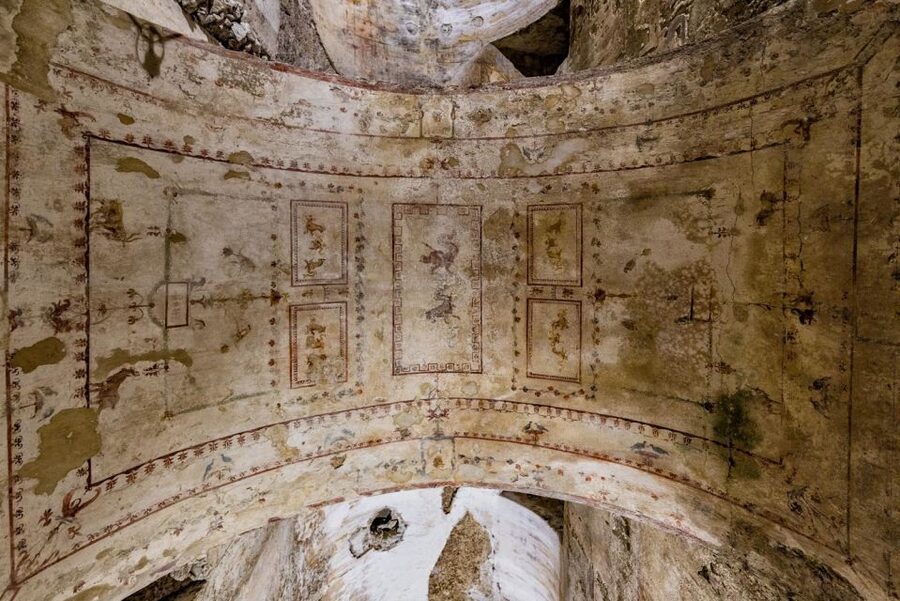
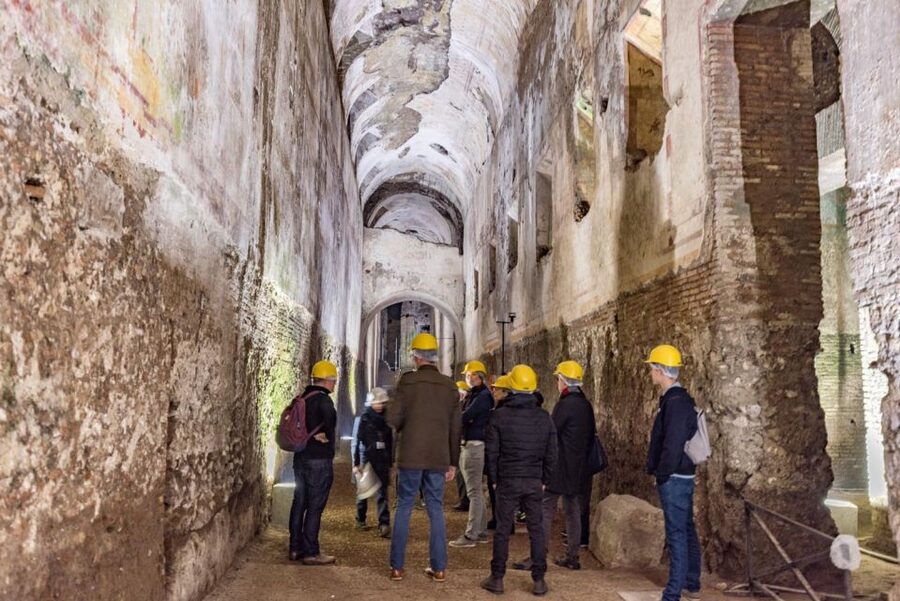
The physical act of going down into the Domus Aurea sets the mood. This is not a bright museum with polished floors and neatly labeled objects. You move through an archaeological site with steps, staircases, and uneven surfaces.
Wear sturdy, comfortable shoes. Bring water and warm clothing, since underground spaces can feel cool even when Rome is hot. The setting is part of the attraction, but it also means you should not treat this as an effortless stroll.
Once inside, the scale begins to emerge. The surviving rooms have high vaults and broad spaces that hint at a much larger complex. You will not see Nero’s entire palace. Much of it is gone, buried, or inaccessible, and the visit focuses on the sections that can safely be opened and preserved.
That limitation is worth understanding before you arrive. The Domus Aurea is exciting precisely because it remains an active excavation and restoration site. You are seeing real archaeological work in progress, not a finished reconstruction designed for easy viewing.
Frescoes, vaults, and the palace’s surviving details
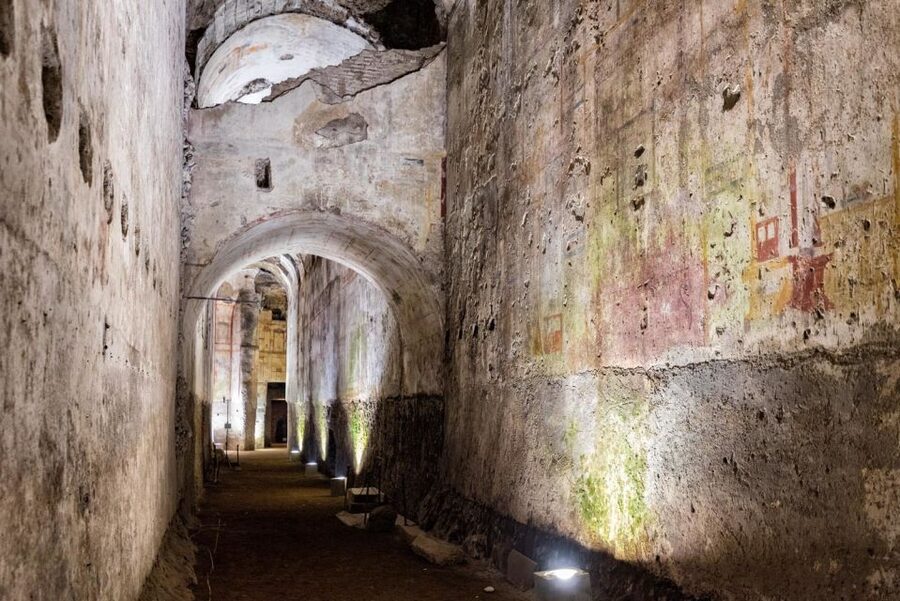
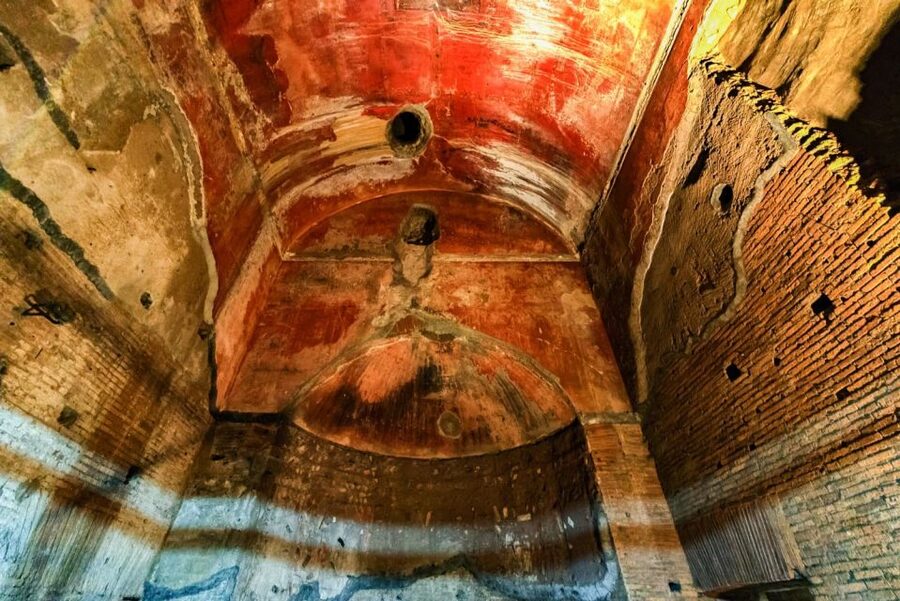
The best physical remains are the decoration and the architecture. Ancient wall frescoes survive in several rooms, along with tiled floors and fragments that show the care lavished on Nero’s private spaces.
Look upward as often as the lighting allows. The soaring vaults help you understand the palace’s theatrical scale, while the frescoes reveal how much visual detail once covered the walls. The decoration is not merely an added flourish. It was part of Nero’s message: this was a residence built to overwhelm.
The guide helps you read what remains. Without context, a damaged wall can look like another ancient surface. With an explanation of the room’s form, decoration, and place within the palace, the fragments become clues to a much grander design.
The surviving pavilion and wall paintings are especially rewarding. They are not intact royal rooms, and you should not expect a complete palace interior. What you get instead is a close look at fragile remains that survived under later construction.
Preservation is an important part of the experience. The care given to the site has impressed many people who have visited, and the controlled access helps protect the rooms. That also means the visit can feel more restrained than a typical sightseeing stop. You may wish you had longer in certain rooms, but the limits serve a real purpose.
A different sort of day out around Rome:
- Vatican Museums, Sistine Chapel & St Peter’s Basilica Guided Tour
★ 4.5 · 39,149 reviews - Rome: Colosseum, Palatine Hill and Roman Forum Guided Tour
★ 4.8 · 32,814 reviews - Rome: Guided Tour of Colosseum, Roman Forum & Palatine Hill
★ 4.7 · 27,897 reviews - Rome: Colosseum & Forum with Audio Guide App -Optional Arena
★ 4.2 · 24,770 reviews
Nero’s excesses, explained without cartoon history
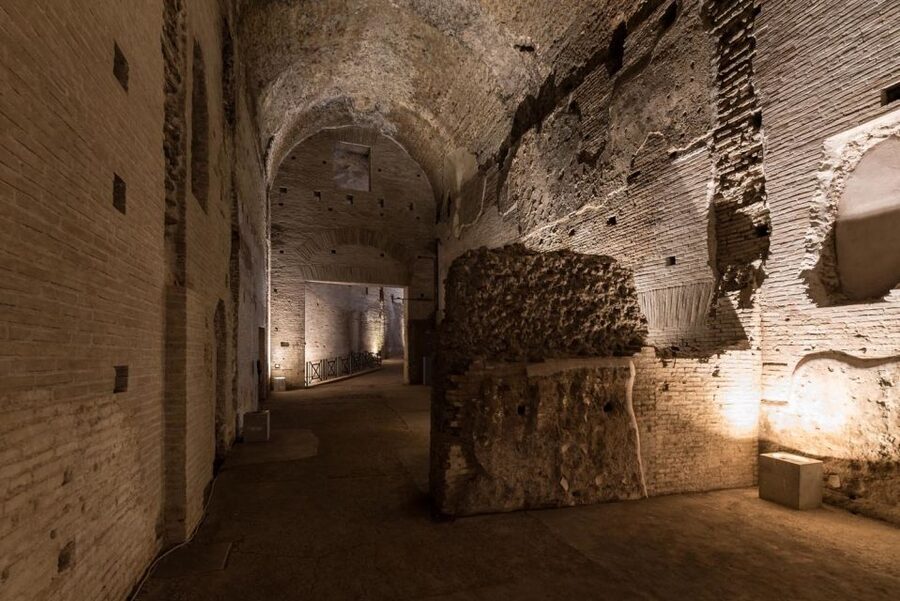
A good guide makes Nero more than a villain from a schoolbook. The tour places his building project within the upheaval that followed the fire of Rome, then explains why the palace became such an obvious symbol of imperial excess.
The reported guide quality has been one of the strongest parts of this experience. Valentina has been praised for bringing the site to life, while Brandon, Thomas, Elena, Marco, Renata, Monica, Patrick, and others have been singled out for clear explanations, warmth, humor, or strong storytelling.
That consistency matters. A palace this damaged needs interpretation. You need someone to explain where the rooms fit, why the scale was so startling, and how later emperors tried to wipe away Nero’s presence. The best guides connect the Domus Aurea to nearby Roman monuments, including the Colosseum and the excavations at San Clemente.
The guiding arrangement can vary. In some cases, the Through Eternity guide escorts the group to the site, while an official Domus Aurea guide leads the main explanation inside. Several people found the official guide highly effective, but a few had trouble hearing or understanding parts of the narration. If you have hearing concerns, stay close to the guide and ask for repetition when needed.
There is no mention of audio enhancement being supplied. That is worth noting for older visitors or anyone who struggles in echoing rooms. Small groups help, but they cannot always solve the problem of a quiet speaker in a vaulted underground space.
The virtual reality sequence changes the visit
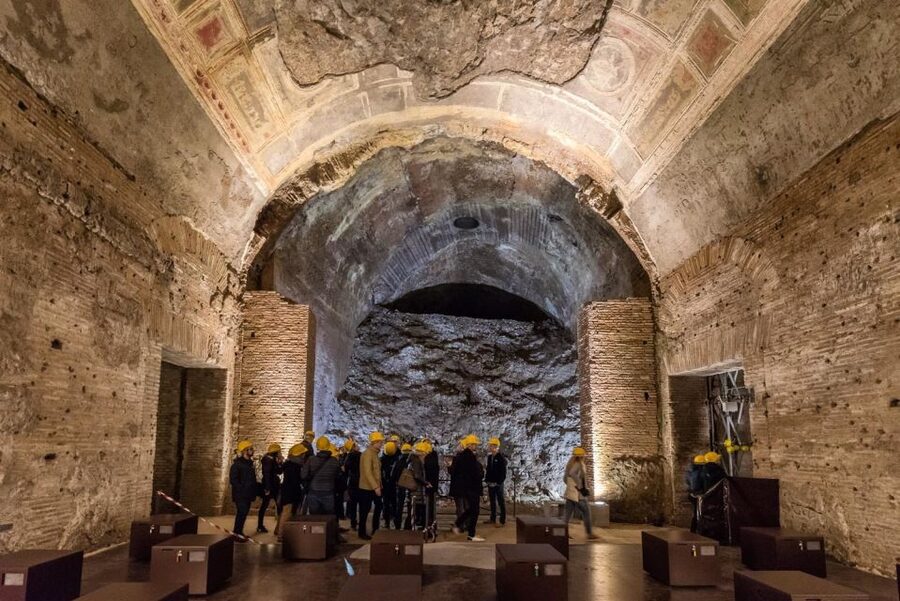
The virtual reality experience is not a gimmick tacked onto an ancient site. It answers the biggest problem at the Domus Aurea: the palace is difficult to imagine from its surviving ruins.
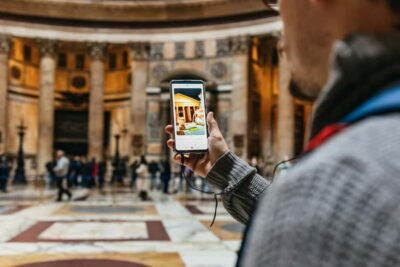
Through the digital reconstruction, you can see how the rooms and surrounding terrain may have looked when new. The experience gives you a sense of the palace’s original scale, decoration, and relationship to the wider complex. It also helps explain the artificial lake and the dramatic transformation of the area after Nero’s death.
Many people have called this the most powerful part of the visit. That praise makes sense. A fresco fragment is impressive, but a reconstruction lets you connect fragment, room, and palace. You begin to understand that the remaining chambers were only pieces of an enormous imperial project.
The virtual reality section also gives younger visitors a stronger way into the story. Children may not care about a damaged wall at first glance, but a visual reconstruction can show them what that wall once belonged to. Adults who already know Roman history will also gain a clearer picture of the palace’s lost form.
The technology does not replace the ruins. It works because you see the real archaeological remains first, then use the reconstruction to interpret them. I would treat the VR portion as essential rather than optional.
A two-hour pace that suits curious visitors
The full visit lasts about two hours. That is long enough for a proper explanation without taking over your day, especially if you are combining the Domus Aurea with the Colosseum, Roman Forum, or nearby churches.
The pace appears measured rather than rushed. You move through the excavated rooms, hear the story of Nero and the palace, examine surviving decoration, and finish with the multimedia reconstruction. The group size is limited, which keeps the experience calmer than many open Roman attractions.
Still, two hours can pass quickly. The palace is a place you may want to linger over, especially if you enjoy architecture or ancient painting. One person felt there was not enough time to study each room, so you should arrive ready to listen closely and make the most of the pauses you get.
The site is generally open to guided visits only on a limited schedule, according to information shared about the excavation program. Check the available start times before planning other tickets around it. This is not the kind of attraction you can always add casually between stops.
Is the $55 price fair?
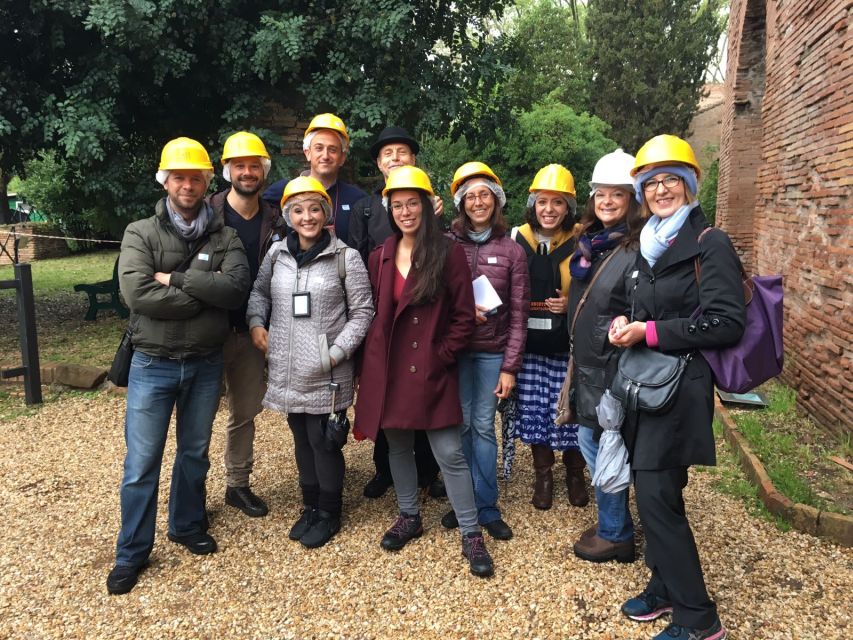
At $55 per person, this is not a bargain attraction in the same way as a free church or an ordinary self-guided ruin. But the price includes exclusive access, admission and reservation fees, an English-speaking guide with archaeological expertise, and the virtual reality experience.
That package gives the fee real value. You are paying for access to a controlled archaeological site that you cannot experience in the same way by simply walking around the Colosseum district. You are also paying for the explanation, which is vital here.
I would especially consider the cost worthwhile if you have already seen Rome’s main monuments and want something less familiar. The Domus Aurea adds a new layer to the Colosseum area, since you can stand above the site where Nero’s lake once lay and then visit the buried palace beneath the modern city.
The value is weaker if you dislike guided visits, stairs, or multimedia presentations. You may also feel the price is high if you expect a fully restored palace with many rooms open and plenty of free time. That is not what this is. It is a focused archaeological visit with strong interpretation.
The booking is non-refundable, so be sure your schedule is firm before paying. That matters more here than with a casual museum ticket because opening times are limited and the experience has a fixed meeting point.
Who will enjoy this most?
I would recommend the Domus Aurea to:
- People fascinated by Roman emperors, court life, and political power
- Visitors who want an archaeological site beyond the usual Colosseum circuit
- Families with children old enough to manage steps and pay attention to a guide
- Art and architecture enthusiasts interested in frescoes, vaults, and ancient design
- Repeat visitors to Rome looking for a different kind of ancient monument
- Anyone who enjoys seeing restoration and excavation as active work
The tour may be less suitable for anyone with serious mobility limitations. Wheelchair users cannot take part, and uneven surfaces require care. Comfortable shoes are not optional advice here.
It can work well for families because guides have handled children’s questions patiently, and the VR sequence gives the history a visual hook. But the underground setting, stairs, and fairly concentrated historical discussion may not suit very young children.
Practical advice for making the visit better
Arrive at Oppio Caffè with time to spare. The guide will have a clear sign or flag, but finding the correct corner is easier when you are not rushing.
Keep your bag small. Large bags and luggage are not allowed, and there is no reason to carry extra items into an underground excavation. Water, a warm layer, and reliable shoes are the useful basics.
If you qualify for a student discount, bring valid student identification. Without it, you may be charged the full entry price on the day.
Tell the provider about mobility concerns during booking. The attraction is not suitable for wheelchair users, but early notice may allow accommodations for some other needs.
Finally, stay near the guide. Some people found sections difficult to hear, especially when the escorting guide spoke quietly. This simple step can make a large difference in echoing rooms.
Should you book the Domus Aurea tour?
Yes, if you want a thoughtful, unusual Rome experience and can manage stairs and uneven ground. The combination of buried imperial rooms, surviving frescoes, active preservation, strong archaeological interpretation, and virtual reality makes the $55 fee reasonable.
I would not choose it as a replacement for the Colosseum or Roman Forum if this is your first hour in ancient Rome. I would choose it as a companion to them, because it explains the monumental setting from Nero’s point of view and shows how later rulers reshaped his legacy.
Book it when your schedule is settled, keep your expectations focused on excavation rather than restoration, and make sure you have the right shoes. For many visitors, the VR reconstruction will be the moment when the damaged rooms finally make sense.
FAQ
Where does the Domus Aurea tour begin?
It begins at Oppio Caffè, on the corner of Via Nicola Salvi and Via delle Terme di Tito. The exact address is Via delle Terme di Tito 72.
How do I find the guide?
Look for a guide carrying a Through Eternity sign or flag at the meeting point.
Where does the tour finish?
The tour finishes at the Domus Aurea.
How long does the experience last?
The guided visit lasts two hours.
What language is the tour conducted in?
The live tour guide speaks English.
Is admission included in the price?
Yes. The price includes entry tickets, reservation fees, exclusive access, the English-speaking guide, and the virtual reality experience.
Is transportation included?
No. You must arrange your own transportation to the meeting point and from the end point.
Is the tour accessible to wheelchair users?
No. The experience is not suitable for wheelchair users and includes steps, staircases, and uneven surfaces.
What should I bring?
Bring comfortable shoes, water, and warm clothing. The underground site can feel cool, and the route is a walking visit.
Can I bring luggage or a large bag?
No. Luggage and large bags are not allowed.
Can students receive a discount?
Yes, but a valid student ID must be shown on the day of the tour. Without valid identification, the full ticket price may be charged for entry.
Just added around Rome
- Rome City, Pantheon, and Trevi Fountain Walking Tour★ 5.0 · 249 reviews
- Rome: Skip the line Vatican Museums & Sistine Chapel Tour★ 4.2 · 251 reviews
- Rome: Tivoli Day Trip with Villa d’Este and Villa Adriana★ 4.5 · 251 reviews
- Transfer Rome center – Ciampino Airport★ 4.5 · 251 reviews
- Rome: Cannondale E-Bike Evening Tour with Optional Dinner★ 4.9 · 251 reviews
- VIP Colosseum, Roman Forum & Palatine Hill & Special Access Sites★ 4.5 · 252 reviews
- Private Vatican Museums Hidden Gems Tour with Optional Pick-Up★ 5.0 · 253 reviews
- Vatican Museums & Sistine Chapel Skip-the-Line Guided Tour★ 4.6 · 254 reviews
Guided, compared.
Colosseum, Roman Forum & Palatine Guided Tour
Read our review →
Vatican Museums, Sistine Chapel & St Peter’s Basilica Guided Tour
Read our review →
Colosseum, Palatine Hill and Roman Forum Guided Tour
Read our review →
Guided Tour of Colosseum, Roman Forum & Palatine Hill
Read our review →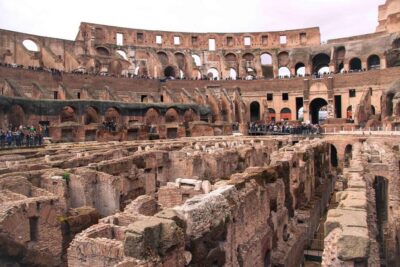
Colosseum & Forum with Audio Guide App -Optional Arena
Read our review →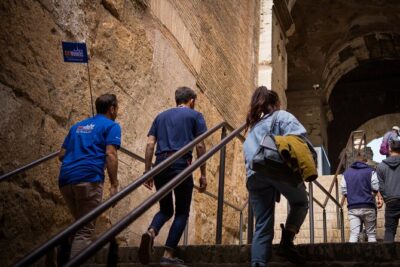
Colosseum, Roman Forum and Palatine Hill Guided Tour
Read our review →
Naples Underground Entry Ticket and Guided Tour
Read our review →