
Review · CATACOMBS & APPIAN WAY TOURS
Rome: Catacombs of Priscilla Entry Ticket & Guided Tour
Rome keeps some of its best stories underground. The Catacombs of Priscilla offer a short, atmospheric look at early Christian burial customs, ancient art, and the lives of people who worshipped outside the public Roman world. I especially like the small groups of up to 10, which make it easier to hear the guide in narrow passages. I also like the chance to see early Christian paintings, including images associated with the Virgin Mary and Child.
The main drawback is the brief 45-minute schedule. That is enough time for a strong introduction, but you will not see every part of this large site. The catacombs are also outside the historic center on Via Salaria, and the underground passages are not suitable for people with mobility impairments.
In This Review
- Key points to know before you go
- Why the Catacombs of Priscilla feel different from central Rome
- What happens during the 45-minute visit
- The paintings and symbols are the real highlight
- The people buried at Priscilla
- The Acili hypogeum and the site’s earlier life
- Why the guide makes such a difference
- Is $16 a fair price?
- Getting there and planning your visit
- Who should book the Catacombs of Priscilla?
- Should you book it?
- FAQ
- Where are the Catacombs of Priscilla?
- How long does the guided tour last?
- What does the $16 price include?
- Is transportation included?
- Where do I meet the guide?
- Which languages are available?
- How large is the tour group?
- Can I take photographs inside?
- Are baby strollers allowed?
- Is the tour suitable for people with mobility impairments?
- Can I cancel the booking?
Key points to know before you go
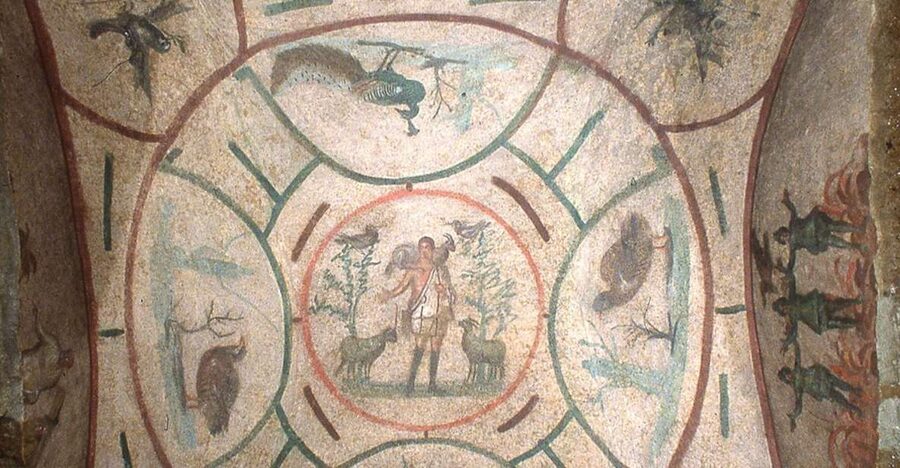
- Some of Rome’s oldest Christian art: The catacombs contain paintings dating from roughly the third century, with especially important early Christian images.
- A small, guided visit: Groups are limited to 10 people, a useful advantage in tight underground corridors.
- A short but focused tour: The visit lasts 45 minutes, though some guides have added extra time when questions and discussion allowed.
- A site with several layers of history: The catacomb began as an abandoned sand quarry, then became a Christian burial area with connections to a noble family tomb.
- Strong guide-led experience: Guides such as Sister Lydia, Alexandra, Clara, and Alexandria have been praised for clear explanations, warmth, humor, and enthusiasm.
- Good value at $16: The ticket includes entry and the guided tour, making this one of Rome’s more affordable history experiences.
Why the Catacombs of Priscilla feel different from central Rome
You come to Rome for the Colosseum, the Trevi Fountain, and the Vatican. Those places deserve their fame, but they can also leave you moving with a crowd from one famous sight to the next. Priscilla offers a quieter change of pace.
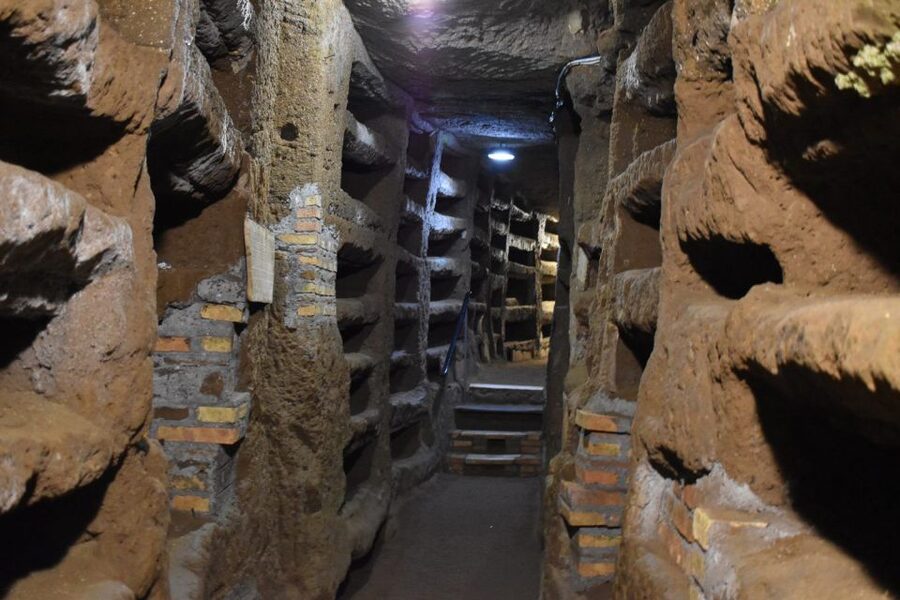
The catacombs lie beneath Via Salaria, away from the main cluster of ancient monuments. You will not get the grand views or dramatic scale of the Colosseum. Instead, you get low ceilings, irregular passageways, wall niches, and a close look at how an early Christian community remembered and buried its dead.
That difference matters. This is not a spectacle built for modern visitors. The site retains the character of a burial complex and archaeological area. One of the best parts of the experience is learning how ordinary burial spaces, family tombs, martyrs’ graves, painted chambers, and church history all connect.
The setting also gives you a break from Rome’s summer heat. One person who visited in July found the cool underground air especially welcome, while another advised bringing a light top because the catacombs remain chilly. You should think of the temperature as part of the practical appeal, not the main reason to book.
More catacombs and Appian Way trips:
- Rome: Crypts and Catacombs Underground Tour with Transfers
★ 4.6 · 5,341 reviews - The Original Roman Crypts and Catacombs Tour with Transfers
★ 4.5 · 4,896 reviews - Rome: Catacombs of St. Callixtus Entry Ticket & Guided Tour
★ 4.6 · 3,037 reviews
What happens during the 45-minute visit
You go directly to the catacomb ticket office and show your reservation at least 10 minutes before your scheduled start. There is no hotel pickup, drop-off, or transport included, so you arrange your own way to Via Salaria.
Once the group gathers, the guide leads you below ground. The catacomb is spread over two floors, although the visit focuses on selected areas rather than attempting to cover the entire complex. The first floor contains large, uneven galleries that Christians began using around the start of the third century.
Here you see the basic form of early Christian underground burial. Small niches were cut into the walls for graves, and about 20 larger niche tombs were built in the galleries. The guide explains how these spaces were used for burial and funeral commemoration, helping you read the walls as evidence of community life rather than as a collection of empty tunnels.
That explanation is important because the site can otherwise feel confusing. The passages are irregular, and several chambers may look similar at first. A good guide gives you a clear sense of what you are seeing and why it matters.
The route also includes discussion of an adjoining cryptoporticus, the Greek Chapel, and a large underground room that began as a noble family burial area. That space was later linked to the catacomb. The changing use of the rooms shows that this was not one single project built at one time. It grew and changed as families and Christian communities used the underground spaces.
Expect the guide to pause at paintings, inscriptions, and important burial areas. Photography is not allowed inside, so you will need to look carefully rather than viewing the art through a phone screen. Postcard prints of some artwork have been available for a small charge, which is a useful option if you want a visual souvenir.
The paintings and symbols are the real highlight
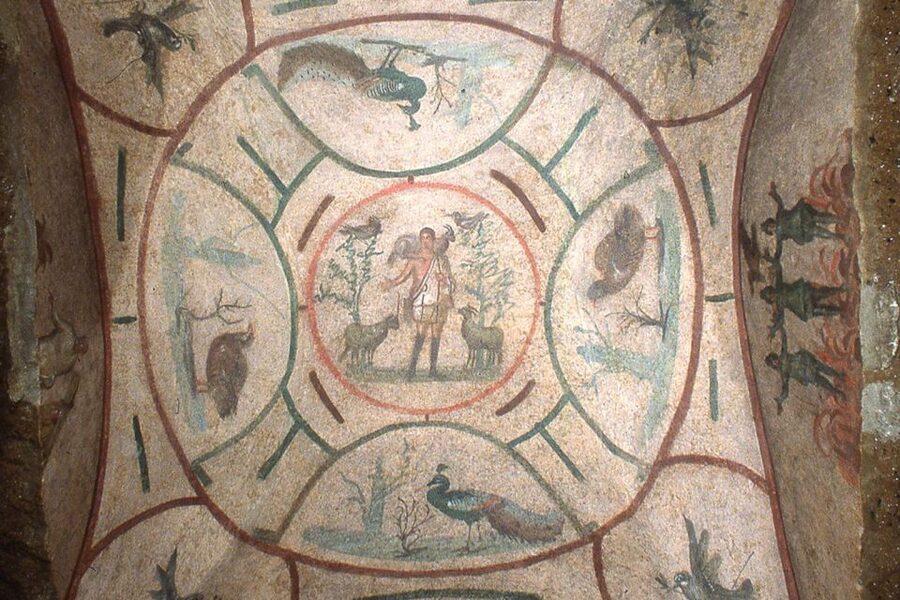
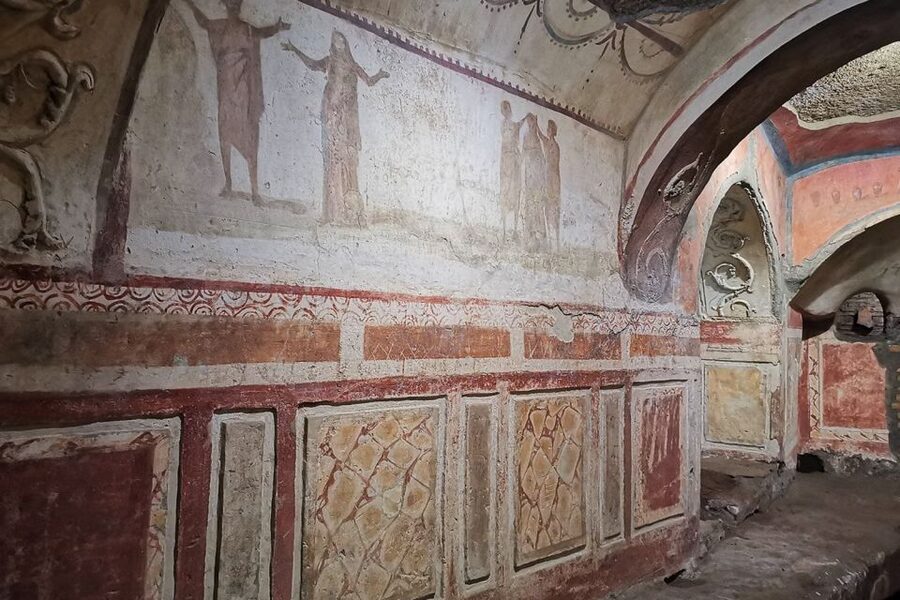
The art gives Priscilla its strongest visual appeal. Several ancient Christian paintings remain preserved, including works associated with the period from about 240 to 280 AD. The colors and details are not comparable to the polished galleries of the Vatican Museums, but that is precisely the point. These images were made in burial spaces for an early Christian community, not for a modern museum.
A frequently discussed image shows the Virgin Mary and Child. It is presented as one of the earliest known images of the Virgin Mary, making it a major reason for visitors interested in Christian art. Your guide provides the needed context, including how early Christian artists used images and symbols to express belief and hope around burial.
The catacombs also help you understand the limits of what can be seen. You are not walking through a fully furnished underground cemetery. The tombs are empty today, and the bodies were moved. One visitor found that this was not clear before arriving, so keep your expectations realistic. The importance of the site comes from its layout, inscriptions, art, and connection to early Christianity, not from seeing human remains in place.
The no-photography rule may disappoint you, especially if you enjoy recording every stop in Rome. Still, it encourages you to pay attention to the guide and to the fragile art itself. If you want a keepsake, postcard reproductions may be available at the site.
The people buried at Priscilla
Priscilla is not only an art site. It is also a place connected with martyrs and popes, and the guide uses these names to make the underground spaces more personal.
Among the martyrs associated with the catacombs are Felice and Filippo, who were killed, probably during the persecution under Diocletian, along with their mother, St. Felicita, and their brothers Alessandro, Marziale, Vitale, Silano, and Gennaro.
Several popes were also buried at Priscilla. They include Marcellino, who served from 296 to 304; Marcello, from 308 to 309; Silvestro, from 314 to 335; Liberius, from 352 to 366; Siricius, from 384 to 399; Celestino, from 422 to 432; and Vigilius, from 537 to 555.
These names may sound like a list during a busy Rome sightseeing day. The guide’s job is to turn them into a picture of how important this place became for the Christian community. The catacombs were used over many generations, and the burials link early Christian worship with the later history of the church.
The name Priscilla probably comes from a woman of the Acili senatorial family. Her name appears in an inscription in the Acili hypogeum on the first floor. This connection adds another layer to the site, since the underground complex includes both Christian burial areas and spaces tied to a wealthy Roman family.
A few more reviews worth comparing before you book
- Vatican: Museums & Sistine Chapel Entrance Ticket
★ 4.5 · 144,003 reviews - Vatican Museums & Sistine Chapel Tour with Optional Basilica
★ 4.3 · 67,413 reviews - Colosseum, Roman Forum & Palatine Guided Tour
★ 4.7 · 63,148 reviews - Vatican Museums, Sistine Chapel & St Peter’s Basilica Guided Tour
★ 4.5 · 39,149 reviews
The Acili hypogeum and the site’s earlier life
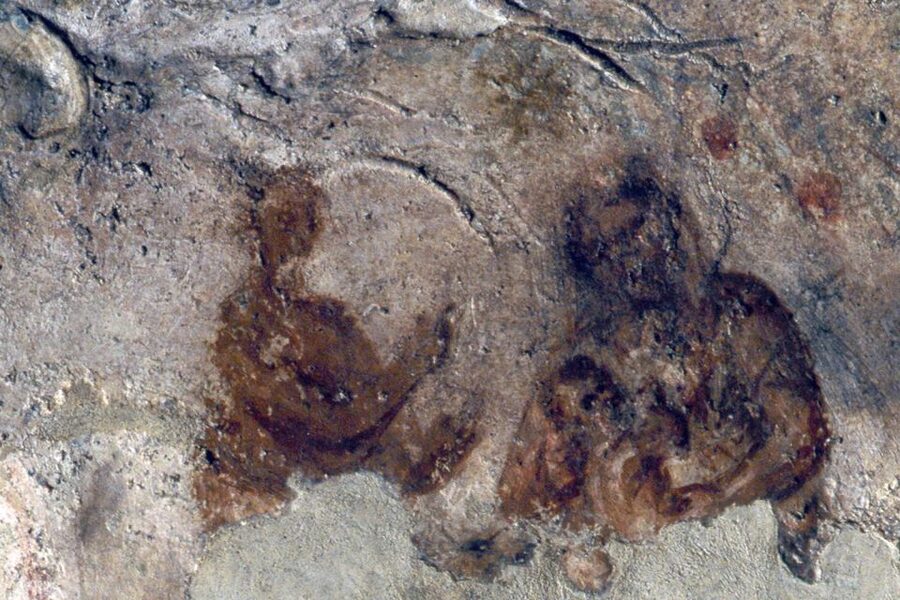
The origin of Priscilla differs from many other Roman catacombs. The area first served as an arenarium, a place where sand was extracted. After it was abandoned, Christians began using the broad and uneven galleries for burials.
That earlier use explains why the corridors do not feel like a neatly planned underground cemetery. The shape follows older excavated spaces, then adds tombs and wall niches over time. You get a useful lesson in how Roman sites were reused instead of simply discarded.
The Acili hypogeum began as a water cistern. Inscriptions connected with the Acili family were found there and are now displayed. This is one of the most interesting details because it shows how the underground area changed function across different periods.
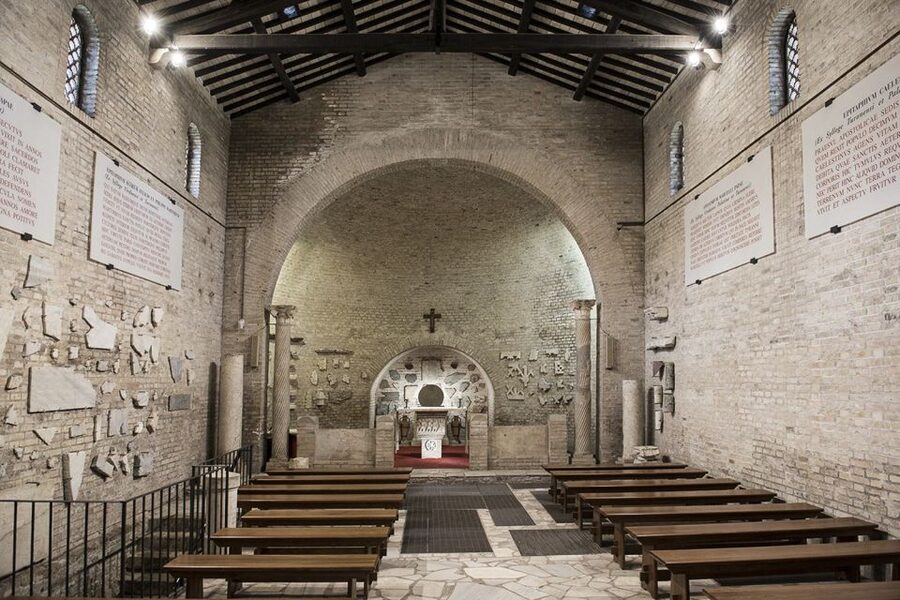
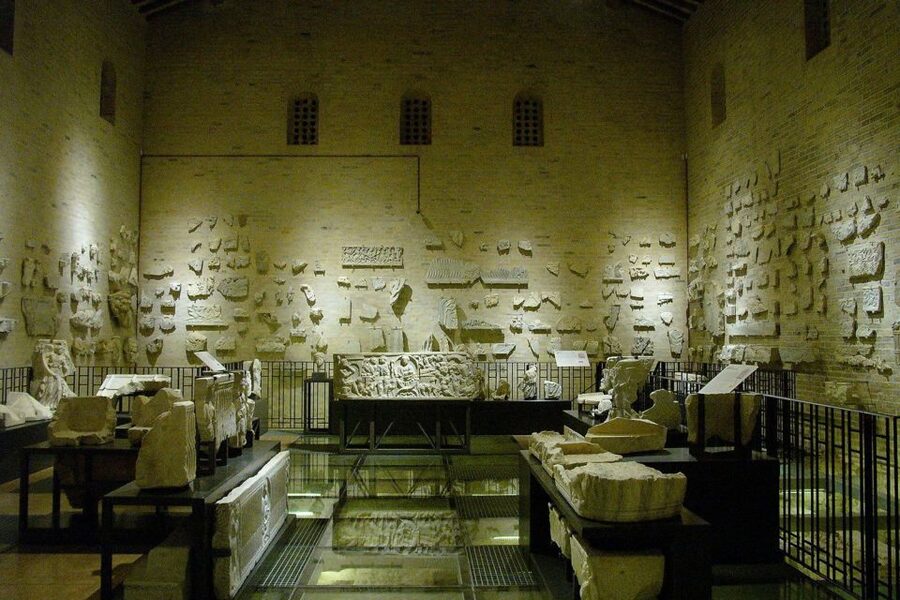
Nearby, inside Villa Ada, a basilica was built by Pope St. Silvester above the burial place associated with Felice and Filippo. A museum near the basilica holds hundreds of sarcophagus fragments found during excavations around the catacomb area.
Do not assume the 45-minute underground visit includes a full visit to every related feature. The ticket covers entry to the Catacombs of Priscilla and the guided tour. The basilica and museum provide useful context if you have time to explore the surrounding area, but they should not be treated as guaranteed stops on this short booking.
Why the guide makes such a difference
The passages are narrow, the subject is serious, and much of the art is hard to understand without explanation. This is a place where a guide adds real value.
The strongest guides combine archaeology, art, and faith without letting one angle take over. Sister Lydia has been especially praised for her warmth, humor, and ability to explain the catacombs from both an archaeological and religious point of view. Alexandra and Alexandria have also been singled out for clear explanations and strong command of the subject. Clara was praised for answering questions patiently and adding extra time to the tour.
Guides have also been willing to start early when a group arrived well before its appointment. That is helpful, but you should still plan to arrive at least 10 minutes early rather than count on an earlier departure.
English, Italian, and Spanish tours are available. The quality of a live tour can vary slightly with the guide’s language skills. One English-speaking visitor felt the guide’s English could have been clearer, while most comments praised the explanations. If precise language is especially important to you, choose your tour language carefully when booking.
The group limit of 10 is a real benefit. Underground galleries can feel crowded quickly, and a small group gives you a better chance to hear the guide and see the art when the group stops. One person noted that the spaces sometimes felt large for a small room, but the guide worked to make sure everyone could see.
Is $16 a fair price?
At $16 per person, this is a good-value visit for Rome. The price includes both the entrance ticket and a guided tour, so you are not paying only to walk through an empty set of corridors.
The value depends on your interests. If you enjoy archaeology, ancient burial customs, early Christianity, or historic art, the cost is modest for a site with such old material. The small-group format also makes the price more appealing than a large, impersonal tour.
If you want dramatic architecture, a long route, or a major visual showpiece, you may find the experience less satisfying. One person described the tour as interesting but not especially large in impact, while another wished it lasted longer. That is a fair warning. Priscilla rewards curiosity more than spectacle.
The 45-minute length can be a virtue. You get a focused history stop without using half a day. One visitor felt that more than 45 minutes underground might have been too much, especially in a cool, confined setting. For most itineraries, it fits neatly before or after another Rome activity.
Getting there and planning your visit
The catacombs are on Via Salaria, not beside the Colosseum or Roman Forum. You need to allow time to reach the site, and clear signage near the entrance may not be as strong as you expect. One visitor found the catacombs within walking distance of the city center, while another was surprised by the distance from the old Rome area. The practical lesson is simple: check your route before leaving and do not schedule this with a tight connection to another timed attraction.
Public buses can be an inexpensive way to reach Via Salaria. A bus was described as cheap and on time, but the information provided does not specify a particular route, so check current transit details for your travel date.
Bring a light layer even in hot weather. The underground spaces are cool, and the contrast with Rome’s summer sun can be sharp.
Baby strollers are not allowed. The site is also unsuitable for people with mobility impairments, so consider this carefully before booking. The combination of underground passages, stairs, and uneven spaces makes this a poor choice if you need step-free access.
You cannot take photographs inside. Make sure everyone in your group knows this before arriving, especially teenagers who may expect to document every ancient site.
Free cancellation is available up to 24 hours before the scheduled tour for a full refund. Starting times vary, so check availability for the day you want.
Who should book the Catacombs of Priscilla?
I would recommend this visit if you want a quieter and more thoughtful side of Rome. It suits adults interested in early Christianity, ancient art, Roman burial customs, archaeology, and the way sacred places changed over time.
It can also work well for families with older children and teenagers. Two teenagers, aged 15 and 18, found the visit interesting, which makes sense: the underground setting feels different from a standard museum, and the stories of martyrs and ancient paintings give the guide plenty to discuss.
I would be more cautious if you are traveling with a stroller, have limited mobility, dislike confined underground spaces, or want a major monument with a big visual payoff. The catacombs are not the Vatican or the Colosseum, and the tour does not try to compete with them.
For the best experience, arrive early, wear practical shoes, bring a light layer, and listen closely to the guide. Since photography is prohibited, let the visit be about seeing the art and understanding the place rather than collecting phone images.
Should you book it?
Book the Catacombs of Priscilla if you want ancient Rome presented through personal stories, early Christian art, and burial customs rather than imperial monuments. At $16, the small group and guided explanations make it a strong value, especially with a guide such as Sister Lydia or Alexandra.
Skip it if you need easy access, have only a short time in Rome, or want grand rooms and sweeping ruins. For everyone else, this is a compact, unusual stop that adds depth to a city already crowded with famous sights.
FAQ
Where are the Catacombs of Priscilla?
The Catacombs of Priscilla are located on Via Salaria in Lazio, outside Rome’s main historic center.
How long does the guided tour last?
The scheduled tour lasts 45 minutes. Some guides have added extra time when visitors had questions or arrived early.
What does the $16 price include?
The price includes the entrance ticket to the Catacombs of Priscilla and the guided tour.
Is transportation included?
No. Hotel pickup, hotel drop-off, and transportation are not included.
Where do I meet the guide?
Go directly to the ticket office at the catacomb and show your reservation at least 10 minutes before the scheduled tour.
Which languages are available?
Guided tours are available in Italian, English, and Spanish.
How large is the tour group?
The group is limited to 10 participants.
Can I take photographs inside?
No. Photography is not allowed inside the catacombs.
Are baby strollers allowed?
No. Baby strollers are not allowed.
Is the tour suitable for people with mobility impairments?
No. The experience is not suitable for people with mobility impairments.
Can I cancel the booking?
Yes. You can cancel up to 24 hours in advance for a full refund.
Just added around Rome
- Rome City, Pantheon, and Trevi Fountain Walking Tour★ 5.0 · 249 reviews
- Rome: Skip the line Vatican Museums & Sistine Chapel Tour★ 4.2 · 251 reviews
- Rome: Tivoli Day Trip with Villa d’Este and Villa Adriana★ 4.5 · 251 reviews
- Transfer Rome center – Ciampino Airport★ 4.5 · 251 reviews
- Rome: Cannondale E-Bike Evening Tour with Optional Dinner★ 4.9 · 251 reviews
- VIP Colosseum, Roman Forum & Palatine Hill & Special Access Sites★ 4.5 · 252 reviews
- Private Vatican Museums Hidden Gems Tour with Optional Pick-Up★ 5.0 · 253 reviews
- Vatican Museums & Sistine Chapel Skip-the-Line Guided Tour★ 4.6 · 254 reviews
Catacombs & Appian Way Tours, compared.
Catacombs of San Gennaro Entry Ticket & Guided Tour
Read our review →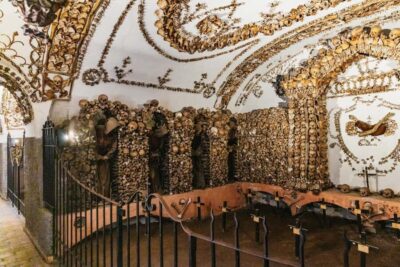
Crypts and Catacombs Underground Tour with Transfers
Read our review →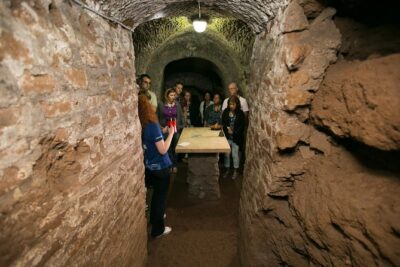
The Original Roman Crypts and Catacombs Tour with Transfers
Read our review →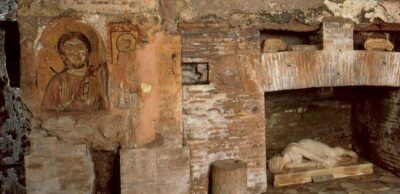
Catacombs of St. Callixtus Entry Ticket & Guided Tour
Read our review →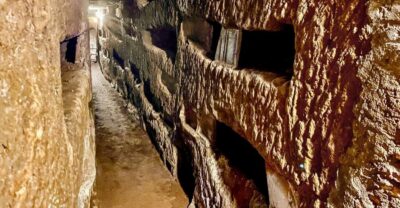

Rome EBike Tour: Appian Way, Catacombs & Roman Aqueducts
Read our review →
Catacombs and Capuchin Crypt Guided Tour with Transfer
Read our review →Browse the lists this tour appears in