Review · PRIVATE
Rome: Caracalla Baths & Circus Maximus — Private or Shared
Ancient Rome’s leisure life was surprisingly grand. This 1.5-hour tour pairs the colossal Baths of Caracalla with the broad former arena of Circus Maximus, giving you two very different views of Roman entertainment. I especially like the expert storytelling inside the baths and the small-group format, which makes it easy to ask questions. The main drawback is clear: Circus Maximus has little visible structure left, so much of that half-hour depends on your imagination.
At $77 per person, this is not Rome’s cheapest guided outing. Still, I think the price makes better sense if you value a live archaeologist guide, skip-the-line entry, and a tour capped at 10 people. The baths are the real prize here. Circus Maximus adds useful context, but it is less visually rewarding.
In This Review
- Key points to know before booking
- Why the Baths of Caracalla are worth your Rome time
- Following a Roman day through the thermal complex
- Mosaics, frescoes, and the power of scale
- Circus Maximus: enormous history, limited remains
- The guide can make or break the experience
- Timing, meeting point, and walking comfort
- Is $77 a fair price?
- Who will enjoy this tour most?
- Practical booking advice
- Should you book the Caracalla Baths and Circus Maximus tour?
- FAQ
- How long does the tour last?
- Where is the meeting point?
- Is entrance to the Baths of Caracalla included?
- Is the tour available in English?
- How large is the group?
- What should I bring?
- Are large bags and strollers allowed?
- Can I cancel the booking?
Key points to know before booking
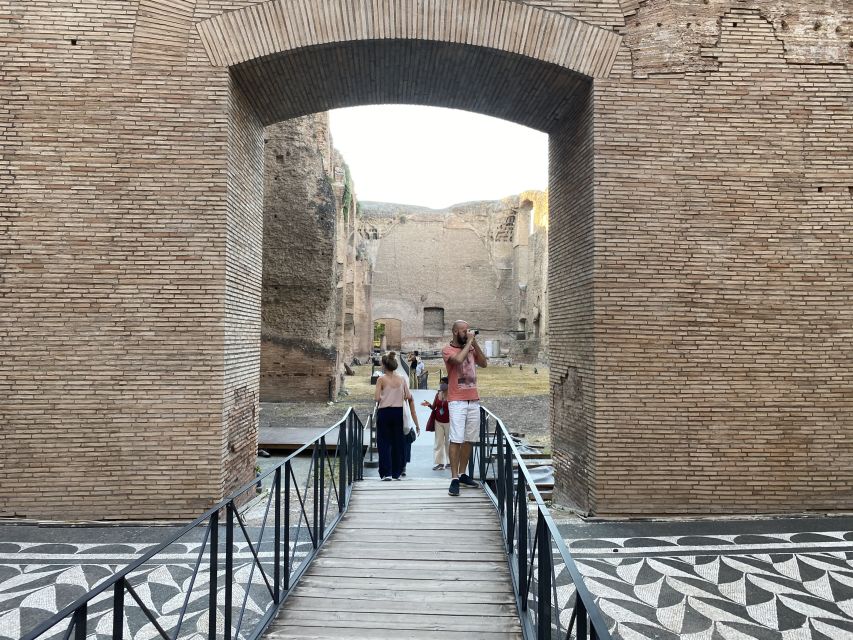
- The Baths of Caracalla take up about one hour: Expect immense walls, old mosaics, monumental rooms, and an explanation of how the complex worked.
- Circus Maximus is mainly an interpretive stop: The site once hosted huge public spectacles, but little of the original stadium remains above ground.
- The meeting point is simple to reach: Meet outside Circo Massimo Metro Station, toward Laurentina, in front of the FAO building.
- Small groups make a real difference: The maximum group size is 10, and some scheduled tours have become private when few people booked.
- Guides are the strongest part of the experience: Chiara, Lars, Francesca, Mario, Samuele, and Anestis are among the guides praised for clear explanations and warm, engaging delivery.
- Wear practical shoes and pack lightly: Large bags, trolleys, strollers, pets, drones, and sharp objects are not allowed at the monuments.
Why the Baths of Caracalla are worth your Rome time
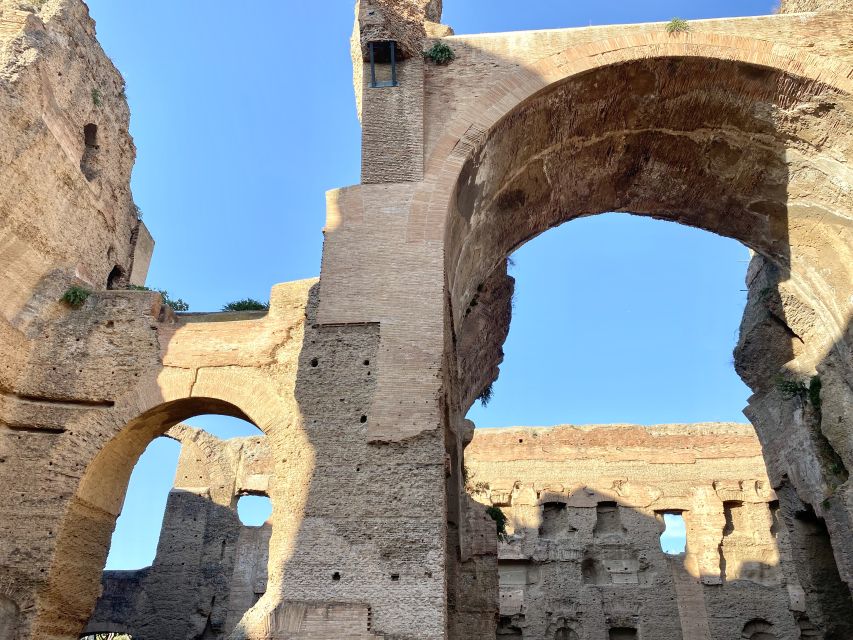
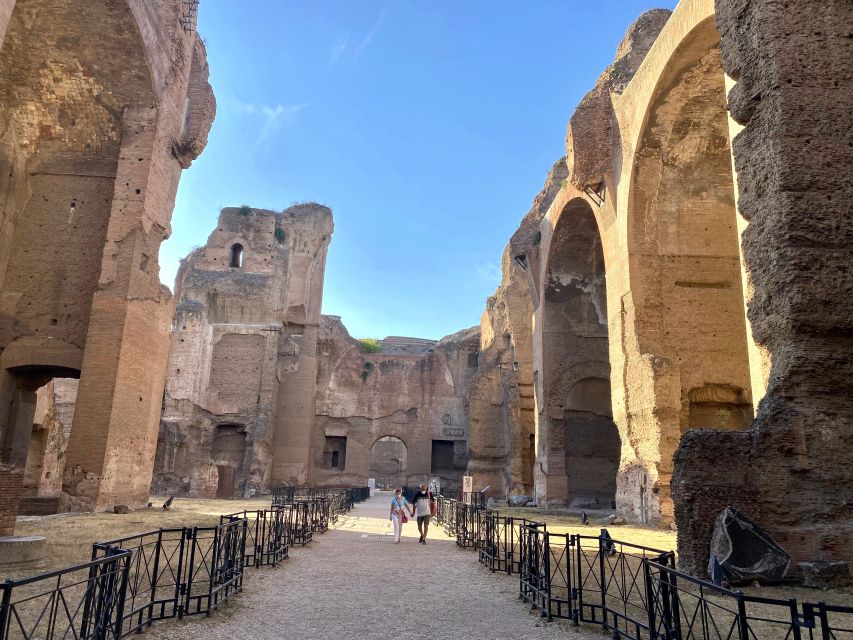
Rome gives you no shortage of ancient ruins, but the Baths of Caracalla offer a different kind of scale. Instead of focusing on emperors, senators, or military victories, this complex shows how ordinary Romans spent leisure time in a public setting built on an enormous scale.
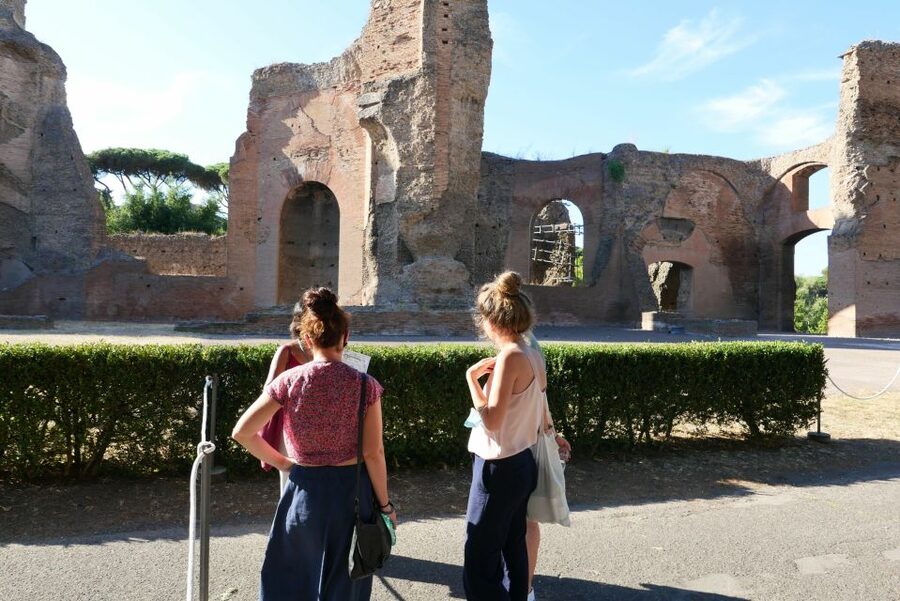
The ruins are especially effective because so much of the structure remains. You can walk among towering brick walls and large rooms that still communicate the original size of the building. Several people who took the tour were struck by the height of the walls, the surviving mosaic floors, and the way the guide helped them picture the complete complex.
I like this site for another reason: it usually feels calmer than the Colosseum area. The archaeological grounds are green and open, and the setting gives you room to look up, listen, and get a sense of the architecture. You are still close to the Colosseum, but the mood is less crowded and frantic.
That quieter setting matters in Rome. At the Colosseum, the sheer number of people can compete with the monument itself. At Caracalla, you have a better chance to notice the proportions of the rooms and the details under your feet.
A few more reviews worth comparing before you book
- Vatican: Museums & Sistine Chapel Entrance Ticket
★ 4.5 · 144,003 reviews - Vatican Museums & Sistine Chapel Tour with Optional Basilica
★ 4.3 · 67,413 reviews - Colosseum, Roman Forum & Palatine Guided Tour
★ 4.7 · 63,148 reviews
Following a Roman day through the thermal complex
The guide does more than point at walls. You follow the general sequence of a typical visit to the baths in the third century AD, learning how the complex served both physical and social needs.
The tour explains the range of services once available here, including care for the body and activities for the mind. The baths were not simply a place to wash. They were part of Roman public life, and the size of the complex shows how important leisure was to the empire.
The route also introduces the different temperatures used throughout the bathing process. Your guide explains the underfloor heating system and the labor required to keep rooms at the desired temperature. This is one of the most useful parts of the visit because the heating system is largely invisible today. Without an explanation, you might see brick walls and mosaic fragments without understanding the engineering behind them.
The idea of heat moving beneath the floors helps you read the ruins differently. You begin to notice the relationship between the rooms and imagine the work needed to operate such a vast public facility. The ancient engineers were not working with modern machinery, yet they created a carefully managed thermal system.
That practical explanation is where a good guide earns the tour fee. Guides such as Chiara, Lars, Francesca, Mario, and Anestis have been praised for making technical and historical details easy to follow. Several people also appreciated guides who answered questions patiently and adjusted the pace for the group.
Mosaics, frescoes, and the power of scale
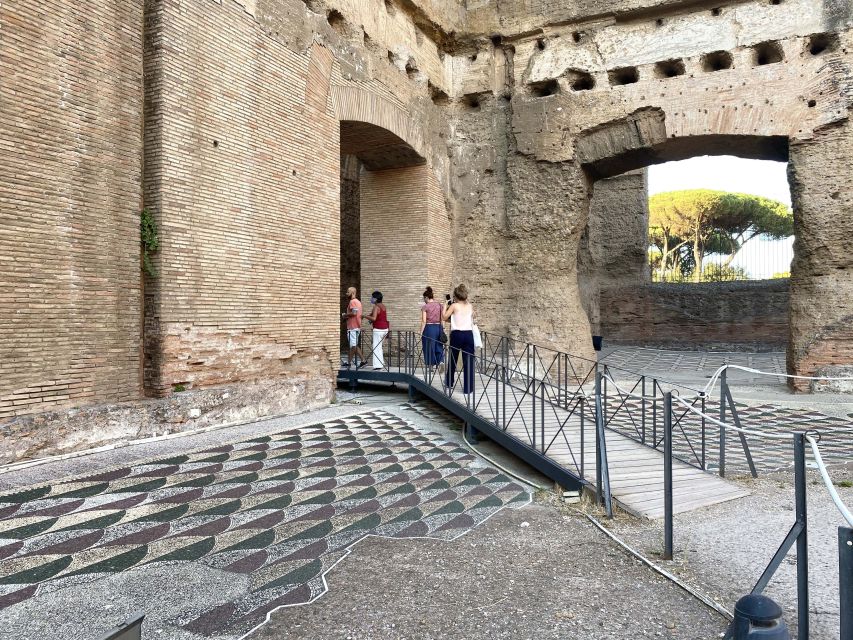
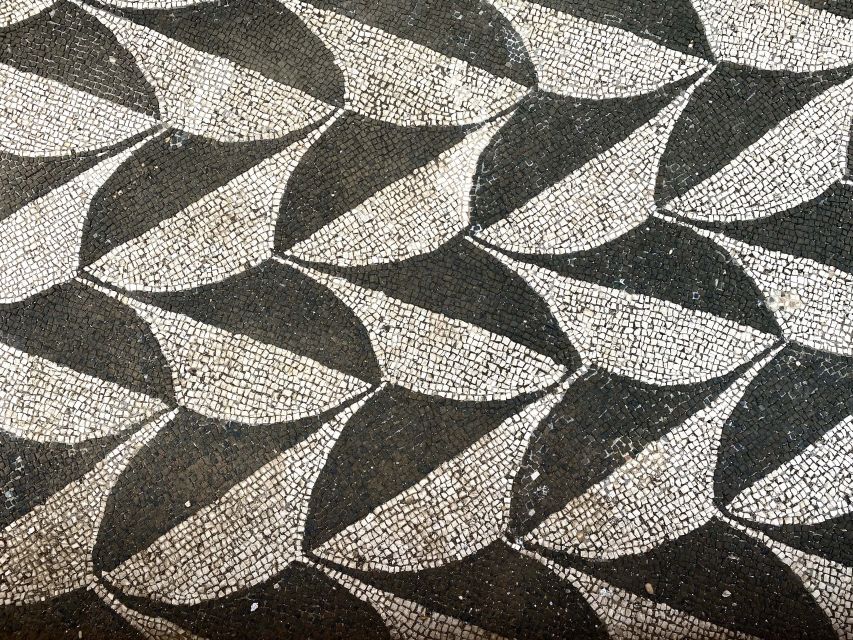
The remaining mosaics are among the best reasons to visit. Geometric patterns still appear across sections of the flooring, and some colors and details have survived with surprising clarity. The effect is strongest when you compare the decoration with the massive, plain brick walls around it.
I recommend taking time to look down as well as up. The walls grab your attention first, but the floors show how much care went into the interior. These were not bare utility buildings. The decoration helped turn the bathing complex into an impressive public setting.
Some descriptions of the site can make it sound like a complete building waiting for you to walk inside. It is not. You are exploring substantial ruins, and many original features are missing or only partly preserved. The guide’s explanation fills in the gaps, but you should come prepared to use your imagination.
That is not a weakness unique to this tour. It is simply the nature of ancient Rome. The Baths of Caracalla give you enough surviving material to understand the scale, but no modern reconstruction can fully replace the vanished rooms, ceilings, and daily activity.
A strong guide helps bridge that distance. One guide, Mario, was praised for creating a vivid picture of what an actual day at the baths may have felt like. Others, including Samuele, were appreciated for connecting the ruins to wider topics such as art, architecture, and Rome’s later development.
Circus Maximus: enormous history, limited remains
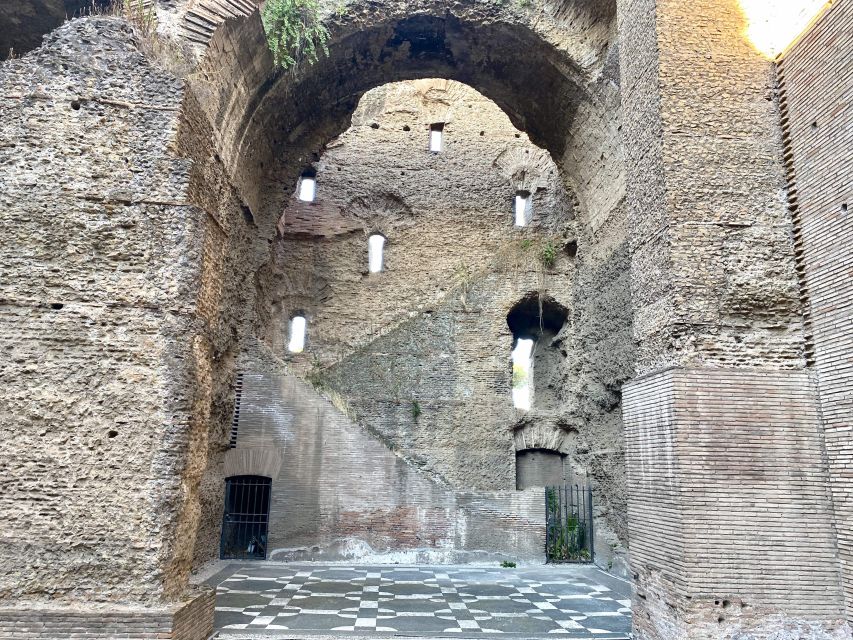
After the baths, the tour moves to Circus Maximus for about 30 minutes. This was once the largest venue for public games, and the guide explains the Roman Ludi, the extended celebrations that could continue for several days and use more than one venue.
The stories include chariot races, gladiator contests, public noise, and the huge crowds that gathered for spectacles. You walk across the area where these events took place, but the physical remains are far less impressive than those at Caracalla.
This is the part of the tour where expectations matter most. If you want towering ancient walls, detailed floors, and rooms you can study, Circus Maximus may feel thin. A few people found that there was not much to see at the site itself, and that the visit relied heavily on the guide’s account.
I still think the stop has value, especially if you want to understand the scale of Roman public entertainment. The ancient stadium was vast, and the guide helps explain how the venue fit into Rome’s festival culture. The site also reaches back to the early myths and gods connected with Rome before the city fully developed.
Think of Circus Maximus as a storytelling stop rather than a monument visit. The baths give you physical evidence to examine. Circus Maximus gives you space, location, and a sense of the vast events that once filled it.
For that reason, I would not book this tour solely for Circus Maximus. I would book it for Caracalla, then treat the circus as a useful second chapter.
A different sort of day out around Rome:
- Vatican Museums, Sistine Chapel & St Peter’s Basilica Guided Tour
★ 4.5 · 39,149 reviews - Rome: Colosseum, Palatine Hill and Roman Forum Guided Tour
★ 4.8 · 32,814 reviews - Rome: Guided Tour of Colosseum, Roman Forum & Palatine Hill
★ 4.7 · 27,897 reviews - Rome: Colosseum & Forum with Audio Guide App -Optional Arena
★ 4.2 · 24,770 reviews
The guide can make or break the experience
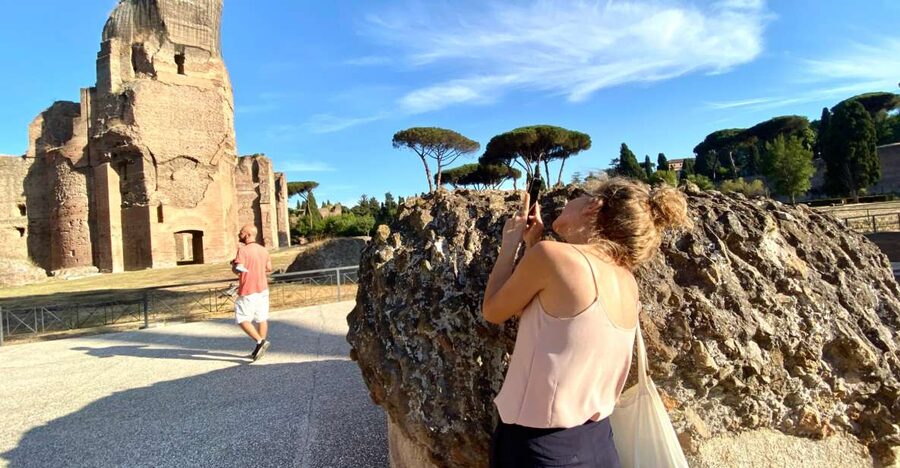
The strongest common thread in the feedback is the quality of the guides. People repeatedly valued clear historical explanations, a friendly tone, humor, and the ability to answer questions without making the visit feel like a lecture.
Names praised include Chiara, Francesca, Lars, Mario, Samuele, Anestis, Alicia, and Sam. This does not guarantee who you will get, but it gives you a good sense of the guide team’s strengths. Several guides were described as warm and personable, while others were singled out for their archaeological knowledge and passion for the subject.
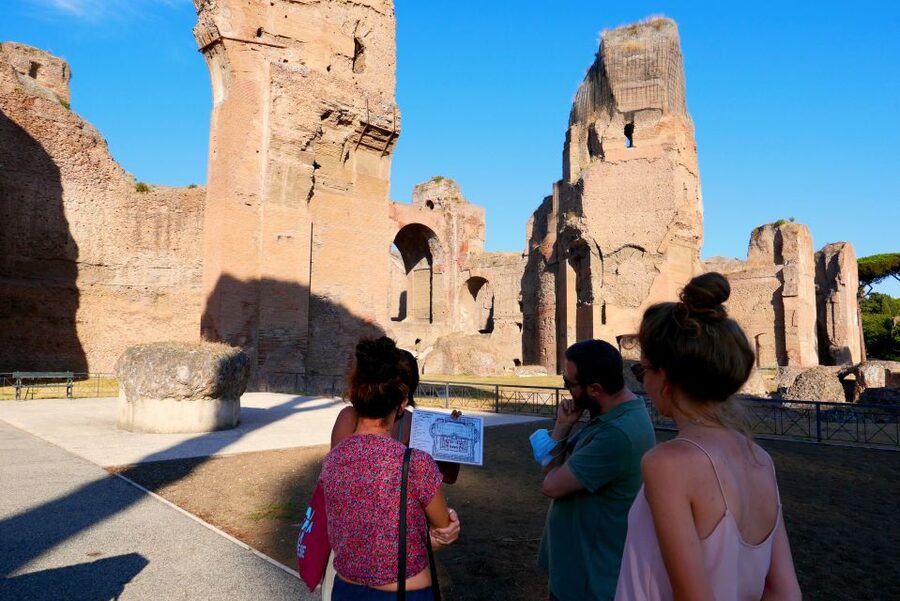
Small groups help here. With no more than 10 people, you can usually hear the guide through the provided sterilized headset and ask questions without holding up a large crowd. Small groups also make it easier to move through the ruins at a comfortable pace.
There is an interesting possibility when demand is low: a small-group booking may become a private-style visit without an added charge. This has happened to some participants, including people who ended up with only their own family or travel party. It is a pleasant bonus, though you should not book expecting it.
The guide may also add time when conditions allow. One tour extended beyond its planned duration because the guide wanted to continue explaining the site. Again, this is not something to count on, but it reflects the personal quality that several people valued.
The tour is offered in English, French, Portuguese, Spanish, German, and Italian. If you have a preferred language, check the available departure before paying.
Timing, meeting point, and walking comfort
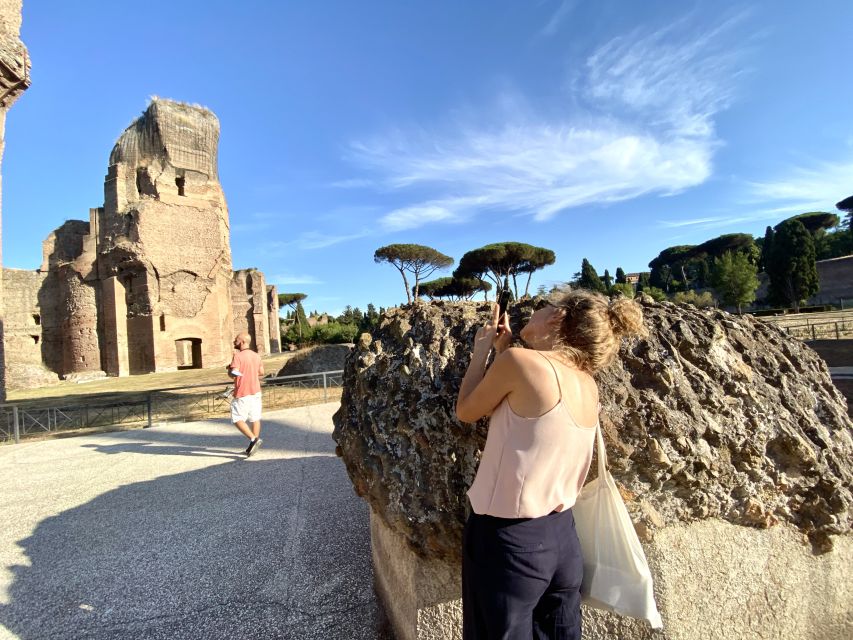
The tour begins at the exit of Circo Massimo Metro Station, in the direction of Laurentina, in front of the FAO building. Look for a yellow label with the local partner’s name. You need to arrive five minutes early so the sign-up process can be completed before the group moves on.
This is a practical meeting point because it is tied to a Metro station rather than a vague monument entrance. Still, give yourself enough time to find the correct station exit. In Rome, large roads and multiple exits can make a short final walk take longer than expected.
The total duration is 90 minutes, with about an hour at the baths and 30 minutes at Circus Maximus. That makes this a useful morning or afternoon addition to a packed Rome schedule. It is long enough to provide context without taking over half your day.
You will be walking around archaeological ground, so comfortable shoes are important. Large backpacks, trolleys, luggage, baby strollers, pets, drones, weapons, and sharp objects are not allowed inside the monuments. A small, practical bag is the safest choice.
The activity is listed as wheelchair accessible, but the ruins remain an ancient archaeological site. If you have specific mobility needs, confirm the current route and conditions before booking.
Weather can affect the schedule. The activity may be canceled in poor conditions, with the choice of another date or a full refund. The outdoor portion at Circus Maximus makes weather more relevant than it would be on a fully indoor tour.
Is $77 a fair price?
At $77 per person, this tour sits in the mid-to-high range for a 90-minute Rome visit. The entrance fee to the Baths of Caracalla, the live archaeologist guide, headsets, and on-site assistance are included. Food, drinks, and hotel transport are not.
The value depends on how you like to visit ancient sites. If you are happy reading signs and walking alone, the price may feel high, especially because Circus Maximus has limited visible remains. One person specifically found the tour expensive compared with longer outings to the Appian Way, aqueducts, catacombs, and other Rome activities.
I see stronger value for first-time visitors who want the ruins explained properly. The baths are large enough that you could miss the heating system, room functions, and surviving decoration without guidance. A good archaeologist can turn a collection of walls into a coherent visit.
The price also looks better for a private or semi-private booking shared among several people. Families and couples who prefer questions and a slower pace may find that useful. If you are traveling alone and happen to receive a small group or private-style tour, the value improves considerably.
Keep your expectations focused. You are paying for access, structure, and interpretation, not for two equally complete monuments.
Who will enjoy this tour most?
I would recommend it to anyone who has already seen Rome’s headline sights and wants an ancient site with more breathing room. It also suits people who enjoy architecture, engineering, archaeology, and the practical details of daily Roman life.
Families can benefit from the clear sequence of a Roman bathing day and the stories of racing and public games. The private option may be especially useful if children need a flexible pace, although strollers are not allowed inside the monuments.
History fans should find plenty to appreciate in the underfloor heating, room temperatures, mosaics, and early stories tied to Circus Maximus. You do not need specialist background. The guide supplies the structure.
I would be more cautious if your Rome schedule is extremely tight or if you have already visited many archaeological ruins without guides. The tour is not a must for every visitor, and the Circus Maximus portion may feel too abstract if you need substantial remains to enjoy a site.
The activity is also suitable for people who prefer smaller groups over large walking tours. The headset helps with clear listening, and the maximum of 10 participants keeps the visit manageable.
Practical booking advice
You can cancel up to 24 hours before the start for a full refund, and the reserve-now, pay-later option keeps your plans flexible. Check the starting time carefully, since departure times vary by availability.
Bring water for your own comfort, though food and drinks are not included. Wear shoes you can use comfortably on uneven archaeological ground and avoid bringing anything larger than necessary.
Participants under 18 and European citizens under 25 must carry official identification or a digital copy. This is easy to overlook, so check your documents before leaving your hotel.
If the weather looks uncertain, keep an eye on messages from the operator. Rain has not stopped every tour, and guides have led successful visits in wet conditions, but the activity can be canceled if conditions are judged unfavorable.
Should you book the Caracalla Baths and Circus Maximus tour?
Book it if the Baths of Caracalla are the main attraction for you. The surviving walls, mosaics, heating system, and monumental rooms deserve explanation, and the smaller format gives you a better chance to ask questions. The calmer setting is a welcome break from Rome’s busiest sights.
Choose the private or small-group option if you want a more personal visit, especially for a family or a couple sharing the cost. If you mainly want to see Circus Maximus as a complete ancient stadium, choose another activity or adjust your expectations. The site is impressive in scale, but the remains are sparse.
For most visitors, I would treat this as a focused archaeology tour with one excellent stop and one story-led stop. At $77, it is worth booking for the Caracalla experience, the guide, and the chance to see a quieter side of ancient Rome.
FAQ
How long does the tour last?
The tour lasts 1.5 hours. About one hour is spent at the Baths of Caracalla, followed by about 30 minutes at Circus Maximus.
Where is the meeting point?
Meet at the exit of Circo Massimo Metro Station in the direction of Laurentina, in front of the FAO building. Look for a yellow label with the local partner’s name.
Is entrance to the Baths of Caracalla included?
Yes. The entrance fee to the Baths of Caracalla is included in the tour price.
Is the tour available in English?
Yes. The available languages are English, French, Portuguese, Spanish, German, and Italian.
How large is the group?
The tour has a maximum of 10 participants. Private and small-group options are available.
What should I bring?
Bring comfortable walking shoes. Participants under 18 and European citizens under 25 should also carry official identification or a digital copy.
Are large bags and strollers allowed?
No. Trolleys, large backpacks, luggage, baby strollers, pets, drones, weapons, and sharp objects are not allowed inside the monuments.
Can I cancel the booking?
Yes. You can cancel up to 24 hours in advance for a full refund. The activity may also be canceled because of unfavorable weather, in which case you can choose another date or receive a full refund.
Just added around Rome
- Rome City, Pantheon, and Trevi Fountain Walking Tour★ 5.0 · 249 reviews
- Rome: Tivoli Day Trip with Villa d’Este and Villa Adriana★ 4.5 · 251 reviews
- Rome: Skip the line Vatican Museums & Sistine Chapel Tour★ 4.2 · 251 reviews
- Transfer Rome center – Ciampino Airport★ 4.5 · 251 reviews
- Rome: Cannondale E-Bike Evening Tour with Optional Dinner★ 4.9 · 251 reviews
- VIP Colosseum, Roman Forum & Palatine Hill & Special Access Sites★ 4.5 · 252 reviews
- Private Vatican Museums Hidden Gems Tour with Optional Pick-Up★ 5.0 · 253 reviews
- Vatican Museums & Sistine Chapel Skip-the-Line Guided Tour★ 4.6 · 254 reviews
Private, compared.
Como & Bellagio with Private Lake Como Cruise
Read our review →
Murano & Burano Islands Guided Small-Group Tour by Private Boat
Read our review →
Rome by Golf Cart Private Tour: Beyond the Landmarks
Read our review →
Early Morning Vatican, Sistine, St. Peter’s Semi or Private Tour
Read our review →
Private 3 hrs Venice Tour: St Mark’s, Walking tour & Boat tour
Read our review →
Private Gondola Cruise for up to 5 Passengers
Read our review →