Review · ROME TOURS
Roman Gladiator School: Learn How to Become a Gladiator
Roman history gets physical here. Near the Colosseum, you put on a tunic, belt, gloves, and training sword before learning basic gladiator moves from members of the Historic Group of Rome. I like the hands-on mix of museum objects and mock combat, and the instructors bring plenty of humor to the lesson. The main catch is the location: Via Appia Antica 18 is outside the center and can be tricky to find.
This two-hour activity works especially well for families, active children, and anyone who wants more than another walk past ancient ruins. I also like the small class size, capped at 15, and the choice of lesson times. Just bring comfortable clothes, sturdy shoes, and mosquito repellent. The outdoor area can have plenty of insects, and the advertised drink has not always been available.
In This Review
- Key points to know before booking
- Why this gladiator lesson works so well in Rome
- Arriving on the Appian Way
- Stop one: the Gladiator School of Rome Museum
- Putting on the Roman gear
- Learning the basic gladiator moves
- The arena battle and optional tournament
- How much value do you get for $108.16?
- Who should book this activity?
- Practical advice for a smoother visit
- Should you book the Roman Gladiator School?
- FAQ
- Where does the Roman Gladiator School experience take place?
- How long does the gladiator lesson last?
- What is included in the price?
- What clothing and equipment do participants use?
- What is the minimum age?
- Can family members watch without joining?
- Is transportation included?
- Can I cancel for a full refund?
Key points to know before booking
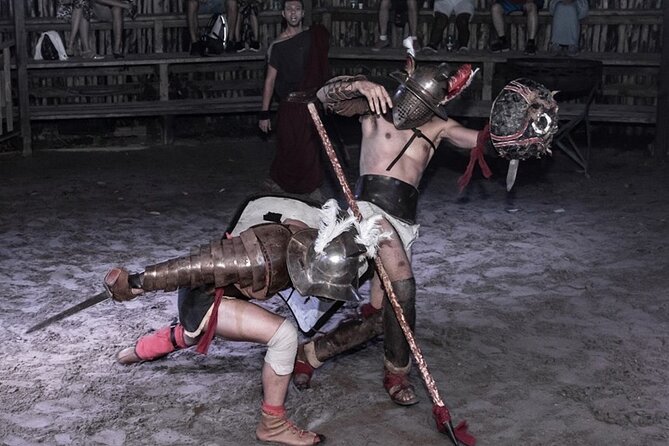
- You get dressed as a gladiator: A traditional belt, tunic, leather gloves, and a wooden training sword called a rudis are provided for the class.
- The museum comes first: You see gladiator weapons, armor, helmets, shields, and other Roman objects before training begins.
- The lesson ends in an arena: After warm-ups and instruction, you practice sword and shield movements and take part in friendly mock battles.
- It suits families best: The minimum age is 6, and children often find it one of their favorite Rome activities, though younger participants may find the physical fighting too rough.
- The setting takes extra planning: The school is on the Appian Way, with bus 118 mentioned as an option. Some people walk from the Colosseum, but the route can take about 45 minutes.
- The price buys an active experience: At about $108.16 per person, the cost is higher than a standard museum visit, but it covers the two-hour class, costume and weapon hire, museum admission, instruction, a drink, and a certificate.
Why this gladiator lesson works so well in Rome

Rome offers no shortage of ancient stones, grand churches, and archaeological sites. After a few hours of looking at ruins, children can start asking when they get to do something. This class answers that question with wooden swords, Roman clothing, warm-ups, and a mock battle.
You are not signing up for a serious martial arts course. This is a playful reenactment built around Roman history. The instructors explain what soldiers and gladiators wore, show you period weapons and equipment, then turn the group loose for a safe, theatrical training session.
That balance is the key. You learn enough background to understand the setting, but you are not stuck listening to a long lecture. The strongest part of the experience is the way facts lead directly into action. After hearing about helmets and shields, you get to handle or wear examples. After learning about combat techniques, you try them yourself.
The Historic Group of Rome provides the instructors. Their approach can vary slightly by guide, but the best sessions combine clear explanations, jokes, and plenty of encouragement. Guides named Mirkos, Patricio, Ivan, and Flama have been praised for their warmth, energy, and ability to involve both adults and children.
A few more reviews worth comparing before you book
- Vatican: Museums & Sistine Chapel Entrance Ticket
★ 4.5 · 144,003 reviews - Vatican Museums & Sistine Chapel Tour with Optional Basilica
★ 4.3 · 67,413 reviews - Colosseum, Roman Forum & Palatine Guided Tour
★ 4.7 · 63,148 reviews
Arriving on the Appian Way
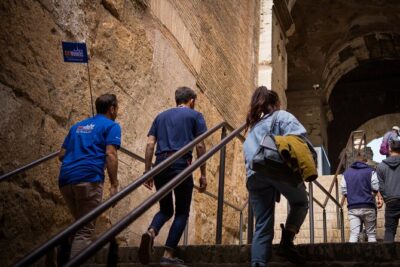
The Gladiator School of Rome is at Via Appia Antica 18, near the ancient Appian Way and outside the old Roman walls. It is not right beside the Colosseum, despite the way this activity is often paired with a visit there.
Allow extra time for the journey. The school can be difficult to spot, and the entrance is at the end of a long driveway rather than directly where a map marker may suggest. One practical tip is to avoid arriving at the last minute, especially if you are traveling with children or carrying bags.
Bus 118 serves the Via Appia area and is mentioned as a useful option. Walking from the Colosseum takes roughly 45 minutes, according to one detailed account. That walk may appeal to you if you want to connect two Roman sites on foot, but it is not the easiest choice in hot weather or with small children.
A taxi is simpler, though the distance can make it costly. Since hotel pickup and drop-off are not included, transportation is your responsibility. Plan this part before the day of the class, not while your children are already dressed as Roman warriors and eager to fight.
The setting has a rural, open-air feel compared with the packed streets around the Colosseum. That helps the lesson feel separate from a normal sightseeing stop. It also means mosquitoes can be a nuisance. Bring insect repellent, particularly if you are visiting in warm weather.
Stop one: the Gladiator School of Rome Museum
The museum visit sets the scene before the physical activity begins. You see weapons, helmets, shields, uniforms, armor, and displays related to gladiators and Roman soldiers. Some classes include the chance to try on pieces of armor or handle equipment, which gives children a direct connection to the objects on display.
The museum is not a replacement for the Colosseum or a major archaeological museum. It is smaller and focused on the practical side of Roman combat. That focus is useful. Instead of trying to cover every part of Roman society, the guide concentrates on what fighters wore, how they trained, and how different weapons were used.
I particularly like this order. A child who has just seen the Colosseum can recognize the helmets and shields, then understand why the arena mattered. If you visit the Colosseum the day before, the class becomes a playful follow-up rather than an isolated novelty.
Allow enough time to look around. At least one class felt rushed through the museum because the participants were eager to get outside, and the collection contains more than a quick glance suggests. The displays help adults too, especially if you know the Colosseum mainly from photos and want a better idea of the equipment used in Roman combat.
The museum is included in the admission, so you do not have to choose between history and the activity. You get both.
Putting on the Roman gear
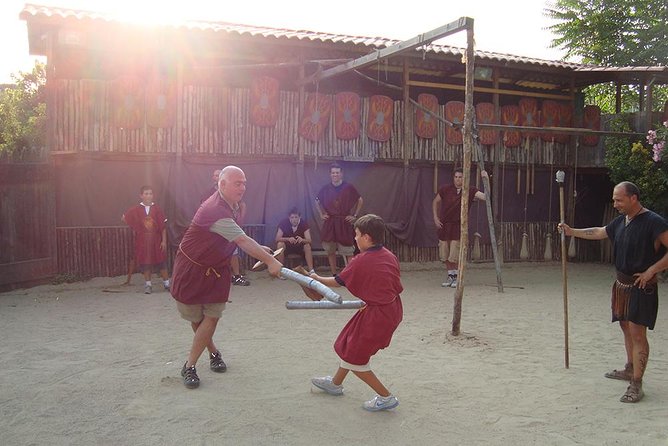
Once the introduction is complete, you dress for the lesson. The provided equipment includes a belt, tunic, leather gloves, and a rudis, the wooden sword used for training.
This costume is not just a photo prop. It helps children understand that gladiator training involved more than swinging a sword. Clothing, protective gear, and the weight and shape of weapons all affect movement. The instructor can use the equipment to explain how Roman fighters prepared for combat.
The costume also gives the group a shared sense of occasion. Adults may feel slightly silly at first, but that is part of the fun. You are not expected to look like a professional reenactor. The instructors know most people arrive with no experience and keep the mood light.
Comfort matters here. Wear clothes that allow you to move and shoes suited to outdoor activity. The class includes warm-ups, agility exercises, sword work, and mock combat, so this is not a good time for restrictive clothing or delicate footwear.
A different sort of day out around Rome:
- Vatican Museums, Sistine Chapel & St Peter’s Basilica Guided Tour
★ 4.5 · 39,149 reviews - Rome: Colosseum, Palatine Hill and Roman Forum Guided Tour
★ 4.8 · 32,814 reviews - Rome: Guided Tour of Colosseum, Roman Forum & Palatine Hill
★ 4.7 · 27,897 reviews - Rome: Colosseum & Forum with Audio Guide App -Optional Arena
★ 4.2 · 24,770 reviews
Learning the basic gladiator moves
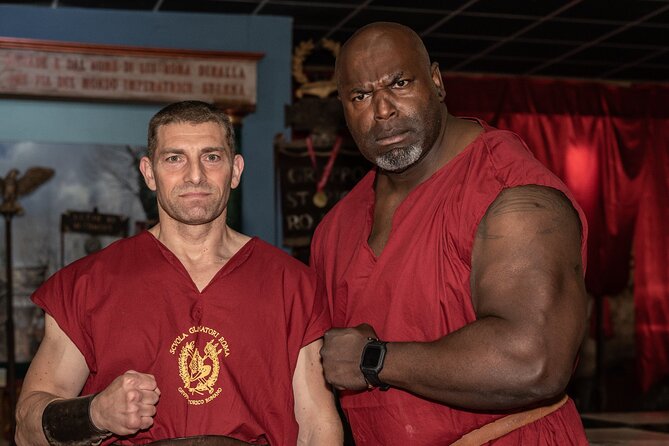
The training starts with warm-ups and basic instruction. You learn simple offensive and defensive movements, including how to use a sword and shield together.
Some sessions also include agility or obstacle-style exercises and a mental game designed to put you into a gladiator mindset. These activities keep children involved while the instructor explains the principles behind the movements.
The class is not presented as a professional combat lesson. The weapons are for training and reenactment, and the emphasis is on participation. You will probably look less like a Roman champion and more like someone trying to remember which foot goes forward. That is exactly why the instructor’s attitude matters.
The best guides correct mistakes without making anyone feel awkward. Patricio, Ivan, Mirkos, and Flama have each been praised for explaining things clearly and keeping children involved. Adults are encouraged to join rather than stand around taking pictures.
That said, adults should set their expectations correctly. One group of people in their 20s still made a fun afternoon of it, but the format is aimed most strongly at children and families. If you want serious historical combat training, this will feel theatrical and basic. If you want to laugh with your family while learning a little Roman history, it fits much better.
The arena battle and optional tournament
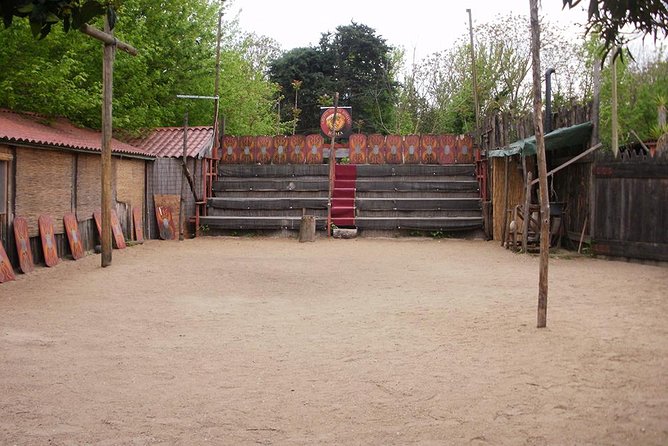
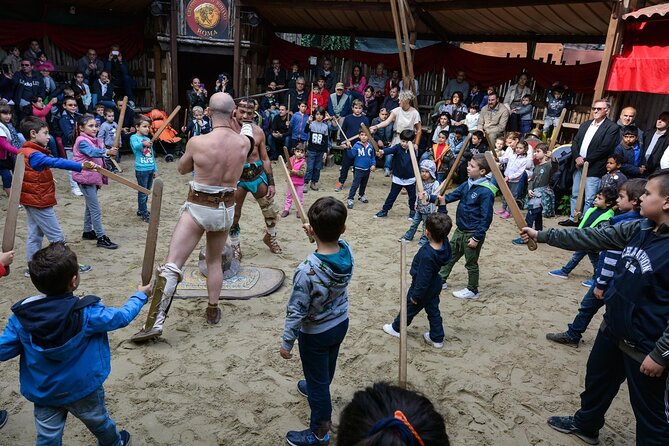
The class ends with mock fights in an arena. You use wooden swords and shields to practice the movements you have just learned, then take part in friendly matches.
This is the moment children tend to remember. The museum provides the context, but the arena supplies the story they can retell later. A final battle can include plenty of cheering, comic defeats, and an optional tournament with a prize for the winner.
You do not have to enter the tournament. If you prefer to watch, friends and family can use the viewing platform. That makes the activity workable for parents who want to observe, for relatives who do not want to participate, or for anyone who needs a break.
Physical contact is part of the mock fighting, and this deserves a clear warning. One group with young children found that the combat became too rough, with several children crying after getting hurt. The activity is intended to be playful, but children do not always judge force well when swords and shields are involved.
Talk with your children before the session. Explain that the aim is controlled play, not winning at any cost. If your child is particularly young, anxious, or sensitive to physical contact, you may prefer to have them watch part of the lesson rather than join every match.
The official minimum age is 6. Some families have brought younger children, but that does not change the stated age requirement or guarantee that the format will suit them. For most children around school age and older, the instructor-led structure helps keep the activity focused.
Everyone receives a certificate of accomplishment at the end. It is a small touch, but children enjoy leaving with proof that they became a Roman gladiator for the day.
How much value do you get for $108.16?
At about $108.16 per person, this is not a cheap add-on. A family of four will spend more than $400 before transportation, so the price deserves a careful look.
You are paying for about two hours of instruction, museum admission, costume and weapon hire, a drink, and the services of an instructor from the Historic Group of Rome. You also get a small-group setting with a maximum of 15 people, though some time slots may be much smaller. In one low-season morning session, only two participants attended, allowing for very personal attention.
Compared with a standard museum ticket, the cost is high. Compared with a private family activity or a full-day guided tour, it can be reasonable, particularly if your children will remember it as the favorite part of Rome.
The value depends on how your family likes to sightsee. If everyone enjoys history but needs a physical break from museums, this offers a useful change of pace. If your group dislikes costumes, role play, or organized games, the price will feel harder to justify.
There is one small point to check on the day. A drink is listed as included, but at least one participant did not receive one. Food and other beverages are not included unless specifically stated. Eat before you arrive, since nearby food options are limited.
Who should book this activity?

This is best for families with children aged 6 and up, especially those already excited by Roman soldiers, shields, swords, or the Colosseum. It also suits adults who enjoy playful reenactments and do not mind looking a little ridiculous for a good cause.
It can work well for mixed-age groups because adults may participate or watch from the platform. The instructors have been praised for making children feel welcome, including children who need extra patience and support.
History fans will appreciate the museum and the explanations of equipment. Active children will appreciate the training and arena match. Adults who want an academic examination of Roman gladiators should choose a museum tour instead, then treat this as entertainment with historical content.
The small-group limit matters. A class of 15 can still feel lively, but it is more manageable than a large commercial activity. In quieter periods, you may get nearly private instruction. Booking about 52 days ahead is the average pattern, so popular times can fill well before your visit.
Practical advice for a smoother visit
A little preparation will make the experience much easier.
- Allow extra travel time. The school is outside the central sightseeing zone, and the driveway entrance is not always obvious.
- Use comfortable clothing and shoes. You will warm up, move around, and handle training weapons.
- Bring mosquito repellent. Several participants found the outdoor area heavy with mosquitoes.
- Eat before class. Snacks may be available, but there are no substantial food options nearby.
- Consider visiting the Colosseum first. Seeing the arena before training helps children understand what the school is recreating.
- Set rules about mock fighting. Tell children to follow the instructor, control their movements, and stop if someone gets hurt.
- Check the drink expectation. It is listed as included, but availability has not been consistent.
- Use the viewing platform if needed. Friends and family can watch without taking part.
Free cancellation is available up to 24 hours before the start time for a full refund. Changes or cancellations made less than 24 hours before the activity are not accepted for a refund, and the cut-off follows local Rome time.
Should you book the Roman Gladiator School?
Book it if you want a lively, hands-on family activity that connects directly to the Colosseum and ancient Roman combat. The combination of a focused museum, Roman clothing, simple training, and an arena battle gives children a role in the story rather than another set of ruins to look at.
I would hesitate only if your group dislikes physical play, has very young children, or wants a serious adult-focused history lesson. The location takes effort, mosquitoes can be troublesome, and the price is substantial.
For families with active children, the cost can be worthwhile because the class fills a gap that many Rome itineraries have: something educational, social, and genuinely fun. Pack repellent, plan the route, and expect a little theatrical silliness. That is where this activity earns its place.
FAQ
Where does the Roman Gladiator School experience take place?
The activity takes place at the Gladiator School of Rome at Via Appia Antica 18, 00179 Roma RM, Italy. It is near the historic Appian Way and outside the central area around the Colosseum.
How long does the gladiator lesson last?
The class lasts approximately two hours and ends back at the meeting point.
What is included in the price?
The experience includes the two-hour gladiator class, instruction from members of the Historic Group of Rome, museum admission, a drink, and use of gladiator clothing and training weapons during the lesson.
What clothing and equipment do participants use?
Participants receive a traditional belt, tunic, leather gloves, and a training sword called a rudis. Training can also include swords and shields.
What is the minimum age?
The minimum age is 6 years old.
Can family members watch without joining?
Yes. Friends and family can watch the class from a viewing platform.
Is transportation included?
No. Hotel pickup and drop-off are not included. The school is near public transportation, and bus 118 is mentioned as an option. Walking from the Colosseum can take about 45 minutes.
Can I cancel for a full refund?
Yes. You can cancel at least 24 hours before the local start time for a full refund. Cancellations or changes made less than 24 hours before the start time are not accepted for a refund.
Just added around Rome
- Rome City, Pantheon, and Trevi Fountain Walking Tour★ 5.0 · 249 reviews
- Rome: Skip the line Vatican Museums & Sistine Chapel Tour★ 4.2 · 251 reviews
- Rome: Tivoli Day Trip with Villa d’Este and Villa Adriana★ 4.5 · 251 reviews
- Transfer Rome center – Ciampino Airport★ 4.5 · 251 reviews
- Rome: Cannondale E-Bike Evening Tour with Optional Dinner★ 4.9 · 251 reviews
- VIP Colosseum, Roman Forum & Palatine Hill & Special Access Sites★ 4.5 · 252 reviews
- Private Vatican Museums Hidden Gems Tour with Optional Pick-Up★ 5.0 · 253 reviews
- Vatican Museums & Sistine Chapel Skip-the-Line Guided Tour★ 4.6 · 254 reviews
Rome Tours, compared.

Vatican: Museums & Sistine Chapel Entrance Ticket
Read our review →
Vatican Museums & Sistine Chapel Tour with Optional Basilica
Read our review →
Colosseum, Roman Forum & Palatine Guided Tour
Read our review →
Vatican Museums, Sistine Chapel & St Peter’s Basilica Guided Tour
Read our review →
Colosseum, Palatine Hill and Roman Forum Guided Tour
Read our review →
Guided Tour of Colosseum, Roman Forum & Palatine Hill
Read our review →
Colosseum & Forum with Audio Guide App -Optional Arena
Read our review →