
Review · WALKING TOURS
Palermo: NO Mafia Walking Tour
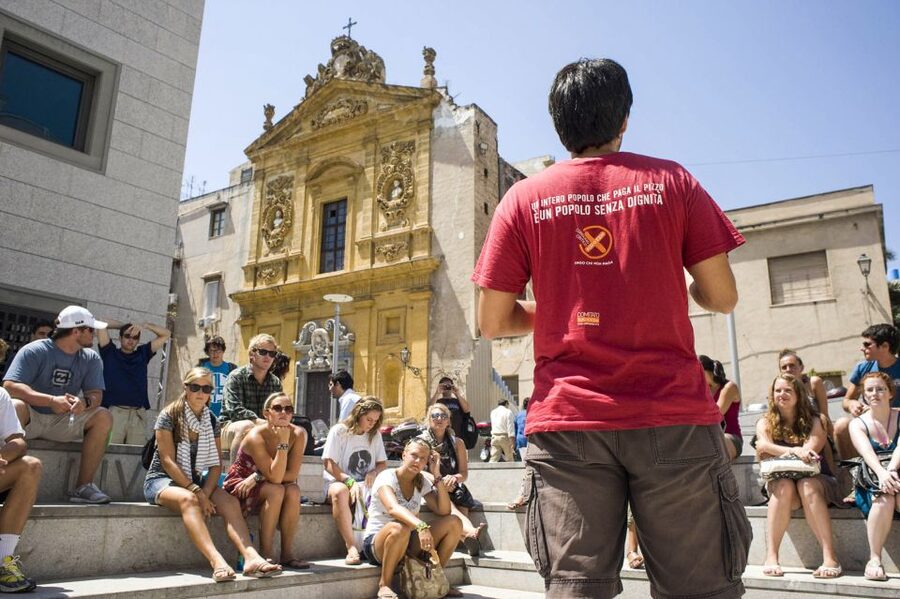
Palermo’s past is not a movie plot. This three-hour walk pairs the city’s best-known sights with a clear account of Mafia power and the citizens who resisted it. I like the way the tour replaces romantic movie myths with real social and political context, and I like that your contribution supports Addiopizzo, Palermo’s anti-extortion movement. The main consideration is that this is a serious, talk-focused experience, not a light sightseeing stroll.
At $40 per person, the value depends on what you want from a city tour. You are paying mainly for a strong local guide and an informed story, not museum admission or inside access to monuments. Guides such as Linda, Valeria, Attilio, Giuseppe, Salvatore, and Marinella have been praised for clear explanations, humor, patience, and passion. Bring comfortable shoes, and expect to spend much of the three hours listening outdoors.
In This Review
- Key points at a glance
- Why this Palermo walk feels different
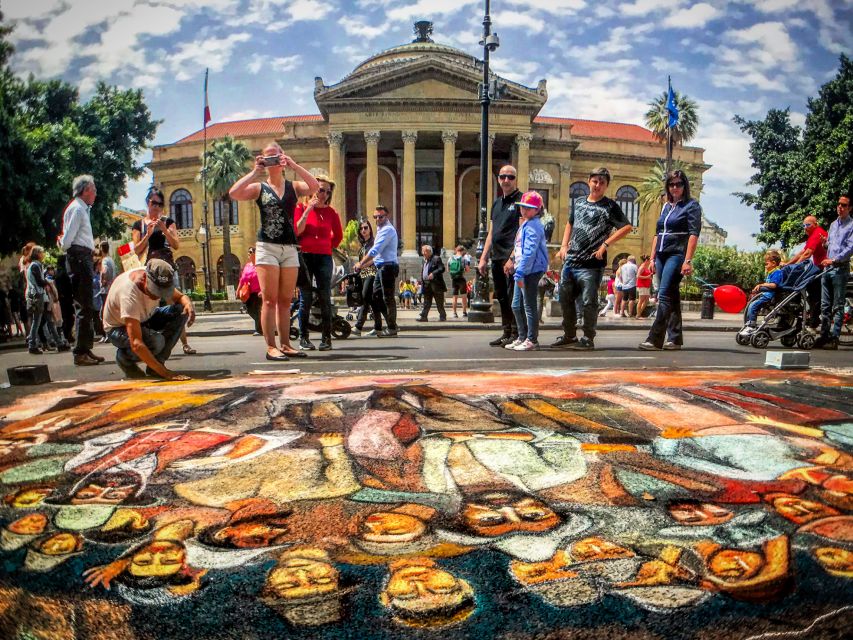
- Teatro Massimo sets the scene
- Il Capo market brings the story down to street level
- Piazza della Memoria remembers the victims
- The orange stickers along the Cassaro
- From Piazza Beati Paoli to the cathedral
- What the guides do best
- Three hours on foot: plan for the format
- Is $40 a fair price?
- Who should book this experience?
- Should you book the Palermo NO Mafia Walking Tour?
- FAQ
- How long does the Palermo NO Mafia Walking Tour last?
- How much does the tour cost?
- Which languages are available?
- What sights are included on the walking route?
- Does the tour include admission to museums or monuments?
- What should I bring?
- Does the booking include any support for the anti-mafia movement?
Key points at a glance
- The story matters more than the photo stops: Palermo’s cathedral, Teatro Massimo, and markets provide the setting, but the guide’s explanation is the main event.
- Piazza della Memoria gives the tour emotional weight: This memorial honors prosecutors and judges killed by the Mafia.
- Orange stickers carry a practical message: Shops displaying them support the ethical consumer campaign pago chi non paga, meaning I pay those who do not pay.
- The tour presents resistance, not Mafia glamour: You learn how citizens, businesses, and civic groups challenged extortion and intimidation.
- The walking route covers central Palermo: Expect Teatro Massimo, Il Capo market, the Cassaro, Piazza Beati Paoli, Palermo Cathedral, city hall, and more.
- Small groups may be available: The activity runs in Spanish, French, English, and Italian, with free cancellation up to 24 hours before departure.
Why this Palermo walk feels different
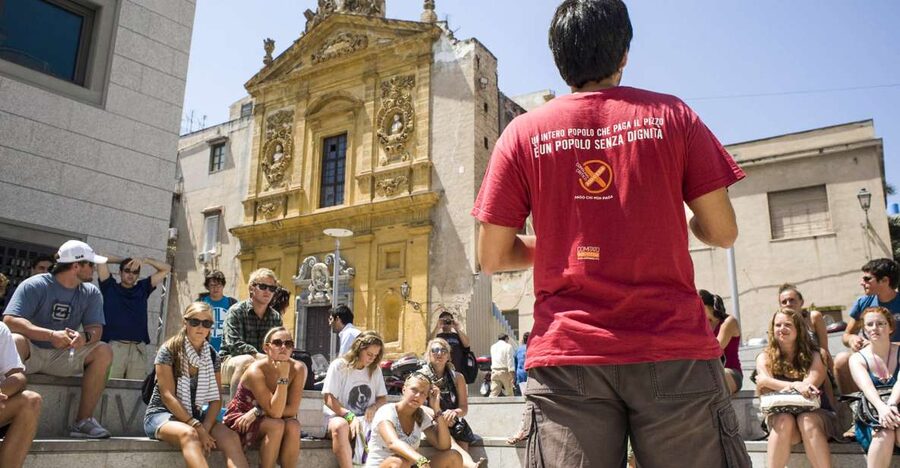
Most introductory tours of Palermo focus on architecture, food, royal dynasties, and church interiors. This one uses those same streets to explain how power worked in everyday life. A shopfront, courthouse memorial, public square, or market lane can become evidence in a larger story about fear, silence, courage, and civic action.
I appreciate that the tour does not treat the Mafia as colorful folklore. Popular films and television often turn gangsters into stylish antiheroes. Here, the emphasis is on extortion, violence, political influence, intimidation, and murder, along with the people who challenged that system.
That makes the experience useful even if you already know the basic Mafia story. You get more than names and dates. The guide connects the past to present-day Palermo and explains why ordinary purchasing choices can support businesses that resist extortion.
The tone is serious, but it is not gloomy from start to finish. Several guides are described as funny and engaging, and the best guides keep the group involved with questions and clear examples. Attilio, in particular, is praised for holding attention for the full three hours. That is no small feat on a walking tour built around difficult material.
More Walking Tours in Palermo
- Palermo Original Street Food Walking Tour by Streaty
★ 5.0 · 2,105 reviews - Palermo: Street Food and History Walking Tour
★ 4.9 · 1,294 reviews - Palermo No Mafia walking tour: discover the Anti-mafia culture in Sicily
★ 5.0 · 1,011 reviews
Teatro Massimo sets the scene
The route includes Teatro Massimo, Palermo’s grand opera house and one of the city’s most recognizable landmarks. You should not expect an entrance or an interior visit, since museum and monument admissions are not included.
Still, the stop helps orient you in central Palermo. The theater is not simply a grand building to photograph. In the context of this tour, a major public landmark becomes part of the city’s story of institutions, authority, and changing public life.
Your guide may spend more time speaking than pointing out architectural details. That is an important expectation to set. If you want a dedicated art-history tour of Teatro Massimo, book a different experience. If you want to understand how Palermo’s landmarks fit into its modern civic story, this stop does its job.
The central location also makes the tour easy to combine with other plans. You might book it early in your stay, then return later for a theater visit, a meal, or a slower look at the surrounding streets.
Il Capo market brings the story down to street level
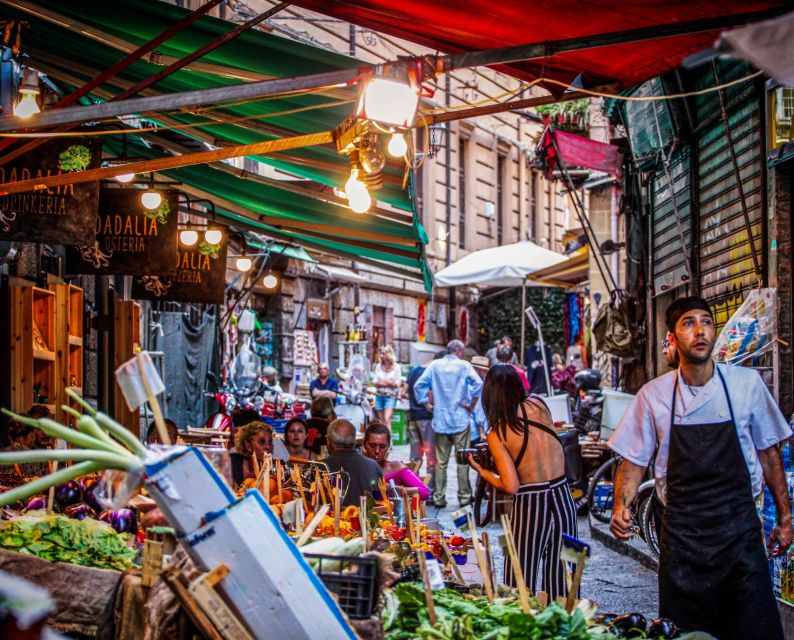
Il Capo is an open-air market, and it gives the walk a more ordinary, lived-in setting. Instead of discussing Palermo only through court cases and famous officials, the guide can relate the subject to businesses, neighborhoods, customers, and daily commerce.
That change of setting matters. Mafia influence is not presented as something locked away in a crime museum. The tour explains how it affected people who ran shops, paid for goods, raised families, and tried to make choices under pressure.
The market also adds sensory variety to a talk-heavy morning or afternoon. You will see one of Palermo’s traditional commercial areas while learning about the city around you. At the same time, a market is an active public place, so the group may pause at the side of the route rather than gather in a quiet lecture room.
If you are easily distracted by crowds, noise, or vendors, this may be less comfortable than a museum talk. For me, that is also part of its value. The subject belongs in the streets where city life continues.
Piazza della Memoria remembers the victims
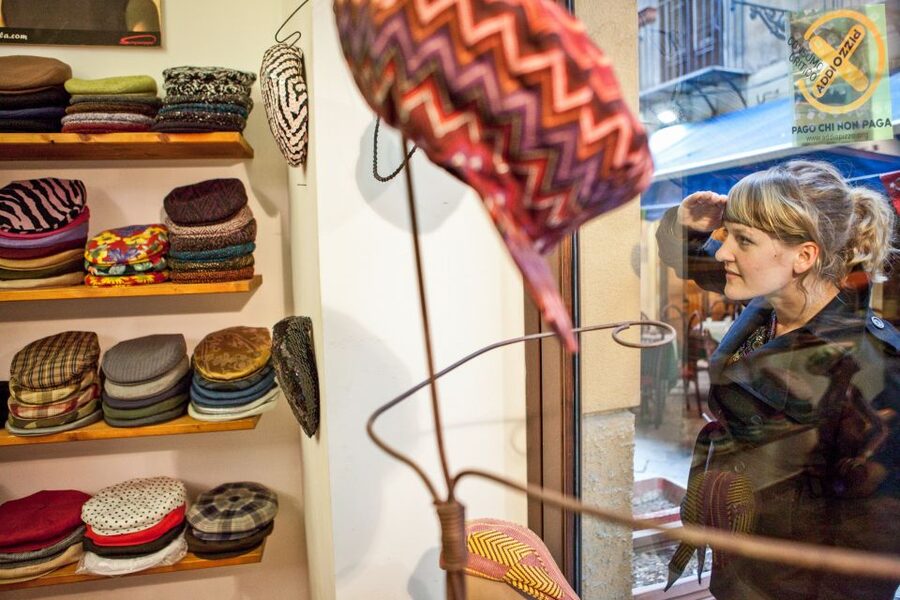
Piazza della Memoria is one of the most important stops. The square serves as a memorial to prosecutors and judges killed by the Mafia, giving the history a human focus.
This is where the tour moves beyond an abstract discussion of organized crime. The guide can place the violence within the lives and work of public servants who tried to uphold the law. The memorial also helps explain why Palermo’s anti-mafia movement is rooted in memory as well as protest.
You should expect this portion to be sober. The experience does not make the deaths into spectacle, and that is one of its strengths. The point is not to collect dramatic crime stories. It is to understand the cost of corruption and the courage required to oppose it.
Several people who took the tour describe gaining greater respect and empathy for Sicilians and for the resistance movement. That response makes sense here. A memorial changes the mood of the walk and reminds you that these events are not distant entertainment.
More guided walks:
- Palermo: Private Custom Walking Tour with Local Guide
★ 4.7 · 661 reviews - Palermo: Street Food Walking Tour with Local Guide & Tasting
★ 4.9 · 632 reviews - Palermo Walking Tour and Street Food
★ 5.0 · 617 reviews - Palermo: UNESCO World Heritage Sites Guided Walking Tour
★ 4.8 · 548 reviews
The orange stickers along the Cassaro
One of the tour’s most practical details appears along the Cassaro, Palermo’s major historic street. Some shops and businesses display orange stickers showing that their owners reject extortion payments and support the ethical consumer campaign pago chi non paga.
This is a small visual sign, but it gives you something concrete to notice after the tour ends. Instead of treating anti-mafia work as the job of police or judges alone, the campaign shows how businesses and customers can take part.
The phrase means I pay those who do not pay. The idea is simple: support businesses that refuse the extortion racket. Your guide explains how this works and why consumer choices can carry civic meaning.
This is also where the included contribution to Addiopizzo matters. The organization is not a decorative add-on to the outing. It connects the tour to an ongoing campaign that works within the community and encourages people to support businesses resisting Mafia pressure.
You may leave with a practical question: how can I make better choices while visiting Palermo? The guide’s food and shopping suggestions can help, since the group receives advice on where to taste Sicilian specialties and how to continue exploring the city.
From Piazza Beati Paoli to the cathedral
The walk continues through places including Piazza Beati Paoli and Palermo Cathedral. These stops add the city’s older layers to a tour that is mainly concerned with modern history and civic life.
Piazza Beati Paoli has a strong connection to Palermo’s popular imagination, and its name is familiar to people interested in local legends and crime stories. On this tour, it is part of a wider explanation rather than a staged Mafia attraction. That distinction is important. You are not being led from one cinematic crime scene to another.
The cathedral offers a different kind of contrast. Its scale and long religious history remind you that Palermo has been shaped by many forces, not only the Mafia. The city’s streets contain layers of Norman, Arab, Spanish, Italian, religious, commercial, and political influence.
Again, no monument entrance is included. You will see the cathedral as part of the walking route, while the guide gives the context. If you want to go inside, allow separate time and check opening details for your visit.
City hall is another useful stop because it brings the discussion back to public government. The tour connects Palermo’s institutions with the broader question of how organized crime gains influence and how citizens work to limit it.
What the guides do best
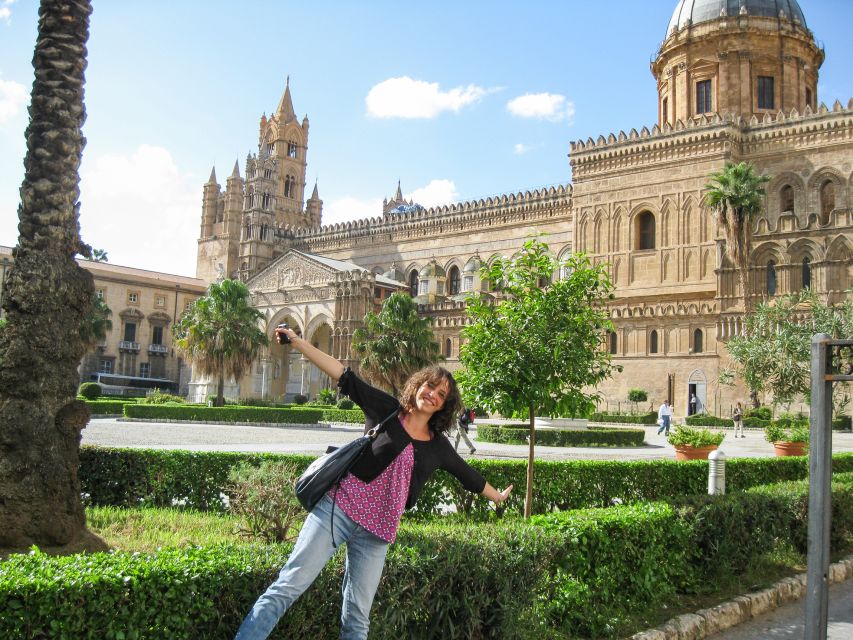
The strongest part of this experience is the guide. Nearly every account points to the same qualities: strong command of the subject, clear English, personal commitment, and an ability to answer questions without losing the thread of the walk.
English-language guiding is frequently praised. One English-speaking group found the guide easy to understand, while another appreciated patient answers to many questions. Spanish, French, English, and Italian are offered, but Polish is not listed among the available languages.
Guide names vary by departure. Linda was praised for her warmth and command of the topic. Valeria was repeatedly singled out for her enthusiasm and connection to the anti-mafia cause. Attilio received praise for his storytelling and humor, while Giuseppe, Salvatore, Marinella, Laura, and Ermes were also described as engaging and well prepared.
That range tells you something useful: the exact personality of your guide will shape the outing. The shared strength is not a scripted celebrity host. It is the human delivery of a subject the guides clearly care about.
The material can be dense. You may hear about Mafia origins, its influence on Sicilian society and politics, major acts of violence, and the growth of resistance movements. Some people will want even more detail, while others may find three hours demanding. The guide’s storytelling skill is what keeps the content moving.
Three hours on foot: plan for the format
The tour lasts three hours and covers Palermo’s historic center. You should wear comfortable shoes and be ready for outdoor walking, standing, and listening.
There may be places to sit in the shade during longer explanations. One guide made a point of offering shaded seating, which can make a real difference in warm weather. Still, the activity is not described as a seated tour, so plan for a fairly active route.
The group format can vary, with a small-group option available. A smaller group usually makes it easier to hear the guide and ask questions, though the exact size depends on the option you book.
The meeting point may change by booking option. Check your confirmation carefully rather than heading straight to Teatro Massimo or another stop on the route.
The tour finishes in the heart of Palermo’s old town. That is convenient. You are already near places to eat, continue sightseeing, or return to a landmark for a closer look. The guide also offers tips for Sicilian food, which adds practical value beyond the formal end of the walk.
Is $40 a fair price?
At $40 per person, this is not the cheapest way to see Palermo’s center. You are not paying for transport, museum tickets, or a meal. You are paying for three hours of guiding, interpretation, and a contribution to Addiopizzo.
That is fair value if you want a serious subject explained well. A basic free walk may show you the cathedral, market, and opera house, but it is unlikely to give you this level of context or connect your spending choices to local resistance work.
The value also rises if you book early in your stay. The tour can help you understand the city before you explore it on your own, and the guide’s restaurant and food advice may improve the rest of your visit.
It is less suitable if your main goal is entering monuments or covering a large number of architectural details. Those admissions are not included, and the tour spends much of its time on history, social conditions, and the anti-mafia movement.
Free cancellation up to 24 hours before departure and the reserve-now, pay-later option reduce the financial risk when your schedule is uncertain. Check availability for the start time that suits you.
Who should book this experience?
I would recommend it to first-time visitors who want a more grounded introduction to Palermo. It suits people curious about Sicily beyond beaches, pastries, churches, and film stereotypes.
It is especially useful for:
- Visitors interested in modern Italian and Sicilian history
- Families with older children or teenagers who can follow a serious discussion
- People who prefer civic stories to standard sightseeing commentary
- Anyone who wants to support ethical local businesses
- Repeat visitors looking for a different view of Palermo
- Travelers who enjoy asking questions and listening for long stretches
The tour can also work for people who know little about the Mafia. You do not need a background in Sicilian politics to follow it. The guide builds the story through places, people, and events.
I would hesitate to recommend it to someone seeking a relaxed, purely visual walk. The subject includes violence, murder, corruption, and intimidation. It is handled with purpose, but it is not carefree entertainment.
Should you book the Palermo NO Mafia Walking Tour?
Book it if you want Palermo to make more sense. The buildings and markets are worthwhile, but the lasting value comes from understanding the forces that shaped daily life and the civic movement pushing back.
You will not be taken on a parade of glamorous crime scenes. Instead, you will hear a local account of harm, memory, resistance, and the choices still available to citizens and visitors. At $40, the tour is a good buy for a strong guide, a three-hour walk through central Palermo, and support for Addiopizzo.
I would choose this early in a Palermo visit, wear good shoes, and leave room afterward for a meal recommended by the guide. If you want only monument interiors, skip it. If you want a thoughtful and memorable way to see the city, book it.
FAQ
How long does the Palermo NO Mafia Walking Tour last?
The tour lasts three hours and takes place on foot through Palermo’s historic center.
How much does the tour cost?
The listed price is $40 per person.
Which languages are available?
The tour is offered in Spanish, French, English, and Italian.
What sights are included on the walking route?
The route includes Teatro Massimo, Il Capo open-air market, Piazza della Memoria, the Cassaro, Piazza Beati Paoli, Palermo Cathedral, and city hall.
Does the tour include admission to museums or monuments?
No. Entrance to museums and monuments is not included.
What should I bring?
Comfortable shoes are recommended because the experience is a three-hour walking tour.
Does the booking include any support for the anti-mafia movement?
Yes. The price includes a contribution to the Addiopizzo charitable organization.
Just added around Palermo
- Palermo Sicilian Street Food Tour: Small Group with a Local★ 4.8 · 259 reviews
- Discover the Charm of Palermo: A 3-Hour UNESCO Sites Walking Tour★ 5.0 · 264 reviews
- Palermo, tour tra monumenti unici e mercati colorati★ 4.9 · 271 reviews
- Sicilian Cooking Class★ 5.0 · 289 reviews
- From Palermo: Villa Romana and Valley of the Temples Trip★ 4.6 · 294 reviews
- Palermo: Norman Palace and Palatine Chapel Tour with Tickets★ 4.7 · 298 reviews
- Discover Palermo in 3 hours. Art, history, markets and street food★ 5.0 · 352 reviews
- Palermo: Guided City Walking Tour w/Customizable Itinerary★ 4.6 · 390 reviews
Walking Tours, compared.

Guided Walking Tour & Last Supper Visit with Ticket
Read our review →

Rialto Bridge & Offbeat Unusual Venice Walking Tour
Read our review →

Private 3 hrs Venice Tour: St Mark’s, Walking tour & Boat tour
Read our review →

Skip the line: Uffizi and Accademia Small Group Walking Tour
Read our review →Browse the lists this tour appears in