
Review · WALKING TOURS
Palermo No Mafia walking tour: discover the Anti-mafia culture in Sicily
Palermo tells its hardest stories in the open. This three-hour walk links the city’s major sights with its anti-mafia movement, turning familiar places into lessons about courage, corruption, and civic change. I like the small group of no more than 15 people, and I like that part of the price supports Addiopizzo, a local organization working against extortion. The main caution is simple: this is not a general history or art tour, so expect a focused message rather than a broad survey of Palermo.
The best guides bring the subject close to home. Guides such as Sylvia, Valeria, Ermes, Federico, and Marienella have been praised for clear explanations and personal passion, while the tour’s route gives you an easy introduction to the old center. You should also expect periods of standing while the guide speaks, which one participant found less comfortable than walking and listening.
In This Review
- Key things to know before you go
- What the Palermo No Mafia tour is really about
- Starting beneath the Teatro Massimo
- Meeting the faces on the Wall of Legality
- Hearing the market’s complicated story
- Remembering judges at Palazzo di Giustizia
- The cathedral and the question of the Church
- Buying gelato with a purpose
- Palazzo Pretorio and the city’s political past
- Why the guides make or break the experience
- The honest drawbacks: what this tour does not try to do
- Is $39.30 a fair price?
- Who should book this walk?
- Should you book the Palermo No Mafia walking tour?
- FAQ
- How long does the Palermo No Mafia walking tour last?
- How much does the tour cost?
- What language is the tour offered in?
- Where does the tour begin?
- Where does the tour end?
- What is included in the price?
- Is lunch included?
- How large is the group?
- What should I bring for the walk?
- Can I cancel for a full refund?
Key things to know before you go
- The tour begins at Teatro Massimo: Palermo’s grand opera house provides both a cinematic reference and a symbol of the city’s renewal.
- The focus is resistance, not Mafia glamour: The guide explains how citizens, officials, shopkeepers, and community groups have pushed back against organized crime.
- You visit several meaningful memorials: The Wall of Legality and Piazza della Memoria put real faces and names to the story.
- You support an anti-extortion campaign: The price includes a small contribution to Addiopizzo, and you can buy gelato from a business that refuses to pay pizzo.
- The route ends at Fontana Pretoria: You finish in central Palermo, close to restaurants, sights, and the next part of your day.
- Comfortable shoes matter: This is a three-hour city walk, with standing at several stops and little shelter in bad weather.
What the Palermo No Mafia tour is really about
The name can sound like a standard Mafia-themed sightseeing trip. It is not. The purpose is to explain the anti-mafia movement and the people who resisted extortion, political corruption, intimidation, and violence.
That difference matters. You will hear about Cosa Nostra, but the guide does not treat it as a movie subject or a source of colorful folklore. The emphasis is on the damage done to Palermo and on the civic effort to reduce its grip. You learn how the city, courts, churches, businesses, and grassroots groups have responded.
Several strong experiences describe the tour as a way to correct movie myths. You may know the Mafia mainly through The Godfather, but this walk shifts the attention from fictional characters to judges, prosecutors, shopkeepers, activists, and ordinary families. The result is serious, sometimes sad, and far more useful than a tour built around gangster legends.
The route also gives you a helpful first look at Palermo’s old center. You pass the cathedral, markets, city hall, and the Cassaro, so the tour works well early in a stay. It gives you a social and political frame for places you may later revisit on your own.
More Walking Tours in Palermo
- Palermo: NO Mafia Walking Tour
★ 4.8 · 2,431 reviews - Palermo Original Street Food Walking Tour by Streaty
★ 5.0 · 2,105 reviews - Palermo: Street Food and History Walking Tour
★ 4.9 · 1,294 reviews
Starting beneath the Teatro Massimo
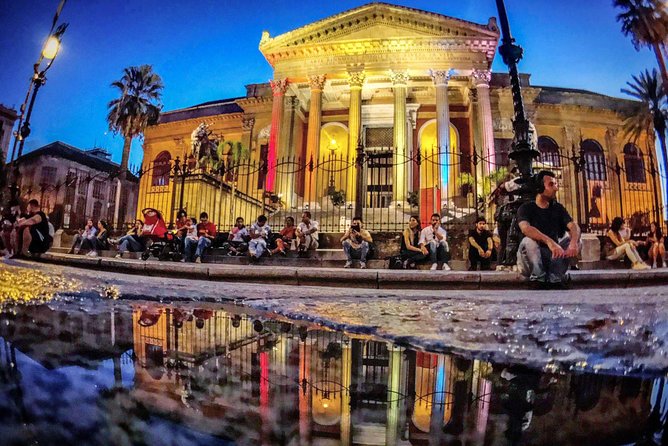
Meet at Piazza Giuseppe Verdi, outside Teatro Massimo. The opera house gets about 30 minutes, and it is a smart opening point because the building carries two very different stories.
You may recognize it as the location of the dramatic final scene in The Godfather III. The guide uses that connection as a doorway, then moves beyond cinema. Teatro Massimo also represents Palermo’s effort to recover after decades marked by Mafia violence.
The building itself is one of the city’s major sights, but this tour does not function as an interior visit. Admission is free because the stop is for the outside setting and the explanation. If you want to see more of the opera house, plan a separate visit.
This first stop helps set the tone. You are not being promised a collection of movie locations. Instead, you are shown how a famous public monument can carry memories of decline, violence, and renewal at the same time.
Meeting the faces on the Wall of Legality
The Wall of Legality is one of the most direct stops on the route. At about 70 meters long, it is described as Italy’s longest wall painting and includes some of the best-known victims of the Mafia.
The guide gives you time to look at the faces and take photographs. That may sound like a small part of a three-hour walk, but it changes the scale of the subject. Names in a lecture can blur together. A large public mural makes the people visible and gives the story a place in the city.
This is also an urban renewal project, so the wall connects memory with the present condition of Palermo. The city is not only marking past violence. It is using public space to teach, remember, and encourage a different civic identity.
Take a moment here rather than treating it as a quick photo stop. The tour’s strongest moments come when you connect the guide’s explanation with the faces in front of you.
Hearing the market’s complicated story
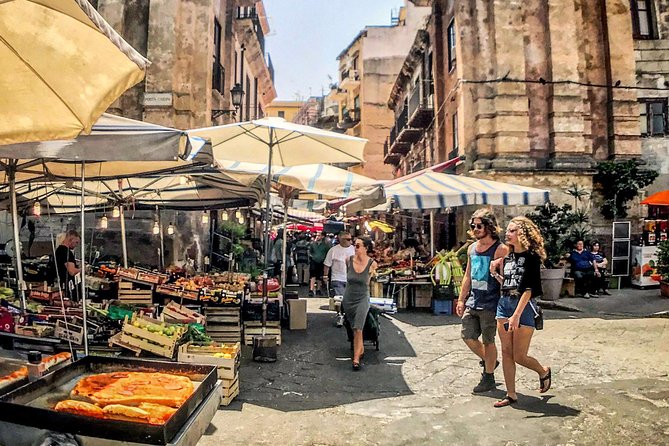
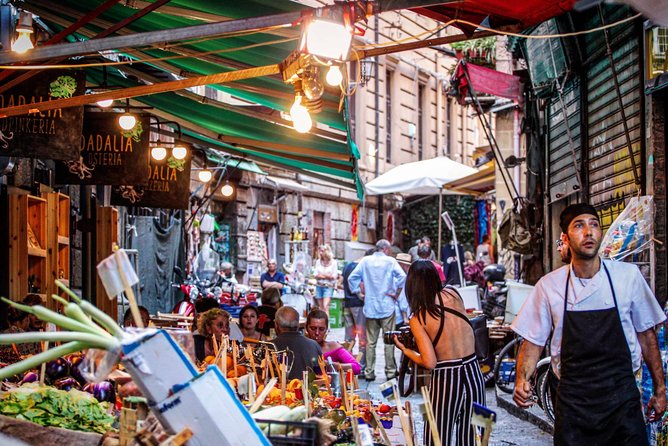
The open-air market is one of the route’s most atmospheric sections. It is colorful, loud, and full of everyday activity, but the guide uses it to discuss the relationship between the Mafia and shopkeepers.
This is where the subject becomes practical. Extortion, or pizzo, was not an abstract problem hidden somewhere outside daily life. It affected businesses and shaped the choices available to people trying to earn a living. The market gives you a setting for understanding how organized crime can operate through pressure and fear rather than open drama.
The guide also explains the importance of resistance. The point is not to label an entire neighborhood or suggest that every business had the same experience. You are looking at the social and economic conditions that allowed extortion to take hold, and at the courage needed to reject it.
Expect some noise and movement here. This is still a working market, not a quiet museum room. If you prefer long uninterrupted explanations, the setting may feel distracting. If you want the subject tied to ordinary city life, it is one of the more useful parts of the walk.
More guided walks:
- Palermo: Private Custom Walking Tour with Local Guide
★ 4.7 · 661 reviews - Palermo: Street Food Walking Tour with Local Guide & Tasting
★ 4.9 · 632 reviews - Palermo Walking Tour and Street Food
★ 5.0 · 617 reviews - Palermo: UNESCO World Heritage Sites Guided Walking Tour
★ 4.8 · 548 reviews
Remembering judges at Palazzo di Giustizia
At Piazza della Memoria, beside Palermo’s Court House, the guide discusses the judges and prosecutors killed by the Mafia. The memorial gives the tour a sober pause after the market.
This stop shows the role of the courts in the wider anti-mafia struggle. You hear about people who took public responsibility in a dangerous setting, rather than seeing the issue only through the actions of criminal groups. The setting near the courthouse makes the connection clear: law, justice, and public service are central to Palermo’s resistance.
The stop lasts about 15 minutes. Much of the experience here comes through the guide’s explanation, so the quality of the presentation matters. Strong guides such as Sylvia, Ermes, and Federico have been praised for speaking with conviction and answering questions carefully. English is the offered language, and the experience has earned a 4.8 rating from 1,011 reviews, with 95 percent recommending it.
Still, do not expect a museum presentation or a long list of exhibits. This is an outdoor memorial stop. You listen, look, and consider the human cost behind the legal fight.
The cathedral and the question of the Church
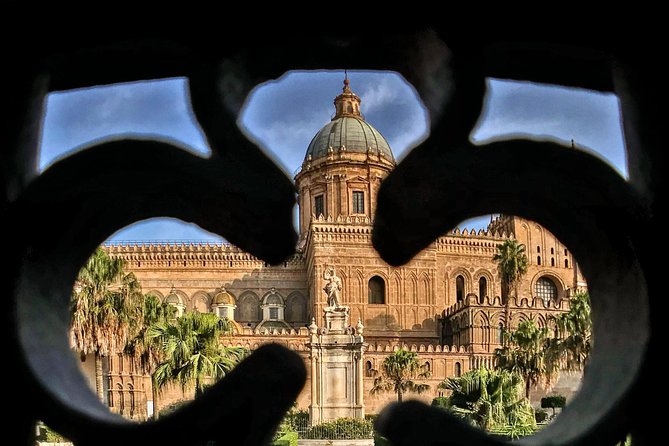
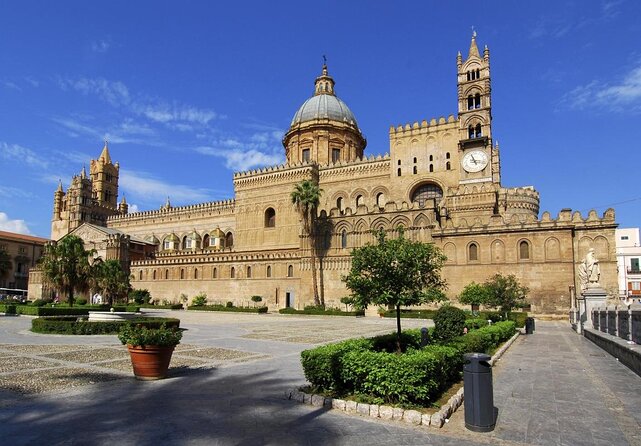
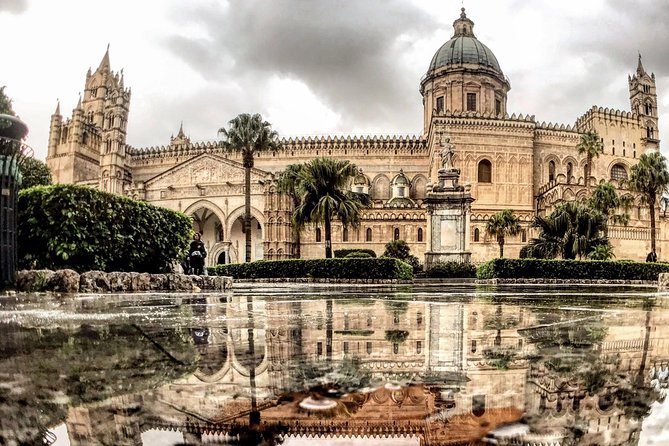
In front of Palermo Cathedral, the guide turns to the relationship between the Catholic Church and the Mafia. The cathedral is a spectacular Arab-Norman monument, but on this walk it serves as a place to discuss institutions and moral responsibility.
That makes this stop different from a standard cathedral visit. You will not get a full architectural tour or an extended explanation of mosaics, chapels, and construction phases. The focus is on how the Church related to Mafia power, and how religious and civic institutions responded.
This is a good example of why you should choose the tour for its theme. If you want to understand the cathedral’s art, book a dedicated visit or use a guidebook. If you want to hear how a major institution fits into Palermo’s anti-mafia story, this brief explanation adds a layer you might otherwise miss.
The stop is about 15 minutes, so you may want to return to the cathedral later when you have more time to explore inside.
Buying gelato with a purpose
Along the Cassaro, the walk stops at Cappadonia Gelati. Look for the orange sticker on the window. It identifies businesses that have refused to pay pizzo and joined Addiopizzo’s mafia-free critical consumption campaign.
Here the tour turns ethical shopping into something concrete. You can buy gelato from a business that has taken a public position against extortion. It is a small purchase, but it shows how the anti-mafia movement can reach beyond courts and memorials into daily decisions.
The stop lasts about 15 minutes, and admission is free. Your gelato is not included, so bring a little spending money if you want to participate. You are not required to buy anything, but this is one of the most tangible ways to support the idea behind the tour during the walk.
The price also includes a small solidarity contribution to Addiopizzo. That improves the value of the experience because your booking supports the same local effort being explained along the route.
Palazzo Pretorio and the city’s political past
The final major stop is Palazzo Pretorio, Palermo’s city hall, in Piazza Pretoria. The building has been connected with both corrupt politicians and officials who fought the Mafia.
That contrast gives the walk a fitting final lesson. Palermo’s story is not a simple battle between good people and bad people. Public institutions can be compromised, but they can also become places where change is pursued. The guide helps you consider how corruption and resistance can exist within the same civic structure.
The tour then ends at Fontana Pretoria, in the heart of the old center. This is convenient because you are already near many of Palermo’s central sights and places to eat. The guide offers suggestions for continuing your visit and finding Sicilian specialties, though lunch itself is not included.
Why the guides make or break the experience
The route is important, but the guide carries much of the tour. The strongest descriptions praise guides who are passionate, articulate, and able to connect past events with the current anti-mafia movement.
Sylvia receives repeated praise for her commitment and clear command of the subject. Valeria is noted for explaining how Mafia influence affected her own life, as well as the lives of people close to her. Marienella is praised for responding well to questions, while Ermes left such a strong impression that the visitor later went to a museum.
These details tell you what to look for. This is not a tour where you simply walk from monument to monument and take photographs. You spend time listening to interpretation, asking questions, and considering how the issue continues today.
The guide may also speak about the way anti-mafia work helps children and communities. One of the tour’s aims is to discourage the appeal of organized crime among young people, especially in areas where poverty and limited opportunity can make criminal power look attractive.
Because guides differ, the tone may vary slightly from one departure to another. The shared structure remains focused on civic resistance, but the stories and emphasis may reflect the person leading your group.
The honest drawbacks: what this tour does not try to do
The main limitation is also the reason to book it. You will not receive a broad historical walking tour of Palermo. One person found some repetition and wanted more historical context, while another noted that there was a fair amount of standing during explanations.
That criticism is fair. The tour visits famous sights, but those sights are used as stages for the anti-mafia story. If you want architecture, ancient history, street food, and major landmarks all explained in equal measure, choose a general city tour instead.
The group size helps, but the format still includes listening while standing outdoors. A suggestion was made to use headphones and keep walking during the commentary. At present, you should be ready to pause at the stops rather than expect nonstop movement.
Rain can make the experience less pleasant. Bring an umbrella and a waterproof jacket if the forecast looks poor. Comfortable shoes are a good idea in all conditions, and most people can participate without health restrictions.
Is $39.30 a fair price?
At $39.30 per person, this is not the cheapest way to walk around Palermo. You are paying for a three-hour English-language tour, a local guide, a small group capped at 15, and access to a focused subject that is difficult to understand from a map alone.
The value is strongest if you care about responsible tourism and want your sightseeing to support a local cause. The included contribution to Addiopizzo is modest, but it connects your booking with an active anti-extortion organization. Buying from a participating business such as Cappadonia Gelati gives that idea a direct, local form.
The value is weaker if you mainly want to see landmarks quickly. You could pass the cathedral, city hall, and Teatro Massimo on your own, but you would miss the connections among them. You would also miss the memorials, the market discussion, and the explanation of how Palermo’s anti-mafia movement works.
Free cancellation is available if you cancel at least 24 hours before the start time. Changes or cancellations made less than 24 hours ahead are not accepted for a refund.
Who should book this walk?
I would choose this tour early in a Palermo visit if you want to understand the city beyond its food, churches, and grand buildings. It suits adults interested in modern Italian society, civic action, justice, and the difference between Mafia stereotypes and real life.
It can also work for families. One review describes a pleasant and moving experience with a four-year-old, though the serious topic and periods of standing may not suit every young child.
The walk is a particularly good match for you if:
- You want an English-language introduction to the anti-mafia movement.
- You are tired of Mafia stories being treated as entertainment.
- You prefer a small group to a large bus tour.
- You want to support local businesses that reject extortion.
- You plan to visit Palermo’s old center and want helpful suggestions for the rest of the day.
You may want something else if your priority is a detailed study of Arab-Norman architecture, a food-focused walk, or a complete chronological history of Palermo.
Should you book the Palermo No Mafia walking tour?
Yes, if you want a serious and human introduction to Palermo’s anti-mafia culture. The best reason to book is not the movie connection at Teatro Massimo. It is the way the route shifts your attention to victims, judges, shopkeepers, activists, and local institutions that have worked to resist organized crime.
Go with comfortable shoes, allow for standing, and bring rain protection if needed. Start with an open mind, ask questions, and consider returning to the cathedral or other sights after the tour for a fuller look.
At $39.30, the tour is good value for a focused three-hour experience with a small group and a local cause behind it. It is not Palermo in one tidy package. It is something more specific: a thoughtful explanation of how a city confronts a painful part of its present and past.
FAQ
How long does the Palermo No Mafia walking tour last?
The tour lasts approximately three hours.
How much does the tour cost?
The listed price is $39.30 per person.
What language is the tour offered in?
The tour is offered in English.
Where does the tour begin?
It begins at P.za Giuseppe Verdi, 455, 90133 Palermo, Italy, near Teatro Massimo.
Where does the tour end?
The walk ends at Fontana Pretoria, Piazza Pretoria, in Palermo’s old town center.
What is included in the price?
A local guide and a small solidarity contribution to the Addiopizzo local NGO are included.
Is lunch included?
No. Lunch is not included. You may have the opportunity to buy gelato at Cappadonia Gelati during the walk.
How large is the group?
The tour has a maximum of 15 people.
What should I bring for the walk?
Comfortable shoes are suggested. In rainy weather, bring an umbrella and a dry jacket.
Can I cancel for a full refund?
Yes, if you cancel at least 24 hours before the experience start time. Cancellations made less than 24 hours before the start time are not refunded.
Just added around Palermo
- Palermo Sicilian Street Food Tour: Small Group with a Local★ 4.8 · 259 reviews
- Discover the Charm of Palermo: A 3-Hour UNESCO Sites Walking Tour★ 5.0 · 264 reviews
- Palermo, tour tra monumenti unici e mercati colorati★ 4.9 · 271 reviews
- Sicilian Cooking Class★ 5.0 · 289 reviews
- From Palermo: Villa Romana and Valley of the Temples Trip★ 4.6 · 294 reviews
- Palermo: Norman Palace and Palatine Chapel Tour with Tickets★ 4.7 · 298 reviews
- Discover Palermo in 3 hours. Art, history, markets and street food★ 5.0 · 352 reviews
- Palermo: Guided City Walking Tour w/Customizable Itinerary★ 4.6 · 390 reviews
Walking Tours, compared.

Guided Walking Tour & Last Supper Visit with Ticket
Read our review →

Rialto Bridge & Offbeat Unusual Venice Walking Tour
Read our review →

Private 3 hrs Venice Tour: St Mark’s, Walking tour & Boat tour
Read our review →

Skip the line: Uffizi and Accademia Small Group Walking Tour
Read our review →Browse the lists this tour appears in