
Review · MILAN TOURS
Milan: Sforza Castle and Michelangelo’s Pietà Rondanini Tour
Milan’s quiet masterpiece awaits. This 1.5-hour tour brings you into Sforza Castle, one of the city’s great Renaissance landmarks, then focuses on Michelangelo’s final sculpture, the Pietà Rondanini. I especially like the way the tour connects art with Milanese power, from the Visconti and Sforza families to Leonardo da Vinci’s long service at the court.
I also like the small-group format and the sharp focus on the castle’s key sights. Guides such as Giorgio, Fabio, Simone, Lorella, and Stefania have been praised for making complicated history easy to follow. The main drawback is time: 90 minutes is enough for a guided introduction, but not enough to study every room and museum at leisure.
At $47 per person, this is a sensible choice if you want context rather than simply walking through the courtyards on your own. You should know that the meeting point is outside the castle, beneath the Filarete clock tower, and that the tour may move briskly through some museum areas.
In This Review
- Key points to know before booking
- Why Sforza Castle deserves time in Milan
- Meeting the guide outside the Filarete Tower
- Michelangelo’s Pietà Rondanini: the emotional heart of the tour
- The Ducal Courtyard and Renaissance court life
- Cortile della Rocchetta and the castle’s working side
- Leonardo da Vinci’s long Milanese chapter
- What the museum portion is like
- The guides are the main value
- Is $47 good value for 90 minutes?
- Who should book this castle tour?
- Should you book the Sforza Castle and Pietà Rondanini tour?
- FAQ
- How long is the Sforza Castle and Pietà Rondanini tour?
- How much does the tour cost?
- What is included in the price?
- Where do I meet the guide?
- How do I recognize the tour guide?
- In which languages is the tour offered?
- Are headphones provided?
- Is the tour wheelchair accessible?
- Can I book a private group?
- Are hotel pickup, food, or drinks included?
- Can I cancel for a full refund?
- Do I have to pay at the time of booking?
Key points to know before booking
- Michelangelo’s unfinished final work: The Pietà Rondanini is the emotional center of the visit, with a raw, elongated style very different from the polished perfection of his earlier sculptures.
- A castle with a Leonardo connection: Leonardo da Vinci lived and worked at Sforza Castle for nearly 20 years as an engineer, architect, and court artist.
- A compact Renaissance history lesson: You’ll hear how the Visconti and Sforza dynasties shaped Milan’s politics, architecture, and artistic life.
- Small groups can make a real difference: Some departures have been as small as three, four, or six people, while private groups are also available.
- The tour covers selected highlights: You’ll see the Ducal Courtyard, the Cortile della Rocchetta, museum displays, and the Pietà Rondanini, but you should not expect a full-day museum visit.
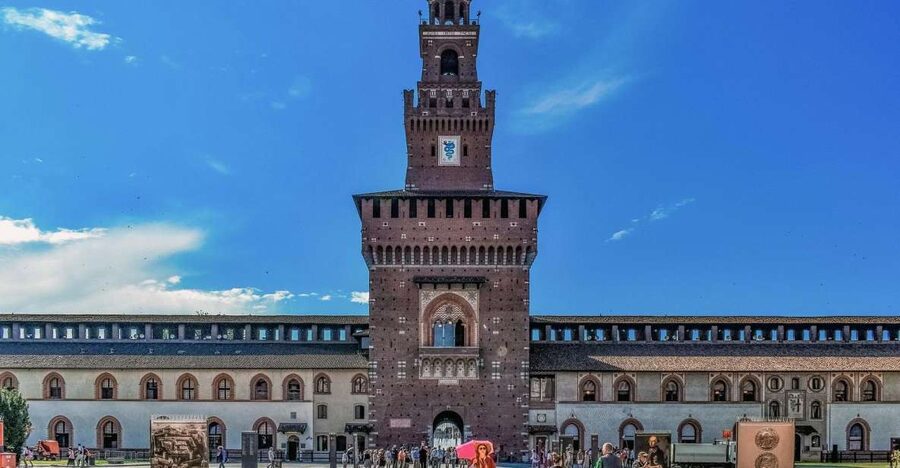
- Practical meeting point: Find the guide in Piazza Castello, outside the castle, under the Filarete clock tower. Look for the purple Hidden Experiences flag or board.
Why Sforza Castle deserves time in Milan
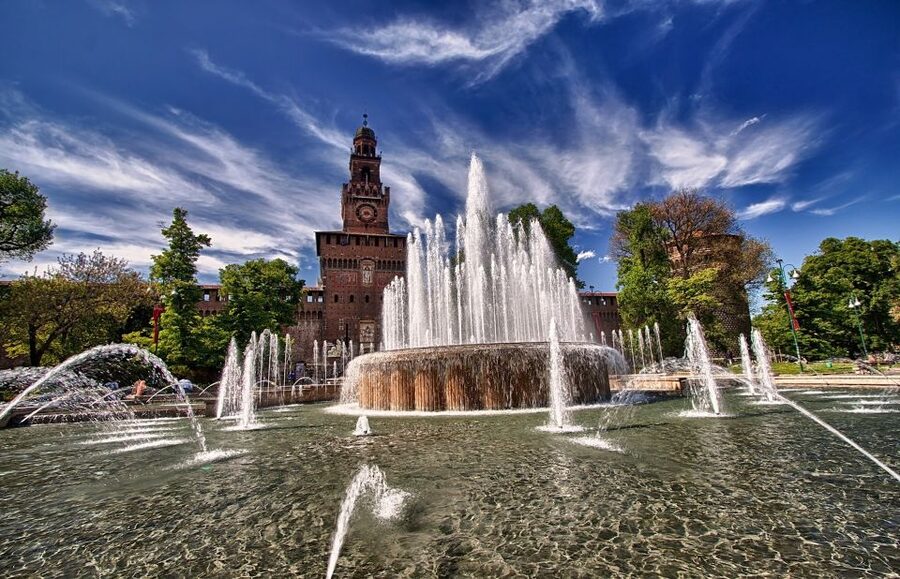
Milan is easy to reduce to the Duomo, designer shops, and sleek modern streets. Sforza Castle gives you another Milan, one shaped by dukes, military ambition, court politics, and Renaissance art.
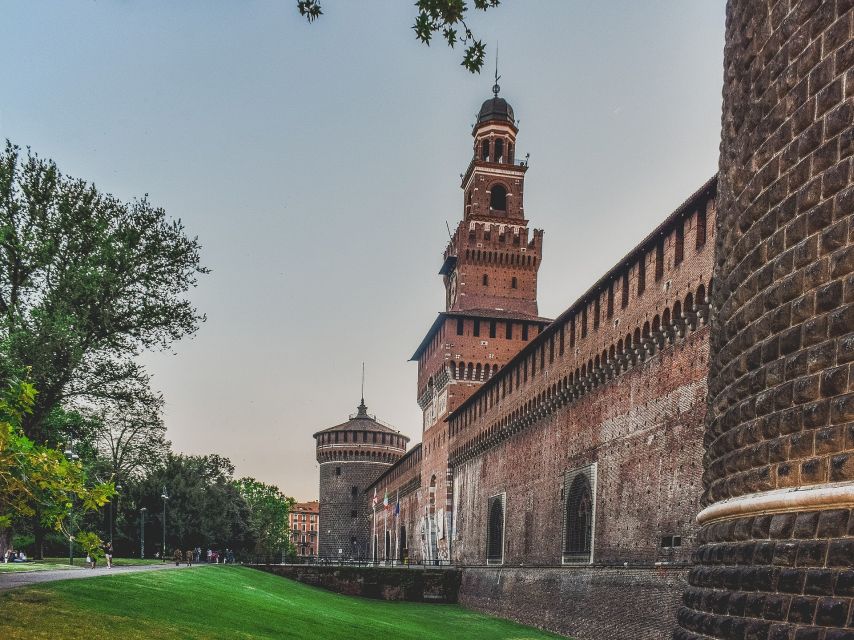
The fortress is only a short distance from the Duomo, yet its scale changes the mood. Thick walls, towers, courtyards, and broad open spaces tell you that this was not built as a pretty royal residence alone. It was a statement of control.
The castle began as a medieval citadel connected with the Visconti family. The Sforza dynasty later made it their home and turned it into a major court. That shift matters. You are not just looking at defensive stonework. You are seeing how Milan’s rulers used architecture to project authority and attract artists.
A guide helps here because the castle can feel like a series of grand walls without a clear story. The best guides give you a timeline that makes the building easier to read. You learn how military power, family rivalries, art, and court life all met in the same place.
A few more reviews worth comparing before you book
- Milan: Cathedral and Duomo’s Terraces Entrance Ticket
★ 4.6 · 61,054 reviews - Milan: Da Vinci’s Last Supper Guided Tour
★ 4.7 · 10,143 reviews - Milan: Science and Technology Leonardo da Vinci Museum Entry
★ 4.5 · 7,169 reviews
Meeting the guide outside the Filarete Tower
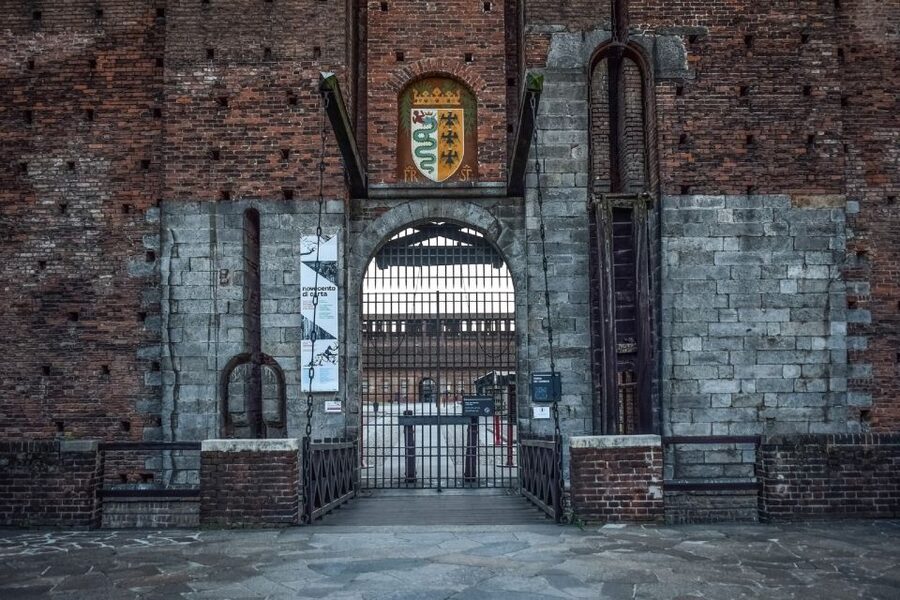
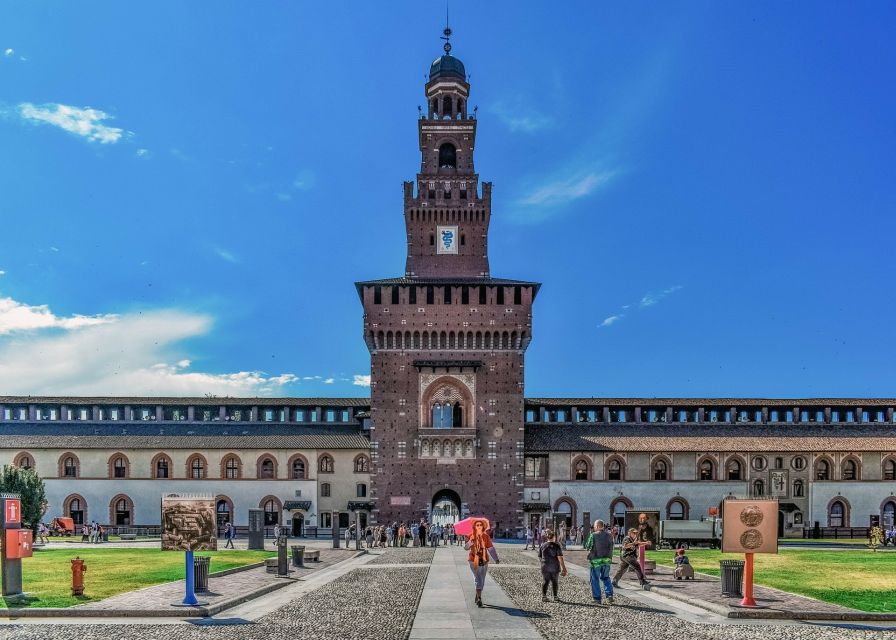
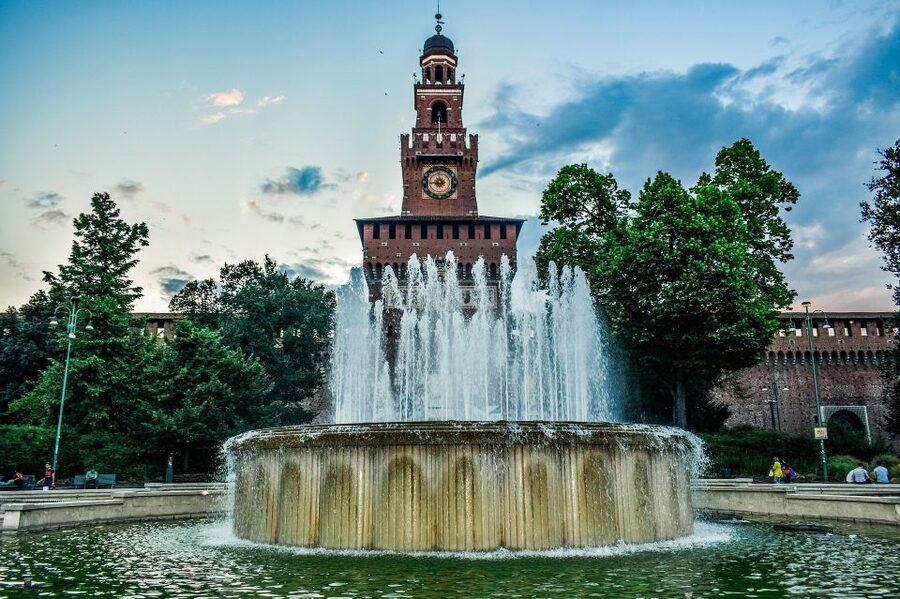
Your meeting point is in Piazza Castello, in front of Sforza Castle and not inside the courtyards. Look for the guide under the Filarete clock tower, marked by a purple Hidden Experiences flag or board.
This detail is worth taking seriously. The castle has large open spaces and several entrances, so going inside first can leave you searching for the group. Plan to arrive with enough time to identify the guide before the start.
The Filarete Tower is the castle’s most obvious landmark and a useful reference point. It also gives you an immediate sense of the building’s scale. Once the group is assembled, you enter with the admission arranged by the tour.
The experience is offered in Italian, English, German, French, and Spanish. It is wheelchair accessible, and a private group can be requested. Hotel pickup and drop-off are not part of the standard price, though an optional service is available for an added charge.
Michelangelo’s Pietà Rondanini: the emotional heart of the tour
The Pietà Rondanini is not the Michelangelo you might expect. It lacks the smooth, muscular certainty of the David or the finished grandeur of the Pietà in St. Peter’s Basilica. Instead, you see two elongated figures emerging from a marble block, with rough surfaces and unfinished passages still visible.
That unfinished quality is not a minor detail. It is the reason the sculpture feels so direct. Michelangelo continued working on it until only a few days before his death at age 89. The work became a final meditation on suffering, death, and spiritual release.
The subject is the Virgin Mary supporting the body of Christ. Yet the forms seem to merge rather than pose in a neatly arranged scene. The figures are thin and almost weightless, and the marble retains the marks of the working process.
Your guide’s explanation is especially useful here. Without context, you might wonder why this sculpture appears so unlike the anatomical precision associated with Michelangelo. The tour explains that the roughness and stretched proportions express a different artistic aim. This is less about displaying physical perfection and more about conveying grief and spiritual urgency.
I would give this section your full attention. It is the part of the experience that benefits most from a guide’s interpretation. You can look at the statue independently, but the background about Michelangelo’s age, working process, and changing style gives the sculpture greater force.
The museum setting also creates a more focused encounter than a quick glance at a famous monument in a crowded church. You are there specifically to consider this final work. The tradeoff is that the visit is guided and timed, so you may not have unlimited time to linger afterward.
The Ducal Courtyard and Renaissance court life
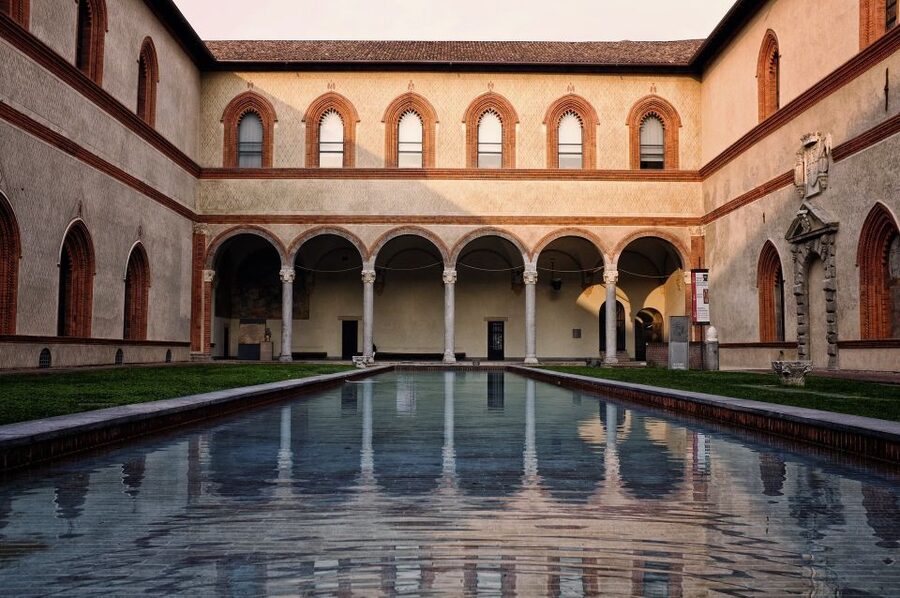
After the Pietà Rondanini, the tour moves into the castle’s internal spaces, including the Corte Ducale. Here, the story shifts from Michelangelo’s inner world to the public life of Milan’s rulers.
The Ducal Courtyard shows how a fortress could also function as a court. Elegant architectural details soften the defensive character of the complex. This was where rulers received guests, managed affairs, and displayed their wealth.
The guide brings the Visconti and Sforza families into focus. Their story is not simply a list of names and dates. It is a tale of ambition, succession, alliances, and the effort to turn Milan into a major Renaissance capital.
You’ll hear about the Biscione, the serpent emblem associated with Milan and the Visconti family. It is one of those symbols that becomes more interesting once you know what to look for. Rather than passing over coats of arms as decoration, the guide explains how these images communicated identity and power.
The tour also touches on the women and men of the court who helped shape Milanese culture. That wider view is valuable. Renaissance history is often presented through a handful of famous male artists, but court life depended on noble families, political marriages, patrons, and ambitious officials as well.
A different sort of day out around Milan:
- Milan: City Sightseeing Hop-On Hop-Off Bus with Audio Guide
★ 4.0 · 6,256 reviews - Milan Cathedral: Duomo Terraces Ticket (No Church Access)
★ 4.6 · 6,111 reviews - Milan: Milan Cathedral Direct Entrance – Terrace Excluded
★ 4.5 · 5,782 reviews - Milan: Guided Walking Tour & Last Supper Visit with Ticket
★ 4.7 · 5,409 reviews
Cortile della Rocchetta and the castle’s working side
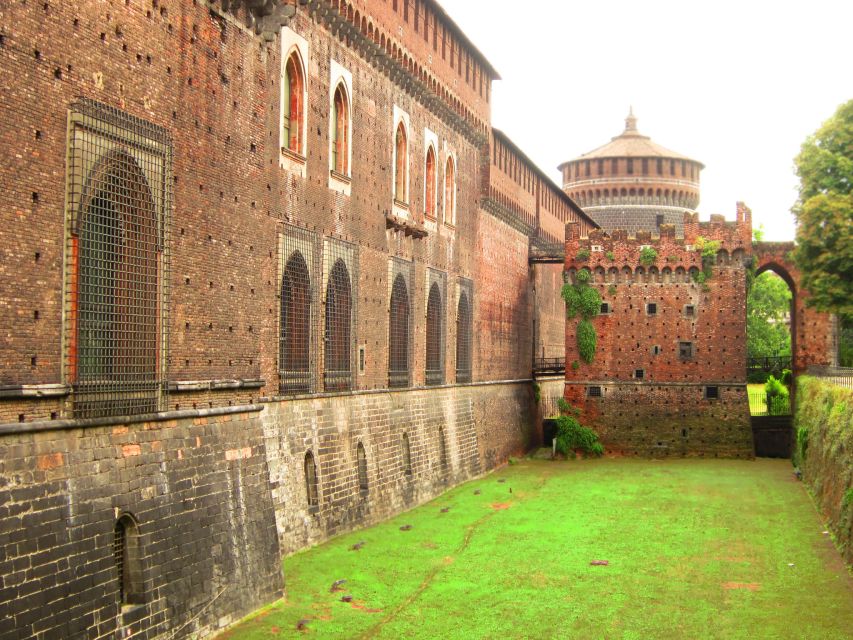
The Cortile della Rocchetta gives you another view of Sforza Castle. Its architecture feels more defensive and practical than the Ducal Courtyard, helping you understand that the building had several roles at once.
A good guide uses the two courtyards to explain the contrast between public display and protection. One space could support court ceremony, while another was tied more closely to the castle’s military function.
This is also where the castle’s long survival becomes easier to understand. It has passed through different periods and uses, yet its walls continue to connect Milan’s medieval and Renaissance identities.
The Filarete Tower is part of that visual story. As you walk beneath or near its shadow, you get a strong sense of the castle as a symbol of Milan, not simply an isolated historic building.
Do not expect every corner to be included. The tour is designed around selected areas and major points of interest. That focus works well for a first visit, but it means you may want to return on your own if you have a strong interest in military architecture, archaeology, or individual museum collections.
Leonardo da Vinci’s long Milanese chapter
Leonardo da Vinci is often linked first with The Last Supper, but his Milanese career was much broader. At Sforza Castle, he served the Sforza court for nearly two decades as an engineer, architect, and creative problem-solver.
This is one of the tour’s most satisfying connections. You begin with Michelangelo’s final sculpture, then move into the world of Ludovico il Moro, the flamboyant Sforza ruler whose court attracted major artistic talent.
Leonardo was not at the castle simply to paint. His work included ideas for engineering, architecture, and court projects. The guide points out traces of his presence and explains his complicated relationship with the Sforza family.
That context helps you understand Renaissance artists as working professionals who depended on powerful patrons. Leonardo’s genius did not exist apart from politics. He needed commissions, protection, and a court willing to support ambitious projects.
If Leonardo is your main reason for booking, keep your expectations realistic. This is not a dedicated Leonardo museum tour, and the experience does not replace a visit focused on The Last Supper. Instead, it gives you the setting in which Leonardo’s Milanese career unfolded.
What the museum portion is like
The entrance includes the castle and its museums, so the tour offers more than an exterior walk. You’ll see selected works and artifacts as the guide leads you through the complex.
The exact balance can depend on the group and guide. Several people have praised guides for selecting the most important objects and explaining them clearly. That is helpful in a large castle with many possible stops.
The main limitation is pace. One visitor specifically felt the archaeological museum was covered too quickly, while another noted that the tour ran slightly long but felt worthwhile. These comments point to the same practical truth: 90 minutes gives you a strong overview, not enough time for slow museum browsing.
You should also allow for the possibility that the castle has temporary or free pop-in exhibitions during your visit. These are not guaranteed parts of the tour, but they may add interest if available.
If you want to read every label or spend long periods with individual paintings, book the guided tour early in your day and return later for independent exploration. The guided portion gives you a map of what matters, then you can decide where to spend more time.
The guides are the main value
The admission itself is useful, but the guide is what makes this experience worth considering. The strongest praise has focused on clear explanations, lively storytelling, patience, and the ability to connect art with Milanese history.
Guides named in past departures include Giorgio, Fabio, Simone, Lorella, Stefania, Simon, Nina, Sylvia, Chiara, and Mary. You cannot assume you will receive a particular person, but the range of positive comments suggests that the operator has a substantial guiding team.
Several guides have been praised for speaking clearly and at a comfortable pace. That matters inside a large historic building where acoustics can be uneven. From 11 participants onward, headphones are provided, which should make it easier to follow the commentary in busy or spread-out areas.
Small groups are another advantage. Groups of three, four, or six have allowed guides to answer questions and adjust the pace. One family ended up with a private-feeling visit, while another group enjoyed having the guide nearly to themselves.
The experience is not completely free from practical snags. One person reported that the earpieces worked only intermittently, and a few people felt parts of the visit moved too fast. Those are reasonable concerns, especially if hearing every explanation matters to you.
Is $47 good value for 90 minutes?
At $47 per person, the tour is not the cheapest way to enter Sforza Castle. The value comes from combining museum admission with a live guide who supplies the historical and artistic connections.
I consider it good value if you want to understand what you are seeing and have limited time in Milan. The Pietà Rondanini alone can be difficult to appreciate fully without context, and the castle’s size can make independent exploration feel scattered.
The price is less appealing if you prefer to move at your own pace or already know Renaissance art and Milanese history well. You may get more from a regular admission visit if you want to spend an hour with one collection and then wander freely.
For most first-time visitors, the tour’s compact length is useful. You can fit it around the Duomo, central Milan, or other appointments. Just remember that the tour may run a little over its stated length, so avoid scheduling something immediately afterward.
Food and drinks are not included. Hotel transportation is also excluded from the standard price. You pay for admission, a certified guide, and the guided experience itself.
Who should book this castle tour?
I would recommend it to you if you enjoy history, art, and stories about the people behind grand buildings. It suits first-time visitors who want a clear introduction without spending half a day in a museum.
It is also a good fit for families and mixed-interest groups. The guide can connect military architecture, family symbols, Leonardo, Michelangelo, and everyday court life, giving different members of your group something to follow.
You should think twice if your priority is a slow, independent museum visit. The tour selects highlights, and the archaeological areas may receive only a brief look.
Art lovers should book with the right expectations. The Pietà Rondanini receives the most focused attention, while Leonardo’s connection is historical and architectural rather than a chance to see one of his famous paintings.
The wheelchair-accessible format is helpful for visitors who need it. If you require a private pace or want the guide to shape the visit around a particular interest, ask about the private group option.
Should you book the Sforza Castle and Pietà Rondanini tour?
Book it if you want the castle to make sense. Sforza Castle is impressive on its own, but the Visconti and Sforza story, Leonardo’s court role, the Biscione emblem, and Michelangelo’s final sculpture all gain meaning through explanation.
The best reason to choose this tour is the balance. You get a major artwork, grand courtyards, museum access, and Milanese political history in 90 minutes. That is a lot, but it is presented as a guided introduction rather than a complete study of the castle.
I would choose it for a first visit, especially if you have only a few days in Milan. Arrive at the Filarete Tower meeting point early, listen closely during the Pietà Rondanini section, and return later if the museums catch your interest.
FAQ
How long is the Sforza Castle and Pietà Rondanini tour?
The tour lasts 1.5 hours.
How much does the tour cost?
The listed price is $47 per person.
What is included in the price?
The price includes entrance fees to Sforza Castle and its museums, a certified live guide, and a small-group guided tour.
Where do I meet the guide?
Meet in Piazza Castello, outside Sforza Castle, under the Filarete clock tower. Do not go inside the courtyards to find the guide.
How do I recognize the tour guide?
Look for a guide holding a purple Hidden Experiences flag or board.
In which languages is the tour offered?
The live tour is available in Italian, English, German, French, and Spanish.
Are headphones provided?
Headphones are provided when the group has 11 or more participants.
Is the tour wheelchair accessible?
Yes, the activity is listed as wheelchair accessible.
Can I book a private group?
Yes, a private group option is available.
Are hotel pickup, food, or drinks included?
No. Food and drinks are not included, and hotel pickup and drop-off are only available as an optional extra service.
Can I cancel for a full refund?
Yes. You can cancel up to 24 hours in advance for a full refund.
Do I have to pay at the time of booking?
No. The reserve-now, pay-later option lets you hold a place without paying immediately.
Just added around Milan
- Milan Sights by Segway Small Group Tour★ 5.0 · 249 reviews
- Unveil the Masterpiece: Guided Tour of Da Vinci’s Last Supper★ 4.5 · 251 reviews
- Milan: Pasta & Tiramisu Cooking Class with Premium Products★ 5.0 · 255 reviews
- Milan Semi-Private Max 6 People Tour with Last Supper and Duomo★ 5.0 · 258 reviews
- Skip The Line: Best Of Milan Tour With Last Supper & Milan Duomo★ 4.5 · 260 reviews
- Milan: Duomo & Rooftop Tour with Optional Hop-On Hop-Off Bus★ 4.5 · 262 reviews
- Stresa: 1-Day 3 Borromean Islands Hop-On Hop-Off Boat Tour★ 4.0 · 262 reviews
- Milan Centre Food Tour of 7+ Italian Tastings with Risotto & Wine★ 5.0 · 264 reviews
Milan Tours, compared.
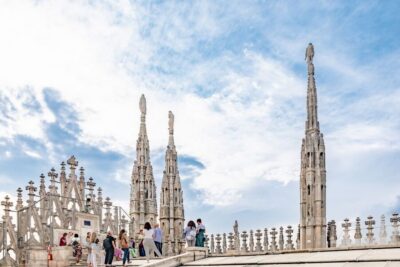
Cathedral and Duomo’s Terraces Entrance Ticket
Read our review →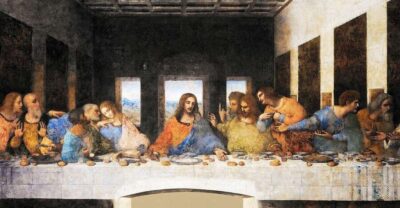
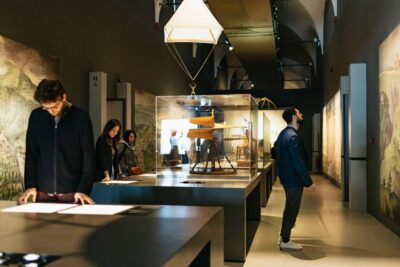
Science and Technology Leonardo da Vinci Museum Entry
Read our review →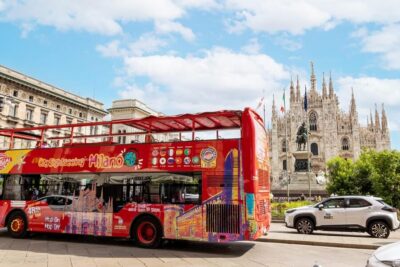
City Sightseeing Hop-On Hop-Off Bus with Audio Guide
Read our review →
Milan Cathedral: Duomo Terraces Ticket (No Church Access)
Read our review →
Milan Cathedral Direct Entrance – Terrace Excluded
Read our review →
Guided Walking Tour & Last Supper Visit with Ticket
Read our review →
Fast-Track Milan Cathedral and Terraces Guided Tour
Read our review →Browse the lists this tour appears in