
Review · COOKING CLASSES
Lecce: Pasta Making Class in 1400s-Era Courtyard with Wine
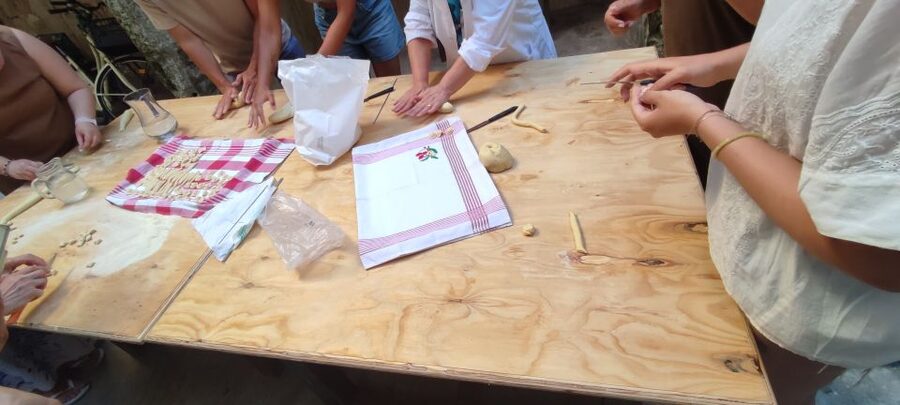
Pasta tastes better when you make it. This hands-on Lecce cooking class brings you into a 1400s-era courtyard at the Faggiano Archaeological Museum, where local cooks teach the small, quick hand movements behind Apulian pasta. I like the setting because you are not tucked into a modern cooking studio, and I like the social format, which brings people from several countries around one table. The main thing to consider is the group size, which can reach about 20 people and may feel crowded.
At $68 per person, the 2.5-hour outing offers more than a demonstration. You mix flour and water, shape your own pasta, eat what you made, and enjoy wine in central Lecce. The class is especially good for families, couples, and solo visitors who want an evening activity with a strong local flavor.
The instructors are warm and patient, but they also expect you to pay attention. Orecchiette looks simple when an experienced cook makes it, yet the technique is trickier than it appears. That small struggle is part of the fun, although anyone seeking a quiet, highly polished cooking lesson may prefer a smaller class.
In This Review
- Key points to know before booking
- Entering the Faggiano Museum in central Lecce
- Meeting the local cooks and language guides
- Making orecchiette by hand
- Learning sagne, maccheroni, and southern pasta traditions
- From worktable to shared meal
- How crowded is the class?
- Is $68 a fair price?
- Who will enjoy this Lecce evening?
- Practical planning details for your night
- Should you book the Lecce pasta class?
- FAQ
- Where does the pasta-making class meet?
- How long does the class last?
- What types of pasta will I make?
- Is food included after the class?
- Is transport included?
- What languages are available?
- Is the class wheelchair accessible?
- What happens if it rains or the class is canceled?
Key points to know before booking
- The class takes place at the Faggiano Archaeological Museum, on Via Ascanio Grandi 58 in central Lecce.
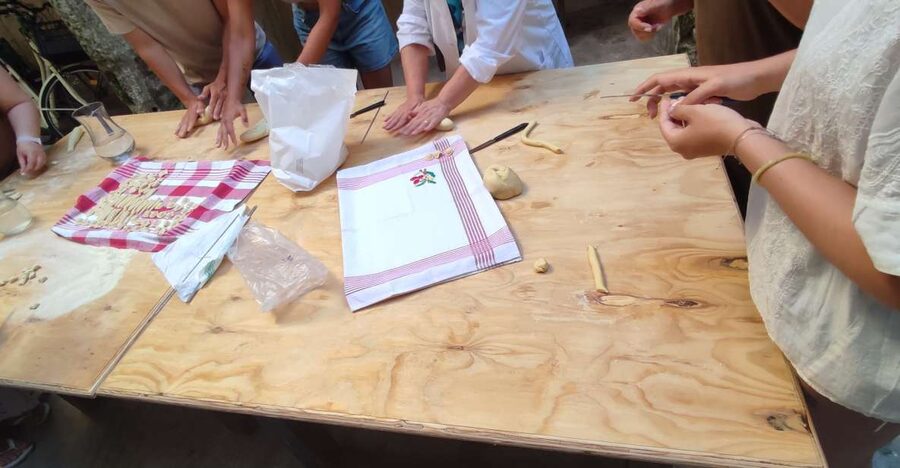
- You make two Apulian pasta shapes, with orecchiette and sagne named in the activity details. Several sessions have also featured maccheroni.
- Local cooks lead the practical work, with linguistic support in Italian, English, and French.
- The pasta becomes your meal, served after cooking with wine and, in some sessions, snacks, an appetizer, or dessert.
- Groups can be fairly large, sometimes around 20 people, though the teaching remains active and personal.
- The price includes equipment and the cooking class, but you must arrange your own transport to the museum.
Entering the Faggiano Museum in central Lecce
The meeting point is easy to identify: Via Ascanio Grandi 58, at the Faggiano Archaeological Museum. You make your own way there, since transport is not included. For most people already exploring Lecce’s old town, this central location makes the class simple to fit into an evening.
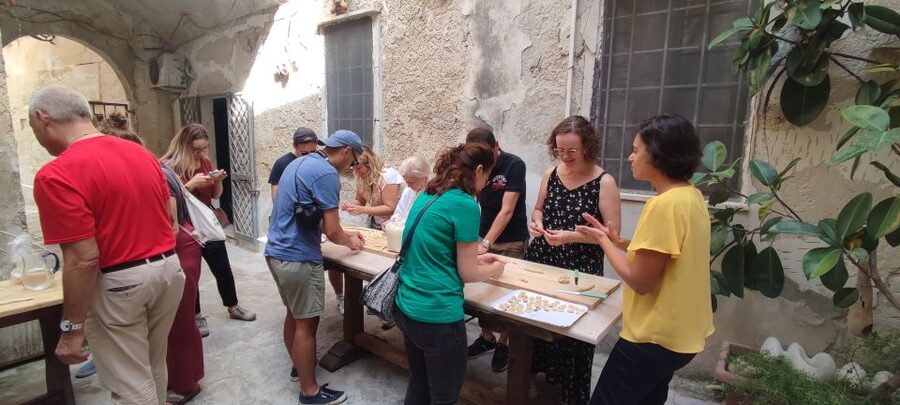
The cooking takes place in a courtyard dating to the 1400s. That detail matters. You are not merely learning a recipe in an ordinary rented room. The old stone setting gives the class a sense of place, and the museum connection adds an unusual layer to what could otherwise be a standard pasta workshop.
The courtyard is one of the strongest parts of the experience. It provides an atmospheric backdrop without turning the class into a history lecture. The focus stays on food, family traditions, and the practical work at the table.
You should bring a passport or identity card. The class runs rain or shine, so outdoor conditions may affect your comfort. The supplied information does not specify shelter arrangements, so check the forecast and dress sensibly for the season.
More Wine Tours in Puglia
- Cooking class, dinner and wine tasting near Lecce
★ 5.0 · 350 reviews - Lecce: Guided Street Food Walking Tour with Food and Wine
★ 4.6 · 273 reviews - Bari: Pasta and Tiramisu Cooking Class with Wine
★ 4.8 · 389 reviews
Meeting the local cooks and language guides
The teaching is led by local women cooks, often described as nonne, or grandmothers, along with language guides. Luciana and Therese have received especially warm praise for their clear English, good humor, and close attention to the pasta-making process. Other sessions have featured Enrica and different members of the cooking team.
The setup gives you two kinds of help. The cooks demonstrate the traditional hand movements, while the language support helps explain what is happening to an international group. English, Italian, and French are available, which makes the class workable even if you know only a few Italian food words.
The tone is friendly but practical. The instructors do not simply prepare pasta while you watch. They show you how to mix flour and water, work the dough, and use the tools. You then repeat the steps yourself.
That personal correction is useful. Orecchiette is made by shaping a small piece of dough and turning it into the familiar ear-like form. The motion requires more control than a quick demonstration suggests. Some participants find the technique surprisingly difficult, and the cooks may be direct when your pasta needs fixing. Take that as part of the lesson, not as a flaw in the format.
Making orecchiette by hand
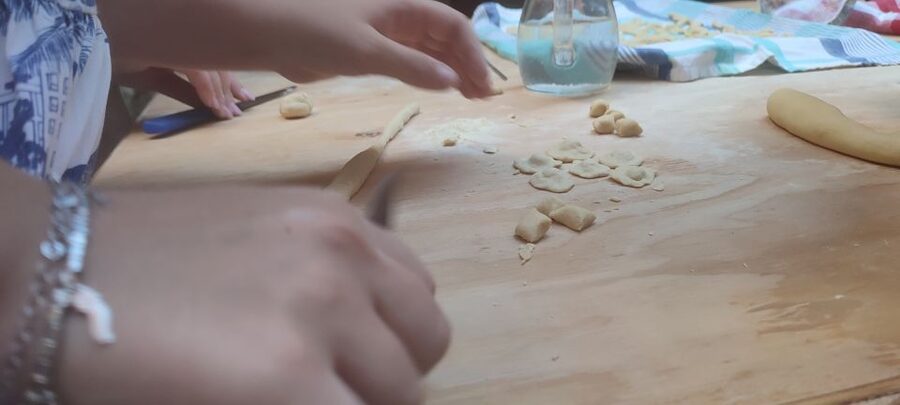
Orecchiette is the star of the class. Its name means little ears, and the shape is strongly linked with Puglia. In Lecce, you will see the pasta sold and served in many forms, but this class lets you understand how it is made from basic ingredients rather than treating it as a mysterious restaurant specialty.
The process begins with flour and water. You learn how to combine them and develop the dough with your hands. The exact recipe details can vary, but the important lesson is the feel of the dough and the repeated shaping motion.
The cooks make the work look effortless. Your first pieces may be uneven, too thick, or not quite hollow enough. That is normal. The point is to learn the method and produce enough pasta for the shared meal, not to win a pasta-shaping contest.
The class works well for children and teenagers who enjoy practical activities. A 2024 session was praised as a hit with children aged 10 and 14, and the hands-on format gives younger participants a clear task. Very young children may need help with the dough and shaping, but the activity itself is family-friendly.
You will likely make more than one pasta form. The activity description names orecchiette and sagne, a Puglian pasta variety, while several sessions have included maccheroni. The exact second shape may vary by class, so do not book expecting a highly fixed menu of shapes.
Learning sagne, maccheroni, and southern pasta traditions
Sagne is another pasta associated with Puglia, and it helps show that southern Italian pasta is not one single style. Shapes change from town to town and from family to family. The class gives you a simple introduction to that regional variety.
Several sessions have described the second pasta as maccheroni. That difference in wording is worth noting if you are a serious food enthusiast. The core promise remains the same: you learn more than one traditional Apulian shape and use basic hand techniques that you can try again at home.
I like this part because the lesson is about method rather than equipment. You are not relying on a pasta machine to do the difficult work. You learn how flour, water, pressure, and speed affect the final shape.
The class also puts pasta in a cultural setting. The cooks connect the food with Salento and southern Italy, and the shared table helps make the evening feel less like a technical course and more like a local social occasion. You leave with a recipe idea, but also with a better sense of why handmade pasta remains such a central food in Puglia.
More vineyard visits and tastings:
- Tuscany Day Trip from Florence: Siena, San Gimignano, Pisa and Lunch at a Winery
★ 5.0 · 21,634 reviews - Florence: Pasta Cooking Class with Unlimited Wine
★ 4.9 · 10,285 reviews - Florence: Chianti Wineries Tour with Wine Tasting
★ 4.5 · 8,301 reviews - Small-Group Wine Tasting Experience in the Tuscan Countryside
★ 5.0 · 7,392 reviews
From worktable to shared meal
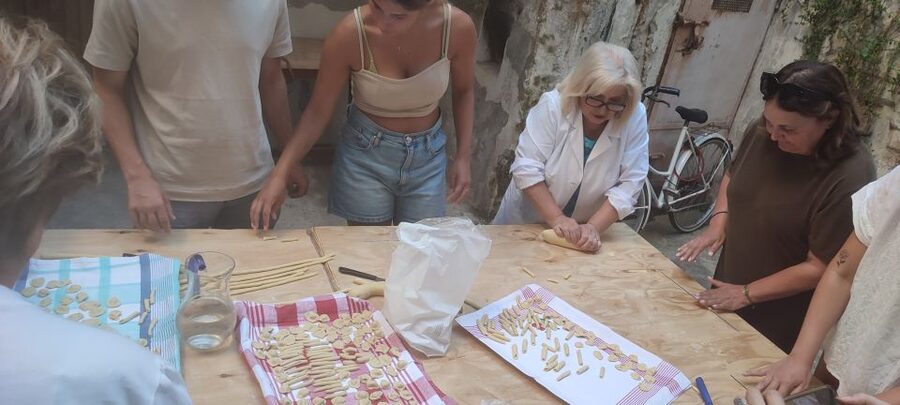
Once the pasta is shaped, it is cooked for the group. You then eat the pasta you helped make, accompanied by wine. This turns the class into a complete evening activity rather than a lesson that ends when the dough is finished.
The pasta has been served with a simple tomato and basil sauce in some sessions. Other accounts describe wine, snacks, an appetizer, and dessert. The exact food beyond the handmade pasta may not be identical every time, so think of the included meal as a shared tasting rather than a full restaurant dinner with a printed menu.
The meal is served in the old courtyard, often with everyone sitting together. This is where the social side of the class pays off. You are likely to share the table with people from several countries, and conversation comes naturally because everyone has just wrestled with the same dough.
Wine is included, but the supplied details do not specify the number of glasses or the exact wines served. If you do not drink alcohol, confirm what alternatives are available before booking. The activity is centered on food and company, so you will still have plenty to do, but the wine pairing is part of the advertised experience.
Some sessions have included music while the pasta cooked, adding to the evening mood. That is a pleasant possibility, not something I would treat as guaranteed for every date.
How crowded is the class?
Group size is the main trade-off. One session had about 20 participants, and several comments describe a large group. The courtyard has enough room for the activity, and the instructors work around the tables, but you should not expect the one-on-one attention of a private lesson.
The positive side is energy. A larger group makes it easy to meet people, and the shared mistakes create plenty of laughs. Solo visitors can join the table without feeling isolated, while couples and families have a ready-made evening activity.
The downside is that you may need to watch closely during demonstrations. If your shaping technique is not working, ask for help rather than waiting. The cooks are engaged and willing to repeat instructions, but in a full class you should be proactive.
For a better position, arrive ready at the stated meeting time and pay attention when the first demonstration begins. The supplied information does not give an exact arrival recommendation, so do not assume that late entry will be easy in a hands-on class.
Is $68 a fair price?
At $68 per person, this is not the cheapest meal you can find in Lecce. It is also not simply a dinner. Your price covers a 2.5-hour activity, a professional local cook, use of the equipment, the museum setting, your handmade pasta, and wine.
The value is strongest if you want an activity that combines food, culture, and conversation. A restaurant meal might cost less, but it will not teach you how to shape orecchiette or place you at a shared worktable in a centuries-old courtyard.
The price is less compelling if you want a formal culinary qualification, an advanced lesson, or a small private class. The format is social and accessible, not specialized. You are paying for the setting, the teaching, the meal, and the evening atmosphere as much as for the food itself.
The activity has a 4.7 rating from 369 reviews, with repeated praise for the cooks, the friendly mood, the clear instruction, and the quality of the finished pasta. The consistent criticism is not about the food or setting. It is mainly the size of the group, plus one complaint about promised photos not arriving.
Who will enjoy this Lecce evening?
I would choose this class for you if you want to do something rather than simply look at another church or piazza. Lecce has plenty of beautiful architecture, but a pasta class gives you a more active connection with Salento.
It suits:
- Couples looking for a relaxed evening activity
- Families with children who enjoy making food
- Solo visitors who like meeting people at shared tables
- Food lovers interested in regional Italian pasta
- First-time visitors wanting an easy introduction to Puglian cooking
- Anyone staying in Lecce’s old town without a car
You should think twice if you dislike group activities, have limited standing or hand use, or want a quiet meal. The class is wheelchair accessible, but the supplied details do not explain the exact table layout or courtyard surfaces, so contact the provider if you need specific access information.
It is also not ideal if you need a guaranteed, tightly timed schedule. The class lasts about 2.5 hours, but group cooking and shared dining can feel leisurely.
Practical planning details for your night
The class is offered in Italian, English, and French. This multilingual setup is a real benefit in an international group, especially when the hand movements need to be explained more than once.
You do not need to bring cooking equipment. It is included. Bring your passport or identity card, and arrange your own transport to Via Ascanio Grandi 58.
The class operates rain or shine. If the minimum number of participants is not reached, the course may be canceled, and you will be notified and refunded. You can cancel up to 24 hours before the start for a full refund, and a reserve-now, pay-later option is available.
Because the class is held in a museum courtyard, consider pairing it with a visit to Lecce’s old town before or after the activity. The central location makes that easy, though the cooking itself is the reason to book, not simply the address.
Should you book the Lecce pasta class?
Yes, if you want a friendly, practical evening with local cooks, handmade pasta, wine, and a setting that feels tied to Lecce. The strongest part is the combination of real participation and easy social contact. You do not just watch an expert produce perfect orecchiette. You make imperfect pieces yourself, then eat the result.
Book it with realistic expectations. The class may be busy, the pasta shapes take practice, and the meal is a shared casual dinner rather than a formal tasting menu. If those points sound appealing rather than alarming, $68 is a fair price for one of Lecce’s most memorable food activities.
FAQ
Where does the pasta-making class meet?
The meeting point is at the Faggiano Archaeological Museum, Via Ascanio Grandi 58, in the center of Lecce.
How long does the class last?
The experience lasts approximately 2.5 hours.
What types of pasta will I make?
The activity focuses on orecchiette and sagne. Some sessions have also included maccheroni, so the exact second pasta shape may vary.
Is food included after the class?
Yes. You eat the pasta you make after the lesson, and wine is included. Some sessions have also included snacks, an appetizer, or dessert.
Is transport included?
No. You must arrange your own transport to the meeting point.
What languages are available?
Instruction and assistance are available in Italian, English, and French.
Is the class wheelchair accessible?
Yes, the activity is listed as wheelchair accessible. Contact the provider if you need details about the courtyard or table arrangement.
What happens if it rains or the class is canceled?
The class takes place rain or shine. If the minimum number of participants is not reached, the course may be canceled, and you will be notified and refunded. You can cancel up to 24 hours in advance for a full refund.
More Pasta
- Florence Pizza or Pasta Class with Gelato Making at a Tuscan Farm
★ 5.0 · 6,801 reviews - Rome: Pasta & Tiramisu Class with Fine Wine by the Vatican
★ 4.9 · 4,852 reviews - Rome: Pasta Making Class with Wine, Limoncello, and Dessert
★ 4.9 · 3,177 reviews - Pastamania – Florence Pasta Making Class
★ 5.0 · 3,050 reviews
More Hands-On Cookery Sessions
- 3 in 1 Cooking Class near Navona: Fettuccine, Ravioli & Tiramisu
★ 5.0 · 7,376 reviews - Florence: Pasta & Tiramisu Cooking Class with Unlimited Wine
★ 4.9 · 6,708 reviews - Florence: Pasta Cooking Class with Unlimited Wine
★ 5.0 · 6,413 reviews - Cooking Class and Lunch at a Tuscan Farmhouse with Local Market Tour from Florence
★ 5.0 · 4,831 reviews
Just added around Lecce
- Mini-cruise tour to the Caves of Santa Maria di Leuca★ 5.0 · 250 reviews
- Tour of Lecce with a visit to the basement of the ancient synagogue★ 5.0 · 258 reviews
- Strolling through Lecce★ 5.0 · 289 reviews
- Tour to 4 Towns of Salento: Otranto, Leuca, Gallipoli, Galatina★ 5.0 · 360 reviews
- Lecce: City Highlights Guided Tour by Bike★ 4.8 · 362 reviews
- Snorkelling-Tour in Porto Cesareo with typical aperitif★ 5.0 · 452 reviews
- 3 Hour Group Tour by Boat to the Caves of Santa Maria di Leuca★ 5.0 · 472 reviews
- Small group tour of the caves of Santa Maria di Leuca★ 5.0 · 806 reviews
Cooking Classes, compared.

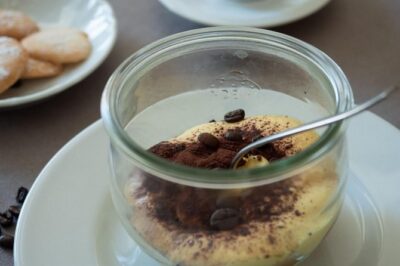
3 in 1 Cooking Class near Navona: Fettuccine, Ravioli & Tiramisu
Read our review →
Pasta & Tiramisu Cooking Class with Unlimited Wine
Read our review →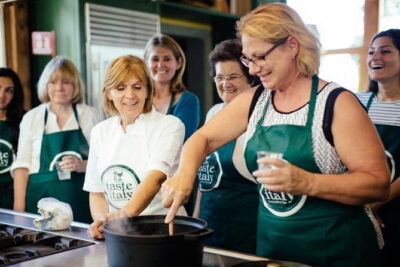
Cooking Class and Lunch at a Tuscan Farmhouse with Local Market Tour from Florence
Read our review →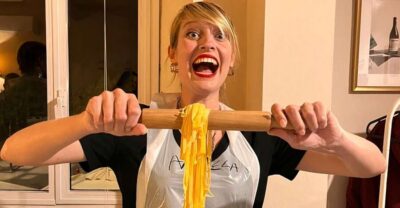
Pasta Making Class with Wine, Limoncello, and Dessert
Read our review →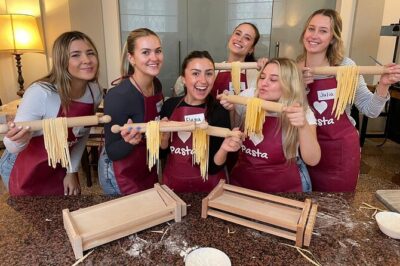
3-in-1 Fettuccine, Ravioli, and Tiramisu Cooking Class
Read our review →Browse the lists this tour appears in