
Review · STREET FOOD TOURS
Lecce: Guided Street Food Walking Tour with Food and Wine
Coffee opens the door to Lecce. I like the way this two-hour food walk pairs caffè leccese and pasticciotto with major sights, and I like that the route includes everyday Salento snacks, not just a single restaurant meal. The main consideration is pace: you cover a good stretch of the old center, so this is more of a tasting tour with sightseeing than a long, sit-down food experience. Extra food and drinks beyond the included tastings cost more, so keep that in mind when judging the $58 price.
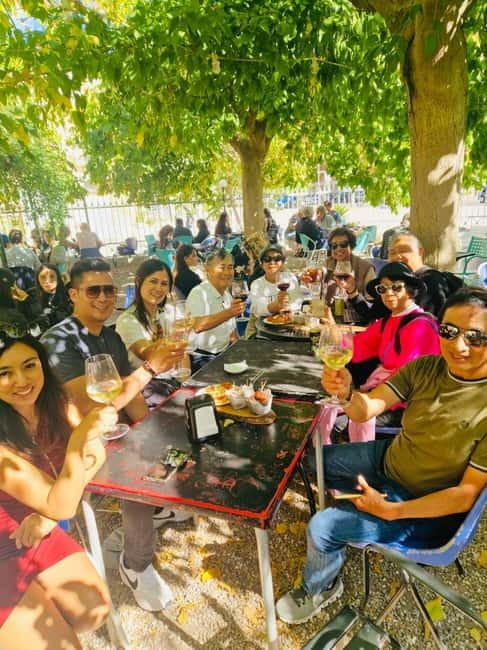
You meet at Porta Rudiae and finish near Porta San Biagio, with the Duomo, Santa Croce, and Piazza Sant’Oronzo along the way. Guides such as Luciana, Enrica, Erika, and Luce have earned especially warm praise for their local stories, language skills, and restaurant or beach suggestions. The route is wheelchair accessible, and tours are offered in English, Italian, and French.
In This Review
- Key points to know before booking
- Why this Lecce food walk works so well
- Meeting at Porta Rudiae and tasting caffè leccese
- Walking toward Piazza del Duomo
- Santa Croce and Lecce’s ornate stonework
- Piazza Sant’Oronzo and the savory Salento break
- Through the alleys to Porta San Biagio
- Finishing with Apulian wine and frisa
- The guides are the heart of the experience
- Is $58 a fair price?
- Who should book this walk?
- FAQ
- Where does the Lecce food tour begin?
- Where does the tour finish?
- How long does the tour last?
- What foods and drinks are included?
- Are monument entry tickets included?
- Can I order additional food or drinks?
- Which languages are available?
- Is the tour wheelchair accessible?
- Should you book it?
Key points to know before booking
- Caffè leccese starts the tour: Try Lecce’s local coffee alongside the classic custard-filled pasticciotto.
- Three major sights anchor the walk: The route links Porta Rudiae, Piazza del Duomo, Basilica of Santa Croce, and Piazza Sant’Oronzo.
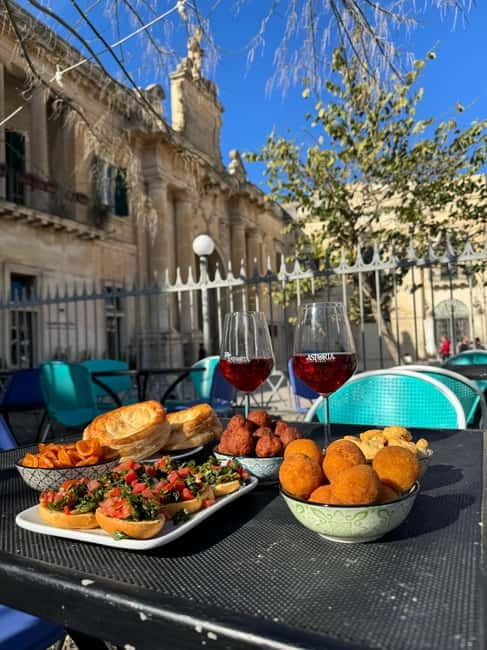
- Salento snacks keep appearing: Expect taralli, pizzi, and frisa, with drinks and regional flavors along the way.
- The guide makes a major difference: Luciana and Enrica receive repeated praise for clear explanations, warmth, humor, and personal recommendations.
- The $58 cost includes several tastings: Coffee, dessert, local snacks, and wine are included, but additional orders are not.
- It works well early in your stay: The walk gives you a quick orientation to Lecce’s old town and can help you choose places to eat later.
Why this Lecce food walk works so well
Lecce is easy to admire but harder to understand at first. Its old center presents one ornate façade after another, and without some direction, the details can blur together. This tour gives you a simple structure: walk, stop for a bite, hear the story of a church or gate, then walk on to the next taste.
I like that food is used as a door into local life. You are not just handed a pastry and sent on your way. You hear about Salento traditions while moving through the streets, then taste foods that people in the region actually recognize as part of daily life.
The timing also makes sense. Two hours is long enough to see a useful portion of central Lecce without turning into an exhausting march. The route includes several walking stretches of roughly five, ten, and fifteen minutes. Those gaps give you time to look around, take photographs, and let the last snack settle.
The tradeoff is that none of the food stops is presented as a full meal. If you arrive hungry, you may want lunch or dinner afterward. Think of the tour as a generous introduction to local tastes, supported by an old-town walk.
More Food Tours in Puglia
- Cooking class, dinner and wine tasting near Lecce
★ 5.0 · 350 reviews - Lecce History and Street Food Tasting Small Group Tour
★ 5.0 · 288 reviews - Bari’s Ultimate Street Food Tour – Small Group by Do Eat Better
★ 5.0 · 1,187 reviews
Meeting at Porta Rudiae and tasting caffè leccese
The starting point is Porta Rudiae, one of Lecce’s three main historic gates. This is a useful meeting place because the gate gives the guide an immediate subject: the role of the entrances in the city and the way Lecce’s old center developed around them.
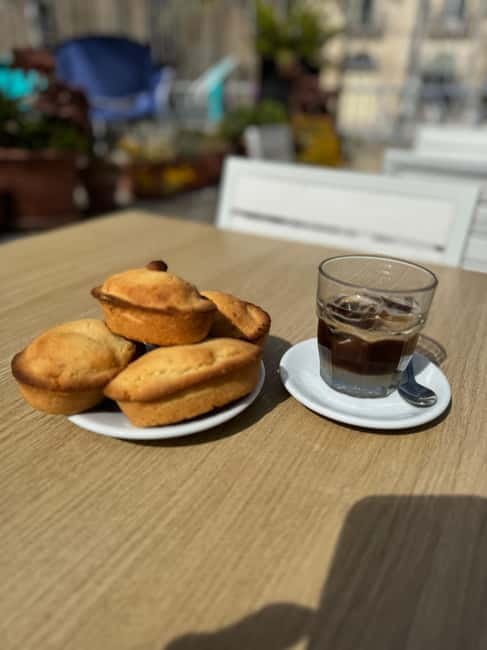
From here, the first food stop introduces you to local coffee. Caffè leccese is commonly served cold and is associated with the area, making it a fitting first taste in a warm Apulian city. The coffee is paired with pasticciotto, a small pastry strongly associated with Lecce and Salento.
Pasticciotto is the kind of food that makes a better first bite than a lecture. It is a pastry with a soft filling, usually custard, and it gives you a quick sense of the region’s fondness for simple baked treats. If you are looking for a single food that represents Lecce’s café culture, this is the one to pay attention to.
I would not treat this first stop as a chance to linger over a large coffee break. The group continues on foot, and the point is to taste the pairing before moving into the monuments. Still, beginning with a local drink and pastry helps set the tone. You are sightseeing with your appetite switched on.
Walking toward Piazza del Duomo
After coffee, the route continues through Lecce’s historic center toward Piazza del Duomo. The walk includes churches and architectural details along the way, with the guide explaining what you are seeing rather than leaving you to guess at the ornament.
Piazza del Duomo is one of the city’s key spaces. It offers a strong introduction to Lecce’s grand church architecture and the dramatic style that gives the old center its visual identity. A guided visit here is valuable because the square can look like a collection of elaborate stone surfaces until someone points out how the buildings relate to one another.
The tour does not focus only on food, and that balance is one of its strengths. Several people praise the amount of historical and architectural information provided during the walk. The most successful guides, including Luciana and Enrica, seem to explain the city in a personal way, adding stories about Lecce, Salento culture, and local customs instead of reciting only dates.
You should expect sightseeing rather than entry into every church. Entry tickets to attractions are not included, and the stated route emphasizes visits, guided explanations, and exterior viewing. If there is a particular interior you want to see, ask the guide about it, then plan to return independently if needed.
Santa Croce and Lecce’s ornate stonework
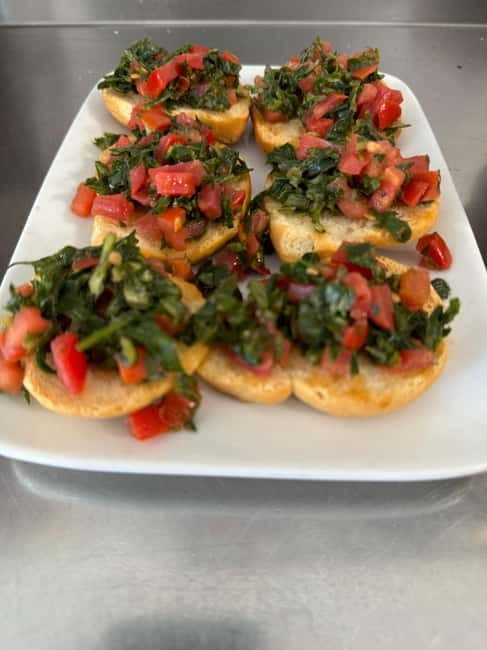
The Basilica of Santa Croce is one of the visual high points of the walk. The stop includes time to admire and photograph its façade, which is famous for its elaborate decoration and expressive stone carving.
This is where a guide adds real value. The exterior has enough detail to keep you busy, but it is easy to look without seeing. A good explanation can help you notice the figures, patterns, and layers of ornament that make the façade more than a pretty backdrop.
The visit is brief enough to keep the tour moving. That is good for anyone who wants a broad introduction to Lecce, though less ideal if you prefer to study a single church at length. I see this as a sampler: you get the context and a chance to look closely, then you continue through the lanes instead of spending the entire afternoon at one monument.
The walking sections between stops are also part of the appeal. Lecce’s smaller streets provide the setting for the food experience. You move away from the big squares, pass through winding alleys, and see how the city feels at street level.
More Walking Tours in Puglia
- Lecce: Baroque Architecture and Underground Walking Tour
★ 4.7 · 842 reviews - Bari: Guided Walking Tour
★ 4.7 · 744 reviews - Bari: Pasta Experience Walking Tour
★ 4.7 · 660 reviews - Bari Walking City Tour
★ 4.5 · 511 reviews
Piazza Sant’Oronzo and the savory Salento break
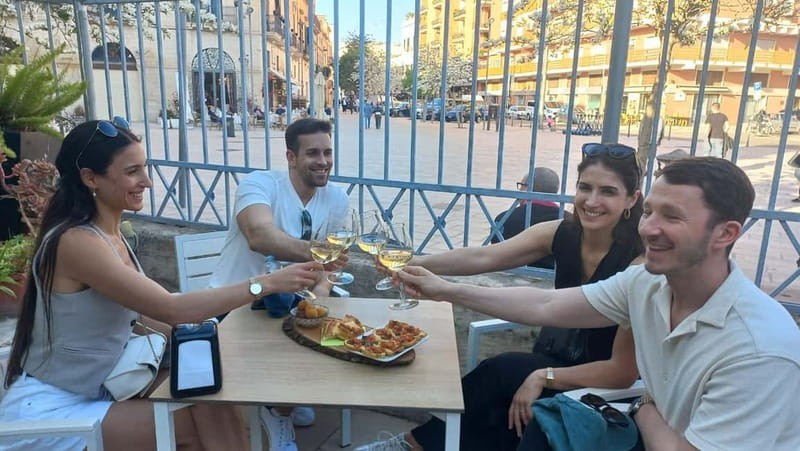
The route then reaches Piazza Sant’Oronzo, Lecce’s main and ancient square. This is another important orientation point, and the tour uses it for both sightseeing and a food stop.
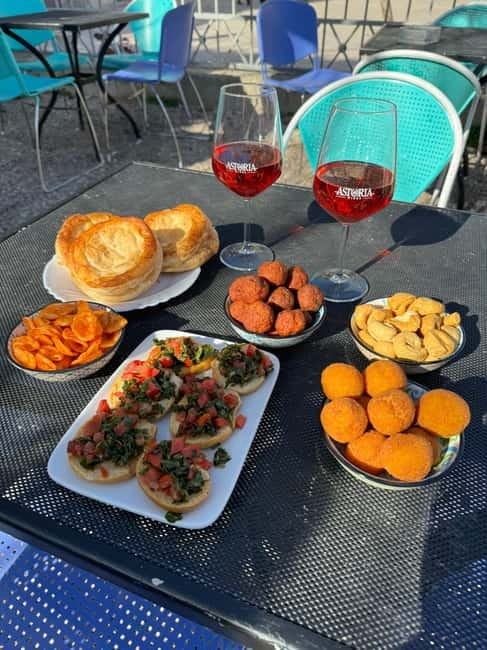
Here you taste savory regional snacks such as taralli and pizzi. Taralli are crisp, ring-shaped snacks often served with drinks. Pizzi are a rustic baked food associated with Salento, and they provide a useful contrast to the sweet pasticciotto from the opening stop.
This sweet-to-savory sequence is well judged. You are not eating the same kind of pastry at every stop, and the snacks give you a wider introduction to local habits. The square also creates a natural pause after the walking and church stops.
The itinerary lists about ten minutes in this area, so do not expect an elaborate aperitivo spread. You get a tasting, some local explanation, and time to look around. The tour is designed to keep moving through Lecce rather than turn each stop into a long restaurant visit.
Piazza Sant’Oronzo is particularly useful for first-time visitors because it helps you understand where the old center’s main activity is concentrated. After the tour, you can use the square and nearby streets as reference points when returning for dinner or an evening walk.
Through the alleys to Porta San Biagio
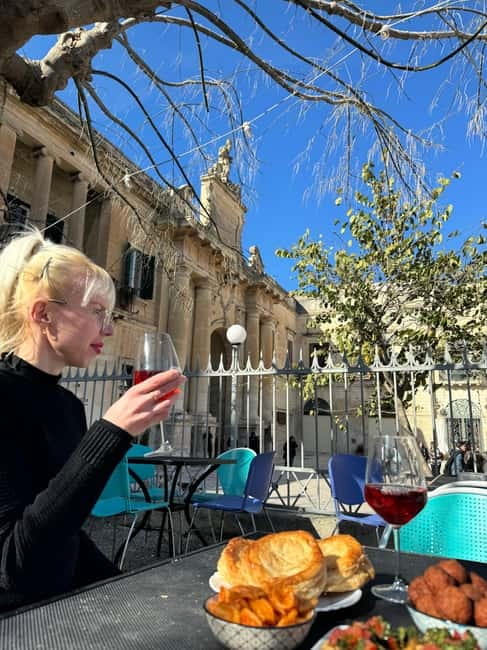
From Piazza Sant’Oronzo, the walk heads through the old center toward Porta San Biagio. This section is less about one headline monument and more about the pleasure of moving through Lecce’s narrow streets.
The guide continues to connect the buildings, food, and local traditions. That combination matters because Lecce’s appeal is not limited to its famous churches. The small lanes, old façades, and changing views between squares give the city its character.
Porta San Biagio is another of Lecce’s three main gates. Stopping here creates a nice structural ending to the walking portion. You began at one historic entrance, Porta Rudiae, and now learn about another, giving the tour a clear sense of movement across the old town.
If you have trouble with heat, this is the part where practical planning helps. Reviews describe the pace as relaxed, and the food stops break up the walking, but Lecce can still be warm. Wear comfortable shoes, carry water, and bring sun protection. The official description states that the route is wheelchair accessible, though you should still ask the provider about the exact route and stop arrangements if you need specific assistance.
Finishing with Apulian wine and frisa
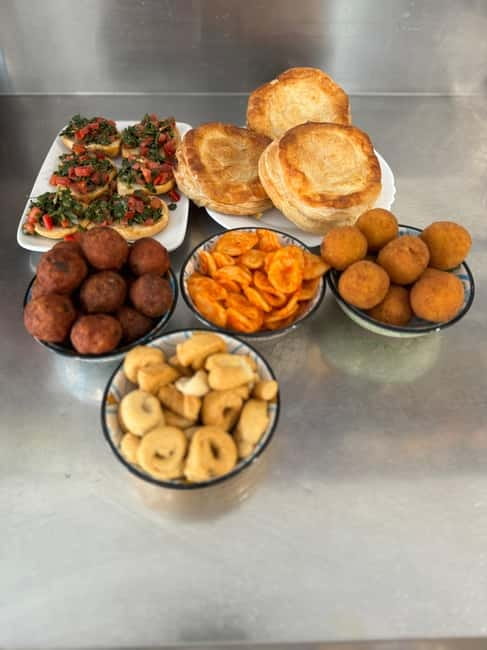
The final stop takes place at a historic bar in Lecce. You choose a glass of Apulian wine and pair it with frisa, a rustic Salento food.
Frisa is a hard, toasted bread traditionally softened before eating and topped in a simple regional style. It is not a delicate dessert or a fancy final plate. That is precisely why it works as a closing taste: the tour ends with something rustic, local, and connected to the food traditions of the area.
The wine gives the last stop a social feel. It is a chance to ask final questions, compare the foods you have tasted, and get advice for the rest of your time in Puglia. Several guides have gone beyond the formal route by suggesting restaurants, nearby beaches, or day trips. One guide even helped arrange a restaurant booking for that evening, though you should regard that as a personal extra rather than a guaranteed part of the tour.
The included wine tasting adds value to the price, especially if you would otherwise pay separately for a drink and snack. Still, check what is covered before ordering anything beyond the planned tasting. Additional food and drinks are not included, and one lower-scoring comment raised concern about the total cost compared with the initial price. That does not prove an undisclosed charge, but it is a sensible reason to ask questions before adding extras.
The guides are the heart of the experience
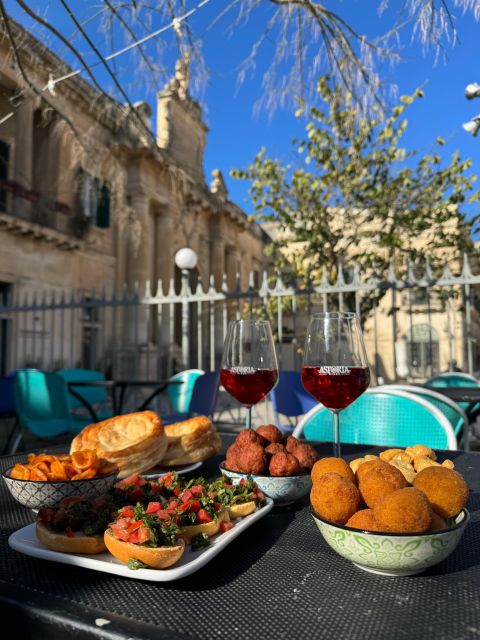
The strongest pattern in the feedback is the quality of the guides. Luciana receives especially frequent praise for being warm, clear, funny, and comfortable in several languages. Enrica and Erika are also praised for explaining Lecce’s architecture, food, and Salento customs in a friendly way.
Guide assignments can vary, so you may not get a particular person. The important point is the role the guide plays. This is not a self-guided list of food samples. The guide connects the caffè leccese to local café culture, the churches to Lecce’s architecture, and the snacks to the wider traditions of Puglia.
Language ability is another practical strength. English, Italian, and French are offered, and guides have handled mixed-language groups by switching between languages. That can slow the rhythm slightly, but it also makes the tour more welcoming for groups with different language needs.
The personal touch is especially useful for solo visitors and families. One solo participant felt included throughout, and a family with teenagers found that the food and witty explanations held their attention. I would expect the experience to suit people who like conversation and questions more than those who prefer a silent, highly formal tour.
Is $58 a fair price?

At $58 per person, this is not the cheapest way to see Lecce. The value depends on how you use the two hours.
You are paying for a live guide, a structured introduction to the old center, coffee, dessert, local savory snacks, and wine. You also avoid having to identify several regional foods on your own, find suitable places, and connect them with the city’s major sights. For a first visit, that combination can be worth the cost.
The price is less attractive if you mainly want a full meal. The tastings are spread across several stops, and the tour includes additional drinks or food only at your own expense. You may still need to budget for a separate lunch or dinner.
I consider it good value for an early-day orientation, especially if you use the guide’s suggestions afterward. It is also a useful choice for a short stay, when two hours can introduce both the city and its food without taking over your schedule.
Free cancellation up to 24 hours before the start and the option to reserve without paying immediately make the booking less rigid. Starting times depend on availability, so check the schedule that suits your plans.
Who should book this walk?
I would recommend it to first-time visitors who want a quick sense of Lecce before exploring alone. It is also a strong fit for couples, small groups, solo visitors, and families who enjoy tasting local food in small portions.
Book it if you want:
- A guided look at Lecce’s old center and major squares
- Several regional tastings instead of one restaurant meal
- A relaxed introduction to caffè leccese, pasticciotto, taralli, pizzi, frisa, and Apulian wine
- A guide who can answer questions and suggest places to eat or visit later
- A tour available in English, Italian, or French
Think twice if you want long interior visits, a formal wine class, or enough food to replace a full meal. The tour is brisk but not rushed, and its strength is the blend of monuments, streets, snacks, and conversation.
FAQ
Where does the Lecce food tour begin?
It begins at Porta Rudiae, one of Lecce’s three main historic gates.
Where does the tour finish?
The route continues toward Porta San Biagio and ends with a tasting at a historic bar in Lecce.
How long does the tour last?
The tour lasts two hours.
What foods and drinks are included?
The included tastings are local coffee, pasticciotto, Salento snacks such as taralli and pizzi, Apulian wine, and frisa.
Are monument entry tickets included?
No. Entry tickets to attractions are not included.
Can I order additional food or drinks?
Yes, but additional food and drinks are not included in the tour price.
Which languages are available?
The live tour guide is available in English, Italian, and French.
Is the tour wheelchair accessible?
Yes, the activity is listed as wheelchair accessible.
Should you book it?
Book this tour if you want Lecce to make sense quickly through both its food and its streets. The included tastings are varied, the route covers the city’s essential sights, and the guides are praised for warmth, clear explanations, multilingual ability, and useful local advice.
I would book it near the start of a Lecce visit, then use the recommendations from the guide to plan the rest of your meals and day trips. Just remember that $58 buys an introduction and several tastings, not a full dinner or an in-depth visit inside every church. For that purpose, it offers a friendly and practical first taste of Salento.
More Street Food Walks
- Naples: Street Food Walking Tour with Local Guide
★ 4.8 · 4,256 reviews - Rome: Trastevere or Jewish Quarter Street Food Tour
★ 4.8 · 3,839 reviews - Florence: Cinque Terre Park Day Trip with Optional Street Food
★ 4.5 · 3,593 reviews - Rome: Trastevere & Campo de Fiori Street Food Walking Tour
★ 4.9 · 2,768 reviews
More Wine Tours in Puglia
- Lecce: Pasta Making Class in 1400s-Era Courtyard with Wine
★ 4.7 · 369 reviews - Bari: Pasta and Tiramisu Cooking Class with Wine
★ 4.8 · 389 reviews - Guided tour and tasting at La Cantina Frrud – Wine Museum
★ 5.0 · 249 reviews
Just added around Lecce
- Mini-cruise tour to the Caves of Santa Maria di Leuca★ 5.0 · 250 reviews
- Tour of Lecce with a visit to the basement of the ancient synagogue★ 5.0 · 258 reviews
- Strolling through Lecce★ 5.0 · 289 reviews
- Tour to 4 Towns of Salento: Otranto, Leuca, Gallipoli, Galatina★ 5.0 · 360 reviews
- Lecce: City Highlights Guided Tour by Bike★ 4.8 · 362 reviews
- Snorkelling-Tour in Porto Cesareo with typical aperitif★ 5.0 · 452 reviews
- 3 Hour Group Tour by Boat to the Caves of Santa Maria di Leuca★ 5.0 · 472 reviews
- Small group tour of the caves of Santa Maria di Leuca★ 5.0 · 806 reviews
Street Food Tours, compared.


Trastevere or Jewish Quarter Street Food Tour
Read our review →
Cinque Terre Park Day Trip with Optional Street Food
Read our review →
Trastevere & Campo de Fiori Street Food Walking Tour
Read our review →
Street Food Tour with a Local Guide and Tastings
Read our review →
Authentic Naples Street Food Tour With Local Expert Guide
Read our review →
Palermo Original Street Food Walking Tour by Streaty
Read our review →Browse the lists this tour appears in