
Review · WINE TOURS
Jewish Ghetto & Piazza Navona: Food, Wine & Sightseeing Rome Tour
Rome tastes better after sunset. This four-hour walk links the Jewish Ghetto, Campo de’ Fiori, and Piazza Navona with seven food and drink stops, so you get dinner and sightseeing in one evening. I like the small group limit of 15 and the way guides such as Maria, Fabrizia, Andrea, and Marco bring history into the meal. The main drawback is that some tastings are eaten standing, and the portions may not satisfy every very hungry diner.
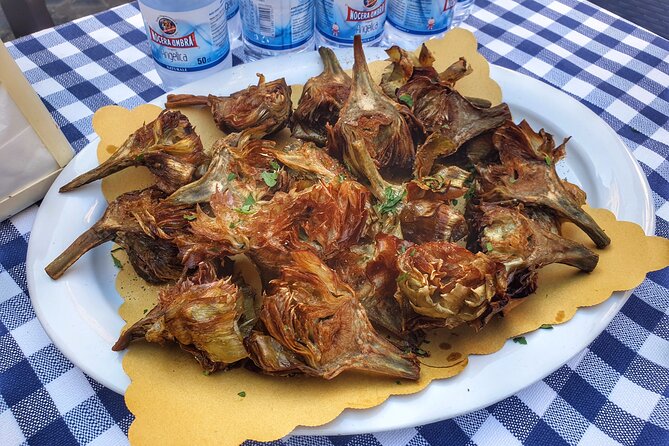
I also like the range of food: fried Roman-Jewish artichoke, cured meat, cheese, pizza, pasta, tiramisu, coffee, and gelato. The evening timing keeps you out of the midday heat and gives Rome’s old streets a softer mood. Just know that this is a Roman food-and-history tour in the former Jewish district, not a kosher or specifically Jewish religious tour.
In This Review
- Five things to know before you book
- What this Rome evening tour is really like
- Meeting at Piazza Mattei at 5:45 pm
- Antico Quartiere Ebraico: food in a historic district
- Portico di Ottavia and the first tastings
- Campo de’ Fiori: an hour of food and city life
- Piazza Navona and the Pompey Theatre
- Largo Argentina and ancient ruins
- Seven food stops, from artichoke to gelato
- The guides make or break the walk
- What the tour does not cover
- Is $107.63 good value?
- Who should book this experience?
- My verdict: book it for the mix
- FAQ
- How long does the Jewish Ghetto and Piazza Navona food tour last?
- What time does the tour start?
- Where does the tour begin?
- Where does the tour finish?
- How many food stops are included?
- Are drinks included?
- Is the Jewish Synagogue visited inside?
- Can vegetarian meals be provided?
- Can the tour accommodate vegan, dairy-free, or gluten-free diets?
- Is hotel transportation included?
Five things to know before you book
- Seven stops make this a full dinner: Wine, beer, soft drinks, savory dishes, coffee, tiramisu, and gelato are included.
- The group is capped at 15: That is small enough for questions, though the pace can still be difficult if someone walks slowly.
- The Jewish Ghetto is mainly an outdoor setting: You see the synagogue from outside, but you do not enter it.
- The history reaches far beyond food: The route includes Roman ruins, the site linked with Julius Caesar’s assassination, and memorial stones in the pavement.
- Dietary limits matter: Vegetarian requests can be handled with advance notice, but the tour does not accommodate vegan, dairy-free, or gluten-free diets.
- The evening schedule is useful: Meet at Piazza Mattei at 5:45 pm and finish near Largo di Torre Argentina, with no hotel transfer included.
What this Rome evening tour is really like
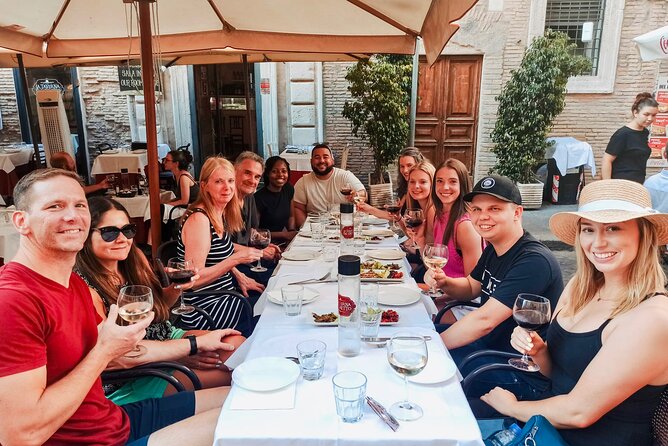
This experience is built around movement. You meet your guide at Piazza Mattei in central Rome, then walk through Campo Marzio and the Jewish Ghetto while stopping at local food businesses along the way.
The format works well for a first evening in Rome. Instead of spending four hours at one restaurant, you sample small dishes in several places and use the walks between them to see old streets, churches, ruins, squares, and monuments.
I would allow the full evening for this. The advertised duration is about four hours, and the seven stops mean the tour has a steady rhythm. You are not simply sitting down for a long meal. You are eating, listening, walking, and eating again.
The tour earns a strong overall rating of 4.8 out of 5, with 96 percent of customers recommending it. The most consistent praise goes to the guides, especially Maria, Fabrizia, Andrea, Marco, Greta, Bruno, and others who combine food explanations with Roman stories.
More Food Tours in Rome
- Rome: Tuscany & Montepulciano Day Trip with Lunch & Wine Tasting
★ 4.5 · 5,232 reviews - Winner 2025 Rome Twilight Trastevere Food Tour by Eating Europe
★ 5.0 · 5,157 reviews - Rome: Trastevere or Jewish Quarter Street Food Tour
★ 4.8 · 3,839 reviews
Meeting at Piazza Mattei at 5:45 pm
Piazza Mattei is a practical starting point in the historic center. It places you close to the Jewish Ghetto and makes sense for a tour that begins with the district’s food and culture.
You need to arrange your own way there. Hotel pickup and drop-off are not included, but the meeting point is near public transportation, and taxis or buses are suitable options.
The smart-casual dress code is easy to follow. Wear shoes with good grip, though, because Rome’s cobblestones can become slick after rain. One person described struggling to keep up with the group on wet streets, so I would not treat this as a gentle, sit-down food crawl.
A moderate level of fitness is requested. You should be comfortable walking for several hours, standing at some food stops, and keeping pace with a group.
Antico Quartiere Ebraico: food in a historic district
The first neighborhood stop is the Antico Quartiere Ebraico, or old Jewish quarter. It is now home to family-run trattorias, restaurants, monuments, and streets that connect easily with the rest of central Rome.
This is where the tour’s focus needs a little explanation. The name Jewish Ghetto refers to the historic neighborhood, but the experience is not a full Jewish heritage tour. The food is not kosher, and the synagogue is viewed only from outside.
That distinction matters if you are hoping for detailed coverage of Jewish life in modern Rome or a visit inside the synagogue. The tour gives you a broad introduction to the district, but much of the historical discussion centers on ancient and Roman-era subjects.
At the same time, the area gives the food genuine context. You are not eating Roman dishes in an anonymous dining room. You are beginning among streets shaped by centuries of Roman and Jewish life.
Portico di Ottavia and the first tastings
The Portico di Ottavia is one of the route’s most useful early stops. Here, the guide explains the area while the group moves into local restaurants and food shops for tastings.
The first standout dish is carciofo alla giudia, the Roman-Jewish fried artichoke. It is crisp, distinctive, and closely tied to the Jewish Ghetto, making it a better introduction to the neighborhood than a generic slice of pizza would be.
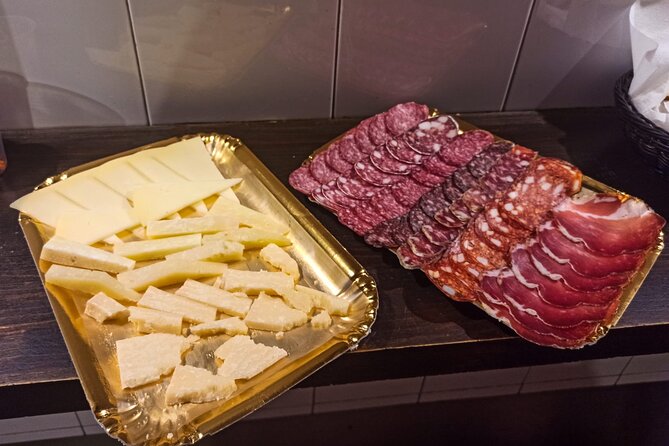
You also receive cured meat from Norcia and local cheese with wine. Soft drinks are available at all stops, which helps if you do not want alcohol with every course.
I like this opening sequence because the food gives you something concrete to remember. The guide can explain the dish, its place in Roman cooking, and the neighborhood around you, rather than delivering a history lecture detached from the meal.
Still, keep your expectations in check. Not every stop is a full restaurant meal. Some tastings are served while standing, and one account found the portions modest. If you normally eat an early dinner or need large servings, have a light snack before you arrive, but do not show up full.
More Wine Tours in Rome
- Rome: Pasta & Tiramisu Class with Fine Wine by the Vatican
★ 4.9 · 4,852 reviews - Rome Food Tour: Unlimited Tastings with Fine Wine & Barolo
★ 5.0 · 3,365 reviews - Rome: Pasta Making Class with Wine, Limoncello, and Dessert
★ 4.9 · 3,177 reviews - Rome: Trastevere Food tour with Free-Flowing Fine Wine
★ 5.0 · 2,853 reviews
Campo de’ Fiori: an hour of food and city life
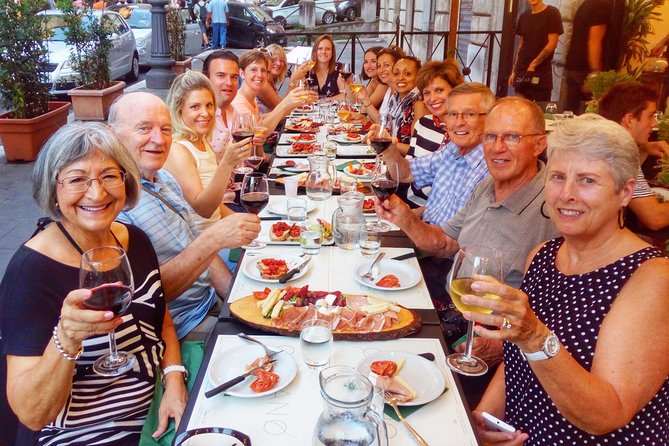
The walk continues toward Campo de’ Fiori, one of central Rome’s best-known public squares. The tour uses the route to connect traditional food with the city’s political and cultural past.
The food here is not presented as a single formal course. You may be moving between stops, listening to the guide, and sampling items as the evening unfolds.
That format suits people who like variety. You can taste several Roman specialties without committing to one menu, and you get a chance to ask where to find a dish again later.
One particularly useful suggestion came from a customer who wished for a written list of the food stops. I agree with that practical point. If you discover a pizza or restaurant you love, ask the guide to write down its name and location before the tour moves on.
The group setting can also shape the evening. A small group may feel warm and social, while a full group of 15 requires more care from the guide. Introduce yourself to the people around you, ask questions, and let the meal become part of the experience rather than treating it as a series of deliveries.
Piazza Navona and the Pompey Theatre
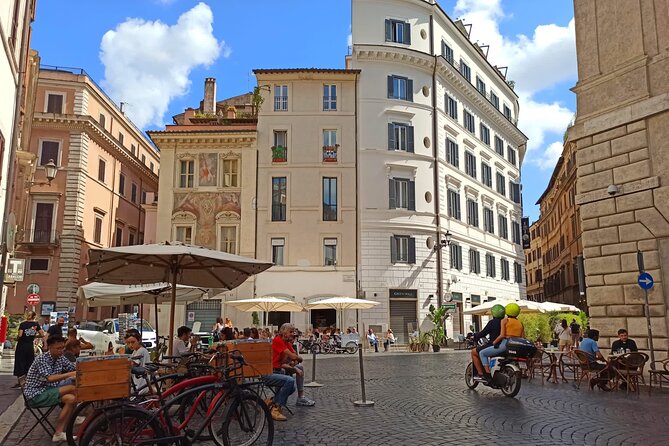
Piazza Navona brings the grand Roman center into the route. The square is famous for its monumental fountains, long urban shape, and evening atmosphere, and it gives the walking portion a change of scale after the narrower streets of the Ghetto.
The tour also points toward the Pompey Theatre, the ancient site associated with Julius Caesar’s assassination. This is one reason the experience works as more than a restaurant crawl. You are linking everyday Roman food with major moments in the city’s past.
Expect outdoor commentary rather than long interior visits. Admission is not charged for the listed sightseeing stops, but this tour does not promise entry into major monuments or museums.
Near Piazza Navona, the sweet course begins to take over. You may taste tiramisu with three varieties to choose from, then move toward an old coffee shop founded in 1938. The coffee is made with home-roasted beans and water from an ancient aqueduct, a detail that gives this short stop more character than a quick espresso at a standard café.
Largo Argentina and ancient ruins
The route includes Area Sacra di Largo Argentina, a large archaeological site in the center of Rome. It is also tied to the location of the Pompey Theatre and the story of Caesar’s death.
Other landmarks named along the walk include the Church of St. Eustace, the Italian Senate House, the Theatre of Marcellus, the Temple of Apollo, and the Portico of Octavia. You should think of these as exterior sights woven into the route, not as a series of inside visits.
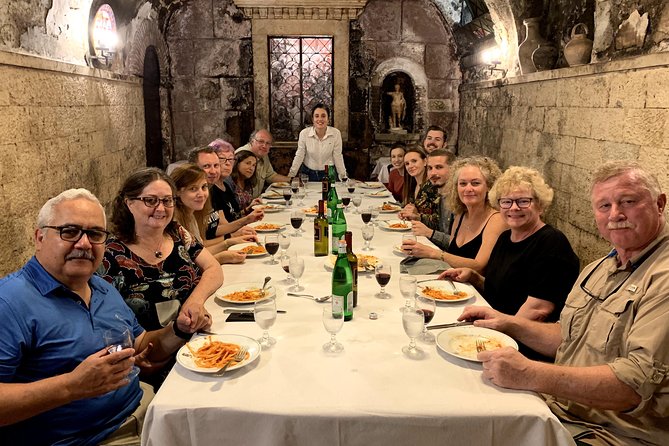
The most unusual dinner setting comes at the ruins of Rome’s oldest theatre. You eat traditional Roman main courses in or near this archaeological setting, paired with local wine.
That combination is the tour’s strongest idea. A plate of pasta is more memorable when the guide explains the ruins around you, and the setting turns a standard meal into a sense-of-place experience.
Food quality can vary from person to person. Some customers found the multiple pasta dishes excellent and the meal plentiful. Another found the food ordinary and the portions too small. I would book this for the mix of food, setting, and storytelling, not as a guarantee of a fine-dining meal.
Seven food stops, from artichoke to gelato
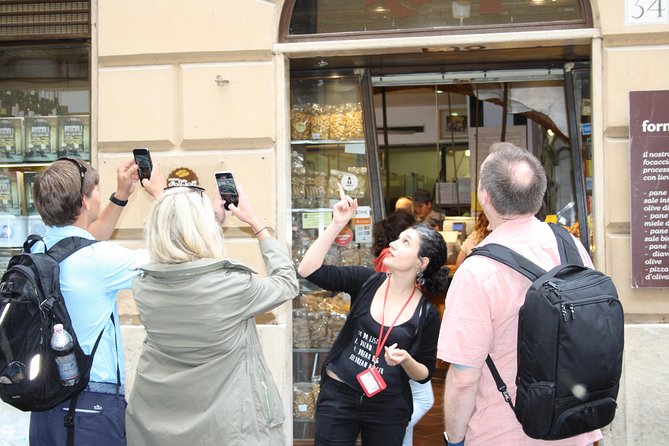
The menu has enough range to make the evening feel like a full meal:
- Roman-Jewish fried artichoke
- Cured meat and local cheese with wine
- Roman pizza from a family bakery operating since 1972
- Italian beer
- Several Roman main courses with local wine
- Tiramisu, with three varieties available
- Coffee and artisanal gelato
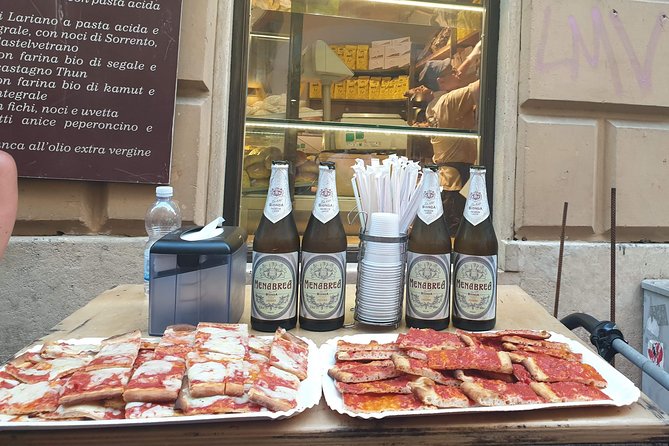
The pizza comes from a family-run bakery, and the beer is described as an award-winning Italian beer. Those details add variety to the wine pairings and keep the menu from becoming pasta at every stop.
The main courses are served at a traditional trattoria among ancient theatre ruins. This is likely the point when you feel you are having an actual dinner rather than simply grazing.
Dessert arrives in stages. Tiramisu comes first, followed by coffee, then gelato from a traditional family shop using fresh products. If you like ending a meal with several small treats, this is a satisfying finish.
I would still avoid eating a large meal beforehand. Most people find the seven-stop format filling, and one person specifically advised arriving hungry. The conflicting portion reports suggest that appetite and serving size may vary, but there is enough planned food to make skipping dinner unnecessary.
The guides make or break the walk
The strongest part of this experience is the guide. Maria receives repeated praise for explaining both Roman food and the history of each area. Fabrizia is described as friendly, informed, and fun, while Andrea is praised for connecting the Ghetto with wider Roman history.
One guide with a master’s degree in art history added specialist detail, showing how much the quality can depend on who leads your group. Marco, Greta, Bruno, and others are also singled out for clear storytelling and an easy manner.
You should also know the main risk. One group felt that the guide walked too far ahead with faster members, leaving older people struggling behind. That is a serious concern on a group walk. If your pace is slow, tell the guide at the beginning, not halfway through the evening.
The experience can work well for older participants when the guide pays attention. One guide slowed down for a husband who could not walk quickly and even helped find a taxi at the end. That is the kind of small practical care that can turn a difficult evening into a good one.
What the tour does not cover
The tour offers a useful introduction to the Jewish Ghetto, but you should choose it for Roman food and general city history.
You do not enter the Jewish Synagogue. You may see it from outside, along with the surrounding streets and landmarks. The route also may change, so the exact order of stops is not fixed.
The Holocaust memorial plaques set into the pavement are an important part of the neighborhood. Some customers wished the tour had spent more time on twentieth-century Jewish history and pointed out that these plaques were not always discussed. If that subject is central to your visit, plan separate time to explore it carefully.
The tour also does not suit every diet. Vegetarian substitutions are possible if you advise the company in advance. Gluten-free, dairy-free, and vegan diets cannot be accommodated, and anyone with a nut allergy should understand that cross-contamination is possible.
Is $107.63 good value?
At $107.63 per person, this is not a cheap dinner. But the price includes seven food stops, wine, beer, soft drinks, a full set of tastings, a guide, and a meal in an ancient Roman setting.
If you would otherwise pay for dinner, several drinks, dessert, and a separate evening walking tour, the price becomes easier to justify. You also gain help choosing places that you might not find on your own.
The value is weaker if you mainly want large portions or a seated restaurant meal. Some food stops are brief, and one account found the servings too small to fill the stomach.
For me, the best value comes from combining three things in one booking: food, orientation, and history. It is especially useful early in a Rome trip, when you want ideas for what to eat and a clearer feel for the historic center.
Group discounts are available, and the maximum group size is 15. A smaller group is preferable, but the actual size can affect how much personal attention you receive.
Who should book this experience?
I would recommend it to:
- First-time Rome visitors who want a guided evening introduction
- Couples and friends who enjoy trying several dishes
- People who prefer local food stops to one long restaurant meal
- History lovers who enjoy ancient ruins with their dinner
- Visitors who want a social small-group activity
- Anyone who likes dessert, since the final stretch includes tiramisu, coffee, and gelato
I would think twice if you need a fully seated meal, follow a strict vegan, gluten-free, or dairy-free diet, or want an in-depth Jewish history tour.
The walk also needs a little stamina. Rome is rewarding on foot, but cobblestones, rain, standing stops, and a group pace can make four hours feel long.
My verdict: book it for the mix
I would book this tour if I wanted one lively evening that combined Roman food with major historic sights. The fried artichoke, theatre ruins, coffee stop, and gelato give the route a clear personality, while strong guides such as Maria and Fabrizia can add real value.
I would not book it expecting a dedicated Jewish heritage program or a high-end tasting menu. For that, choose a more focused experience.
The best strategy is to arrive hungry, wear sensible shoes, tell the operator about vegetarian needs in advance, and clarify the tour’s Jewish Ghetto focus before booking. Cancel at least 24 hours before the 5:45 pm start if your plans change, since later cancellations are not refunded.
FAQ
How long does the Jewish Ghetto and Piazza Navona food tour last?
The tour lasts approximately four hours.
What time does the tour start?
It starts at 5:45 pm.
Where does the tour begin?
The meeting point is Piazza Mattei in central Rome.
Where does the tour finish?
The tour ends at Largo di Torre Argentina.
How many food stops are included?
Seven food stops are included.
Are drinks included?
Yes. Wine, beer, and soft drinks are included.
Is the Jewish Synagogue visited inside?
No. The synagogue is viewed from outside only.
Can vegetarian meals be provided?
Vegetarian options can be arranged if you advise the company in advance through the special requirements field when booking.
Can the tour accommodate vegan, dairy-free, or gluten-free diets?
No. The tour does not accommodate vegan, dairy-free, or gluten-free participants.
Is hotel transportation included?
No. Hotel pickup and drop-off are not included. You need to arrange transportation to Piazza Mattei and from Largo di Torre Argentina yourself.
More Italian Food and Wine Outings
- Rome: Trastevere & Campo de Fiori Street Food Walking Tour
★ 4.9 · 2,768 reviews - Rome Street Food Tour with Local Guide
★ 5.0 · 2,361 reviews - Rome: Guided Food Tour in Trastevere
★ 4.8 · 2,266 reviews - Pasta Making & Wine Tasting with Dinner in Frascati from Rome
★ 5.0 · 1,326 reviews
More Vineyard Visits and Tastings
- Learn to Make Pasta & Tiramisu with Wine and Limoncello Included
★ 5.0 · 2,345 reviews - Rome: Award Winning Trastevere Group Food Tour with Wine
★ 5.0 · 2,273 reviews - Rome: Fettuccine and Tiramisu Cooking Class with Wine
★ 4.8 · 2,013 reviews - Rome: Food Tour with Unlimited Food and Barolo Wine
★ 4.8 · 1,883 reviews
Just added around Rome
- Rome City, Pantheon, and Trevi Fountain Walking Tour★ 5.0 · 249 reviews
- Rome: Tivoli Day Trip with Villa d’Este and Villa Adriana★ 4.5 · 251 reviews
- Rome: Skip the line Vatican Museums & Sistine Chapel Tour★ 4.2 · 251 reviews
- Transfer Rome center – Ciampino Airport★ 4.5 · 251 reviews
- Rome: Cannondale E-Bike Evening Tour with Optional Dinner★ 4.9 · 251 reviews
- VIP Colosseum, Roman Forum & Palatine Hill & Special Access Sites★ 4.5 · 252 reviews
- Private Vatican Museums Hidden Gems Tour with Optional Pick-Up★ 5.0 · 253 reviews
- Vatican Museums & Sistine Chapel Skip-the-Line Guided Tour★ 4.6 · 254 reviews
Wine Tours, compared.
Tuscany Day Trip from Florence: Siena, San Gimignano, Pisa and Lunch at a Winery
Read our review →
Small-Group Wine Tasting Experience in the Tuscan Countryside
Read our review →
Pasta & Tiramisu Cooking Class with Unlimited Wine
Read our review →
Pisa, Siena and San Gimignano Day Trip with Lunch & Wine Pairing
Read our review →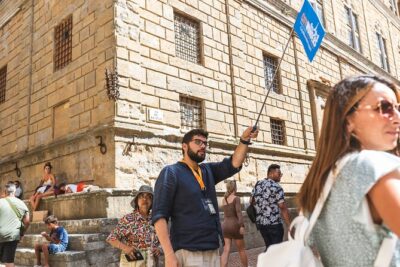
Tuscany & Montepulciano Day Trip with Lunch & Wine Tasting
Read our review →Browse the lists this tour appears in