
Review · LIGURIA TOURS
Guided Tour of Rolli Palaces UNESCO Site, Genoa
Palaces hide in plain sight here. Genoa’s Rolli Palaces tour brings you into four grand residences from the city’s 16th and 17th century Golden Century, when aristocratic families built homes fit for visiting princes. I especially like the small-group option and the chance to enter Palazzo Rosso, Palazzo Lomellino, Palazzo Tobia Pallavicino, and Palazzo Imperiale for just $16. The main consideration is that the tour runs in both Italian and English, so explanations can take longer than on a single-language visit.
You meet at the Tourist Information Centre on Via Garibaldi, one of Genoa’s finest historic streets, and spend about two and a half hours walking between palaces. I also like the mix of famous rooms and less expected details, including Palazzo Tobia Pallavicino’s Golden Room, a hidden fresco at Palazzo Lomellino, and a surprise garden. There are plenty of stairs, so bring sensible shoes and a little patience.
In This Review
- Key points to know before you book
- Why Genoa’s Rolli Palaces matter
- Starting on Via Garibaldi
- Palazzo Rosso and the Strada Nuova museums
- Palazzo Tobia Pallavicino and the Golden Room
- Palazzo Lomellino and the hidden fresco
- Palazzo Imperiale and the great staircase
- The bilingual format: helpful, but slower
- What $16 gets you
- Who should take this tour?
- My verdict on Genoa’s Rolli Palaces
- FAQ
- How much does the Rolli Palaces tour cost?
- How long does the tour last?
- Where does the tour begin?
- Which palaces are included?
- Is admission to the palaces included?
- What languages are offered?
- Is a small group available?
- Can I cancel for a full refund?
- Can I reserve now and pay later?
Key points to know before you book
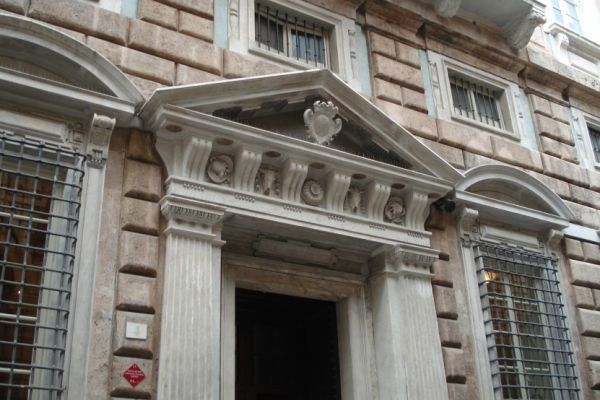
- Four historic palaces in one walk: The route includes Palazzo Rosso, Palazzo Lomellino, Palazzo Tobia Pallavicino, and Palazzo Imperiale.
- A rare look at Genoa’s aristocratic world: These homes once formed part of a public hosting system for cardinals, princes, viceroys, landowners, and ambassadors.
- The Golden Room is a major highlight: Palazzo Tobia Pallavicino offers some of the tour’s most ornate interior decoration.
- Look beyond the grand rooms: Palazzo Lomellino rewards careful attention with a hidden fresco and a garden surprise.
- The tour is bilingual: The guide presents in Italian and English, which works well for many groups but can make the pace slower.
- Good value at $16: You receive guided commentary and admission to the listed palaces, including Palazzo Rosso and Palazzo Imperiale.
Why Genoa’s Rolli Palaces matter
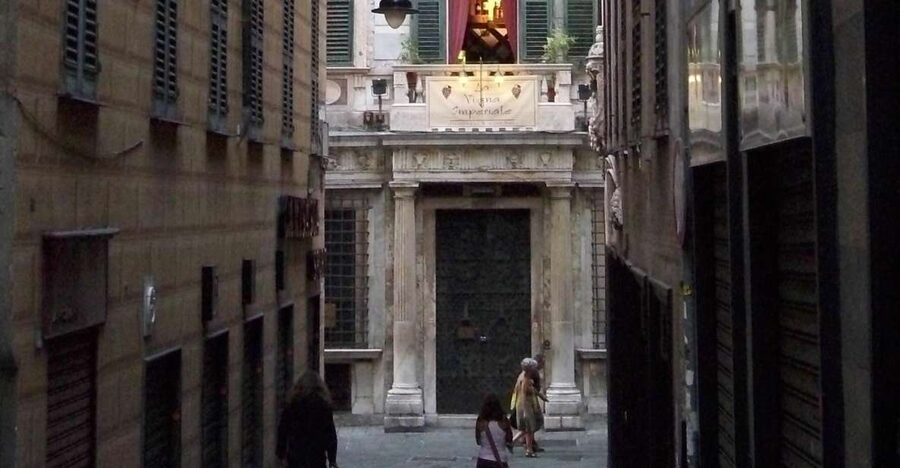
Genoa can be hard to read at street level. Its narrow lanes, tall buildings, and grand facades often conceal what lies behind the doors. The Rolli Palaces give you a way into that private world.
During the 16th and 17th centuries, Genoa was enjoying its Secolo d’Oro, or Golden Century. Powerful families made fortunes through banking, trade, finance, and politics. They built palaces along the city’s grand streets, with courtyards, loggias, open staircases, gardens, and ceremonial rooms designed to impress.
These were not only private homes. In 1576, the Senate of the Republic of Genoa created a formal system for hosting state visitors. The palaces were listed on parchment rolls, called Rolli, and divided into three balloting lists according to their size and status.
The first list was reserved for cardinals, princes, and viceroys. The second included major landowners and other important figures. The third was for lesser princes and ambassadors. When a dignitary arrived, lots were drawn to decide which palace had the duty of hosting that person.
That arrangement is remarkable because it created one of Europe’s earliest organized systems of public hospitality. A palace visit was not simply a matter of finding an available room. It was a civic responsibility, assigned according to rank and the grandeur of the residence.
The Rolli Palaces became a UNESCO World Heritage Site in 2006. Their importance comes from the whole system, not just from individual buildings. You are seeing a network of residences that reveals how Genoa’s ruling class lived, entertained, and served the republic.
The Flemish painter Peter Paul Rubens saw the value of these buildings early. In the 17th century, he published drawings of Genoese palaces as models for the Antwerp nobility. That detail helps explain why these residences still feel carefully staged. Their owners were not merely building houses. They were building a public image.
A few more reviews worth comparing before you book
- Genoa: Aquarium of Genoa Entry Ticket
★ 4.5 · 10,075 reviews - Genoa: Hop-on Hop-off Tour Ticket
★ 4.0 · 1,524 reviews - Genoa: Half-Day Tour to Portofino
★ 4.2 · 1,123 reviews
Starting on Via Garibaldi
The tour begins at the Tourist Information Centre at Via Garibaldi 12red, in central Genoa. This is a sensible meeting point because Via Garibaldi is already part of the Rolli story. The street is lined with historic aristocratic buildings, so the setting prepares you for what follows.
A guide leads the group on foot between the palaces. The walk is described as manageable, but the route includes staircases and buildings set at different levels. You should expect more than a flat museum visit. The steps are part of the architecture and part of the fun, but they can make the tour tiring if you have difficulty walking.
The group may be small, depending on the departure. That matters in rooms where the decoration is the main event. A smaller group usually makes it easier to hear the guide and see details without standing at the back.
The guides have received strong praise for their presentation. Names noted by past participants include Marina, Ana, Manuela, Barbara, Christina, and Fausta. The most consistent compliment is that the guides connect the buildings to Genoa’s story instead of treating the tour as a string of disconnected rooms.
Ana, in particular, was praised for a clear, funny bilingual presentation and for answering questions patiently. Another guide, Manuela, was described as generous with her time and especially good in English. One guide even pointed out several historic shops along the route, adding a little modern street life to the palace story.
Palazzo Rosso and the Strada Nuova museums
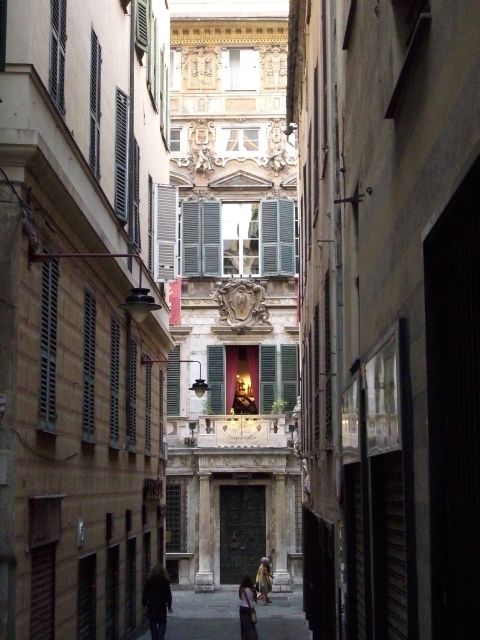
Palazzo Rosso is one of the main stops and one of the most useful for understanding Genoa’s art collections. The entrance is included, and the palace forms part of the Strada Nuova Museums.
The building gives you the polished public face of Genoese aristocracy. Expect grand rooms, carefully arranged works of art, and interiors where decoration was meant to communicate wealth and taste. The appeal is not limited to one painting or one room. It is the sense of moving through an actual noble residence rather than viewing objects in a plain gallery.
The guide helps explain how the rooms worked and why certain decorative choices mattered. That context is important because lavish palaces can blur together if you only look at ceilings and paintings. The commentary gives you a better sense of how families used these spaces to receive important guests and reinforce their standing.
Past visitors have also praised the views from the top of Palazzo Rosso when that option was offered as part of their visit. The tour information specifically includes entrance to Palazzo Rosso, while the rooftop or 360-degree view may not be guaranteed on every departure. If the guide mentions access, it is worth taking advantage of it.
Allow yourself time to look upward. Genoese palace interiors often reward slow observation, and frescoes can be easy to miss if you focus only on furniture or paintings. The guide’s explanations are particularly useful here, since a bilingual presentation can point out small details you might otherwise walk past.
Palazzo Tobia Pallavicino and the Golden Room
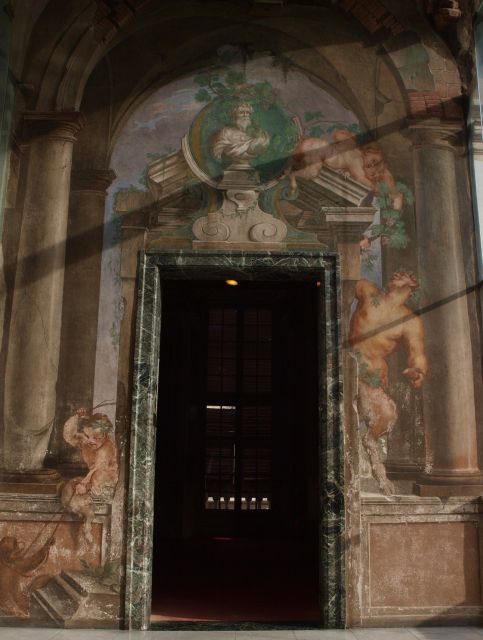
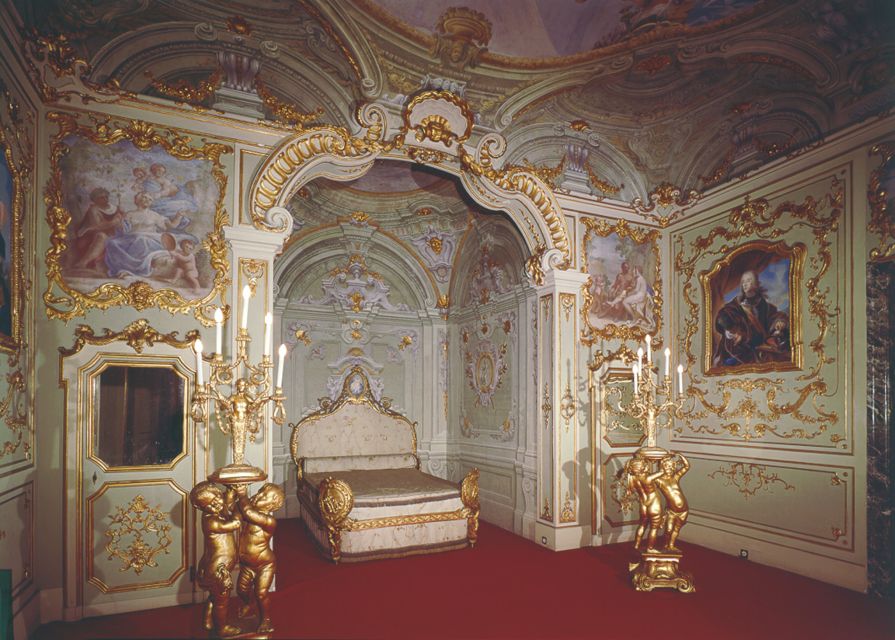
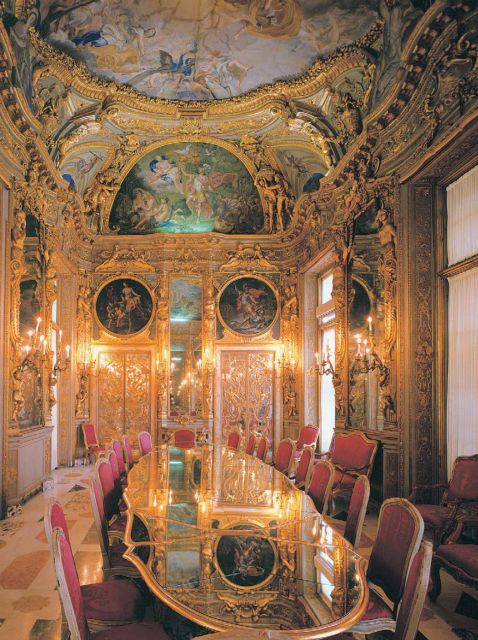
Palazzo Tobia Pallavicino provides one of the tour’s clearest moments of visual excess. The main draw is the Golden Room, an ornate interior that shows how far Genoese families went to impress guests.
The room is valuable not only for its decoration but also for what it tells you about the social role of the palaces. A room like this was a statement. It announced that the family had the money, connections, and taste to host people of the highest rank.
Here, I would pay attention to the relationship between the ceiling, walls, doors, and surrounding decoration. The effect comes from the complete setting, not from one isolated piece. This is the kind of room that makes a guided visit worthwhile because the guide can explain the family, the building, and the purpose of the space at the same time.
The Golden Room is also a good reminder that Genoa’s wealth was not always obvious from its cramped medieval lanes. Behind the narrow streets were residences built on a grand scale. The contrast between the public street and the private interior is one of the best parts of the tour.
A different sort of day out around Genoa:
- Genoa: Pelagos Sanctuary Whale Watching Cruise
★ 4.2 · 806 reviews - Genoa: Cetacean Watching Cruise with Marine Biologist Guide
★ 4.3 · 745 reviews - Genoa: 2-Hour Guided Walking Tour of the Historical Center
★ 4.2 · 605 reviews - From Genoa: Boat Tour to Portofino with Free Time to Explore
★ 4.5 · 579 reviews
Palazzo Lomellino and the hidden fresco
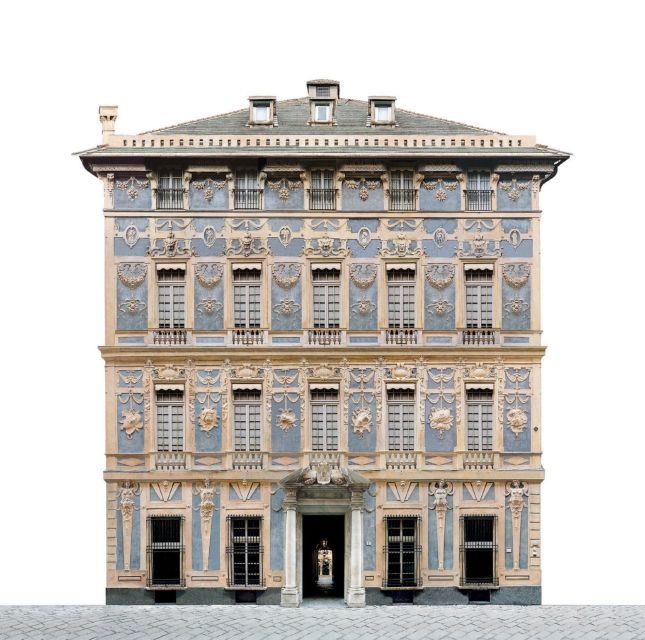
Palazzo Lomellino adds a little mystery to the itinerary. Along with its historic rooms, it is known for a hidden fresco that you might easily miss without guidance.
That small discovery changes the pace. The tour is not only about walking into the biggest and brightest room. You also get moments that reward close attention. A fresco tucked away in the building gives you a reason to look carefully at walls, corners, and less obvious areas.
The palace also offers a garden surprise. One past visit included access to a secret garden area, and the garden has been singled out as one of the most memorable parts of the route. Because access can depend on the day’s arrangements, you should treat it as a welcome bonus rather than the sole reason to book.
Palazzo Lomellino is especially useful for showing how these residences combined formal display with more private spaces. Grand rooms were designed for ceremony, while gardens and tucked-away corners offered a quieter side of palace life.
Palazzo Imperiale and the great staircase
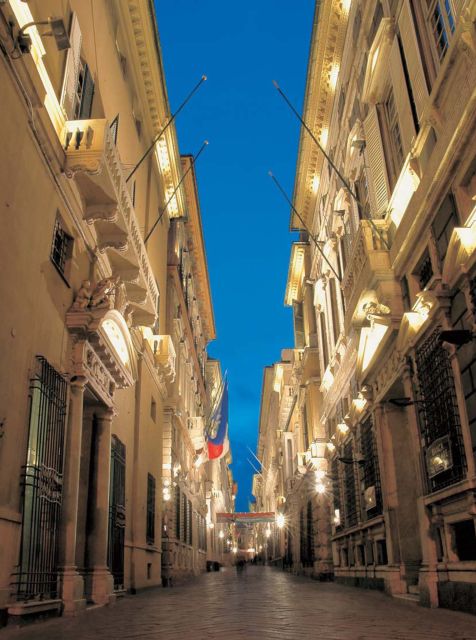
The final named stop is Palazzo Imperiale, where admission is included. The building is particularly noted for its magnificent staircase.
The stairs are not simply a way to reach the next room. In a palace, the arrival mattered. An open or monumental staircase allowed a visitor to be seen as he or she entered, turning movement through the building into part of the ceremony.
You will walk up the staircase as part of the experience, which gives you a better feel for the scale of the palace than a photograph can provide. It is also one reason to wear comfortable shoes. The tour is not a strenuous hike, but the repeated stairs add up over two and a half hours.
Some past participants felt that only part of a palace was shown rather than the entire building. That is a fair limitation to keep in mind. These residences are large, and a short guided tour cannot reveal every room, floor, and courtyard. The advantage is that you see a focused selection without spending an entire day inside one building.
The bilingual format: helpful, but slower
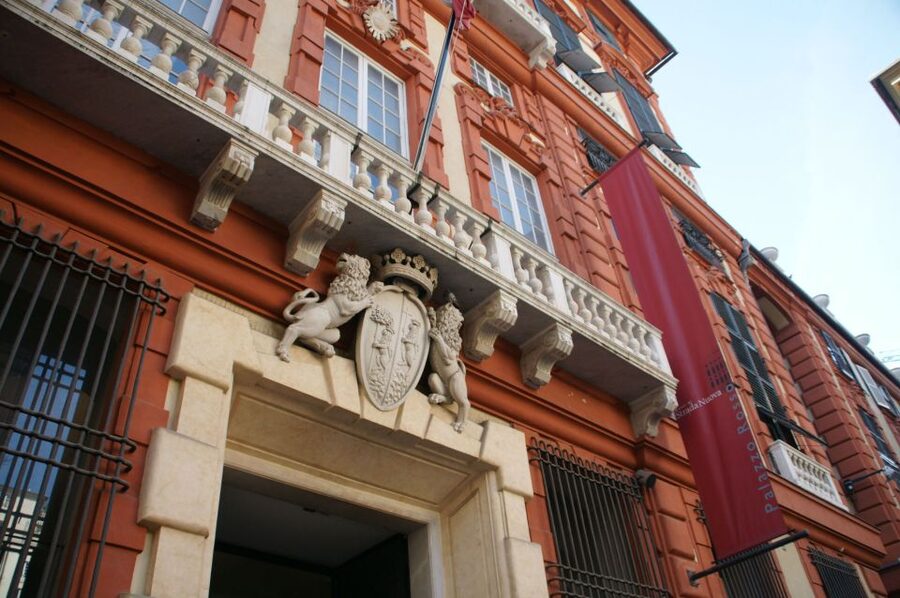
The guide presents in Italian and English, and this is the tour’s clearest practical trade-off.
A good bilingual guide can make the arrangement work very well. Fausta was praised for switching between languages without making the presentation feel dull, and other guides have managed to keep both language groups involved. For an English speaker, the format also offers a chance to hear the place explained in the language of the city.
Still, every point must be presented twice. A few past participants found that the tour took longer because of the repeated explanations. One English-language booking also turned out to be a bilingual group, which caused some frustration because the English-speaking participant had expected a single-language tour.
You should book this knowing that the guide may pause while the second language is covered. If you want the fastest possible pace and uninterrupted English commentary, this may test your patience. If you are happy with a measured tour and value access to several palaces in one outing, the bilingual setup is manageable.
The guide’s skill makes a big difference. The strongest experiences came when the guide was lively, clear, and comfortable answering questions in both languages. You may want to listen closely at the start for instructions about when to ask questions, especially if the group is large.
What $16 gets you
At $16 per person, this is a strong-value introduction to Genoa’s aristocratic architecture. The price includes the guided tour, entrance to Palazzo Imperiale, entrance to Palazzo Rosso, and visits to Palazzo Lomellino and Palazzo Tobia Pallavicino.
That price would be appealing even for one major palace. Here, you get several residences and a guide who explains how they fit into Genoa’s political and social system. The value is greatest if you are interested in architecture, art, urban history, or the lives of the families who shaped the city.
The tour also saves you from trying to work out which palaces are open and how they connect. That matters in Genoa, where the buildings can be easy to pass without realizing what is behind the facade.
The limitation is that not every room or floor is necessarily included. You are paying for a guided selection, not unrestricted access to every part of four complete buildings. The tour also covers a lot in 2.5 hours, so you should not expect long, quiet museum time at each stop.
Free cancellation up to 24 hours in advance and the option to reserve now and pay later make the booking less rigid. Starting times vary, so check availability before building the rest of your Genoa day around it.
Who should take this tour?
I would recommend it most strongly to first-time visitors who want a clear introduction to Genoa’s grandest historic center. You get architecture, art, civic history, and a practical walking route in one compact outing.
It is also a good match for anyone who has already wandered Genoa’s lanes and wants to understand what lies behind the doors. The tour gives meaning to Via Garibaldi and the palaces around it.
Art lovers should enjoy Palazzo Rosso and the decorated interiors. Architecture fans will appreciate the staircases, courtyards, loggias, and changing levels. Families with older children may also find the hidden fresco and garden surprise more engaging than a standard museum visit.
I would be more cautious if you dislike stairs, need a completely flat route, or strongly prefer a single-language tour. The available information does not give a detailed accessibility plan, so you should confirm any mobility needs before booking.
My verdict on Genoa’s Rolli Palaces
This is a well-priced way to see a side of Genoa that is easy to miss. The grand rooms are impressive, but the best part is the link between the buildings: these were working residences in a civic system created to host the republic’s most important visitors.
The guides are the heart of the experience. The strongest guides add humor, answer questions, and make the bilingual format feel natural. The main drawback remains the same: Italian and English explanations take time, and the exact rooms or garden areas available may vary.
I would book this tour if you want several palace interiors without spending much money or planning the route yourself. I would skip it only if you want a fast, single-language visit or need a tour with very few stairs. For most visitors interested in Genoa’s art and architecture, $16 for 2.5 hours is an easy value.
FAQ
How much does the Rolli Palaces tour cost?
The tour costs $16 per person.
How long does the tour last?
The guided visit lasts approximately 2.5 hours.
Where does the tour begin?
It starts at the Tourist Information Centre, Via Garibaldi, 12red, 16124 Genova GE, Italy.
Which palaces are included?
The tour includes Palazzo Rosso, Palazzo Lomellino, Palazzo Tobia Pallavicino, and Palazzo Imperiale.
Is admission to the palaces included?
Yes. The price includes entrance to Palazzo Imperiale and Palazzo Rosso, plus visits to Palazzo Lomellino and Palazzo Tobia Pallavicino.
What languages are offered?
The tour is conducted in Italian and English by a bilingual guide.
Is a small group available?
Yes, a small-group option is available.
Can I cancel for a full refund?
You can cancel up to 24 hours in advance for a full refund.
Can I reserve now and pay later?
Yes. The activity allows you to reserve your place and pay later.
Just added around Genoa
- Genoa: Aquarium of Genoa & City of Children and Youth Ticket★ 4.5 · 258 reviews
- Genoa: Aquarium & Christopher Columbus’ House Entry Tickets★ 4.4 · 258 reviews
- City Sightseeing Genoa Hop-On Hop-Off Bus Tour★ 3.0 · 259 reviews
- Genova: Segway Tour★ 4.9 · 275 reviews
- Genoa: The City of Children and Young Museum Entry Ticket★ 4.1 · 303 reviews
- Homemade Pasta and Pesto Class with a Local Chef in Genoa★ 5.0 · 305 reviews
- Genoa: Aquarium and FantaCinema Combined Ticket★ 4.6 · 314 reviews
- Taste Genoa: A Full Meal Walking Food Tour by Do Eat Better★ 5.0 · 509 reviews
Liguria Tours, compared.

Full-Day Tour to Camogli, San Fruttuoso & Portofino
Read our review →

Cinque Terre Small Group or Private Day Tour from Florence
Read our review →
Florence, Pisa w/Leaning Tower & Accademia Option
Read our review →Browse the lists this tour appears in