
Review · FOOD & DRINK
From Carrara: Marble Quarries Jeep Tour with Lardo Tasting
Carrara’s white mountains tell a surprising story. This three-hour jeep tour takes you from the city up to quarries nearly 1,000 meters above sea level, where Michelangelo once selected marble for his sculptures. You see both outdoor workings and an indoor quarry, then taste Lardo di Colonnata, the cured specialty once tied to the hard life of quarry workers.
I like the mix of big mountain views and hands-on history, especially the chance to see marble being cut rather than simply hearing about it. I also like the small group, limited to eight people, which gives you a better chance to ask questions. The main drawback is that the back seats can be hard for hearing, especially when the tour runs in more than one language, and the lardo tasting is fairly brief.
In This Review
- Key points to know before you go
- Why Carrara marble is worth the trip
- Meeting your guide in Carrara
- The jeep climb to the quarry zone
- Seeing marble extraction from the Roman era to today
- Inside an active marble cave
- What makes Lardo di Colonnata different
- Is three hours enough?
- The guides make the difference
- Value, group size, and who should book
- Should you book the Carrara marble quarry tour?
- FAQ
- How long does the Carrara marble quarry tour last?
- Where is the meeting point?
- What time does the tour start?
- Which languages are offered?
- How many people are in the group?
- Will the tour visit an indoor quarry?
- How high do the quarries reach?
- Is Lardo di Colonnata included in the experience?
- What should I bring?
Key points to know before you go
- Michelangelo’s marble source: Learn how the artist chose Carrara stone for his famous sculptures.
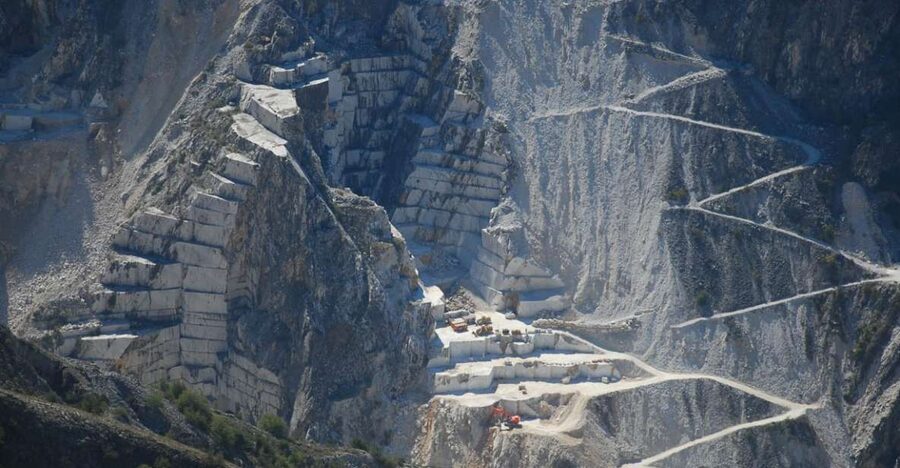
- Two very different quarry settings: The route can include open-air quarry views and an indoor marble cave.
- A steep off-road ride: The jeep climbs toward quarries reaching about 1,000 meters above sea level.
- Roman methods meet modern machinery: Your guide explains how extraction changed over the centuries.
- Lardo di Colonnata tasting: Sample the local cured pork product and buy some to take home.
- Small groups matter: With no more than eight participants, the experience feels more personal than a large coach tour.
Why Carrara marble is worth the trip
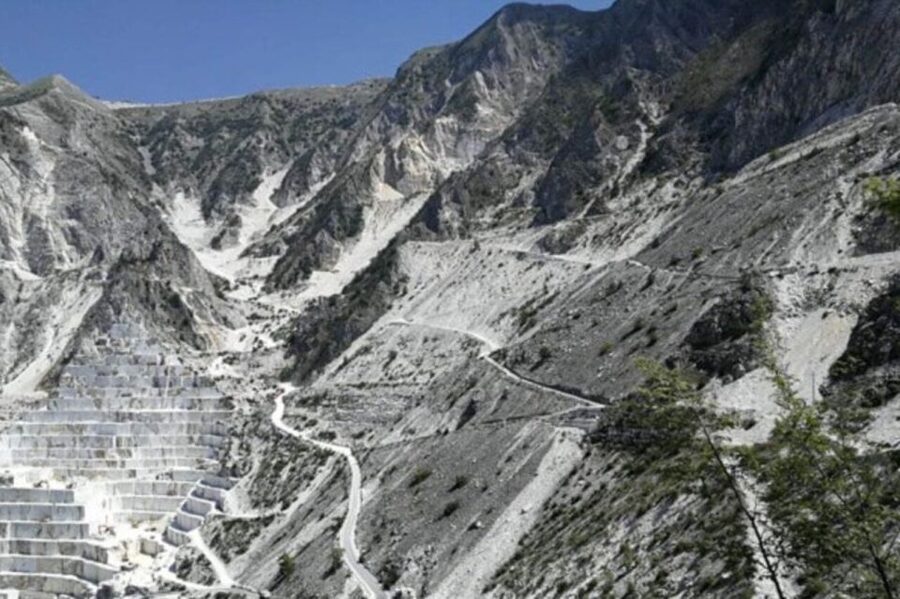
Carrara is not simply a town with a marble museum. Here, the mountains themselves are the source of the stone. White cuts in the steep slopes show where generations of quarry workers have removed blocks for buildings, monuments, and sculpture.
That physical connection is what makes the tour worthwhile. You do not just look at a polished statue in a gallery. You ride toward the place where the material began, then see the machinery and working faces that turn solid mountain into usable stone.
The cultural link to Michelangelo gives the visit an easy starting point. The guide explains how the artist came to Carrara to select marble for his work, including stone associated with his sculptures. If you enjoy art, this turns a familiar name into a practical question: what did the artist see in this particular rock, and how did it leave the mountain?
I found the experience especially useful for understanding the distance between finished art and raw material. A smooth white sculpture looks calm and effortless. The quarry is noisy, steep, industrial, and full of hard physical work. That contrast gives Carrara marble more meaning.
More Food Tours in Florence
- Florence: Chianti Wineries Tour with Wine Tasting
★ 4.5 · 8,301 reviews - Small-Group Wine Tasting Experience in the Tuscan Countryside
★ 5.0 · 7,392 reviews - SMALL-GROUP Wine Safaris: Tuscan Wine Tasting Tours from Florence
★ 5.0 · 5,088 reviews
Meeting your guide in Carrara
The stated meeting point is Piazza Vittorio Veneto, in front of the stadium. Morning departures meet at 9:30 am, while afternoon departures meet at 2:30 pm. The exact coordinates are 44.06465148925781, 10.074934005737305.
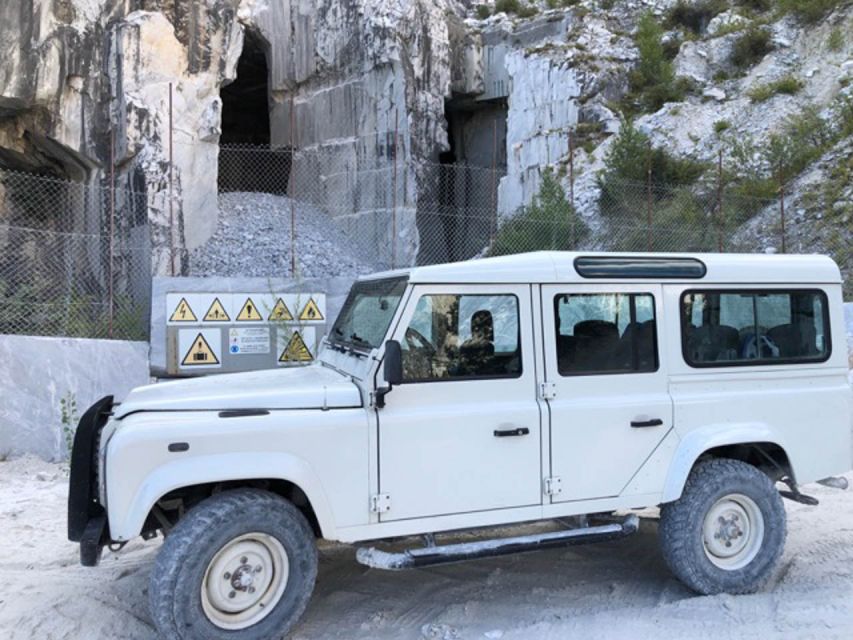
Arrive with enough time to find the stadium area and your vehicle. The tour uses a stylish off-road vehicle rather than a standard sightseeing bus, and the vehicle is essential once the road begins climbing toward the quarry zone.
Some departures have included pickup at the train station, and some guides have taken participants back to a cruise port. Those arrangements should be confirmed before you rely on them, since the published meeting point is the stadium in Carrara.
The small group limit of eight is a real advantage. You spend less time waiting for a large crowd to gather, and the guide can respond to questions about mining, sculpture, engineering, or local food. Guides named in past departures include Luca or Lucca, Beatrice, Giorgio, Manuela, Lavinia, and Tomas.
The tour is offered in English, Italian, and French. If you speak English and another language is also being used, sit where you can hear the guide clearly. One useful warning is that passengers in the rear seats have sometimes found the commentary difficult to hear.
The jeep climb to the quarry zone
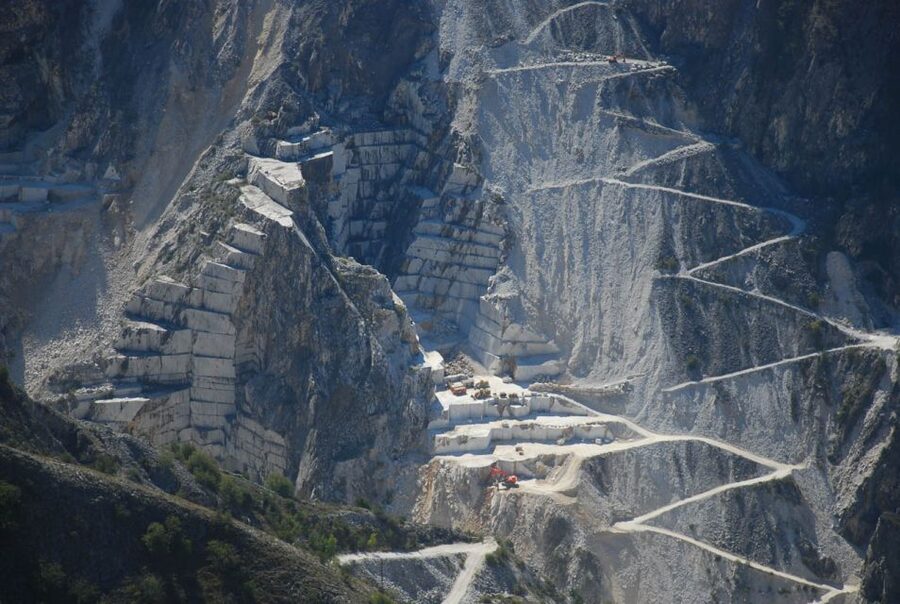
The drive is part of the attraction, not just transportation. The vehicle takes you up narrow mountain roads to quarry sites high above Carrara, with routes reaching about 1,000 meters above sea level.
From these heights, you get a sense of the scale of the marble industry. The white stone is not a small pocket hidden in one hillside. It forms the mountain itself, and the quarry cuts show how much material has been removed over time.
You should expect a rougher ride than you would get in a regular car. That is the point of using an off-road vehicle, but it may not suit someone who wants a smooth, quiet transfer. The drivers receive repeated praise for handling the steep climb, and an experienced driver makes a major difference on this route.
The views are one of the strongest parts of the outing. Several people have wished for more photo stops, so keep your camera ready rather than assuming every scenic place will mean a long pause. The schedule is only three hours, and the guide needs to balance views, quarry visits, explanations, and tasting.
Seeing marble extraction from the Roman era to today
At the quarry sites, the guide explains how workers extracted marble during the Roman period and how the process changed with modern technology. This is where the visit becomes more than a scenic drive.
Older methods relied on far more manual labor and slower cutting. Modern quarrying uses powerful equipment and diamond saws to separate and shape enormous blocks. A roadside stop has sometimes included a close look at a diamond saw demonstration, giving you a better idea of how the stone is cut today.
The explanation also helps you understand the marks on the mountain. Straight cuts, stepped quarry faces, machinery, and blocks waiting for transport are not random details. They show the stages of production, from separating stone from the mountain to preparing it for workshops and construction sites.
The guides are particularly good at connecting Carrara to wider questions about excavation and monument building. Past discussions have included comparisons with large American stone projects, including the Crazy Horse monument. That sort of comparison helps if you are interested in engineering as much as art.
The quality of the explanation depends partly on where you sit and how many languages are in use. In a single-language group, the guide can spend more time on questions. In a mixed group, information may be repeated or shortened, and the rear seats may not be ideal.
More Italian food and wine outings:
- Winner 2025 Florence Sunset Food & Wine Tour by Eating Europe
★ 5.0 · 5,015 reviews - San Gimignano, Siena, Monteriggioni, Chianti Day Trip with Lunch & Wine Tasting
★ 4.5 · 4,432 reviews - From Florence: Small Group Wine Tasting Tour to Tuscany
★ 4.9 · 3,902 reviews - Florence: Cinque Terre Park Day Trip with Optional Street Food
★ 4.5 · 3,593 reviews
Inside an active marble cave
The indoor quarry is the most memorable stop for many people. Instead of seeing only a white mountain from outside, you enter the mountain and look at the marble from within.
The interior makes the scale easier to grasp. Solid rock rises around you, while cut surfaces reveal the work needed to open a passage and remove usable material. Some departures have entered an active quarry and seen marble being cut fairly close up, though operations can vary by season, holidays, strikes, or work schedules.
Do not expect a dark, narrow tunnel ride. The indoor area has been described as open enough that it does not feel claustrophobic. Still, this is a working quarry setting, not a polished museum, so comfortable clothing is the right choice.
The indoor stop also gives you a useful contrast with the exterior viewpoints. Outside, you appreciate the size and bright whiteness of the mountain. Inside, you see the texture, weight, and stubbornness of the stone. Together, the two stops explain why quarrying is such a demanding trade.
If quarry activity is paused during a holiday break, you may still be able to enter and see the interior. What you see being cut on the day will depend on current operations.
What makes Lardo di Colonnata different
After the quarry visit, the tour turns from stone to food at a lard factory. Lardo di Colonnata is the traditional cured pork product associated with Colonnata and the quarry workers’ diet.
The tasting is not a full meal. It is a short local-food stop that rounds out the story of the quarries. Workers needed food that could be preserved and carried, and lardo became closely linked with life in the marble mountains.
The taste is richer and more distinctive than the name may suggest. If you enjoy traditional cured meats, you will probably appreciate the chance to sample it in its home area. If you are unsure about fatty foods, treat the tasting as a small cultural stop rather than the main reason to book.
You usually have time to order a drink and browse souvenirs. Lardo is also practical to take home, and it has been described as relatively affordable. The factory stop gives the tour a more local feel than a quarry visit followed by a generic roadside café.
Is three hours enough?
Three hours is a sensible length for this experience. You get the climb, outside quarry views, an indoor visit, historical explanations, and the lardo tasting without giving up an entire day in Tuscany.
The tradeoff is a fairly brisk schedule. You will not have unlimited time at every viewpoint, and the tour may not satisfy you if you want long photography sessions or a detailed technical study of quarrying. One participant specifically wished for additional photo stops.
For most people, the compact format works well. You can fit it into a day based in Carrara, combine it with a train journey, or use it as an unusual break from the churches and piazzas of Tuscany. It is also a useful option during a cruise stop if your timing and transport arrangements are confirmed.
The morning and afternoon departures make planning easier. Check the available start times for your date, then allow time to reach the stadium meeting point.
The guides make the difference
This tour depends heavily on the guide, because the quarries are impressive but the details give them meaning. The strongest guides explain the history of mining, answer questions fully, and keep the drive entertaining without turning it into a lecture.
Luca, also spelled Lucca in some bookings, has been especially praised for his explanations, friendly manner, and ability to handle the mountain roads. Beatrice has been described as charming and engaging, while Manuela has led informative visits through the quarry area. Other named guides include Lavinia and Tomas.
The best guides make room for different interests. A sculptor can ask about the stone used by Michelangelo. Someone interested in machinery can ask about diamond saws and modern cutting. A family can focus on the dramatic drive and the views.
The main communication issue is not the content but the acoustics. If the guide speaks Italian to one passenger while also addressing an English or French group, you may miss some extra information. A translator has helped on some departures, but you should still choose your seat carefully and ask the guide to repeat anything you cannot hear.
Value, group size, and who should book
No price is provided here, so I cannot judge the exact fare against competing tours. I can say what you receive for the time: private-feeling transport into a difficult-to-reach quarry area, a live guide, two types of quarry viewing, a food tasting, and the chance to ask questions in a group of no more than eight.
That combination gives the tour good value for someone who would otherwise struggle to reach the quarries independently. The off-road vehicle is not a luxury extra for show. It gets you to the high sites and makes the journey part of the experience.
I would recommend it most strongly to:
- People interested in Michelangelo, sculpture, or Italian art
- Anyone curious about mining, machinery, or industrial history
- Visitors who want a break from conventional Tuscan sightseeing
- Cruise passengers or train-based visitors who can match the departure time
- Food-minded visitors who enjoy local cured products
- Small groups who prefer conversation over a large bus tour
I would think twice if your priority is a slow photography outing, a full meal, or a completely quiet ride. You should also consider the multilingual format if hearing every word of the commentary matters to you.
Wear comfortable clothes, bring a camera, and keep your schedule flexible enough for the mountain route. You do not need to be an art expert to enjoy the visit. The stone, the road, the working quarry, and the food all explain Carrara in different ways.
Should you book the Carrara marble quarry tour?
Yes, if you want to see where Carrara marble comes from rather than only admire it in finished buildings and sculptures. The indoor quarry is the strongest reason to choose this particular outing, while the mountain drive and Lardo di Colonnata tasting give it variety.
I would book it for an art-focused trip, a cruise stop, or any Tuscany itinerary that needs something more unusual than another town square. Just accept the limits: three hours moves quickly, photo stops may be short, and the back of the vehicle may not be the best place for hearing the guide.
For the best experience, request a seat with clear sound, arrive early at Piazza Vittorio Veneto, and ask about train-station or cruise-port transport before booking. If those details fit your day, this is a memorable and useful way to understand Carrara’s famous white gold.
FAQ
How long does the Carrara marble quarry tour last?
The tour lasts three hours.
Where is the meeting point?
Meet your guide in Piazza Vittorio Veneto in Carrara, in front of the stadium. The coordinates are 44.06465148925781, 10.074934005737305.
What time does the tour start?
The available departure times are 9:30 am and 2:30 pm. Check availability for the date you want.
Which languages are offered?
The tour is offered in English, Italian, and French.
How many people are in the group?
The group is limited to eight participants.
Will the tour visit an indoor quarry?
The tour includes access to an indoor marble quarry. Depending on quarry operations, you may also see marble being cut inside or near the working area.
How high do the quarries reach?
The off-road vehicle drives to quarry areas reaching up to about 1,000 meters above sea level.
Is Lardo di Colonnata included in the experience?
The itinerary includes a visit to a lard factory with a tasting of Lardo di Colonnata.
What should I bring?
Wear comfortable clothes. A camera is useful for the quarry views, and you may want to bring room for souvenirs or lardo purchased during the visit.
Just added around Florence
- Palazzo Vecchio guided experience with entrance ticket★ 4.5 · 249 reviews
- Lucca Bikes and Bites with food tastings for Small Groups or Private★ 5.0 · 249 reviews
- Perfume Masterclass in Florence: Make your Own Personal Fragrance★ 4.5 · 253 reviews
- Florence Oltrarno Neighborhood Food & Wine Dine Around★ 5.0 · 253 reviews
- Florence: Cathedral, Dome and Terraces Guided Tour★ 4.5 · 253 reviews
- Florence: 1.5-hour Santa Croce Guided Experience★ 4.8 · 254 reviews
- Florence: Pitti Palace and Palatina Gallery Ticket and Tour★ 4.9 · 255 reviews
- Private Florence Tour by Golf Cart ETukTuk with Audio Guide★ 4.0 · 256 reviews
Food & Drink, compared.
Small-Group Wine Tasting Experience in the Tuscan Countryside
Read our review →
Tuscany & Montepulciano Day Trip with Lunch & Wine Tasting
Read our review →
Rome Twilight Trastevere Food Tour by Eating Europe
Read our review →
SMALL-GROUP Wine Safaris: Tuscan Wine Tasting Tours from Florence
Read our review →
Florence Sunset Food & Wine Tour by Eating Europe
Read our review →
San Gimignano, Siena, Monteriggioni, Chianti Day Trip with Lunch & Wine Tasting
Read our review →
Browse the lists this tour appears in