
Review · SICILY TOURS
Underground Catania
Ancient Catania lies below your feet. This 2 to 3 hour walking tour links Roman baths, lava caves, catacombs, and a buried river beneath the city center. I especially like the rare access to places you would struggle to find alone and the way guides such as Oreste and Matilde connect each site to Catania’s volcanic past.
The tour also offers a welcome break from Sicily’s heat, since several stops are underground and naturally cool. I like the small maximum group of eight, which allows for questions and a more personal pace. The main caution is value: the experience costs about $96.79 per person, and one recent account found the group arrangement less private than expected.
In This Review
- Key points to know before booking
- Why Catania’s underground world matters
- Roman baths beneath the cathedral
- The cathedral and the city’s rebuilding story
- The Amenano River under A Putia dell’Ostello
- San Gaetano alle Grotte and the rock-cut crypt
- How the route feels in practice
- Private tour or small-group experience?
- Is $96.79 a fair price?
- The guides make or break the experience
- Who should book Underground Catania?
- My booking advice
- FAQ
- Where does Underground Catania begin?
- Where does the tour end?
- How long does the tour last?
- What language is the tour offered in?
- How large can the group be?
- Are admission tickets included?
- Are service animals allowed?
- Can I cancel for a full refund?
Key points to know before booking
- Roman baths beneath Piazza Duomo: See the surviving section of the vast Terme Achilliane complex below the cathedral.
- A buried river under a restaurant: Visit a basalt cave where a branch of the Amenano still flows.
- A church inside an ancient lava cave: San Gaetano alle Grotte combines volcanic rock, Roman burial use, and early Christian tradition.
- Strong archaeological guidance: Oreste, Matilde, Maria, and other guides are praised for clear explanations and lively storytelling.
- A compact central route: The tour begins at Piazza del Duomo and ends near Piazza Stesicoro.
- Small, but not always fully private: The maximum is eight people, so confirm the group setup if exclusivity matters to you.
Why Catania’s underground world matters
Catania is a city repeatedly rebuilt. Lava flows, earthquakes, wars, and changing waterways have altered its streets and foundations over many centuries. This tour helps you see that the city is not simply old, it is layered.
You begin in the center, near Piazza del Duomo, then move through several underground spaces before finishing at Piazza Stesicoro. The route gives you a useful timeline: Roman bathing, the Amenano River, early Christian worship, lava, earthquakes, and the rebuilding of Catania.
I find this more rewarding than a standard walk around grand churches and ornate squares. Above ground, Catania can look strongly Baroque. Below ground, you see the rough basalt, earlier structures, old water channels, and the physical evidence of destruction and rebuilding.
The guide matters a great deal here. These places do not always explain themselves. A dark chamber or rough stone wall becomes far more interesting when you understand how it was used, what buried it, and how it relates to the city above.
The strongest feedback centers on the guides’ archaeology background and their ability to answer questions. Oreste is repeatedly praised for his command of Catania’s past, while Matilde is noted for her energy, patience, and ability to adjust the experience to the group. Maria is also praised for making the city’s story clear and engaging.
A few more reviews worth comparing before you book
- From Trapani: Cruise to Favignana and Levanzo with lunch
★ 4.2 · 2,286 reviews - Agrigento: Valley of the Temples Skip-the-Line Sunset Tour
★ 4.5 · 1,512 reviews - From Trapani: Day Cruise to Favignana & Levanzo with Lunch
★ 4.3 · 1,483 reviews
Roman baths beneath the cathedral
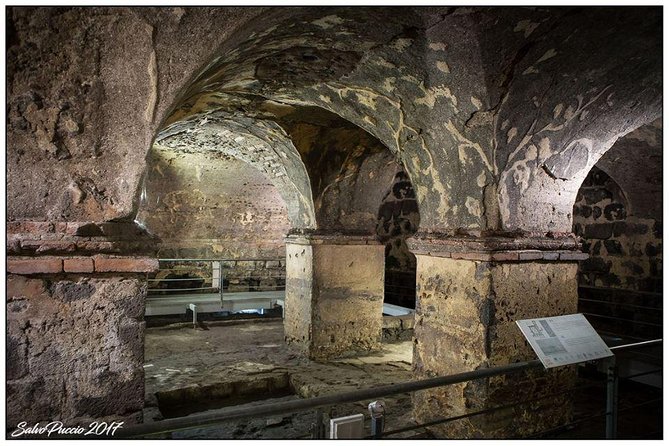
The first stop is the Terme Achilliane, a large thermal complex dating from the third or fourth century AD. It once extended beneath the area of Piazza Duomo, but only a portion remains open for access below the cathedral.
You can expect about 20 minutes here. The visit is less about seeing a complete bathhouse and more about understanding the scale of Roman Catania. The surviving rooms give you a sense of how much of the ancient city remains under the modern one.
This is an especially useful opening stop because it changes your sense of direction. You are standing in the heart of Catania, close to the cathedral and the city’s most familiar monuments, yet the Roman world is directly underneath.
The guide’s explanation adds the needed context. Without it, the remains could seem like a collection of stone walls. With the story of the larger thermal complex, you can picture the rooms as part of a working public facility rather than an isolated ruin.
Admission is included. The space is underground and may feel enclosed, so this stop is best appreciated by someone who enjoys archaeological remains more than polished museum displays.
The cathedral and the city’s rebuilding story
The next stop is the Basilica Cattedrale di Sant’Agata, the religious center of Catania. The tour allows about 20 minutes to discuss the cathedral and its place in the city’s long cycle of destruction and reconstruction.
The cathedral combines Norman origins with later Baroque rebuilding. Its story is tied to Saint Agatha, the city’s patron saint, and to the people of Catania, who repeatedly restored their city after major disasters.
This stop provides an important contrast with the underground spaces. You move from buried Roman structures to a major living church, from rough archaeological remains to the formal architecture of the Baroque city.
The cathedral visit is listed as free admission, but the tour is not simply a quick look inside. The value comes from hearing how the building changed over time and how the sacred center of Catania connects to the city’s older layers.
If you have already visited the cathedral on your own, the guide can still add useful context. If you have not, this is a good point in the route to connect the city’s religious identity with the archaeological spaces you have just seen.
The Amenano River under A Putia dell’Ostello
One of the tour’s most unusual stops is A Putia dell’Ostello, where you enter a sliding cave containing a branch of the Amenano River. The stop lasts around 10 minutes, but it may be one of the most memorable moments.
The Amenano once flowed on the surface and helped feed the Lake of Nicito. Over time, volcanic eruptions, earthquakes, and changes to the city pushed the river below ground. Today, a section still moves beneath the historic center.
The setting is particularly striking because the entrance is connected with a restaurant. That ordinary urban setting makes the underground basalt grotto feel even more unexpected. You can be surrounded by the daily life of Catania one moment and standing beside an ancient watercourse the next.
The short visit means you should not expect a long cave exploration. Instead, think of it as a focused look at how natural forces shaped the city. The Amenano is not just an archaeological curiosity. It helps explain why Catania’s streets and buildings developed as they did.
This stop also shows why a guided visit is useful. Finding a small cave with a surviving underground branch of a river would be difficult without local direction, and the connection between the waterway, lava, and urban growth is easy to miss.
A different sort of day out around Sicily:
- Stromboli: Sunset Trekking at Sciara del Fuoco
★ 4.6 · 1,372 reviews - Etna Morning Trip
★ 4.5 · 1,241 reviews - Boat Tour Egadi Day discover Favignana and Levanzo from Trapani
★ 5.0 · 1,183 reviews - Agrigento: Valley of the Temples Ticket & App Audioguide
★ 4.3 · 1,160 reviews
San Gaetano alle Grotte and the rock-cut crypt
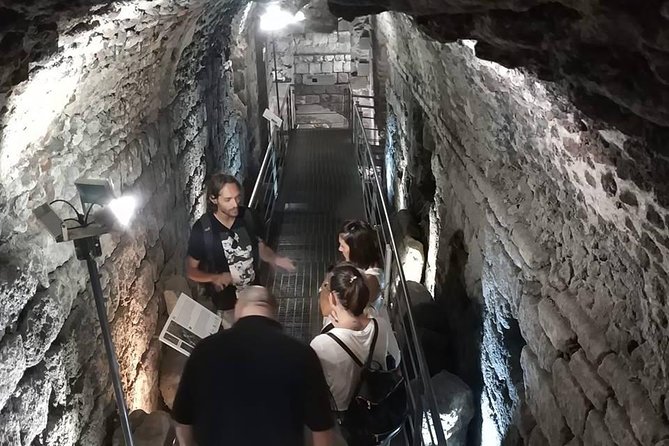
The final listed stop is Chiesa di San Gaetano alle Grotte, an ancient lava-flow cave used in different ways across the centuries. It was reused as a cistern in Greek times, later served as a Roman catacomb tomb, and is linked by tradition with the first burial of Saint Agatha.
A small church was reportedly built here as early as 262. Today, the crypt preserves traces of old frescoes and decorations carved directly into the living rock.
You spend around 20 minutes at this site. It brings together several themes from the tour: volcanic stone, ancient water storage, Roman burial customs, Christian worship, and Catania’s deep connection with Saint Agatha.
This is not a grand church in the usual Sicilian sense. Its appeal comes from the raw setting. The rock itself forms part of the space, and the marks left on it show how people adapted natural cavities for practical and religious use.
If you are interested in early Christianity or archaeology, this may be the strongest stop. If you prefer bright interiors and polished monuments, it can feel spare. The guide’s storytelling is important here, particularly when explaining how one cave could serve several purposes over a very long period.
How the route feels in practice
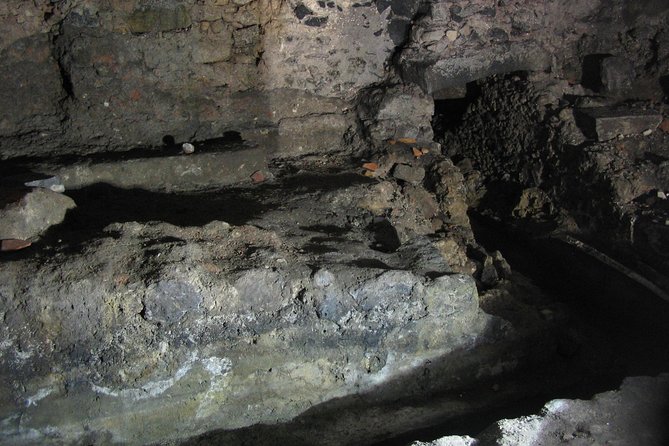
The tour begins at Piazza del Duomo, 7, and finishes at Piazza Stesicoro. Both locations are central, and the experience takes place around Catania’s historic core rather than requiring a separate vehicle transfer.
The overall duration is approximately two to three hours. The difference depends on the group, questions, walking speed, and time spent at the sites. One account found the pace a little slow, while other feedback valued the patience shown when people wanted to examine a detail or ask more questions.
That means you should not book this expecting a brisk checklist. The tour works best when you allow time for explanations. If you like to move quickly, tell the guide early. If you enjoy asking about archaeology, Saint Agatha, Mount Etna, or the 17th-century eruption and earthquake, the slower rhythm may suit you well.
The experience is offered in English. Confirmation is provided at booking, and service animals are allowed. The activity is near public transportation, and most people can take part, though the underground settings may be worth considering if enclosed spaces are difficult for you.
Wear sensible walking shoes. The tour includes several underground areas and a route through the city center, so comfort matters more than dressy footwear. Since the spaces can offer relief from the heat, this can be a smart afternoon choice during a hot visit to Catania.
Private tour or small-group experience?
The tour is described as private and exclusive to your group, but the practical group policy allows up to eight people. One account from a group of seven people from three separate parties felt the experience was not truly private and considered the price high for a small-group arrangement.
I would clarify this point before paying. If you are booking for your own family or friends, ask whether the departure will include anyone outside your party. The small size is still a plus, but private and small-group do not always mean the same thing.
A group of six or fewer may find the format especially comfortable. One account described a group of six enjoying the unusual sites and the timing of an evening visit. Small groups also make it easier to hear the guide in the caves and ask about details without holding up a large crowd.
Group discounts are available, which may improve the value for families or larger parties. The price is still substantial, so the best return comes if you care about archaeology, local history, and access to places that are not obvious from the street.
Is $96.79 a fair price?
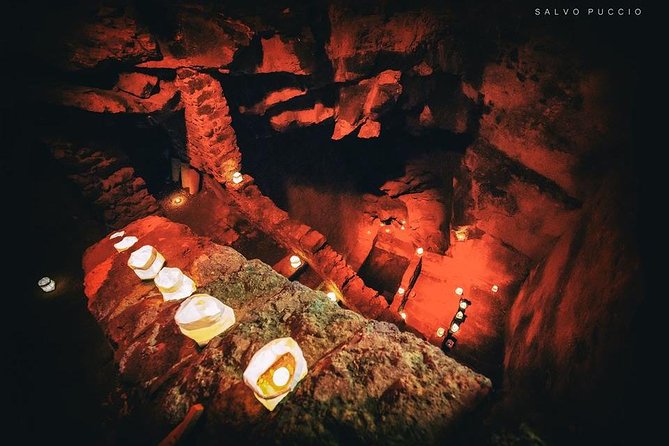
At about $96.79 per person, this is not a budget sightseeing walk. You are paying for a specialist-led experience with admission included at several underground sites, a compact group, and access to spaces that would be difficult to arrange independently.
The price makes more sense if you value interpretation. The Terme Achilliane, Amenano cave, and San Gaetano alle Grotte are not simply places to photograph. Their meaning depends on understanding the Roman, volcanic, religious, and urban stories connected to them.
It is also useful for a first visit to Catania. Several accounts describe the tour as a strong introduction to the city because it explains why the modern streets look the way they do. You come away with a clearer picture of how Etna, lava, earthquakes, and rebuilding shaped the city.
Still, I would not call it an automatic bargain. If you are mainly interested in famous churches, open squares, or a fast orientation walk, the cost may feel high. You should also check the currency carefully during booking, since one person was surprised by the charge being shown in a different currency than expected.
The tour can also serve as a substitute for a volcano excursion in one limited sense. It cannot replace seeing Mount Etna, but it does show how volcanic activity affected Catania and lets you examine layers of lava within the city itself.
The guides make or break the experience
This tour depends heavily on the person leading it. The most praised qualities are strong archaeological knowledge, clear explanations, warmth, patience, and a personal connection with Catania.
Oreste is described as a specialist who explains both the underground sites and the city around them. Matilde, also written as Mathilde in some accounts, is praised for bringing the history to life, answering questions, and adapting when rain or other conditions affected the day. Maria is noted for her passion and ability to reveal less familiar parts of the city.
The best guide style here is not a memorized speech. You need someone who can connect a Roman bath to the cathedral above it, then explain how lava and earthquakes changed the river and street plan. The strongest feedback suggests that this connection is one of the tour’s chief strengths.
Guides have also adjusted the timing to suit group needs and allowed extra time when people wanted to look more closely. If you prefer a very fast pace, say so politely. If you want more detail, ask. The experience appears to work best as a conversation rather than a rigid march from one door to the next.
Who should book Underground Catania?
I would recommend it most strongly to:
- People who enjoy archaeology and ancient buildings
- First-time visitors who want context for Catania
- Anyone curious about Etna’s effect on the city
- Families or friends who prefer a small guided group
- Visitors seeking a cooler activity during hot weather
- Repeat visitors who have already seen the cathedral and main squares
You may want to skip it if you dislike enclosed spaces, want a fast-paced tour, or are mainly looking for major monuments with no archaeological explanation. The route is unusual, but it is not a simple entertainment attraction. Much of the pleasure comes from listening and making connections.
The tour is also a good choice if you have limited time in Catania and want one experience that joins several periods of the city’s past. You will not see every underground site, but you get a varied sample: baths, river, lava cave, catacomb, church, and cathedral.
My booking advice
I would book this tour if you want to understand Catania from below as well as above. The combination of Roman remains, volcanic rock, underground water, and Christian tradition gives the city a physical depth that a normal sightseeing walk can miss.
Before booking, confirm whether your departure is genuinely private or shared with other parties. Also check the currency and allow the full three hours, especially if you enjoy questions and detailed explanations.
The cancellation terms are generous if your plans remain uncertain: you can cancel for a full refund up to 24 hours before the start time. Changes or cancellations inside that window are not accepted for a refund.
At 4.9 out of 5 from 302 ratings, with 97 percent recommending it, the experience has earned strong approval. My own practical verdict is simple: book it for the archaeology and the guide, not just for a list of underground rooms. If Oreste, Matilde, Maria, or another equally strong guide leads your group, you are likely to leave with a far better sense of how Catania became the city you see today.
FAQ
Where does Underground Catania begin?
The tour begins at Piazza del Duomo, 7, 95131 Catania, Italy.
Where does the tour end?
The tour ends at Piazza Stesicoro, 95100 Catania, Italy.
How long does the tour last?
The experience lasts approximately two to three hours.
What language is the tour offered in?
The tour is offered in English.
How large can the group be?
The maximum group size is eight people.
Are admission tickets included?
Admission is included for the Terme Achilliane, A Putia dell’Ostello, and Chiesa di San Gaetano alle Grotte. The cathedral stop has free admission listed.
Are service animals allowed?
Yes. Service animals are allowed on the tour.
Can I cancel for a full refund?
Yes. You can cancel at least 24 hours before the experience start time for a full refund. Cancellations or changes made less than 24 hours in advance are not refunded or accepted.
Just added around Sicily
- Trapani: Salt Pans Sunset Tour and Flamingo Way★ 4.4 · 252 reviews
- Agrigento: Valley of the Temples Entry Ticket & Audio Guide★ 4.1 · 268 reviews
- Classic Boat Tour in Palermo★ 5.0 · 268 reviews
- Stromboli: sunset trekking to Sciara del Fuoco – Ashàra★ 4.5 · 270 reviews
- Mini Cruise to Favignana and Levanzo with lunch on board★ 4.0 · 270 reviews
- Etna, Summit Craters★ 5.0 · 272 reviews
- Etna – Trekking to the summit craters (only guide service) experienced hikers★ 5.0 · 286 reviews
- Trapani: 2-Hour Salt Flats Tour★ 4.9 · 286 reviews
Sicily Tours, compared.
Agrigento: Valley of the Temples Skip-the-Line Sunset Tour
Read our review →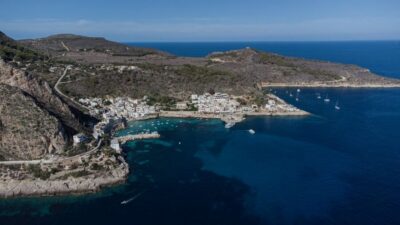
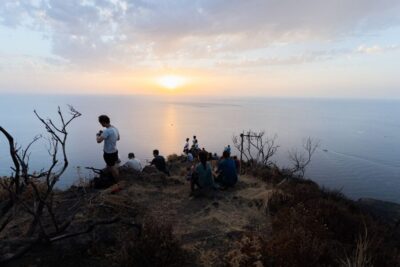
Stromboli: Sunset Trekking at Sciara del Fuoco
Read our review →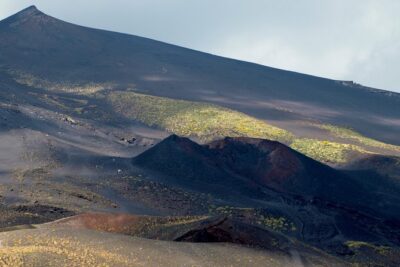

Boat Tour Egadi Day discover Favignana and Levanzo from Trapani
Read our review →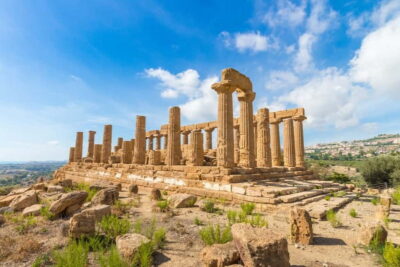
Agrigento: Valley of the Temples Ticket & App Audioguide
Read our review →
Browse the lists this tour appears in