
Review · SELF-GUIDED TOURS
Agrigento: Valley of the Temples Ticket & App Audioguide
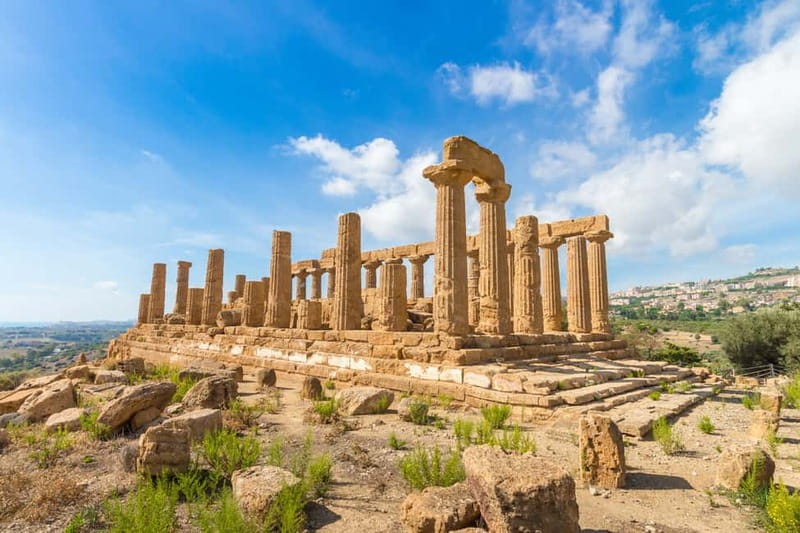
Ancient temples meet open Sicilian views. This self-guided visit gives you fast-track entry to Agrigento’s Valley of the Temples, a vast archaeological site founded as the Greek colony of Akragas in the sixth century BC. I like the freedom to walk at my own speed, and I like the chance to visit major Doric monuments without joining a guided group. The main catch is that skip-the-line does not always mean walk straight in, since you must exchange the voucher for a paper ticket at the Temple of Juno entrance.
The site is extraordinary, but this is a long outdoor walk with limited shade. I would choose early morning or late afternoon, especially in summer. The app audioguide adds useful context, though its setup has caused confusion for some visitors, and the ticket price may not be the best deal if you qualify for free admission or want a combined ticket with the archaeological museum.
In This Review
- Key points to know before you go
- What you are buying for $19
- Getting to the correct entrance near the Temple of Juno
- Walking through Akragas, the ancient Greek colony
- Temple of Juno and the upper approach
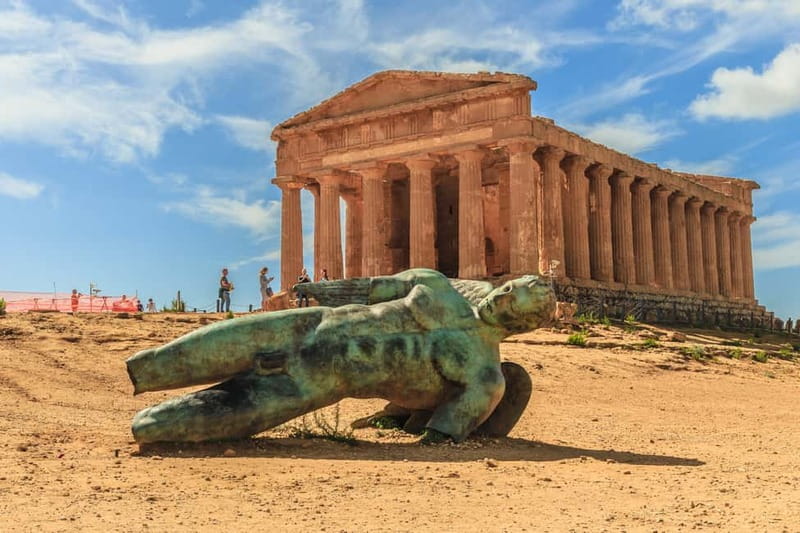
- Temple of Concordia, the great highlight
- Temple of Zeus and the fallen giants
- Temple of Heracles and the aqueducts
- The gymnasium and public life beyond the temples
- Choosing the best time, from morning heat to evening lights
- How the app audioguide performs
- Accessibility, pace, and practical comfort
- Cancellation and booking flexibility
- Should you book this Valley of the Temples ticket?
- FAQ
- Where do I exchange the voucher?
- Is transportation included?
- How long is the ticket valid?
- Can I enter more than once?
- Is there a live guide?
- Do I need identification?
- Is the site wheelchair accessible?
- Can I cancel the booking?
Key points to know before you go
- Start at the Temple of Juno ticket office: This is the only place where you can exchange your voucher for entry.
- Expect a single-entry visit: Your ticket is valid for one admission during one day.
- Allow time for a serious walk: The site covers about 1,300 hectares, with temples, aqueducts, terraces, and the gymnasium spread along the route.
- Time your visit for cooler air: Early morning and evening are more comfortable than a hot afternoon.
- The audioguide is helpful but not flawless: Some visitors find the app less useful than the audio option sold at the site.
- The temples look different at sunset: A late afternoon visit can lead into evening, when some monuments are lit.
What you are buying for $19
At $19 per person, this experience is mainly an admission ticket with a digital audioguide. You also receive access to the I Tesori d’Italia exhibition through December 31, 2025, plus a Pemcards digital photo service that lets you turn a holiday picture into a real postcard.
The price can make sense when the entrance is busy and you value arranging your ticket before arriving. The site is one of Sicily’s essential archaeological stops, and avoiding the regular ticket queue can save time during a crowded period.
Still, I would check the details before paying. You must exchange the voucher for a physical ticket, so the process may involve a shorter line rather than no line at all. Several visitors also found that the standard admission price at the gate was lower, while children and some visitors with disabilities may qualify for free or reduced entry. If you want the nearby museum as well, a combined ticket may offer better value.
This is not a guided tour. You will not have a live guide walking beside you, answering questions, or adjusting the pace. You receive a digital audioguide instead, which suits independent sightseeing but may disappoint you if you want a full explanation of every ruin.
More Valley of the Temples visits:
- Agrigento: Valley of the Temples Skip-the-Line Sunset Tour
★ 4.5 · 1,512 reviews - Agrigento: Valley of the Temples E-Scooter Tour
★ 4.6 · 557 reviews - Palermo: Valley of the Temples and Scala dei Turchi Day Trip
★ 4.1 · 380 reviews
Getting to the correct entrance near the Temple of Juno
The meeting point matters here. Take your voucher to the Temple of Giunone ticket office, near the Temple of Juno on Via Panoramica Valle dei Templi. This is the only entrance where the voucher can be exchanged.
Do not assume you can use the QR code at any gate. Arrive with the voucher ready on your phone, then allow time for the exchange and the required security check. If you selected a reduced-price ticket, bring valid identification.
Once inside, your visit begins near the upper section of the archaeological area. This is useful because the route leads you toward the major temple zone and gives you access to some of the site’s finest views. Transportation is not included, so you must arrange your own way to the entrance.
The activity returns to the same general meeting point, but you should treat the Valley of the Temples as a one-way style walk through a broad area rather than a compact museum visit. A shuttle service has been available for the return between parts of the site for an extra charge, but it is not included in this ticket. Check the current operation on arrival if you need help avoiding the full walk back.
Walking through Akragas, the ancient Greek colony
Agrigento’s importance begins with Akragas, founded in the sixth century BC. It became one of the largest Greek cities on the Mediterranean, and the remains you see today were once part of a major public and religious center.
The site is not a single temple with a few stones around it. It includes terraces, roads, aqueducts, public spaces, and scattered monuments across a wide area. That size gives the visit its power, but it also explains why comfortable shoes, water, and sensible timing matter.
I like the way the ruins share space with open countryside and views toward Agrigento and the sea. The setting helps you understand why this was more than a collection of religious buildings. You are walking through a large ancient city, even though only parts of it survive.
The audioguide can help explain the layout and the purpose of the ruins. Use it as a companion rather than as the entire experience. Some visitors found the digital guide weak or awkward to operate, while others preferred the independence of listening only when they wanted more detail. If the app does not work well for you, the information panels and maps around the site still provide useful help.
Temple of Juno and the upper approach
The Temple of Juno, or Tempio di Giunone, is close to the ticket office and forms a natural beginning to the visit. Its position gives you an immediate sense of the scale and terrain of the Valley of the Temples.
You can pause here to get your bearings, check the map, and decide how much time you want to spend at each monument. The site rewards a slow pace, but you do not need to examine every stone to enjoy it. If the day is hot, use this first stop to plan your water breaks before walking farther.
The temple area also makes a good photography point. The ancient columns, uneven masonry, and distant views create the kind of scene that explains why people come to Agrigento even when they are not serious archaeology fans.
More self-led routes:
- Agrigento: Valley of the Temples Entry Ticket & Audio Guide
★ 4.1 · 268 reviews - Rome: Colosseum & Forum with Audio Guide App -Optional Arena
★ 4.2 · 24,770 reviews - Rome: Pantheon Fast-Track Ticket and Official Audio Guide
★ 4.3 · 21,008 reviews - Venice: Grand Canal Gondola Ride with App Commentary
★ 4.1 · 18,908 reviews
Temple of Concordia, the great highlight
The Temple of Concordia is usually the emotional high point of the visit. Its Doric columns and strong surviving form make it easy to picture the original scale of the ancient sanctuary.
You can appreciate the monument from several angles as the path continues through the archaeological zone. Look closely at the rhythm of the columns and the way the building sits above the surrounding ground. It is impressive without needing much imagination, which makes it especially rewarding if you have limited time.
This is also one of the best places to slow down. The site can feel quiet, even when other people are present, because the ruins are spread out rather than packed into a tight courtyard. The open setting gives you space for photographs and a moment to take in the age of the place.
The audioguide is most useful here if you want background on the temple’s construction and later history. If the commentary feels too general, do not let it control your visit. Read the signs, use the map, and look carefully at the surviving details.
Temple of Zeus and the fallen giants
The Temple of Zeus offers a different experience. Rather than presenting a nearly complete classical temple, this area shows the scale and ambition of a monumental project through fragments, fallen blocks, and colossal architectural elements.
The contrast with Concordia is valuable. One monument gives you a clear picture of a Doric temple, while the Temple of Zeus area makes you think about construction, destruction, and the sheer size of ancient public architecture.
The remains can be difficult to read without explanation, so this is where the audioguide or site information can add real value. Listen for the sections that explain the layout and the huge stone features. You may find that the most interesting part is not a perfect column but the evidence of how much material was once moved and shaped here.
Temple of Heracles and the aqueducts
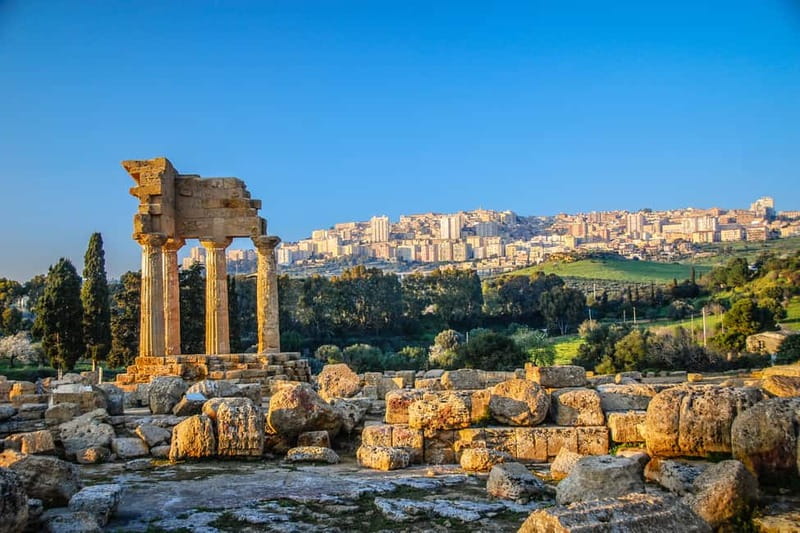
The Temple of Heracles, or Tempio di Eracle, adds another important stop to the route. Its surviving columns and scattered remains help fill out the story of the sanctuary zone.
As you walk between the temples, watch for the aqueducts and the changes in level. The terraced layout shows how the ancient city used the ground rather than simply placing buildings on a flat field. These transitions also make the site physically engaging, though they contribute to the need for good footwear.
The aqueducts are easy to overlook if you focus only on the famous temples. I would give them a proper pause. They remind you that Akragas was a functioning city, with practical systems supporting religious buildings, public activity, and daily life.
The gymnasium and public life beyond the temples
The gymnasium broadens the visit beyond temples and ritual. In the ancient world, a gymnasium could serve athletic, educational, and recreational purposes, making it part of public life rather than a private training room.
This section helps you picture the city’s social side. The Valley of the Temples is often presented through its religious monuments, but the gymnasium shows that ancient Akragas also needed places for exercise, learning, and communal activity.
By this point, you may be ready for a break. The site is extensive, and afternoon heat can make even a fairly level walk feel tiring. Some drinking fountains have worked during visits, but do not rely on every fountain being available. Bring plenty of water.
Choosing the best time, from morning heat to evening lights
Time of day can change the quality of this visit more than the audioguide does. In summer, shade is limited and the stone reflects the heat. Early morning is the safest choice for comfort and clear energy.
Late afternoon is another strong option. A visit beginning around 6 p.m. can move from sunlight to sunset and then into evening, when the temples may be illuminated. This gives you several different views of the same ruins and can produce a memorable finish.
Check the available starting times before booking because the ticket is valid for one day and the selected entry time may shape your whole visit. If you are driving from another Sicilian city, allow enough time for the journey and do not arrive at the last possible moment.
The scenery is a major part of the experience at any hour. You see open fields, distant hills, Agrigento, and views toward the coast. In spring, almond trees may be in bloom, adding color and scent to the route. That seasonal detail is not guaranteed, but it shows why the Valley can feel like both an archaeological site and a country walk.
How the app audioguide performs
A digital audioguide gives you control. You can stop, replay, or skip sections, and you do not have to follow a group’s pace. That is a good match for the Valley of the Temples, where you may want to spend ten minutes at Concordia and only a few minutes at another ruin.
The weak point is reliability and setup. The ticket exchange and audio guide may involve separate steps, and some visitors had trouble getting the QR code to work for everyone in their group. Others found the on-site audio option more useful, with one visitor suggesting that the approximately €5 site audio guide was better value.
I would not choose this ticket solely for the audioguide. Choose it first for the admission arrangement, then treat the digital commentary as an extra. If you are a serious history enthusiast, a live guide may suit you better, but this package does not include one.
The Pemcards feature is another extra rather than a core reason to book. You can use a digital photo from your visit as a real postcard sent anywhere in the world. The idea is fun, though finding the Pemcards stand may not be obvious, so ask at the entrance before leaving if you want to use it.
Accessibility, pace, and practical comfort
The activity is listed as wheelchair accessible, but the site covers a large archaeological area with uneven ancient surfaces and changing levels. If mobility is a concern, ask staff about the most suitable route and any available shuttle service before setting off.
You should plan for walking, but the route is not described as strenuous. The bigger challenge is distance, sun, and the lack of shade. Wear practical shoes, carry water, and avoid treating this as a quick photo stop.
Families can enjoy the major monuments, but younger children may need breaks. A café partway through the Valley can provide a useful pause, especially during a hot visit. The site’s size means you can move at your own pace, but you should not expect every child to remain interested in the smaller ruins and aqueducts.
Cancellation and booking flexibility
You can cancel up to 24 hours in advance for a full refund. The reserve-now, pay-later option also helps if your Sicilian plans may change.
The key booking question is value. At $19, the ticket is sensible if fast entry matters, especially during a busy season. It is less compelling when there is no queue, when you qualify for free admission, or when a museum combination ticket costs about the same.
The voucher exchange is the main practical flaw. You still need to visit the Temple of Juno ticket office, and the process may not feel as quick as the phrase skip the line suggests. Go early, keep your phone charged, and have identification ready if you bought a reduced ticket.
Should you book this Valley of the Temples ticket?
I would book it if you want a simple, self-guided visit, prefer to set your own pace, and are visiting during a busy period. The archaeological site itself is exceptional, with Concordia, Juno, Zeus, Heracles, the gymnasium, aqueducts, and far-reaching Sicilian views making the admission worthwhile.
I would compare prices first if you are visiting outside peak periods, traveling with children, or eligible for a reduced or free ticket. You may find that buying at the entrance costs less, while a combined museum ticket gives you more for similar money.
Choose an early or late time, bring water, and do not expect a fully guided tour. If you accept the audioguide as a useful extra rather than the star feature, this ticket can be a practical way to experience one of Sicily’s most memorable ancient sites.
FAQ
Where do I exchange the voucher?
You must exchange it at the Temple of Giunone ticket office near the Temple of Juno on Via Panoramica Valle dei Templi. This is the only stated location for voucher exchange.
Is transportation included?
No. Transportation to or from the Valley of the Temples is not included.
How long is the ticket valid?
The ticket is valid for one day. Check the available times when booking.
Can I enter more than once?
No. The ticket allows a single entry into the Valley of the Temples.
Is there a live guide?
No. The package includes a digital audioguide, not a live guide.
Do I need identification?
Bring valid identification if you selected a reduced-price ticket.
Is the site wheelchair accessible?
The activity is listed as wheelchair accessible. The archaeological area is large, with ancient surfaces and changing levels, so ask staff about the most suitable route if needed.
Can I cancel the booking?
Yes. You can cancel up to 24 hours in advance for a full refund. You can also reserve now and pay later.
Just added around Sicily
- Trapani: Salt Pans Sunset Tour and Flamingo Way★ 4.4 · 252 reviews
- Agrigento: Valley of the Temples Entry Ticket & Audio Guide★ 4.1 · 268 reviews
- Classic Boat Tour in Palermo★ 5.0 · 268 reviews
- Stromboli: sunset trekking to Sciara del Fuoco – Ashàra★ 4.5 · 270 reviews
- Mini Cruise to Favignana and Levanzo with lunch on board★ 4.0 · 270 reviews
- Etna, Summit Craters★ 5.0 · 272 reviews
- Etna – Trekking to the summit craters (only guide service) experienced hikers★ 5.0 · 286 reviews
- Trapani: 2-Hour Salt Flats Tour★ 4.9 · 286 reviews
Self-Guided Tours, compared.
Colosseum & Forum with Audio Guide App -Optional Arena
Read our review →
Pantheon Fast-Track Ticket and Official Audio Guide
Read our review →
Grand Canal Gondola Ride with App Commentary
Read our review →
Pompeii: Entry Ticket with Optional Audio Guide
Read our review →
La Fenice Opera House Entry Ticket with Audio Guide
Read our review →
Colosseum, Forum, Palatine Hill Entry & Audioguide App
Read our review →
St. Peter’s Basilica & Dome Entry Ticket & Audio Tour
Read our review →
Cathedral & Brunelleschi’s Dome Ticket & Audio App
Read our review →Browse the lists this tour appears in