
Review · SICILY TOURS
Syracuse: Neapolis Archaeological Park Small Group Tour
Ancient Syracuse rewards a closer look. I like the way this 1.5-hour walking tour ties together the Greek Theater, Ear of Dionysius, quarries, altar, and Roman amphitheater instead of leaving you to decode scattered ruins alone. I also like the low starting price of $26 per person, especially when entry tickets are included with the option you choose. The main drawback is the brisk schedule: some stops receive only 10 or 15 minutes, so serious archaeology fans may want more time.
Your guide meets you at the Neapolis Archaeological Park entrance and leads the group through the key monuments. Guides such as Eva, Federica, Galina, and Anne-Marie have earned especially warm praise for clear explanations and an easy way with questions. Still, check the language when booking, since the listed live tour language is Italian, and a very small shared group may receive explanations in two languages.
In This Review
- Key things to know before you go
- Why Neapolis matters in Syracuse
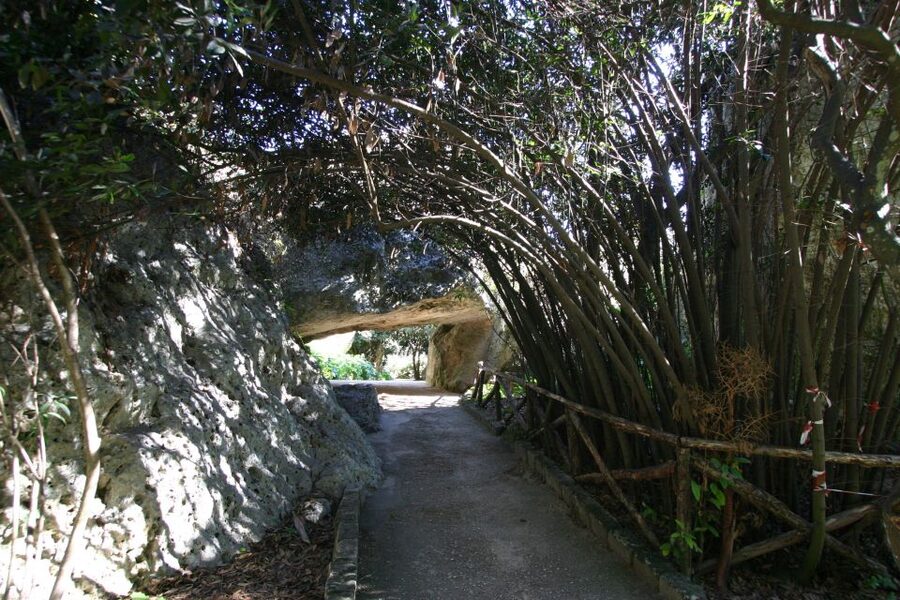
- Latomie del Paradiso: a quarry turned garden
- Grotta dei Cordari and the working life of the caves
- The Ear of Dionysius and its famous echo
- The Greek Theater: Syracuse’s great view and main event
- A brief photo stop across the archaeological park
- The Altar of Hiero II and the scale of ancient power
- The Roman Amphitheater closes the historical loop
- How much does the $26 price buy you?
- Guides and the value of interpretation
- Who will enjoy this tour most?
- Should you book the Neapolis Archaeological Park tour?
- FAQ
- Where does the Neapolis Archaeological Park tour start?
- How long does the tour last?
- What monuments are included?
- Is admission to the park included?
- Is the tour private or shared?
- What language is the live tour conducted in?
- Are radio receivers provided?
- Can I cancel the booking?
Key things to know before you go
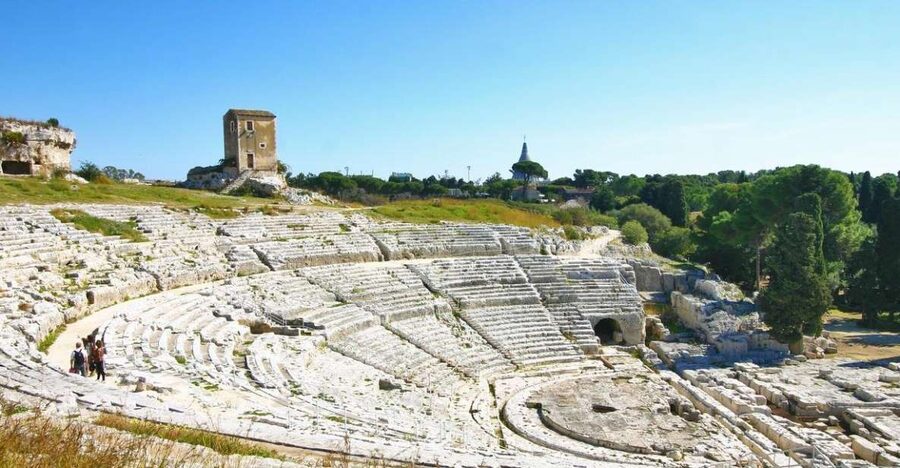
- The Greek Theater is the centerpiece: Cut into Temenite Hill, it combines impressive ancient engineering with views toward Syracuse’s bay.
- The Ear of Dionysius is short but memorable: Its unusual shape and echoing acoustics make it more than another stone ruin.
- The tour connects Greek and Roman Syracuse: You see the city’s ancient theater, quarry, altar, and amphitheater in one compact visit.
- A guide adds real value: Eva and Federica are often praised for turning dates and ruins into stories that children and teenagers can follow.
- The group format affects the experience: Small groups can be easier to hear and more personal, while radio receivers are available only for the large shared-group option.
- The pace suits a first visit: You cover the major sights without spending half a day in the park, but photography and extended inspection are limited.
Why Neapolis matters in Syracuse
Neapolis Archaeological Park gathers some of Syracuse’s most important ancient remains in one broad historic area. The site reflects both Greek and Roman periods, which gives the visit a useful sense of change over time rather than presenting one isolated monument.
I find that contrast especially helpful. The Greek Theater feels tied to performance, civic life, and the hillside itself. The Roman amphitheater has a different character, built for large public spectacles. Between them are quarries, religious remains, and later uses of the same terrain.
That variety is the reason I would not treat this as a simple walk among old stones. Without context, the park can feel like a series of impressive but disconnected stops. A good guide explains how each place worked and why Syracuse mattered as an ancient Greek colony.
The tour begins at the entrance gate, with the precise meeting point depending on the option you book. The listed starting and finishing point is Largo Anfiteatro, 2, but check your booking details so you do not wait at the wrong gate.
A few more reviews worth comparing before you book
- From Trapani: Cruise to Favignana and Levanzo with lunch
★ 4.2 · 2,286 reviews - Agrigento: Valley of the Temples Skip-the-Line Sunset Tour
★ 4.5 · 1,512 reviews - From Trapani: Day Cruise to Favignana & Levanzo with Lunch
★ 4.3 · 1,483 reviews
Latomie del Paradiso: a quarry turned garden
The first major stop is Latomie del Paradiso, an ancient stone quarry with local plants growing among the cut rock. The guided visit lasts about 15 minutes, enough to introduce the scale of the excavation and the way stone was taken from the hillside.
This is a good opening because it makes the ground beneath the other monuments easier to understand. The park is not simply built on a natural hill. Much of it was shaped by cutting, quarrying, and adapting the rock.
I would pay attention to the plant life here as well as the stone. The contrast between hard quarry walls and greenery gives this part of the park a calmer feel. One spring visit was especially memorable for the scent of orange and lemon blossom, a reminder that the site is not only an archaeological zone but also a living outdoor place.
The short stop can feel rushed if you want detailed information about quarrying methods or the later history of the caves. Still, it gives you a useful visual frame before the more famous grottoes.
Grotta dei Cordari and the working life of the caves
The route continues to Grotta dei Cordari for roughly 15 minutes. The name is associated with rope makers, and the stop helps show how these excavated spaces continued to serve practical purposes long after their original ancient use.
I like this part because it widens the story beyond Greek and Roman glory. Ruins are rarely frozen in one period. Caves and quarries can be reused by later communities, and that later activity helps explain why the site feels layered.
The exact amount of detail depends on your guide and group size. In a small group, you should have a better chance to ask questions. In a large shared group, radio receivers are supplied, which should help you hear the explanation as the party moves through the park.
The park is wheelchair accessible, but this remains an outdoor archaeological site with walking between monuments. If you use a wheelchair, it is sensible to confirm the meeting point and route for your chosen departure before arriving.
The Ear of Dionysius and its famous echo
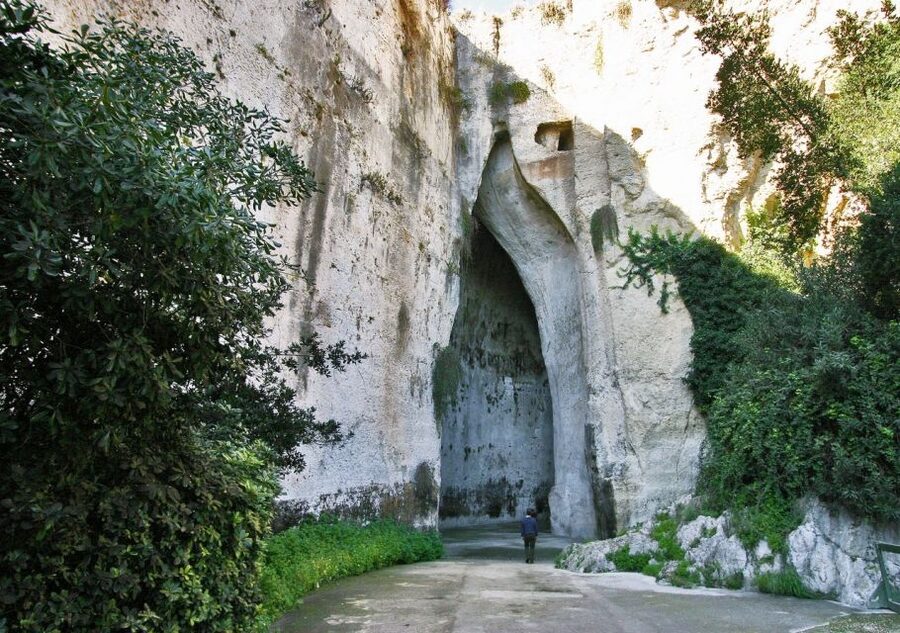
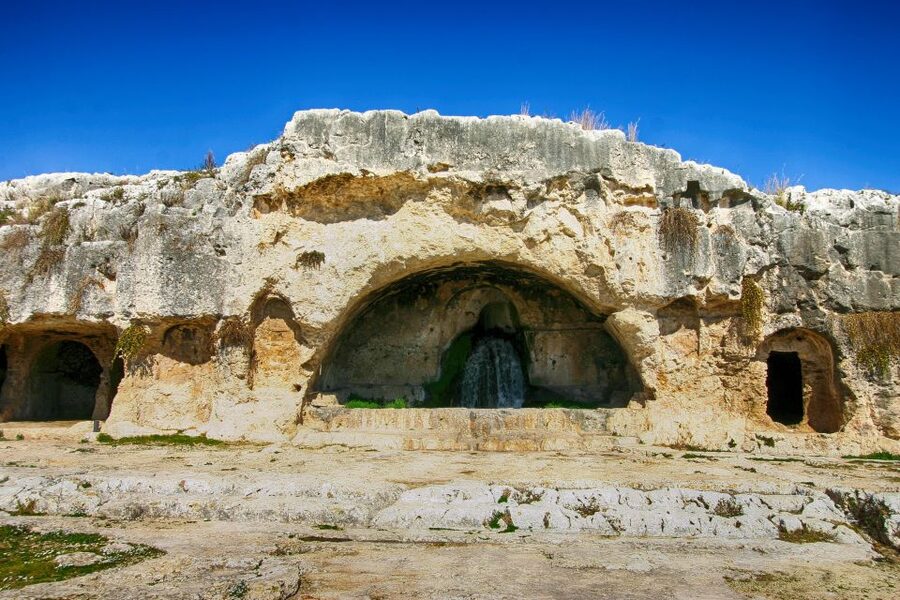
The Ear of Dionysius receives another 15-minute guided stop. This grotto is famed for its ear-like shape and echoing sounds, and it is one of the most instantly memorable places on the route.
Here, the guide’s explanation matters. The grotto is visually striking, but its importance is not limited to the shape of the rock. The acoustics and the stories attached to the cave have made it one of the park’s best-known sights.
I would give yourself a moment to notice the scale and sound before reaching for your camera. The visit is brief, and the cave can become a quick photo stop if you are not careful.
The name also brings legends into the conversation. A strong guide can separate local storytelling from established historical information without draining the fun from the place. That balance is part of what made Eva so popular with past groups. She is praised for explaining difficult material in plain language and answering questions without turning the tour into a lecture.
A different sort of day out around Sicily:
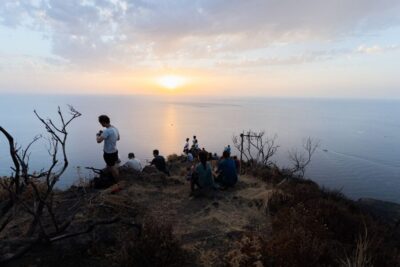
- Stromboli: Sunset Trekking at Sciara del Fuoco
★ 4.6 · 1,372 reviews - Etna Morning Trip
★ 4.5 · 1,241 reviews - Boat Tour Egadi Day discover Favignana and Levanzo from Trapani
★ 5.0 · 1,183 reviews - Agrigento: Valley of the Temples Ticket & App Audioguide
★ 4.3 · 1,160 reviews
The Greek Theater: Syracuse’s great view and main event
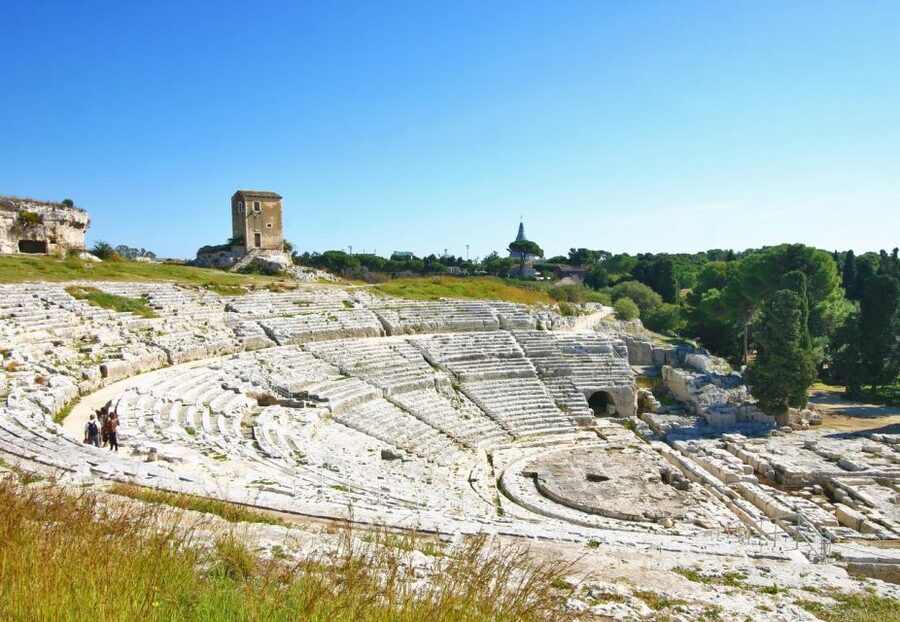
The Greek Theater gets the longest guided visit, about 30 minutes, and rightly so. Cut directly into the rock of Temenite Hill, it is the tour’s central monument.
The setting does much of the work. From the theater, you can look toward Syracuse’s bay, so the visit combines architecture with a broad view across the area. I find that this is the point when the park begins to feel like a city rather than a collection of remains.
Your guide can help you imagine how the theater functioned as a public space. The curved seating, stage area, and relationship to the hillside are much easier to understand when someone points out what you are seeing. Several guides, including Federica and Anne-Marie, have been praised for bringing the site to life in a way that held the attention of younger visitors.
You should have time for photographs, but do not expect an extended independent exploration during this 30-minute segment. The tour has several more stops to cover, and the guide needs to keep the group moving.
The theater is also where timing and weather matter most. Summer heat can make exposed stone tiring, and one past group found an evening departure more comfortable during a very warm period. Rain can make the route more difficult too, although a determined guide may keep the visit going when conditions allow.
A brief photo stop across the archaeological park
After the theater, the itinerary includes a five-minute photo stop in the wider Neapolis Archaeological Park. This is not a long free period, so I would use it for quick views and pictures rather than trying to wander off.
The stop gives you a chance to collect the whole setting in your mind. You have seen the quarry spaces and the theater, and now you can pause before moving to the monuments connected with Hiero II and the Roman period.
Five minutes goes quickly. Keep your group in sight and listen for instructions about where to regroup. If you want a slower photographic visit, plan to return to the park separately only if your ticket and schedule permit it. The tour itself is designed as an overview, not a free-roaming photography session.
The Altar of Hiero II and the scale of ancient power
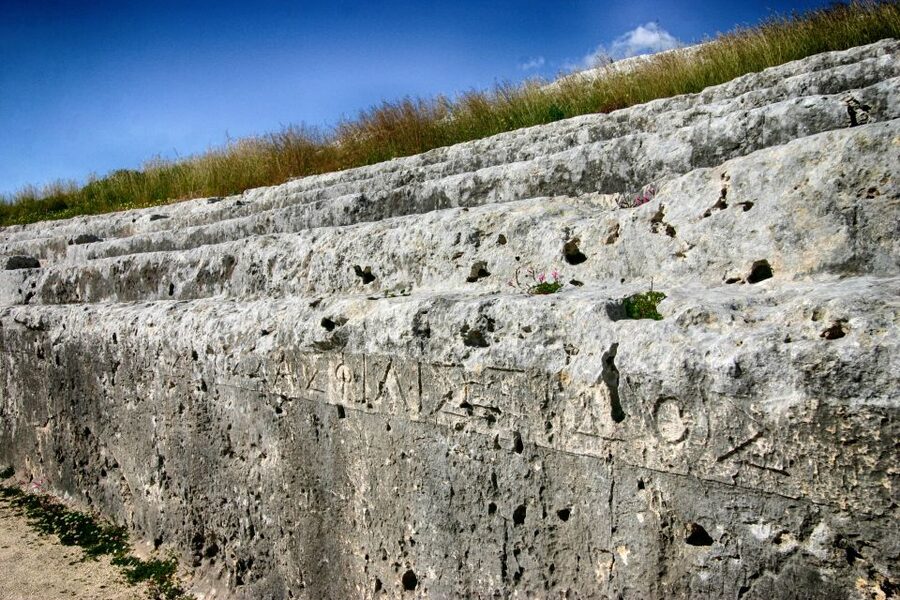
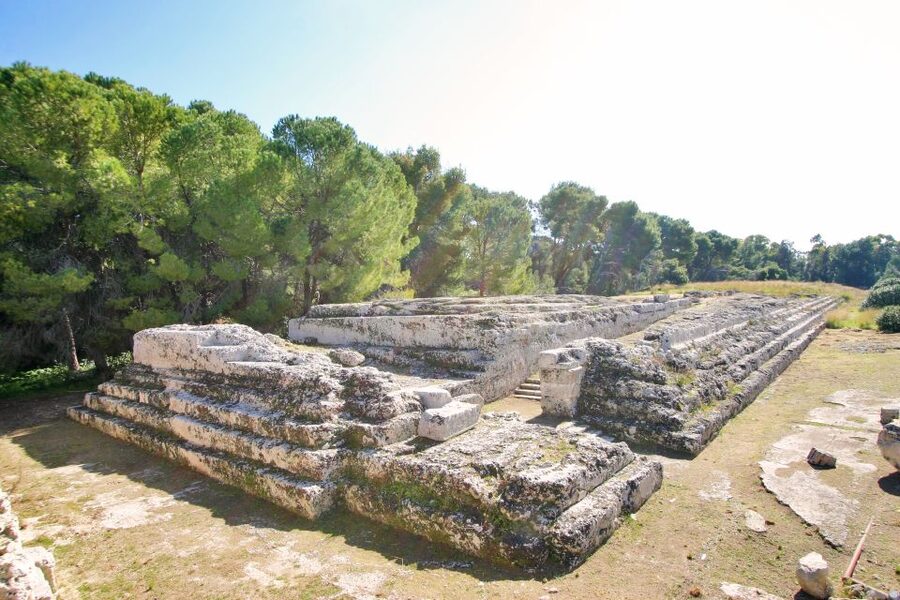
The Altar of Hiero II receives about 10 minutes of guided attention. Even with a short stop, it adds important context to the political and religious side of Syracuse.
The altar helps you think about the resources behind ancient public monuments. Large ceremonial structures required organization, labor, materials, and authority. A guide can make that scale easier to picture than a bare foundation can.
This is one of the places where a short explanation can be more useful than a long silent visit. On your own, you may see a large stone platform and move on. With help, you can connect it to the city’s public and religious life.
Ten minutes will not satisfy anyone hoping for a full architectural study. But as part of a compact route, it works well. The tour gives you the main idea, then moves on before the heat, distance, or repetition begins to wear you down.
The Roman Amphitheater closes the historical loop
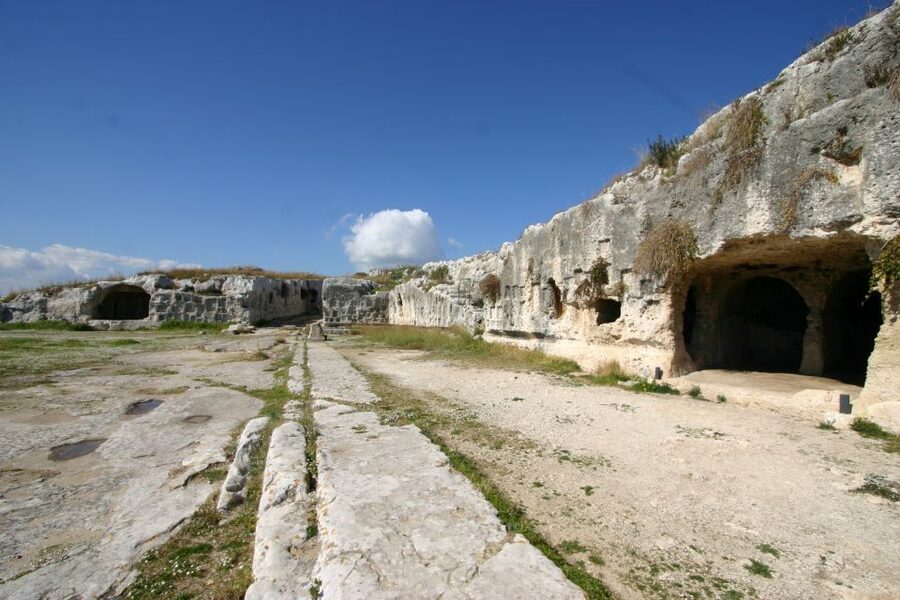
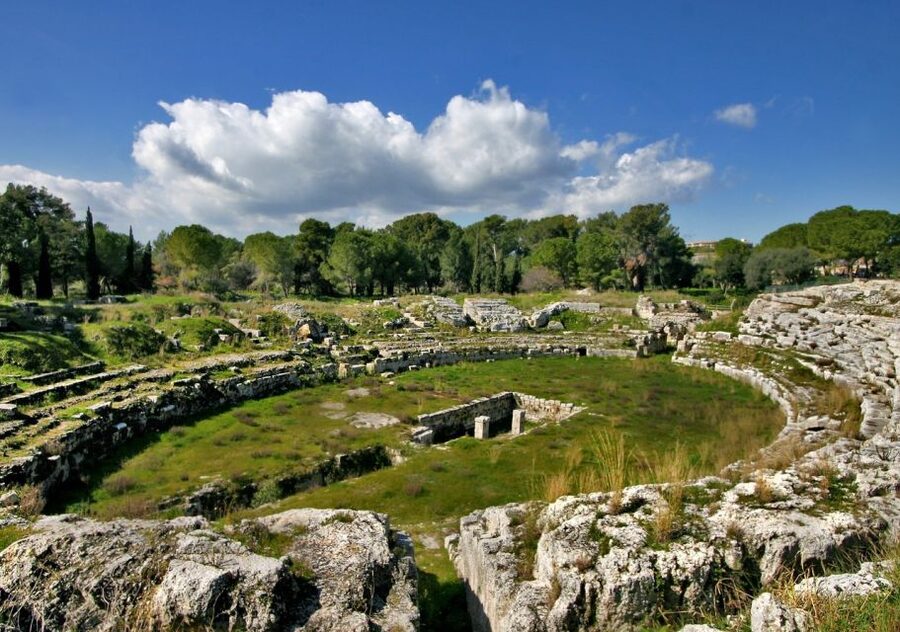
The final monument is Syracuse’s Roman amphitheater, with about 15 minutes of guided time. It provides a clear contrast with the Greek Theater and rounds out the tour’s Greek-to-Roman story.
I like seeing both structures in one visit because the comparison is immediate. The Greek Theater is shaped into the hillside and linked to performance. The Roman amphitheater is a different kind of public venue, with its own design and social purpose.
Access to the amphitheater can occasionally be affected by closing arrangements. On one earlier visit, the guide had to advocate for the group when staff closed that section earlier than expected. That story also points to the practical value of having a guide present: you are not left alone to guess what happened or simply walk away.
The tour normally finishes back near Largo Anfiteatro, 2, with two listed drop-off options. The entire route is on foot, so wear shoes suitable for uneven archaeological ground and bring water, particularly in summer. An ID card or passport is listed among the required items.
How much does the $26 price buy you?
At $26 per person, this is a strong value if the entry ticket is included in the option you select. You are paying for a licensed guide and a concentrated explanation of the park’s major sites, not just admission.
That distinction matters at Neapolis. You can walk through ancient ruins without help, but the quarry, theater, altar, and amphitheater do not explain themselves. Several people who had visited other ruins found that the guide helped them understand what they were looking at and how Greek and Roman Syracuse fit together.
The price is also reasonable for families who want structure without committing to a long private excursion. One private tour was adjusted for an eight-year-old child, and teenagers have also found the explanations engaging. A private option should give you more control over pace and questions, though the exact price and availability depend on the booking choice.
For the lowest cost, choose the shared group. A small shared group of around 10 people can still feel personal, and the guide should be easy to hear. A very large group may be less intimate, but radio receivers are available in that format.
The one value question is pace. If you want to linger at every inscription, sketch the theater, or study the quarry walls, the 1.5-hour format may feel short. If you want the main story and monuments in a manageable block, the price makes good sense.
Guides and the value of interpretation
The strongest part of this experience is the human explanation. Eva is repeatedly praised for clear storytelling, patience, and a strong grasp of both the park and Syracuse. Federica is also singled out for making Greek and Roman culture interesting, answering questions, and offering helpful ideas for the surrounding area.
Galina and Anne-Marie have received similar praise for enthusiasm and local insight. A guide born in Syracuse has also been appreciated for connecting ancient events with life in the city today. These details suggest that the experience can vary slightly by departure, but the guiding is clearly central to its appeal.
I would book this tour if you enjoy history but do not want to prepare a long reading list before your visit. The explanations are described as informative without becoming overloaded, and the timing generally includes room for photographs and questions.
The listed live language is Italian. A rare very small shared group may receive the explanation in two languages, so confirm the language arrangement before paying if Italian is not suitable for you.
Who will enjoy this tour most?
I recommend it most strongly to first-time visitors to Syracuse, families, cruise or day visitors with limited time, and anyone who wants the major monuments explained in a logical order.
It also works well for people who enjoy history but find bare ruins hard to read. The tour gives you a basic picture of public life, religion, quarrying, performance, and Roman entertainment without demanding a full day.
You may want a different plan if you prefer complete freedom. The schedule is fixed, and the 10 to 15-minute stops leave little room for lingering. Independent visitors with strong archaeological knowledge may also prefer an admission ticket and a slower self-guided visit.
The experience is wheelchair accessible, and the short duration helps keep the outing manageable. Still, it is wise to check the exact route and meeting point for your booking choice.
Free cancellation is available up to 24 hours before the start, and you can reserve now and pay later. Those terms are useful when your Sicily schedule includes uncertain transport or changing weather.
Should you book the Neapolis Archaeological Park tour?
Book it if you want a focused introduction to Syracuse’s most important ancient monuments and value clear explanations over a long, independent wander. The Greek Theater, bay views, Ear of Dionysius, quarry spaces, Altar of Hiero II, and Roman amphitheater make a satisfying package for $26 when admission is included.
I would choose a small shared group for the best balance of price and personal attention, or a private option if you are traveling with children and want the pace adjusted. Confirm the tour language, entry-ticket details, and meeting point before booking.
Skip it only if you already know the park well or want to spend hours examining each monument at your own speed. For most first visits, a guide turns a striking archaeological site into a coherent story, and that is where this compact tour earns its keep.
FAQ
Where does the Neapolis Archaeological Park tour start?
The listed starting location is Largo Anfiteatro, 2. The exact meeting point may vary depending on the option booked, so check your booking details.
How long does the tour last?
The tour lasts about 1.5 hours. The planned stops add up to roughly that time, including guided visits and a short photo stop.
What monuments are included?
The route includes Latomie del Paradiso, Grotta dei Cordari, the Ear of Dionysius, the Greek Theater, the Altar of Hiero II, and the Syracuse Roman Amphitheater.
Is admission to the park included?
Entry tickets are included only if you select the option that includes them. Check the specific booking choice before confirming.
Is the tour private or shared?
You can choose between a shared group tour and a private tour. The meeting point may differ by option.
What language is the live tour conducted in?
The listed live tour language is Italian. In rare cases involving a very small shared group, the explanation may be given in two languages.
Are radio receivers provided?
Radio receivers are available only with the large shared-group tour option.
Can I cancel the booking?
You can cancel up to 24 hours in advance for a full refund. A reserve-now, pay-later option is also available.
Just added around Sicily
- Trapani: Salt Pans Sunset Tour and Flamingo Way★ 4.4 · 252 reviews
- Agrigento: Valley of the Temples Entry Ticket & Audio Guide★ 4.1 · 268 reviews
- Classic Boat Tour in Palermo★ 5.0 · 268 reviews
- Stromboli: sunset trekking to Sciara del Fuoco – Ashàra★ 4.5 · 270 reviews
- Mini Cruise to Favignana and Levanzo with lunch on board★ 4.0 · 270 reviews
- Etna, Summit Craters★ 5.0 · 272 reviews
- Etna – Trekking to the summit craters (only guide service) experienced hikers★ 5.0 · 286 reviews
- Trapani: 2-Hour Salt Flats Tour★ 4.9 · 286 reviews
Sicily Tours, compared.
Agrigento: Valley of the Temples Skip-the-Line Sunset Tour
Read our review →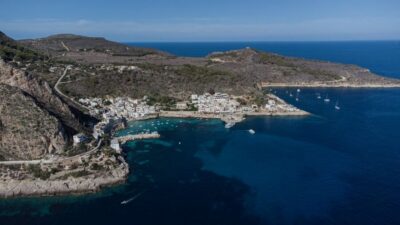
Stromboli: Sunset Trekking at Sciara del Fuoco
Read our review →

Boat Tour Egadi Day discover Favignana and Levanzo from Trapani
Read our review →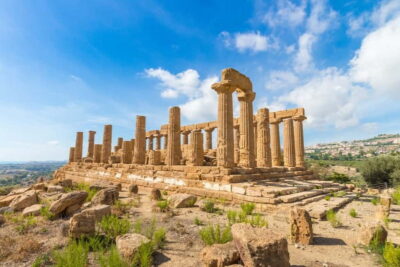
Agrigento: Valley of the Temples Ticket & App Audioguide
Read our review →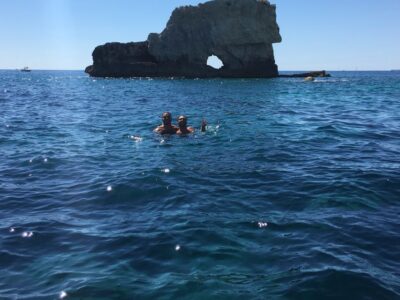
Browse the lists this tour appears in