
Review · SICILY TOURS
SALT TOUR-all inclusive: salt tour: Trapani, Paceco, Nubia
Salt makes a fine Sicilian story. This tour links three working salt pans around Trapani, Paceco, and Nubia with a small museum visit, a salt tasting, and a walk through the ponds. I especially like the three different salt sites and the chance to taste fleur de sel rather than simply look at pretty pools. Guide Alessio also adds real warmth and plenty of memorable facts. The main caution is timing: an optional aperitivo may extend the evening and costs extra, so confirm the plan if you have dinner booked.
The tour costs $60.46 per person and lasts about two and a half hours. It is a good fit if you want transport, guiding, museum admission, and tasting handled in one package. If you only want to see the Salt Museum, a taxi or rental car may cost less, but you would miss the broader story of how salt shaped this corner of Sicily.
In This Review
- Key points before you book
- Starting at Trapani’s port
- Maria Stella and Trapani’s oldest mill
- Salina Calcara and the four-stage process
- Saline Culcasi and the old Salt Museum
- Walking the salt worker’s path
- Sunset over the Nubia salt flats
- What Alessio adds to the experience
- Is $60.46 good value?
- Who should book this salt tour?
- Booking, weather, and cancellation tips
- Should you book it?
- FAQ
- Where does the salt tour begin?
- Where does the tour end?
- How long does the experience last?
- What language is the tour offered in?
- What salt pans are included?
- Is the Salt Museum included?
- Is salt tasting included?
- Is transportation included?
- How many people can join the tour?
- Can I cancel for a refund?
Key points before you book
- Three salt pans in one outing: Maria Stella, Salina Calcara, and Saline Culcasi each reveal a different part of salt production.
- A 600-year-old mill: At Culcasi, you enter an old windmill now used as the Salt Museum.
- Salt tasting included: Try crystal salt and fleur de sel, including versions flavored with orange, lemon, rosemary, and oregano.
- Alessio brings the subject alive: His talks cover craft, trade, local culture, and odd details such as old measuring systems and roof tiles.
- Sunset can be beautiful: Evening light often turns the salt pans into the visual highlight of the outing.
- Check the final timing: The advertised tour lasts about 2 hours and 30 minutes, but an extra aperitivo can add time and cost €10.
Starting at Trapani’s port

You meet at the fire station on Via Ammiraglio Staiti 101, near Trapani’s port. That is a practical starting point if you arrive by ferry or are staying in the port area, though you should allow time to find the exact meeting point.
From there, the tour uses an air-conditioned vehicle. All taxes, the guide, museum admission, and salt tasting are included, while tips are not. The vehicle is listed as sanitized under the tour’s Covid-19 procedures.
The ride to the first salt pan takes about ten minutes. That short transfer matters because the salt flats are spread outside central Trapani. Instead of arranging separate taxis or trying to fit several sites into a self-drive afternoon, you can let the guide handle the route.
The group size deserves a quick check before booking. The experience is promoted as limited to eight people for a more personal outing, while the additional booking information gives a maximum of sixteen. Ask the operator which group size applies to your date if a small group is important to you.
A few more reviews worth comparing before you book
- From Trapani: Cruise to Favignana and Levanzo with lunch
★ 4.2 · 2,286 reviews - Agrigento: Valley of the Temples Skip-the-Line Sunset Tour
★ 4.5 · 1,512 reviews - From Trapani: Day Cruise to Favignana & Levanzo with Lunch
★ 4.3 · 1,483 reviews
Maria Stella and Trapani’s oldest mill
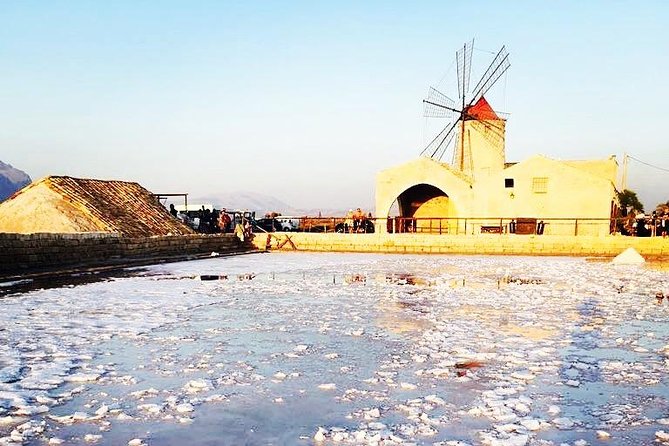
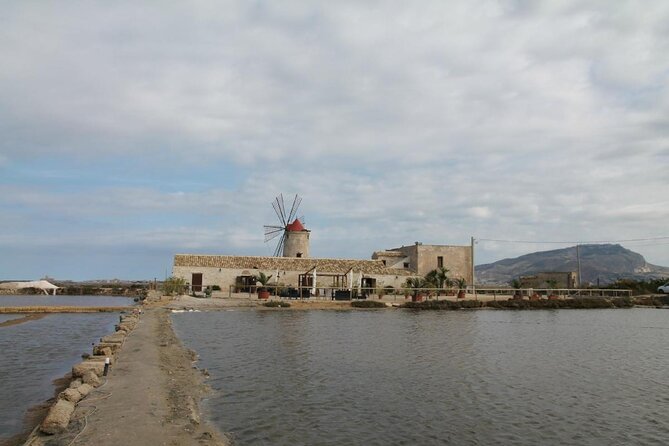
The first salt pan is Maria Stella. Here you see the first mill built in the Trapani salt area, dating from the end of the fifteenth century.
This opening stop gives you a useful frame for everything that follows. The mills were not simply scenic buildings. Wind power helped move and manage water through the salt pans, making the production process possible on a large scale.
The appeal of Maria Stella is partly visual, but the explanation is what gives the place meaning. You begin to see the ponds as a carefully designed water system rather than a series of bright pools. Alessio’s style is a major part of the experience here. He explains the subject with energy, and his talks often include small details that make old working methods easier to picture.
One especially unusual point concerns measurement. He explains the use of a system based on twelve rather than the decimal system based on ten. He also discusses how roof tiles were shaped using the artisan’s thigh as a practical measure. Details like these move the tour beyond a basic account of harvesting salt.
Salina Calcara and the four-stage process
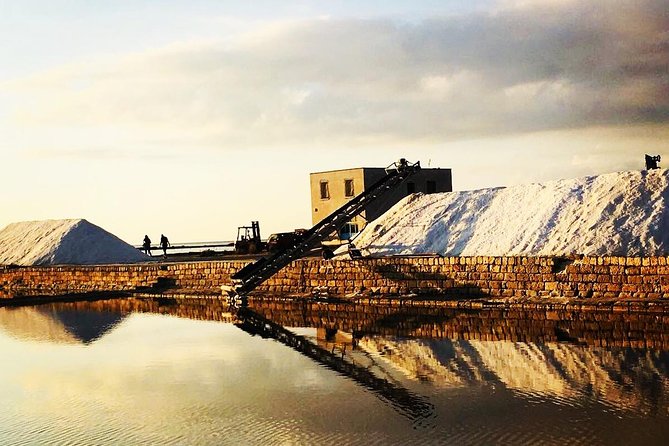
The next stop is Salina Calcara, also described as Salina Chiusicella. You spend about thirty minutes learning how seawater changes into salt through four orders of tanks.
The process depends on moving water through ponds with different levels of concentration. As the water evaporates, the salt begins to form. The system looks simple at first, but the arrangement of tanks reflects generations of practical knowledge.
This is also the best stop for watching wildlife. Depending on the day and season, you might see flamingos, herons, egrets, and the Italian knight, known in Italian as the cavaliere d’Italia. The birds add movement to what could otherwise be a very still scene.
Bring patience and keep your eyes open. Wildlife sightings are never guaranteed, and the tour does not promise a particular number of birds. Still, the mixture of water, white salt, old structures, and birds gives this part of the route a quiet character that contrasts with Trapani’s busy port.
The guide’s explanation helps you understand why the ponds have different roles. Once you know what each section does, the salt works become easier to read. You are not just stopping for photographs. You are following the path of seawater as it becomes a food product.
Saline Culcasi and the old Salt Museum
The longest stop is at Saline Culcasi, where you spend about one hour and fifteen minutes. This is the heart of the tour.
An old mill more than six hundred years old now houses the Salt Museum. Inside, you see the tools used to collect salt and learn how the mill operated. The visit also covers the people who worked there, the hierarchy of the salt industry, and the difference between older methods and present-day production.
That human side is important. Salt production was not an isolated task carried out by a few mill owners. Entire generations worked in and around the pans, and the industry affected local customs, jobs, trade, and family life.
The museum is small, but its scale works in its favor. You can focus on the objects and explanations without feeling lost in a huge collection. Alessio is particularly good at turning practical tools into evidence of daily work. His long experience in hospitality and his time living and traveling outside Italy also give his explanations a wider frame, connecting Trapani’s salt industry with salt production elsewhere.
The tour then becomes hands-on with a tasting. You try different salt crystals and the most prized surface layer, fleur de sel. This delicate salt forms at the top of the brine and is collected with care.
Flavored versions may include orange, lemon, rosemary, and oregano. The tasting is not just a souvenir-style extra. It shows how texture and aroma change between different types of salt, and it gives you a better sense of why fine local salt is treated as a special food rather than a cheap seasoning.
Some explanations also cover Trapani’s integrale salt and its place in local food culture. You should treat any health claims sensibly and ask questions if that subject matters to you. The strongest point is culinary: you learn how salt crystals differ and why the finishing salt used on a dish is not always the same as salt used during cooking.
A different sort of day out around Sicily:
- Stromboli: Sunset Trekking at Sciara del Fuoco
★ 4.6 · 1,372 reviews - Etna Morning Trip
★ 4.5 · 1,241 reviews - Boat Tour Egadi Day discover Favignana and Levanzo from Trapani
★ 5.0 · 1,183 reviews - Agrigento: Valley of the Temples Ticket & App Audioguide
★ 4.3 · 1,160 reviews
Walking the salt worker’s path
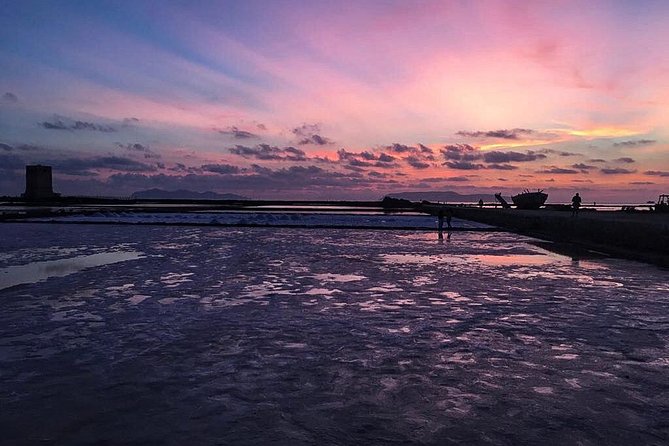
After the museum and tasting, you take the path of the salt worker through the salt tanks. This is the most direct way to connect the displays inside the mill with the work outside.
The walk gives you a closer view of the ponds and the working environment. It is also a more atmospheric part of the visit, especially as the light begins to soften toward evening.
The surface can look almost painted in certain conditions, but the tour is about labor as much as beauty. The salt worker’s path helps you picture the repeated movement between tanks, tools, and mill. It also shows why salt harvesting remained partly manual, even as modern methods changed the industry.
The walk is suitable for families, and the guide can explain the process in simple terms for children. Adults get the craft and cultural context, while younger visitors have the ponds, birds, unusual mill, and tasting to hold their attention.
Sunset over the Nubia salt flats
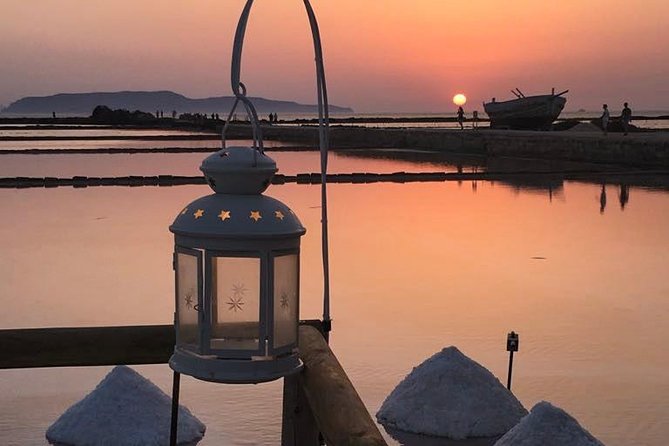
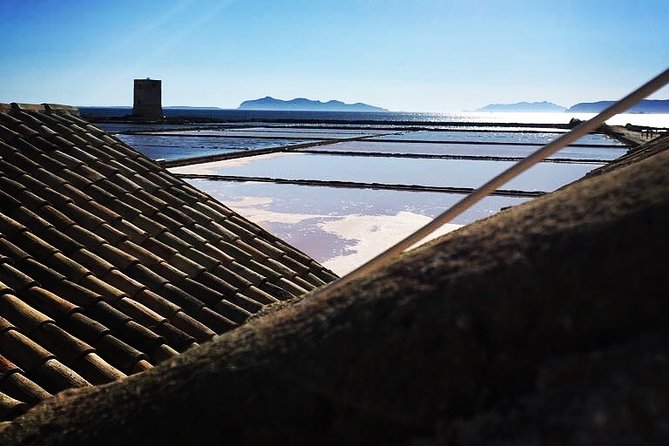
The evening setting is one of the tour’s strongest features. The salt pans near Nubia can look especially striking around sunset, when the light changes across the water and pale salt beds.
You should not book this only for a guaranteed sunset. Clouds can block the view, and weather affects the experience. On a clear evening, though, the closing walk can be the moment you remember most.
The tour requires good weather. If poor conditions force cancellation, you are offered another date or a full refund. That policy is helpful, but it also means you should keep some flexibility in your Sicily schedule.
One practical warning: an aperitivo may be offered at the salt pans after the scheduled activities. It has been described as a lovely addition, but it costs €10 extra and can extend the tour well beyond the stated duration. If you have a restaurant reservation, tell the guide you need to leave at the agreed time before accepting anything additional.
What Alessio adds to the experience

A salt pan tour can easily become a dry technical lesson. Alessio keeps it moving with stories, humor, and clear explanations.
His strongest quality is passion. He explains how salt is made, but he also shows why the work matters to the area. The result feels closer to a local cultural tour than a simple museum transfer.
He is also flexible when traffic or personal schedules cause trouble, according to the supplied tour details. That does not mean you should arrive late, but it is reassuring to know that the operator may try to adjust the timing when circumstances change.
The tour is offered in English. Alessio also speaks Italian, and some past participants who spoke French or Spanish had to make a little extra effort. If English is not your strongest language, expect a spoken tour with plenty of information and ask for clarification when needed.
Is $60.46 good value?

At $60.46, this is not the cheapest way to reach the Salt Museum. If your only goal is to see the old mill, taking a taxi or driving yourself could be better value.
The price makes more sense when you use the whole package. You receive an air-conditioned vehicle, a guide, all entrance fees, access to three salt pans, the salt worker’s path, the museum, and a tasting of crystal salt and flavored fleur de sel.
You are also paying for interpretation. Without a guide, you might see the ponds and mill but miss the four-stage water system, the old measuring practices, the work hierarchy, and the connection between salt and local life.
For me, the value depends on your travel style. Independent visitors who enjoy reading signs and setting their own pace may prefer a taxi and museum visit. If you want the route explained, do not want to drive, and like tasting local food products, the price is easier to justify.
The tour is often booked around thirty days ahead, so reserve early if your dates are fixed. That is especially sensible in the July to September harvesting period, which offers better chances for photographs of active salt gathering.
Who should book this salt tour?
I would recommend it to anyone with a serious interest in food, traditional work, photography, or the quieter side of western Sicily. It also works well for families because the guide can make the process understandable for children.
Couples may like the sunset setting, while ferry passengers can appreciate the port meeting point. The air-conditioned vehicle is useful during warm weather, and most people can take part.
I would hesitate if you have very limited time in Trapani and only want a quick museum stop. I would also think twice if you dislike guided explanations or have a fixed dinner reservation that leaves no room for delays.
The tour includes service animals and is near public transportation. It does not list special mobility details, so contact Trapani Emotions if you need specific assistance.
Booking, weather, and cancellation tips
Confirmation is issued when you book. Free cancellation is available up to 24 hours before the start time for a full refund.
Changes or cancellations made less than 24 hours before departure are not accepted for a refund. The cut-off uses local Sicilian time.
The experience needs a minimum number of participants. If that minimum is not reached, the operator offers another date or experience, or provides a full refund.
Plan to arrive at the fire station meeting point on Via Ammiraglio Staiti 101. Since the tour returns there, you can keep your arrangements simple, but leave enough time to locate the meeting place near the port.
Should you book it?
Book this tour if you want to understand Trapani’s salt industry rather than simply photograph it. The combination of three salt pans, a centuries-old mill, tasting, and sunset gives you a well-rounded two-and-a-half-hour outing.
I would book it with two conditions: confirm the expected group size and make clear that any aperitivo is optional if you have evening plans. For independent visitors, the price may feel high, but for anyone who values a strong guide and a carefully arranged route, Alessio’s explanations make the salt pans worth the time and money.
FAQ
Where does the salt tour begin?
It begins at Vigili Del Fuoco Distaccamento Portuale Trapani, Via Ammiraglio Staiti 101, at the port in Trapani, Italy.
Where does the tour end?
The activity ends back at the same meeting point near Trapani’s port.
How long does the experience last?
The scheduled experience lasts approximately 2 hours and 30 minutes.
What language is the tour offered in?
The tour is offered in English. Alessio also speaks Italian.
What salt pans are included?
The route includes Maria Stella, Salina Calcara or Salina Chiusicella, and Saline Culcasi.
Is the Salt Museum included?
Yes. Admission to the Salt Museum at Saline Culcasi is included in the price.
Is salt tasting included?
Yes. You taste salt crystals and flavored fine fleur de sel, with flavors that may include orange, lemon, rosemary, and oregano.
Is transportation included?
Yes. The experience includes an air-conditioned vehicle between the meeting point and the salt pans.
How many people can join the tour?
The experience highlights limited places, often described as groups of eight. The additional tour information lists a maximum of sixteen people, so confirm the group size for your date.
Can I cancel for a refund?
You can cancel at least 24 hours before the start time for a full refund. Poor-weather or minimum-participant cancellations offer a different date or a full refund.
Just added around Sicily
- Trapani: Salt Pans Sunset Tour and Flamingo Way★ 4.4 · 252 reviews
- Agrigento: Valley of the Temples Entry Ticket & Audio Guide★ 4.1 · 268 reviews
- Classic Boat Tour in Palermo★ 5.0 · 268 reviews
- Stromboli: sunset trekking to Sciara del Fuoco – Ashàra★ 4.5 · 270 reviews
- Mini Cruise to Favignana and Levanzo with lunch on board★ 4.0 · 270 reviews
- Etna, Summit Craters★ 5.0 · 272 reviews
- Etna – Trekking to the summit craters (only guide service) experienced hikers★ 5.0 · 286 reviews
- Trapani: 2-Hour Salt Flats Tour★ 4.9 · 286 reviews
Sicily Tours, compared.

Agrigento: Valley of the Temples Skip-the-Line Sunset Tour
Read our review →
Stromboli: Sunset Trekking at Sciara del Fuoco
Read our review →

Boat Tour Egadi Day discover Favignana and Levanzo from Trapani
Read our review →
Agrigento: Valley of the Temples Ticket & App Audioguide
Read our review →
Browse the lists this tour appears in