

Review · DESSERT TOURS
Rome: Trevi Fountain District Underground Tour and Ice Cream
Rome has another city beneath its streets. This one-hour experience pairs the Trevi Fountain with the small but fascinating Vicus Caprarius archaeological area, where ancient walls, water channels, coins, and amphorae reveal how Roman life continued below modern streets. I especially like the chance to see the Virgo aqueduct at work and the way guides such as Carla, Erica, Noemi, and Alessia bring the archaeology to life with clear stories and good humor.
I also like the practical shape of the tour. You get a reserved archaeological entry, an English-speaking guide, and a gelato voucher, all for $52 per person. The main caution is scale: the underground site is compact, and the Trevi Fountain portion is brief. If you expect a long fountain tour or a major excavation, you may find the experience modest. If you enjoy Roman engineering, it offers a satisfying hour away from the usual postcard view.
In This Review
- Key things to know before booking
- Why the underground Trevi area matters
- Meeting at Vicolo del Puttarello 25
- Inside Vicus Caprarius, Rome’s City of Water
- The Roman objects worth watching for
- What the Trevi Fountain stop really includes
- Gelato at a historic shop
- The guides shape the experience
- Is $52 good value for one hour?
- Heat, crowds, and practical comfort
- Who should book this Trevi underground tour?
- Should you book it?
- FAQ
- Where does the tour begin?
- How long does the experience last?
- What language is the tour offered in?
- Is entry to Vicus Caprarius included?
- Is gelato included?
- Is hotel pickup provided?
- Is skip-the-line entry included?
- Is the tour suitable for wheelchair users?
- What should I bring?
- Can I cancel for a refund?
Key things to know before booking
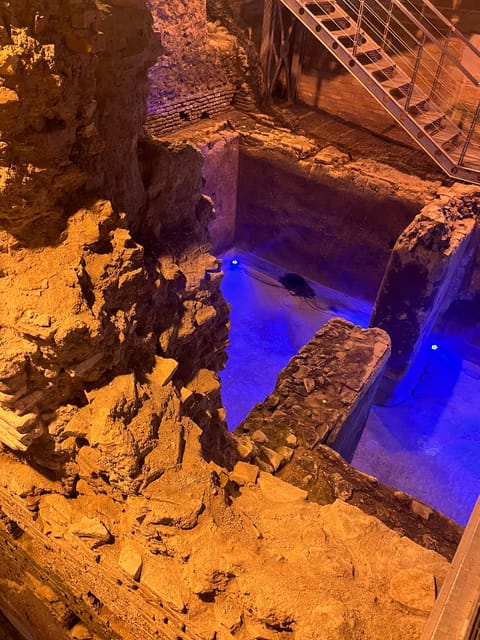
- The water is the star: See how water associated with the Trevi area continues through ancient masonry and channels below street level.
- Vicus Caprarius is small but packed with detail: The archaeological area includes three sections with Roman building remains and objects from different periods.
- Look for the 800-coin find: The excavation uncovered a remarkable collection of coins, along with polychrome marble, amphorae, and the head of Alessandro Helios.
- The guide makes the difference: Carla, Erica, Noemi, Alessia, and other English-speaking guides have been praised for clear explanations, humor, patience, and enthusiasm.
- Gelato comes at the end: You receive Italian gelato from a historic shop near Trevi Fountain, with the flexibility to use the voucher afterward.
- Expect stairs and limited space: This is not suitable for wheelchair users or people with mobility impairments, and comfortable shoes are important.
Why the underground Trevi area matters
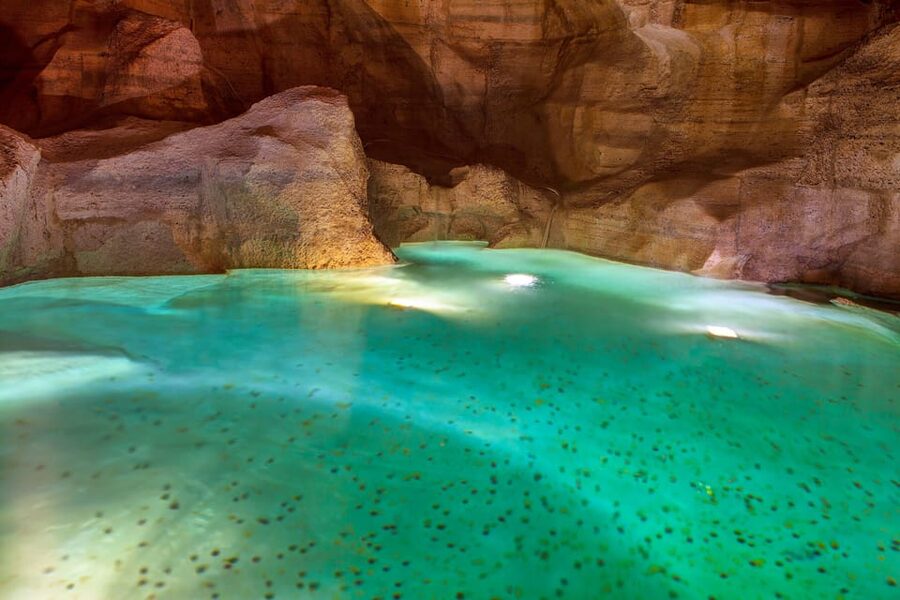
Most people meet Trevi Fountain at street level, surrounded by cameras, coins, and a constant human tide. This tour gives you a different starting point. Instead of looking only at the fountain’s Baroque sculptures, you learn about the older water system that made the area important long before the fountain took its present form.
The archaeological site is Vicus Caprarius, sometimes described as the City of Water. That name makes sense once you see the channels and masonry below the streets. Water from the Virgo aqueduct filters through the ancient structure and continues toward pipes and pools linked with a luxurious Roman residence, known as the Domus.
That connection is the most useful idea on the tour. The fountain is not an isolated decoration. It belongs to a much older story about water supply, urban planning, private wealth, and Roman engineering.
You will not see a huge underground city here. The site is small, and that can be a surprise if you have already visited larger Roman ruins. Still, the confined space helps the guide focus your attention on the layers of construction rather than letting you wander past them without context.
More Trevi and Pantheon walks:
- Rome: Pantheon Fast-Track Ticket and Official Audio Guide
★ 4.3 · 21,008 reviews - Pantheon Reserved Entry Ticket with Audio Guide
★ 4.0 · 4,486 reviews - Rome: Pantheon Timeless Marvel Guided Tour with Entry Ticket
★ 4.9 · 4,002 reviews
Meeting at Vicolo del Puttarello 25
The tour begins at Vicolo del Puttarello, 25, close to the Trevi Fountain district. Arrive at least 15 minutes early. The streets around the fountain can become difficult to cross or navigate, particularly when the plaza is crowded, and one person was allowed to join late only because the operator was accommodating.
That is a good reason not to cut it close. The meeting point is not the broad open space of the fountain itself, so give yourself time to find the narrow street and gather with the guide.
The activity lasts one hour, with about 40 minutes devoted to Vicus Caprarius, a short fountain explanation, and time for the gelato stop. That compact schedule works well as an addition to a day of sightseeing. You can fit it between major Rome sights without sacrificing half a day.
Inside Vicus Caprarius, Rome’s City of Water
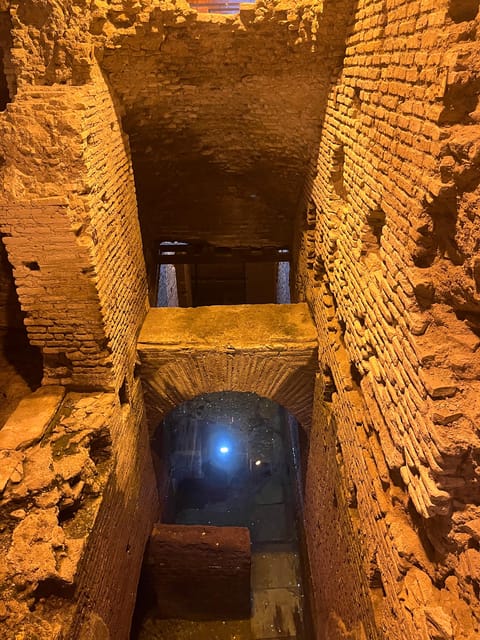
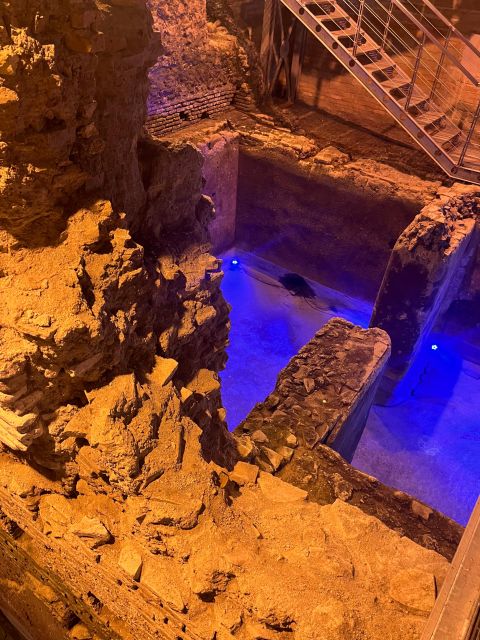
The underground portion is the heart of the experience. With an archaeologist or archaeology-focused guide, you walk through three sections of the antiquarian area and examine remains that reach back to the Imperial Age.
The presentation is not just a list of dates. The guide explains what the rooms and water channels tell us about daily life, construction, and the changing levels of Rome. One particularly useful theme is the idea of underground lasagna, the stacked layers of buildings and streets that formed as Rome was rebuilt over many centuries.
You may see ancient masonry, water routes, remains connected with the Domus, and objects recovered during excavation. The physical evidence is close at hand, so this feels more like reading a building than simply viewing isolated museum pieces.
The water system gives the site its strongest sense of place. You learn how water connected the aqueduct, the underground channels, Roman homes, public fountains, and the later city above. The Virgo aqueduct is especially important to the story, since the water associated with it still helps define the Trevi district.
For me, this is where the $52 price begins to make sense. You are not paying only for a walk to a famous fountain. You are paying for an interpreter who can explain why a damp wall, a channel, or a change in floor level matters.
The Roman objects worth watching for
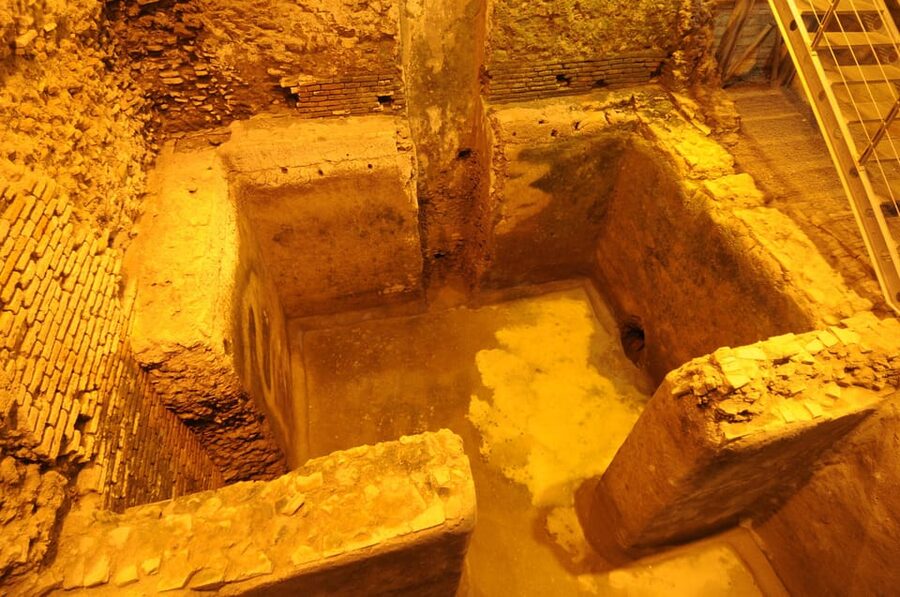
The excavation produced several memorable finds. Precious polychrome marble coverings show the level of decoration used in an affluent Roman residence. These are not merely scraps of building material. They help you picture a home designed to impress.
The head of Alessandro Helios is another notable object. It gives the archaeological area a human face, even if the surrounding ruins can otherwise feel abstract. Ask the guide to explain the figure and its place among the finds if the schedule allows.
The most eye-catching discovery may be the trove of roughly 800 coins. A collection like that helps connect the site to real economic life. Coins are small, but they can reveal movement, wealth, storage, and the sudden way objects sometimes disappear from history.
You will also hear about the Spatheia, an African amphora used for transporting oil. That detail widens the story beyond Rome itself. The container points to trade and supply networks reaching across the Roman world.
The tour’s strength is the way these items work together. Marble tells you about status. Coins suggest money and uncertainty. The amphora points to trade. Water channels explain infrastructure. Together, they make the Domus and its surroundings easier to imagine.
A few more reviews worth comparing before you book
- Rome: Pasta Making Class with Wine, Limoncello, and Dessert
★ 4.9 · 3,177 reviews - Rome Cooking Class: Make Pizza and Pasta with Wine & Dessert
★ 4.5 · 651 reviews - Florence: Handmade Pasta & Dessert Class with Unlimited Wine
★ 4.8 · 788 reviews - Florence: Pasta Class with Wine, Limoncello and Dessert
★ 4.9 · 674 reviews
What the Trevi Fountain stop really includes
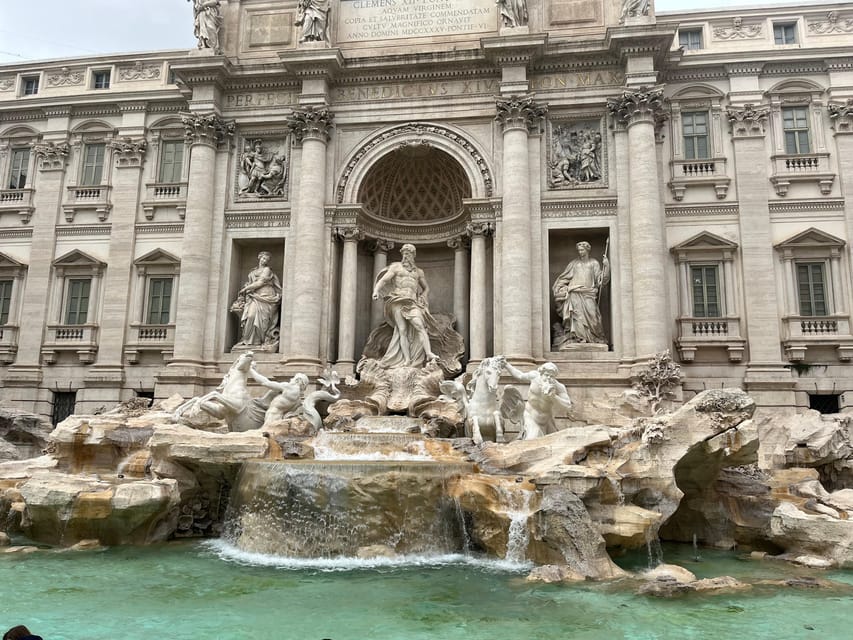
The fountain portion is short, listed at about five minutes. The guide explains the exterior and gives you time to take in the famous Baroque monument, but you should set your expectations carefully.
This is not a long architectural tour of Trevi Fountain. Nor should you assume that the group will receive a special, quiet position directly beside the basin. The plaza can be very crowded, and one account specifically found the fountain view limited to the crowd side of the square.
That does not make the stop pointless. The guide connects the monumental fountain to the water system you have just seen below ground, which gives the sculptures and flowing water more meaning. You may also receive useful advice on getting a better photograph.
The fountain itself is the largest Baroque fountain in Rome, and it is an obvious place to make the traditional wish. The experience handles this in a practical way: the underground archaeology gets the detailed attention, while the fountain provides the famous setting and visual payoff.
If your main goal is a quiet, up-close Trevi Fountain visit, book a separate visit at a less crowded time. If you want to understand the fountain as the modern face of a much older water network, this short stop does its job.
Gelato at a historic shop
The final treat is Italian gelato from a historic shop near Trevi Fountain. It is a simple addition, but it fits the tour well. After a cool underground visit and a concentrated history lesson, a small serving of gelato gives the hour a cheerful finish.
The practical detail matters: you receive a voucher rather than being led through a formal tasting. You can use it at the designated shop, and the voucher may remain useful after the guided portion rather than forcing you to eat immediately.
That arrangement gives you some freedom, though it also means the guide may not escort you through the gelato stop in the same way as the archaeological visit. Follow the instructions you receive and check the shop details before wandering off into the busy Trevi streets.
The gelato has been a highlight for many people, with praise for both its quality and the chance to choose when to claim it. I see it as a pleasant bonus rather than the reason to book. The archaeology and water story are the real substance.
The guides shape the experience
The guide is unusually important here because the site is compact. Without explanation, you could walk through quickly and see old walls, channels, and display cases without grasping how they fit together.
The English-speaking guides named in recent feedback include Carla, Erica, Noemi, Alessia, Viola, Michelle, and Jesse. Erica has been praised for answering questions and offering extra help around the fountain. Noemi has been noted for humor and for making several centuries of history easy to follow. Alessia has been praised for keeping explanations clear and helping families stay engaged.
Those details matter if you are choosing a tour instead of exploring on your own. A strong guide can turn a small site into a coherent story. The best presentations explain Roman life in plain language, pause for photographs, answer questions, and relate the underground remains to sights you may see elsewhere in Rome.
Families can benefit from that approach. One guide was especially patient with children, while another kept an active child involved. Still, the material is historical and the underground area is small, so very young children may not find every explanation equally exciting.
Headsets have also been used, which can help in a confined or noisy setting. You are less likely to miss the guide’s explanation while standing near other groups or visitors.
Is $52 good value for one hour?
At $52 per person, this is not a bargain basement activity. The value depends on what you want from a short tour.
The price includes assistance, reserved entry to Vicus Caprarius, the guided archaeological visit, the Trevi Fountain portion, and Italian gelato. If you would otherwise enter the site without much explanation, the guide adds the main value. The fountain and gelato help round out the package, but they are not substantial on their own.
I would consider it good value for a first visit to Rome if you are curious about ancient water systems and want a guided experience in the Trevi area. The tour gives you a focused story without taking a full morning, and it offers something different from the Colosseum, Forum, and Pantheon.
The calculation changes if you care mainly about the fountain. Five minutes at Trevi will not satisfy someone looking for detailed Baroque art analysis or a calm photo session. You may also feel the cost is high if you prefer to see small archaeological sites independently.
The flexible cancellation policy helps reduce the risk. You can cancel up to 24 hours ahead for a full refund, and you can reserve now while paying later. Those terms are useful when your Rome schedule is still shifting.
Heat, crowds, and practical comfort
The underground site can be a welcome break during hot weather. Several people appreciated getting out of the heat, and the cooler setting makes this a sensible midday option when outdoor sightseeing becomes tiring.
Wear comfortable shoes. The experience is not suitable for wheelchair users or people with mobility impairments, and the underground setting may involve surfaces and access points that are not easy for everyone.
Trevi Fountain itself can be crowded. Keep your belongings secure, listen for the guide, and do not expect the group to control the public square. The underground section is more focused, but it is still a confined archaeological space.
The tour is in English. If you need another language, this experience is not the right choice based on the available information.
Who should book this Trevi underground tour?
I would recommend it to you if you like:
- Ancient Roman engineering and water supply
- Archaeology explained through real objects and buildings
- Short tours that fit between larger attractions
- Guides who tell stories rather than recite labels
- A cooler indoor activity during a hot Rome afternoon
- A mix of history, fountain sightseeing, and gelato
I would be more cautious if you want a long tour, a large archaeological complex, or guaranteed close access to the fountain. The underground area is compact, and the fountain explanation is brief.
It is also a good choice for repeat visitors. People who have already seen Trevi Fountain several times may appreciate learning what lies below the familiar plaza. The tour adds a useful layer to a place that can otherwise become just another photograph.
Should you book it?
Book this tour if you want the story beneath Trevi Fountain, not just another view of the fountain itself. The strongest part is Vicus Caprarius, where water channels, a Roman residence, coins, marble, and an African oil amphora come together under the guidance of an engaging English-speaking archaeologist or history guide.
At $52 for one hour, it is best viewed as a compact, guided history lesson with gelato, not a major sightseeing excursion. Make sure you arrive early at Vicolo del Puttarello 25, wear comfortable shoes, and keep your expectations realistic about the crowded fountain stop.
For history-minded visitors, families seeking a manageable activity, and anyone curious about Rome’s underground layers, I would book it. For a dedicated Trevi Fountain photography session, choose something else and visit the plaza separately.
FAQ
Where does the tour begin?
The meeting point is Vicolo del Puttarello, 25, in the Trevi Fountain district.
How long does the experience last?
The total duration is one hour. The guided visit to Vicus Caprarius takes about 40 minutes, followed by a short Trevi Fountain explanation and the gelato portion.
What language is the tour offered in?
The live guided tour is offered in English.
Is entry to Vicus Caprarius included?
Yes. The experience includes a reserved entry ticket to Vicus Caprarius and a guided visit.
Is gelato included?
Yes. Italian gelato from a historic shop near Trevi Fountain is included.
Is hotel pickup provided?
No. Hotel pickup and drop-off are not included.
Is skip-the-line entry included?
The activity information describes skip-the-ticket-line access, while the included services specifically identify reserved entry to Vicus Caprarius. You should not assume that this provides a separate way through crowds at Trevi Fountain.
Is the tour suitable for wheelchair users?
No. The experience is not suitable for wheelchair users or people with mobility impairments.
What should I bring?
Bring comfortable shoes. Arriving at least 15 minutes before your selected start time is also required.
Can I cancel for a refund?
Yes. You can cancel up to 24 hours in advance for a full refund. You can also reserve now and pay later.
Just added around Rome
- Rome City, Pantheon, and Trevi Fountain Walking Tour★ 5.0 · 249 reviews
- Rome: Skip the line Vatican Museums & Sistine Chapel Tour★ 4.2 · 251 reviews
- Rome: Tivoli Day Trip with Villa d’Este and Villa Adriana★ 4.5 · 251 reviews
- Transfer Rome center – Ciampino Airport★ 4.5 · 251 reviews
- Rome: Cannondale E-Bike Evening Tour with Optional Dinner★ 4.9 · 251 reviews
- VIP Colosseum, Roman Forum & Palatine Hill & Special Access Sites★ 4.5 · 252 reviews
- Private Vatican Museums Hidden Gems Tour with Optional Pick-Up★ 5.0 · 253 reviews
- Vatican Museums & Sistine Chapel Skip-the-Line Guided Tour★ 4.6 · 254 reviews
Dessert Tours, compared.

Pasta Making Class with Wine, Limoncello, and Dessert
Read our review →
Handmade Pasta & Dessert Class with Unlimited Wine
Read our review →

Rome Cooking Class: Make Pizza and Pasta with Wine & Dessert
Read our review →Browse the lists this tour appears in