
Review · TREVI FOUNTAIN & PANTHEON TOURS
Rome: Trevi Fountain District Underground Domus Guided Tour
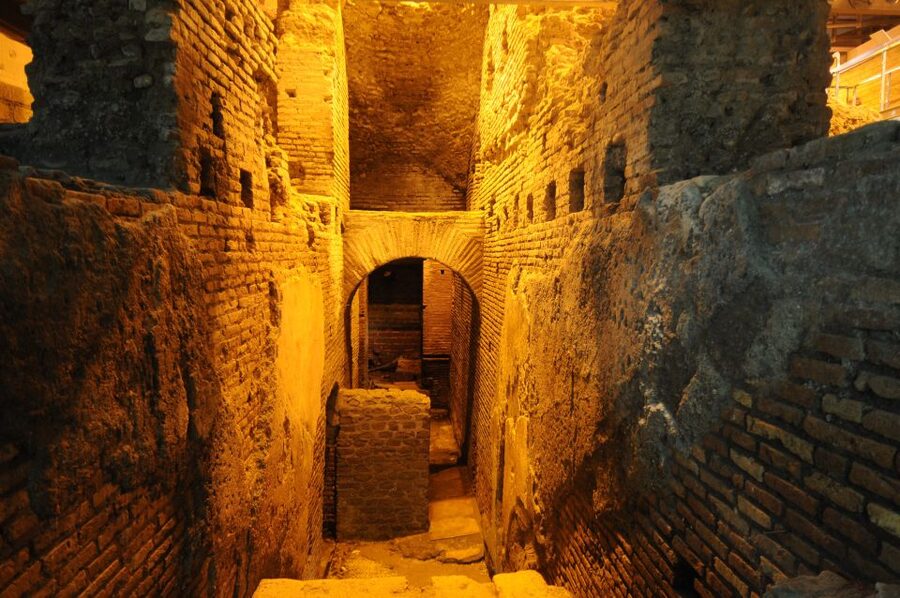
Rome’s best stories are often underground. At Vicus Caprarius, nine meters below the Trevi District, you’ll see ancient masonry, water channels, coins, amphorae, and part of a luxurious Roman home. I especially like the archaeologist-led storytelling and the close look at how water from the Trevi spring served Roman buildings. The main catch is that you do not enter beneath the actual fountain, and the fountain visit is not private.
This is a short, focused experience at $50 per person, with reserved entry and a live English-speaking guide. Guides such as Erika, Naomi, Noemi, Alessia, and Michelle have earned strong praise for clear explanations, humor, patience, and their ability to answer questions. Bring comfortable shoes, and allow extra time afterward if you want to approach the crowded fountain.
In This Review
- Key points to know before you book
- Why this underground Rome tour is worth your time
- Meeting at Vicolo del Puttarello 25
- Vicus Caprarius, Rome’s underground City of Water
- Following the water from the Trevi spring
- Artifacts that make the ruins feel personal
- The guide is the heart of the experience
- Finishing at the crowded Trevi Fountain
- Is $50 a fair price for 45 minutes?
- Who should book this tour?
- Practical details for a smooth visit
- Should you book the Vicus Caprarius and Trevi Fountain tour?
- FAQ
- Where does the tour begin?
- How long does the tour last?
- Is the tour conducted in English?
- Does the tour go underneath the actual Trevi Fountain?
- Is entrance to Trevi Fountain free?
- What is included in the booking?
- Is the tour suitable for wheelchair users?
- Can I cancel the booking?
Key points to know before you book

- Nine meters below Rome: Walk through Vicus Caprarius, an archaeological site beneath the Trevi neighborhood.
- Ancient water engineering: Follow the route of water connected with the spring that feeds the Trevi Fountain.
- Artifacts with everyday stories: See Imperial Age coins, African amphorae, polychrome marble, and the head of Alessandro Helios.
- A guide makes the difference: The site is much easier to understand with an archaeologist explaining its changing use.
- The fountain is separate: You finish at Trevi Fountain, but there is no private or skip-the-line access to the monument.
- A cool break in summer: The underground rooms can offer welcome relief from Rome’s heat, though the spaces may feel tight when several groups are present.
Why this underground Rome tour is worth your time
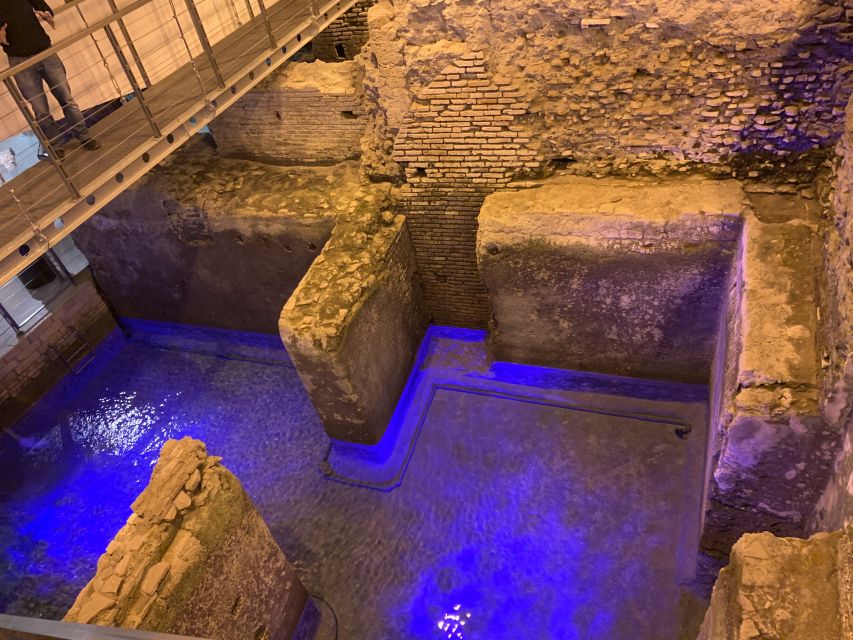
The Trevi Fountain is one of Rome’s most famous sights, but its postcard beauty tells only part of the story. Above ground, you get Baroque curves, roaring water, and a crowded square. Below ground, you see the older systems that made urban life possible long before the fountain received its present design.
That contrast is the real point of this tour. You move from Rome’s theatrical 18th-century monument to layers of Roman construction and water management. The experience gives you a better sense of how the city was built, repaired, occupied, and reused across centuries.
I would not choose this tour simply to get a better look at the fountain. You can visit the fountain for free, and access to the front area can involve waiting in a busy crowd. I would choose it because you want context, archaeology, and a more unusual way to understand one of Rome’s best-known landmarks.
The tour lasts only 45 minutes, so it fits neatly between major sights. That short length is useful if your day already includes the Pantheon, Spanish Steps, or Piazza Navona. It also means the guide needs to keep moving, and one guide noted that there was more to explain than the schedule allowed.
More Trevi and Pantheon walks:
- Rome: Pantheon Fast-Track Ticket and Official Audio Guide
★ 4.3 · 21,008 reviews - Pantheon Reserved Entry Ticket with Audio Guide
★ 4.0 · 4,486 reviews - Rome: Pantheon Timeless Marvel Guided Tour with Entry Ticket
★ 4.9 · 4,002 reviews
Meeting at Vicolo del Puttarello 25
Your starting point is the entrance to the Vicus Caprarius archaeological area at Vicolo del Puttarello 25. This is close to Trevi Fountain, but the underground site is not the fountain itself. That distinction matters because the tour title and descriptions can make the experience sound as if you will walk directly beneath the monument.
Plan to arrive at the entrance and look for the guide there. Assistance and the reserved entry ticket are included, which removes the need to arrange admission separately. The activity is offered in English, and a small group option is available.
Comfortable shoes are the sensible choice. You will be walking through an archaeological site rather than along a polished museum floor, and the area is not suitable for wheelchair users or people with mobility impairments. The information provided does not promise hotel pickup, so you need to make your own way to the meeting point.
Vicus Caprarius, Rome’s underground City of Water

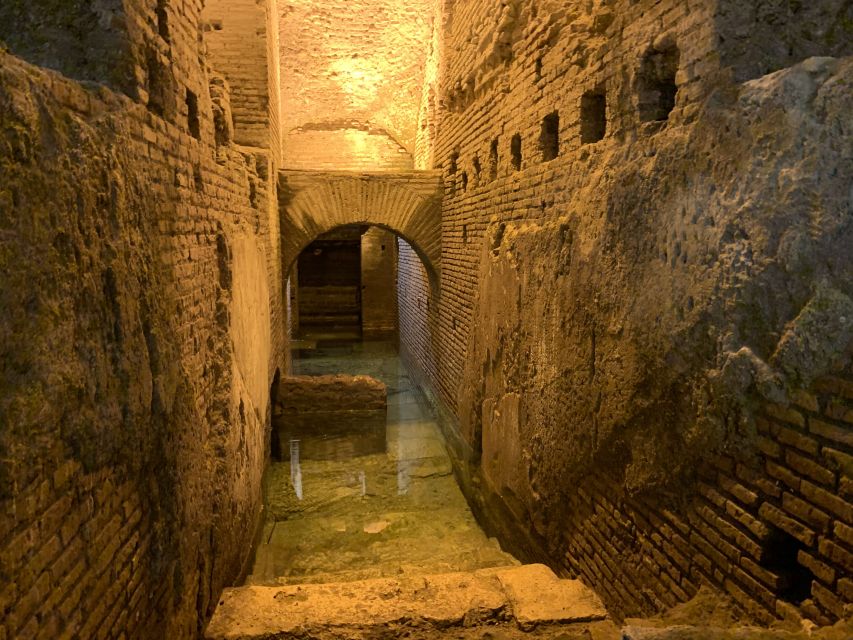
The main part of the tour takes place at Vicus Caprarius, often called the City of Water. At about nine meters below street level, the site reveals a section of ancient Rome that is easy to miss when you are focused on the fountain above.
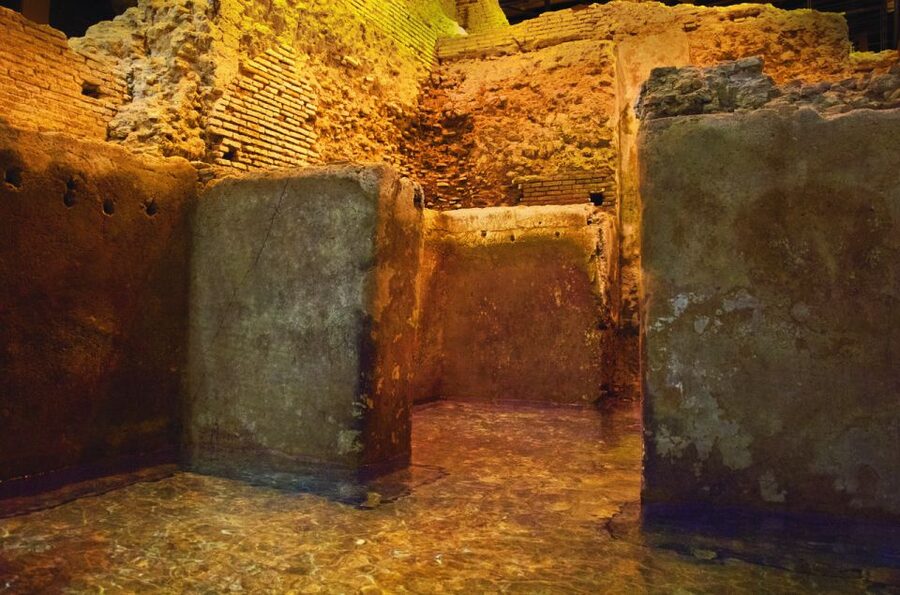
The archaeological area is arranged in three sections. Your guide leads you through the remains and explains how the water moved through the site. Ancient masonry, pipes, channels, and pools show that water was not simply decorative. It supported domestic life and helped make an upscale residence possible.
This is where an archaeologist guide adds real value. Without explanation, you might see walls, fragments, and channels but struggle to understand their purpose. With the guide’s help, those pieces become part of a story about Roman construction, plumbing, status, and daily routines.
The setting is not enormous. One person found the rooms smaller than expected, and another noted that more than one language group could be inside at the same time. If you prefer wide-open ruins and plenty of space for photographs, this may feel confined. If you enjoy close archaeological work, the compact layout keeps the evidence near at hand.
Following the water from the Trevi spring

The most interesting thread is the water itself. The tour explains how water from the spring associated with Trevi moves through older masonry and once supplied pools and pipes connected with the Domus residence.
That gives the tour a practical focus. You are not only hearing dates and names. You are learning how water reached a wealthy Roman home and how Roman builders worked with underground channels. The engineering is impressive because much of the system was built roughly 2,000 years ago.
The water connection also helps tie the underground site to the fountain above. The Trevi Fountain is not an isolated work of Baroque decoration. It depends on a long story of springs, conduits, rebuilding, and public display. Several guides have also pointed out that the underground water structures remain connected with the system serving the fountain.
The site should not be confused with an active passage directly under the fountain basin. You see related underground structures near the fountain, not a private view of the fountain’s foundations. That is a small but important correction to your expectations.
A few more reviews worth comparing before you book
- Vatican: Museums & Sistine Chapel Entrance Ticket
★ 4.5 · 144,003 reviews - Vatican Museums & Sistine Chapel Tour with Optional Basilica
★ 4.3 · 67,413 reviews - Colosseum, Roman Forum & Palatine Guided Tour
★ 4.7 · 63,148 reviews - Vatican Museums, Sistine Chapel & St Peter’s Basilica Guided Tour
★ 4.5 · 39,149 reviews
Artifacts that make the ruins feel personal
The tour includes more than architectural remains. You can see hundreds of ancient coins and African amphorae used to transport oil. These objects help bring daily commerce into a site that might otherwise feel like a collection of walls.
The coins point to the people who passed through the area and the money that circulated in Roman society. The amphorae connect the site with trade and food supply. They show that even an elegant residence depended on goods arriving from far beyond the city.
You will also hear about polychrome marble and the head of Alessandro Helios. The marble suggests the taste and expense associated with a luxurious domus. The sculpture fragment gives the site a more human face, even though it survives only as part of the original decoration.
A guide can explain what is known and what remains uncertain. One comment about the tour noted that some of the story depends on assumptions. That is normal in archaeology, where evidence may be incomplete. A good guide should separate firm findings from interpretation, and the strongest guides on this experience appear to do that while keeping the story lively.
The guide is the heart of the experience
The most consistently praised part of this tour is the guiding. Erika is frequently singled out for enthusiasm, clear explanations, and a talent for making Roman history easy to follow. Naomi is described as a strong storyteller with a good sense of humor, while Noemi, Alessia, Michelle, and Federica also receive warm praise for their patience and personal approach.
The useful thing here is not simply that the guides know the material. They connect the underground site with the wider story of Rome, including the transition from ancient to medieval periods and the development of the fountain. That broader frame helps you understand other ruins you may see during your stay.
Several guides have made time for questions and photographs. One guide even added an extra stop when time allowed, and another helped with photographs outside the fountain. These touches are not guaranteed, but they show the value of having a live person rather than relying on an audio guide.
Some groups receive radio equipment, which makes it easier to hear in a confined or busy site. That is especially helpful when several groups are moving through the archaeological area at once.
The tour is in English. If you enjoy asking questions, this is a good format. If you prefer to explore silently at your own speed, the fixed 40-minute underground visit may feel more structured than you want.
Finishing at the crowded Trevi Fountain
The final five minutes are devoted to Trevi Fountain. Your guide can explain the fountain’s history and point out details of its Baroque design before the tour ends.
This is not a private fountain visit. The monument itself is free, and skip-the-line access is not included. The area can be extremely crowded, with a line to get close to the fountain in some conditions. You still have the opportunity to visit it afterward, but you should not expect a reserved position in front of the water.
For the best use of your time, treat the fountain portion as an orientation rather than the main event. Listen to the guide’s explanation, take note of the details you want to inspect, then return independently if you want photographs or a wish at the basin.
A useful extra is the optional ice cream choice. A voucher can be provided for an ice cream at a place next to the Trevi Fountain, and it can be used at any time during your stay. Check the exact option when booking, since it is not part of the standard inclusions listed here.
Is $50 a fair price for 45 minutes?
At first glance, $50 for 45 minutes may seem high, especially since the fountain is free. The value depends on what you want from the visit.
If you only want a photograph at Trevi Fountain, this is not a good use of your money. You can see the monument without booking a tour, although crowd levels may affect how close you get.
If you want to understand the underground water system, see archaeological remains, and ask questions of an archaeology-focused guide, the price is easier to justify. Reserved entry saves you the trouble of arranging the site visit yourself, and the guide supplies the context that labels alone cannot provide.
I see this as a specialist add-on rather than a major Rome sightseeing tour. It does not replace the Colosseum, Roman Forum, or Pantheon. It adds a different layer to those places by showing you the technical side of Roman urban life.
The short duration also limits the risk. You are not committing half a day or losing time to a long transfer. For a first-time visit, I would schedule it early in your stay if possible. One person specifically wished they had done it on the first day because the explanations helped make sense of other parts of Rome.
Who should book this tour?
I recommend it most strongly for people who enjoy archaeology, ancient engineering, and the less obvious side of famous sights. Families with older children may also find the underground setting more memorable than another long museum visit, though the tour’s suitability depends on each person’s mobility.
It is a good pick for you if:
- You want a short activity near Trevi Fountain.
- You enjoy learning how ancient water systems worked.
- You prefer a live guide who can answer questions.
- You have already seen the main fountain and want more context.
- You like artifacts such as coins, amphorae, marble, and sculpture fragments.
- You are comfortable in a compact archaeological space.
Think twice if your main goal is private access to Trevi Fountain, a long visit among large ruins, or a fully accessible route. The underground site is not suitable for wheelchair users or people with mobility impairments, and the fountain area remains public and crowded.
Practical details for a smooth visit
Book with enough flexibility to account for your Rome plans. Free cancellation is available up to 24 hours before the start time, and you can reserve now and pay later. Starting times vary, so check the available schedule before choosing a slot.
Wear shoes that are comfortable for walking through an archaeological site. Food and drinks are not included, and hotel transportation is not provided. An audio guide is also not included because the tour is led live in English.
Allow a little time after the official finish if you want to see Trevi Fountain properly. The scheduled five-minute fountain portion is brief, and the public area may require patience. The underground rooms can be cool, especially in summer, which makes the visit a pleasant pause from Rome’s heat, though the compact space may feel busy when groups overlap.
Should you book the Vicus Caprarius and Trevi Fountain tour?
Book it if you want the story beneath the postcard. The underground domus, ancient water channels, Imperial Age coins, amphorae, marble, and sculpture offer a meaningful look at how Rome functioned below street level. The guides are the strongest reason to choose the experience, with Erika, Naomi, Noemi, Alessia, and Michelle all praised for enthusiasm, humor, and clear teaching.
Skip it if you expect to walk under the actual Trevi Fountain or receive private access to the monument. That is not what happens. You visit a nearby archaeological site connected to the fountain’s water story, then finish with a short guided look at the fountain itself.
For $50, I think it is worthwhile for curious visitors who want a compact, well-explained archaeological experience. Schedule it early in your Rome stay, take the optional ice cream if available, and leave time afterward to enjoy the fountain at your own pace.
FAQ
Where does the tour begin?
Meet your guide at the entrance to the Vicus Caprarius archaeological area at Vicolo del Puttarello 25.
How long does the tour last?
The complete experience lasts 45 minutes. About 40 minutes are spent at Vicus Caprarius, followed by about five minutes at Trevi Fountain.
Is the tour conducted in English?
Yes. A live English-speaking guide leads the tour.
Does the tour go underneath the actual Trevi Fountain?
No. The tour visits the underground Vicus Caprarius archaeological area near Trevi Fountain. It does not provide access beneath the fountain itself.
Is entrance to Trevi Fountain free?
Yes. Entrance to the fountain is free, but skip-the-line access is not included. The fountain can be very crowded.
What is included in the booking?
The booking includes assistance, reserved entry to Vicus Caprarius, the guided visit there, and a Trevi Fountain access ticket as described for the activity.
Is the tour suitable for wheelchair users?
No. The activity is not suitable for wheelchair users or people with mobility impairments.
Can I cancel the booking?
Yes. You can cancel up to 24 hours in advance for a full refund. Reserve now and pay later is also available.
Just added around Rome
- Rome City, Pantheon, and Trevi Fountain Walking Tour★ 5.0 · 249 reviews
- Rome: Skip the line Vatican Museums & Sistine Chapel Tour★ 4.2 · 251 reviews
- Rome: Tivoli Day Trip with Villa d’Este and Villa Adriana★ 4.5 · 251 reviews
- Transfer Rome center – Ciampino Airport★ 4.5 · 251 reviews
- Rome: Cannondale E-Bike Evening Tour with Optional Dinner★ 4.9 · 251 reviews
- VIP Colosseum, Roman Forum & Palatine Hill & Special Access Sites★ 4.5 · 252 reviews
- Private Vatican Museums Hidden Gems Tour with Optional Pick-Up★ 5.0 · 253 reviews
- Vatican Museums & Sistine Chapel Skip-the-Line Guided Tour★ 4.6 · 254 reviews
Trevi Fountain & Pantheon Tours, compared.

Pantheon Fast-Track Ticket and Official Audio Guide
Read our review →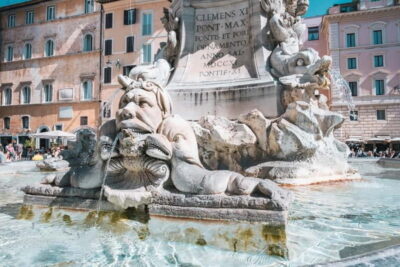
Pantheon Reserved Entry Ticket with Audio Guide
Read our review →
Pantheon Timeless Marvel Guided Tour with Entry Ticket
Read our review →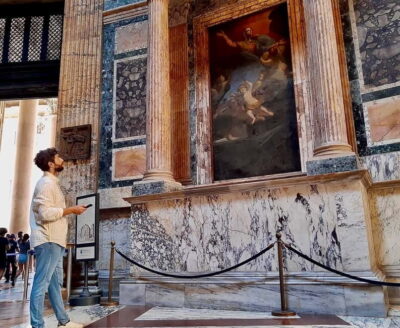
Pantheon Priority Entry Ticket & Audio Guide App
Read our review →
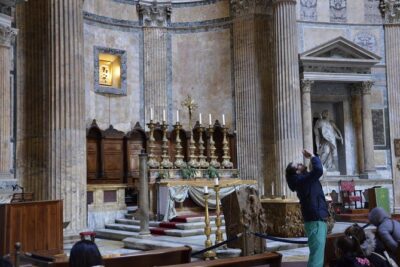
Pantheon Elite Guided Tour – Rome’s Iconic Ancient Temple
Read our review →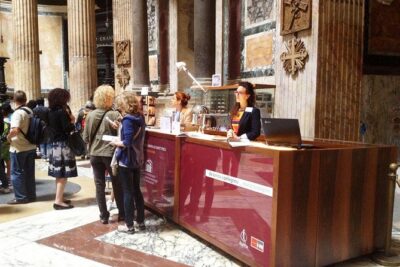
Rome’s Iconic Temple: Pantheon Audio Guided Tour with Fast Access
Read our review →
Pantheon Small-Group Guided Tour with Entry Ticket
Read our review →Browse the lists this tour appears in