
Review · OPERA & CLASSICAL CONCERTS
Rome: Giuseppe Verdi’s “La Traviata” Live Performance
Opera sounds different inside a church. This two-hour performance of Giuseppe Verdi’s La Traviata pairs one of the world’s best-known operas with the striking interior of St. Paul’s Within the Walls Church on Via Nazionale. I like the close-up setting, where the singers and small orchestra feel much nearer than they would in a grand opera house, and I like the price: about $41 for a full evening of live music in central Rome. The main drawback is practical rather than artistic: church pews can be hard, and sight lines get worse farther from the floor-level stage.
You’ll hear professional soloists, choir, orchestra, and a conductor in a production led by Opera e Lirica. The soprano role of Violetta Valéry is central to the evening, and the venue’s unusual acoustics can make the voices thrilling. Still, this is opera in Italian, not English, and you’ll enjoy it much more if you read the plot first.
In This Review
- Key points before you book
- Why La Traviata still works in Rome
- Arriving at St. Paul’s Within the Walls
- What happens during the two-hour performance
- The voices, orchestra, and cast
- Seating, sight lines, and comfort
- Italian opera for English speakers
- Is $41 good value?
- Who should book this performance?
- Should you book La Traviata in Rome?
- FAQ
- Where is La Traviata performed?
- What time does the opera begin and end?
- Is La Traviata performed in English?
- What does the ticket include?
- Who performs in the production?
- Is the church wheelchair accessible?
- Can I cancel my booking?
Key points before you book
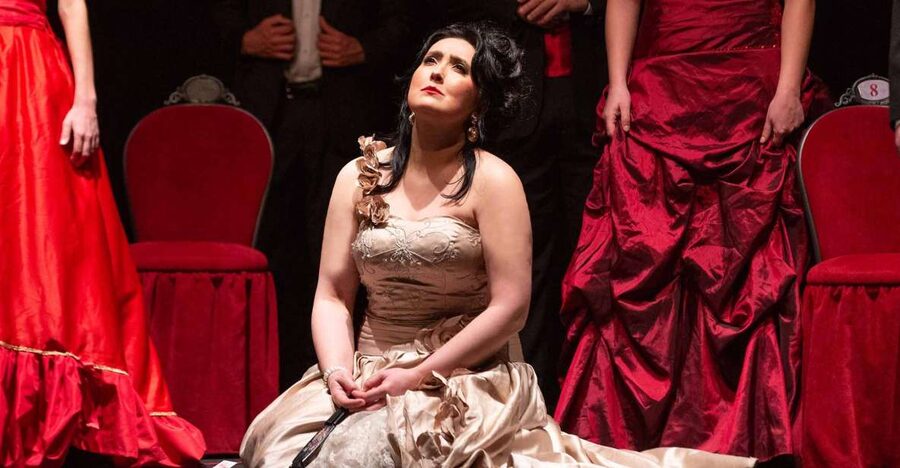
- A famous opera in a nontraditional venue: Verdi’s La Traviata is performed inside St. Paul’s Within the Walls, a church on Via Nazionale.
- A two-hour evening at 8:30 pm: The performance begins at 8:30 pm and ends around 10:30 pm, making it easy to fit after dinner or a day of sightseeing.
- Strong vocal and orchestral performances: The cast includes soprano Aleksandra Buczek as Violetta, tenor Emil Alekperov as Alfredo, and baritone Cristian Alderete as Giorgio Germont.
- Seating affects the experience: The stage is at floor level, so front rows offer the clearest views. Rear and side seats may provide better sound than sight lines.
- Know the story in advance: The opera is sung in Italian, and there is no stated English-language presentation. A short plot summary can prevent confusion.
- Good value for a first opera: At $41, this is a relatively accessible way to hear a live Verdi performance in Rome, though it does not offer the comfort or stage design of a traditional opera house.
Why La Traviata still works in Rome
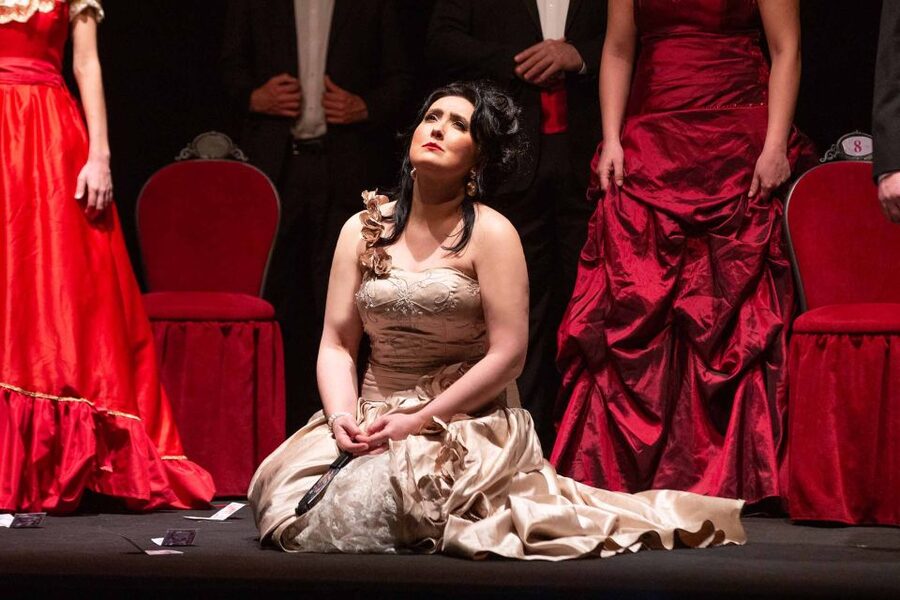
Verdi’s La Traviata tells the story of Violetta Valéry, a celebrated Parisian courtesan who falls in love with Alfredo Germont. Their relationship is tested by family pressure, social judgment, and Violetta’s declining health.
The opera was first performed in Venice on March 6, 1853. Verdi based it on La Dame aux Camélias, a play adapted from Alexandre Dumas fils’s novel. He wanted an original and provocative subject, and the result was a work that brought a contemporary woman and her troubled social position onto the opera stage.
That background matters because La Traviata is not only a parade of famous arias. It is a story about choosing love in a society that gives Violetta very little freedom. You can follow the emotional stakes even if this is your first opera, but the Italian language makes preparation useful.
The music moves from lively party scenes to private confession and finally to heartbreak. Violetta’s role demands both vocal control and dramatic force. The performance’s Violetta, Aleksandra Buczek, is joined by Emil Alekperov as Alfredo and Cristian Alderete as Alfredo’s father, Giorgio Germont. Their scenes form the emotional center of the night.
More opera and concert nights:
- Rome: “The Most Beautiful Opera Arias” Concert
★ 4.3 · 2,495 reviews - Rome: Opera Concert at Palazzo Poli – Fontana di Trevi
★ 4.7 · 1,026 reviews - Rome: The Three Tenors at St. Paul’s Church Concert Ticket
★ 4.7 · 699 reviews
Arriving at St. Paul’s Within the Walls
The meeting point is simple: make your way to St. Paul’s Within the Walls Church at Via Nazionale 16/A in Rome. You are not joining a sightseeing tour or following a guide through several locations. The experience begins and ends at the church, so allow enough time to find the entrance and settle before the music starts.
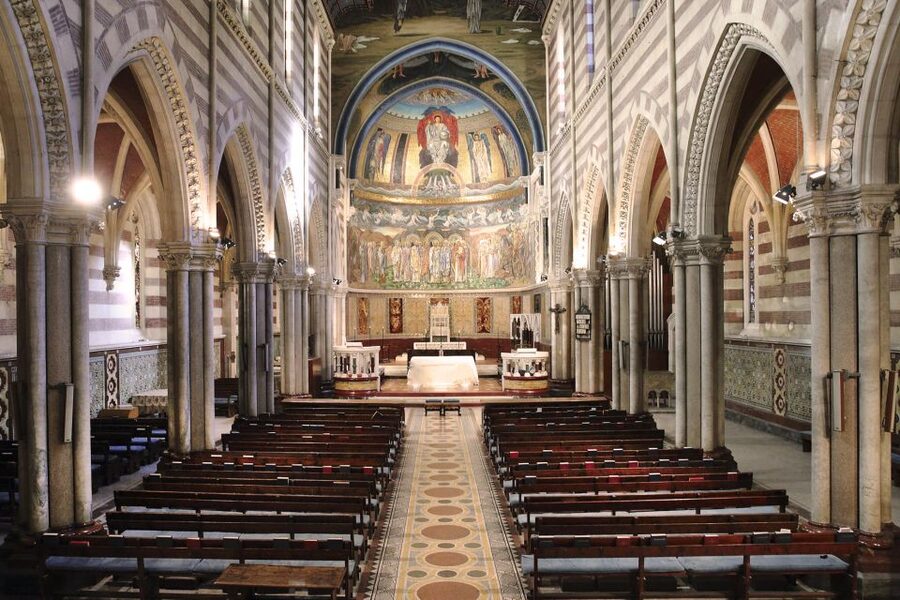
The church is a major part of the appeal. Its tall interior gives the event a sense of occasion before the first note is played. You are sitting in a working religious building rather than a purpose-built theater, and that changes the mood. The setting feels intimate and atmospheric, with the performers close to the audience.
The church also creates the evening’s main compromises. Its acoustics are not designed specifically for opera, and the sound can vary depending on where you sit. Some seats produce impressive resonance, while others may make the voices feel less balanced.
The performance starts at 8:30 pm and lasts about two hours. There is no need to build an entire day around it, but the timing works well as a final activity after sightseeing. Food and drinks are not included, so plan dinner separately.
What happens during the two-hour performance
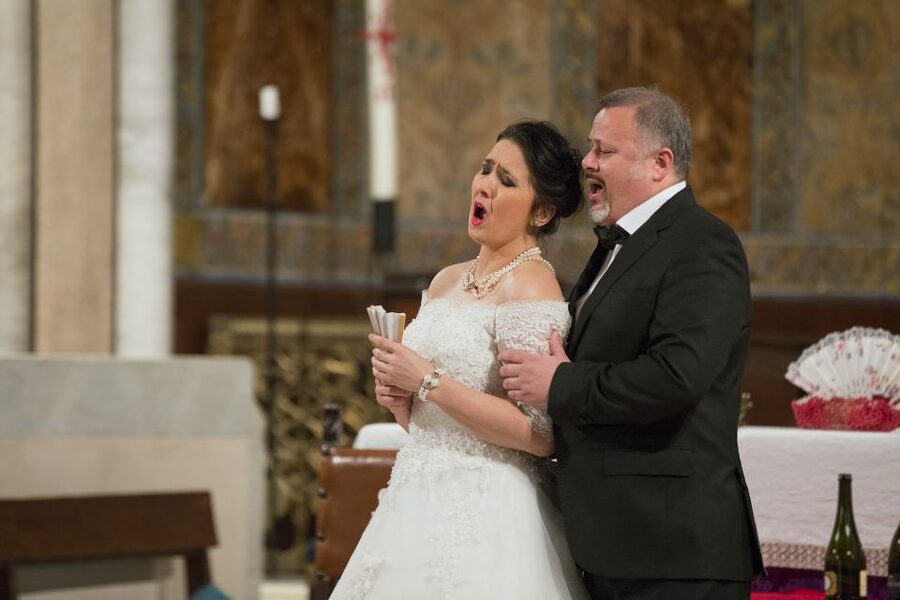
The production presents La Traviata as a melodrama in three acts. Opera e Lirica provides the orchestra, choir, soloists, conductor, costumes, and stage direction. The listed conductor is Elvin Dhimitri, with scenes and costumes by Bolero Sartoria and artistic direction by Giusi Cuccaro.
The opening act introduces Violetta’s social world and her meeting with Alfredo. It is the most energetic section, filled with guests, music, and public celebration. If you know only one piece from the opera, it may be the famous drinking song, Libiamo ne’ lieti calici. The contrast between the festive opening and Violetta’s private troubles gives the act its force.
The second act turns inward. Alfredo and Violetta attempt a life together, but Giorgio Germont asks Violetta to leave Alfredo to protect the reputation and marriage prospects of Giorgio’s daughter. This is where the opera’s moral pressure becomes clear. Violetta’s sacrifice is not a simple romantic gesture. It exposes the rules of the society around her.
The final act is quieter and more painful. Violetta’s illness has worsened, and the story moves toward its tragic ending. The opera’s emotional effect depends on the singer playing Violetta, who must shift from social confidence to physical weakness and despair.
The production also includes choir scenes and, according to the performance program described by attendees, ballet interludes. These are an extra touch rather than the main reason to book. If you are expecting a fully staged theater production with large sets, complex scenery, and a raised stage, adjust your expectations. This is a more compact presentation built around the music and the church.
The voices, orchestra, and cast
The strongest reason to attend is the singing. The production brings together Opera e Lirica soloists associated with important Italian theaters and music academies. The cast includes Aleksandra Buczek as Violetta, Emil Alekperov as Alfredo, and Cristian Alderete as Giorgio Germont.
The supporting cast includes Anastasiia Demchenko as Flora and Annina, Andrea Pecci as Gastone, Andrea Scorsolini as Baron Douphol, Matteo Nardinocchi as the Marquis d’Obigny, and Giuseppe Trovato as the Commission Agent. The choir represents servants, noblemen, friends, gypsies, matadors, picadors, and masked partygoers.
You are close enough to notice the physical effort of the singers. Opera is not amplified in the same way as a pop concert, and the voices must carry through the church. When the sound works well, that closeness is exciting. You can hear the shifts in volume and tone rather than receiving a distant, polished theater sound.
The orchestra is another pleasure. It supports the singers without turning the church into a concert hall. The conductor, Elvin Dhimitri, keeps the performance moving through its changes in mood, from party music to the heavy final scenes.
One point needs care: a church can make sound feel grand, but it can also create echo. Some locations in the building offer clearer balance than others. The sound is often praised, but it is not equally consistent from every seat.
A few more reviews worth comparing before you book
- Vatican: Museums & Sistine Chapel Entrance Ticket
★ 4.5 · 144,003 reviews - Vatican Museums & Sistine Chapel Tour with Optional Basilica
★ 4.3 · 67,413 reviews - Colosseum, Roman Forum & Palatine Guided Tour
★ 4.7 · 63,148 reviews - Vatican Museums, Sistine Chapel & St Peter’s Basilica Guided Tour
★ 4.5 · 39,149 reviews
Seating, sight lines, and comfort
This is the practical issue most likely to shape your night. The stage is at floor level, with no raised platform to help people sitting behind you. From the back of the church, tall people in front can block part of the action. Side seats can also make it difficult to see dancers or visual details.
If seeing the performers matters as much as hearing them, arrive early and choose your seat carefully. The front rows give you the best view, and paying for a more expensive front section may make a real difference here. A seat farther back can still offer a good listening experience, but you may spend more time watching around heads than watching the stage.
The seating is mainly church pews, which are not designed for a two-hour opera. Several attendees have found the benches hard and suggested bringing an extra cushion. Some seats may use plastic chairs, and those can be less comfortable than the pews.
The church can also become hot, especially in summer. Ventilation and fans may not be enough on warm evenings. This affects the audience and, understandably, makes things difficult for singers wearing formal costumes and gowns.
These are not small details. At a standard opera house, seating, temperature control, and sight lines are part of the design. Here, the church setting gives you atmosphere but asks you to accept a few physical compromises.
Italian opera for English speakers
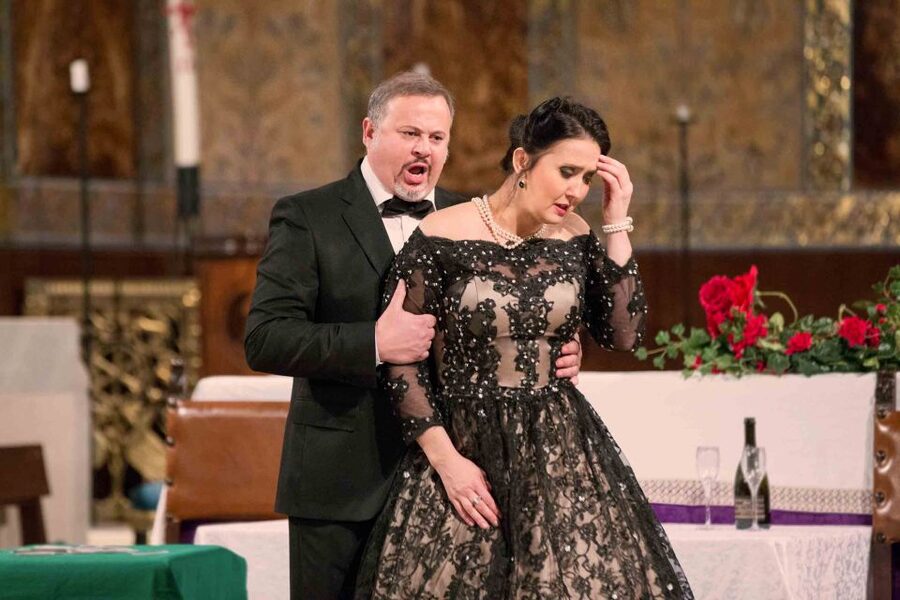
The singing is in Italian, and the experience does not begin with a full explanation of Verdi or the plot. If you arrive without knowing the story, you may struggle to understand why Violetta leaves Alfredo or why the final act unfolds as it does.
I recommend reading a short synopsis before you go. Learn the names Violetta, Alfredo, and Giorgio Germont, and understand the central conflict between love and social respectability. That small amount of preparation can turn a confusing sequence of beautiful sounds into a powerful drama.
You do not need to study opera terminology. You only need the basic story and a sense of the three acts. With that in mind, you can focus on the voices, music, costumes, and expressions rather than trying to decode every line.
This preparation is especially useful if you are attending with teenagers or first-time opera listeners. The performance can be a fine introduction because the story is direct, the music is familiar, and the total running time is manageable. Just explain beforehand that the opera is not presented in English.
Is $41 good value?
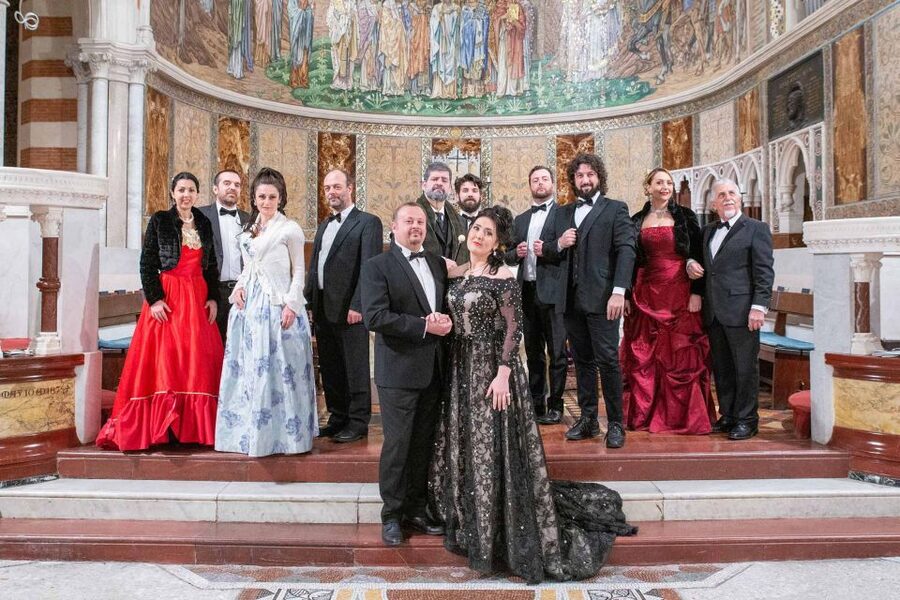
At about $41 per person, this is a strong-value option for an evening of live opera in Rome. You are paying for a ticket to a professional performance with soloists, choir, orchestra, conductor, costumes, and a historic central venue. Food and drinks are not part of the price, but that also keeps the booking straightforward.
The value depends on what you want. If you are searching for the full comfort and grandeur of a major opera house, this church production will feel basic. You may have hard seating, a restricted view, and sound that changes across the room.
If you want an accessible first taste of Verdi, the price makes sense. You can hear La Traviata without committing to a much more expensive theater evening. The intimate setting also puts you physically close to the singers, something that can be lost in a large auditorium.
I would spend more for front-row seating if the price difference is reasonable. The view from the front is important because the performance does not use a high stage. If you care mainly about the music, a less expensive seat may still satisfy you.
The booking terms add flexibility. You can cancel up to 24 hours before the performance for a full refund, and reserve now while paying later. The activity is wheelchair accessible, though the supplied details do not explain the exact seating arrangement, so contact the provider if you need a specific accommodation. Pets are not allowed.
Who should book this performance?
I would recommend it to anyone who wants a memorable Rome evening built around music rather than another monument. It suits classical music fans, opera newcomers, couples, families with older children, and people looking for a calm break from crowded streets.
It is particularly good for a first opera because La Traviata has a clear story and famous music. The two-hour length also feels approachable. You get the drama without spending an entire night in a theater.
It may not suit you if you need generous legroom, strong air conditioning, or a guaranteed unobstructed view from every seat. It is also not ideal if you want opera in English or a highly elaborate stage production.
For the best result, read the plot, arrive early, dress for the temperature, and choose the closest available seating. Those four steps address nearly every concern raised by the venue and format.
Should you book La Traviata in Rome?
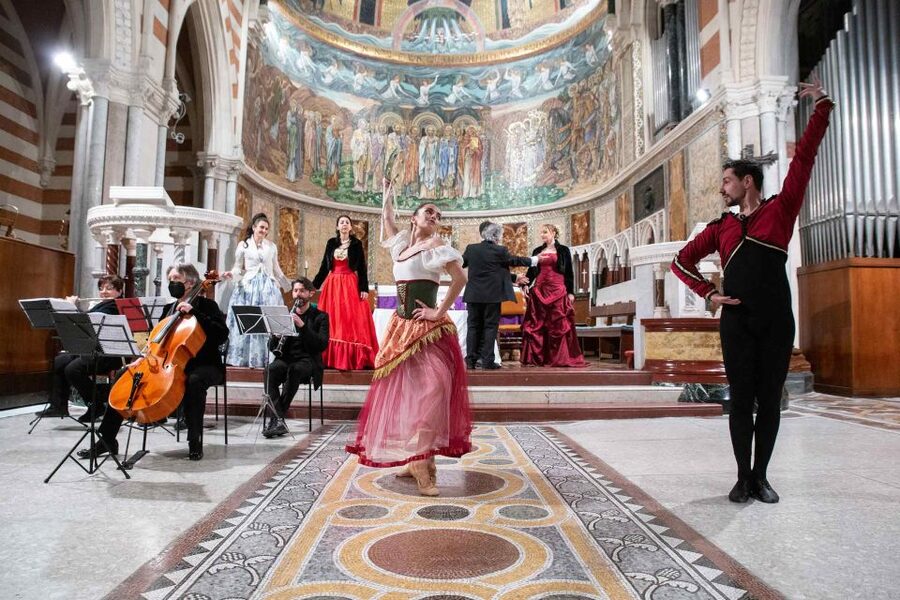
Yes, if you treat it as an intimate church performance rather than a grand opera-house production. The setting is beautiful, the voices and orchestra are the main attraction, and $41 is a fair price for a professional two-hour evening in central Rome.
I would book it for the music, atmosphere, and chance to hear Verdi’s most famous tragic opera in an unusual setting. I would not book it expecting perfect sight lines, soft seats, cool summer temperatures, or English dialogue.
The best plan is simple: learn the story before you arrive, get there early, and pay for front seating if viewing the stage matters to you. Do that, and this can become one of the most distinctive musical nights of your time in Rome.
FAQ
Where is La Traviata performed?
The performance takes place at St. Paul’s Within the Walls Church, located at Via Nazionale 16/A in Rome.
What time does the opera begin and end?
It starts at 8:30 pm and ends at approximately 10:30 pm. The listed duration is two hours.
Is La Traviata performed in English?
No. The opera is performed in Italian. Reading the story of La Traviata before attending can help you follow the action.
What does the ticket include?
The ticket includes admission to the performance. Food and drinks are not included.
Who performs in the production?
The listed cast includes Aleksandra Buczek as Violetta Valéry, Emil Alekperov as Alfredo Germont, and Cristian Alderete as Giorgio Germont. Opera e Lirica Orchestra, choir, and additional soloists also perform, with Elvin Dhimitri as conductor.
Is the church wheelchair accessible?
Yes, the activity is listed as wheelchair accessible.
Can I cancel my booking?
Yes. You can cancel up to 24 hours in advance for a full refund. A reserve-now, pay-later option is also available.
Just added around Rome
- Rome City, Pantheon, and Trevi Fountain Walking Tour★ 5.0 · 249 reviews
- Rome: Skip the line Vatican Museums & Sistine Chapel Tour★ 4.2 · 251 reviews
- Rome: Tivoli Day Trip with Villa d’Este and Villa Adriana★ 4.5 · 251 reviews
- Transfer Rome center – Ciampino Airport★ 4.5 · 251 reviews
- Rome: Cannondale E-Bike Evening Tour with Optional Dinner★ 4.9 · 251 reviews
- VIP Colosseum, Roman Forum & Palatine Hill & Special Access Sites★ 4.5 · 252 reviews
- Private Vatican Museums Hidden Gems Tour with Optional Pick-Up★ 5.0 · 253 reviews
- Vatican Museums & Sistine Chapel Skip-the-Line Guided Tour★ 4.6 · 254 reviews
Opera & Classical Concerts, compared.
La Fenice Opera House Entry Ticket with Audio Guide
Read our review →
Santa Monaca Church Italian Opera Concert Ticket
Read our review →
Vivaldi’s Four Seasons Live Classical Music Concert
Read our review →
Vivaldi’s Four Seasons Concert & Music Museum Visit
Read our review →
Vivaldi Four Seasons Concert at Vivaldi Church
Read our review →
Lucca: Puccini Festival Opera Recitals and Concerts
Read our review →Browse the lists this tour appears in