
Review · SKIP THE LINE
Rome: Catacombs Skip-the-Line Tour with Tickets
The ancient city is still under your feet. This two-hour visit to San Domitilla Catacombs takes you below Rome’s streets, where early Christian burial customs, Roman religious change, and underground art come together. I especially like the small-group format and the guides’ strong storytelling, with John, Heather, Sean, Mike, and Divan all praised for clear, lively presentations. The main drawback is that you must reach the meeting point yourself, and the tour is not suitable for wheelchair users.
I also like that the tour focuses on meaning rather than simply marching through tunnels. You’ll hear how Rome moved from pagan traditions toward Christian Rome, see the tombs associated with Nereus and Achilleus, and view some of the earliest Christian artwork open to the public in the city. Keep in mind that photography is not allowed inside, and a strong level of English is needed to follow the explanations.
In This Review
- Key points to know before you book
- Why San Domitilla offers a different side of Rome
- Meeting at Via delle Sette Chiese, 282
- What happens during the two-hour underground visit
- Tombs, rituals, and the move from pagan Rome
- Early Christian artwork in an underground setting
- The guides make the difference
- Is the small-group format worth paying for?
- Comfort, clothing, and the narrow passage question
- What this tour does not include
- Who will enjoy San Domitilla most?
- Should you book this catacombs tour?
- FAQ
- How long does the San Domitilla Catacombs tour last?
- Where does the tour start?
- Where does the tour end?
- Is transportation included?
- Is the ticket included?
- What language is the tour conducted in?
- Can I take photographs inside the catacombs?
- Is the tour suitable for wheelchair users?
Key points to know before you book
- San Domitilla is the main attraction: You spend the guided two hours inside one of Rome’s important underground burial complexes.
- The history goes beyond tombs: The guide explains persecution, burial rituals, secret religious communities, and Rome’s changing faith.
- Small groups improve the visit: A compact group gives you more room to hear the guide and ask questions.
- Guides receive the strongest praise: John, Heather, Sean, Mike, and Divan are described as funny, clear, patient, and deeply informed.
- You must arrange your own transport: The tour begins and ends at Via delle Sette Chiese, 282.
- Expect a focused route, not 180 miles of tunnels: The catacomb system is enormous, but you visit only an accessible section during the two-hour tour.
Why San Domitilla offers a different side of Rome
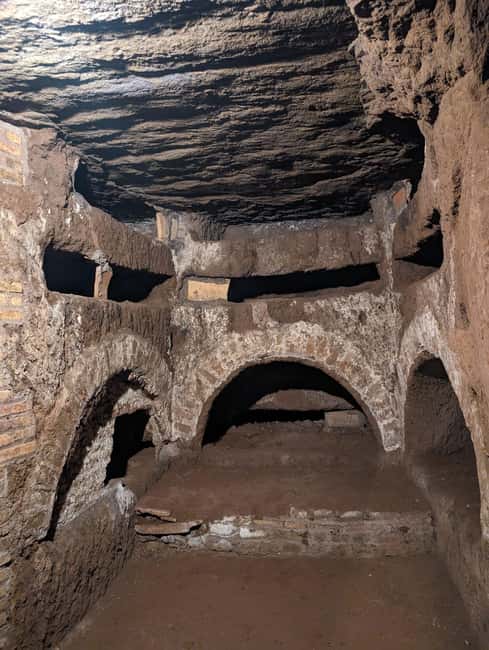
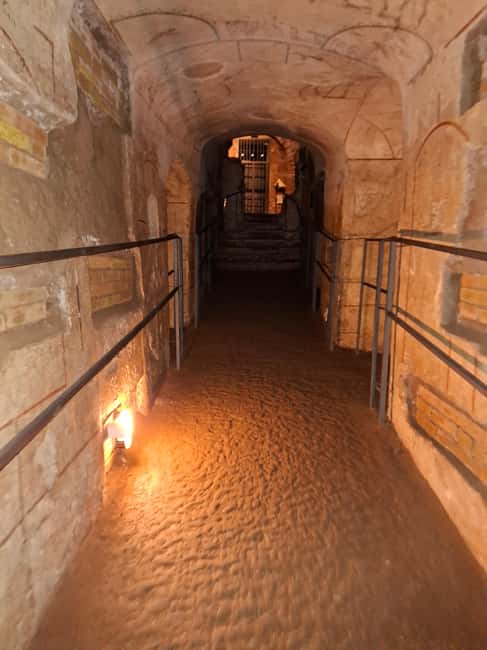
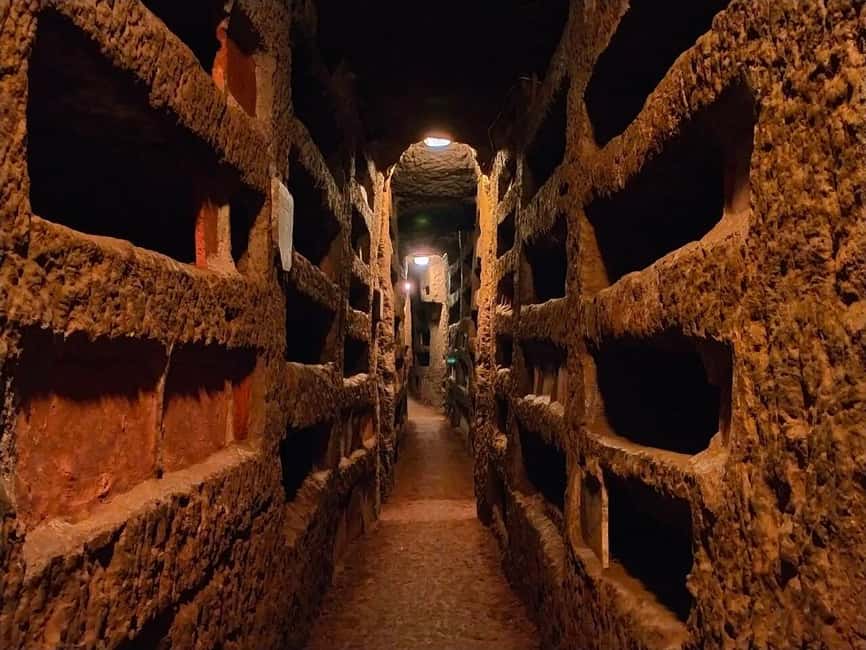
Rome’s famous sights rise above ground: the Colosseum, the Pantheon, the Roman Forum. San Domitilla asks you to look below it. The catacombs form part of an underground network extending for more than 180 miles outside the old city walls, though no two-hour tour can cover more than a small section.
That limitation is useful. Instead of rushing through a huge maze, you get a guided look at a manageable portion of the tunnels and the stories connected to them. The guide supplies the order and context that the dark, narrow passages cannot provide on their own.
The setting also changes how Roman history feels. Above ground, Rome’s monuments often present imperial power. Below ground, the catacombs show how ordinary communities dealt with death, belief, family, ritual, and danger. You are not simply looking at old stone. You are seeing evidence of how people organized burial and expressed faith during a period of major change.
More Skip-the-Line Tickets in Rome
- Vatican Museums & Sistine Chapel Skip-the-Line Entry Ticket
★ 4.4 · 13,838 reviews - Skip-the-Line Group Tour of the Vatican, Sistine Chapel & St. Peter’s Basilica
★ 4.5 · 12,779 reviews - Rome: Vatican Museums & Sistine Chapel Skip-The-Line Ticket
★ 4.2 · 11,708 reviews
Meeting at Via delle Sette Chiese, 282
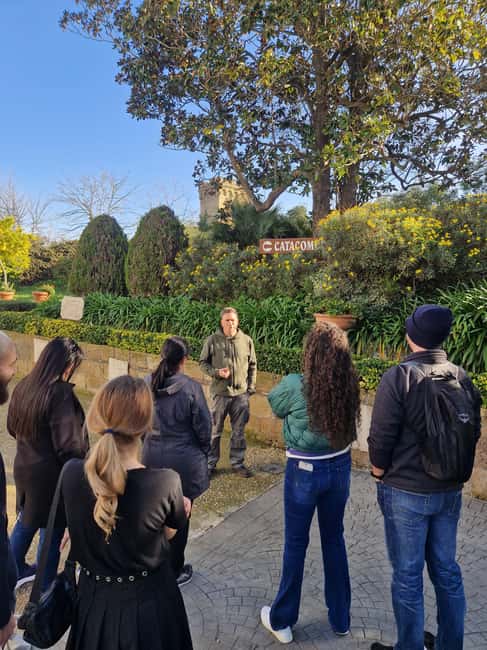
The meeting point is at Via delle Sette Chiese, 282, where you gather in the garden near the picnic tables and the white gazebo or umbrellas. The same location is used at the end, so you do not need to find a second place after the visit.
This is a practical detail worth taking seriously. Transfers are not included, so you need to plan your own way to the site. Build in enough time to find the garden and identify the white gazebo area. The tour begins when you arrive at the meeting point, and starting times vary, so check the available slot before booking.
You may find the outdoor meeting area more relaxed than a crowded city-center departure point. Still, this is not a tour where you can simply step out of your hotel and follow a guide through central Rome. Look at the route from your accommodation before committing, especially if you have a tight schedule or a later train.
What happens during the two-hour underground visit
Once the group is assembled, the English-speaking guide sets the scene before taking you below ground. This preparation matters. The tunnels make much more sense when you first understand the religious and social world that created them.
The guide discusses Rome’s older pagan traditions and the later growth of Christianity. You’ll hear about persecution and the transition toward Christian Rome, along with the burial rites and customs connected to that shift. The exact balance between history, architecture, art, and questions will depend on your guide, but the format is designed around explanation rather than silent sightseeing.
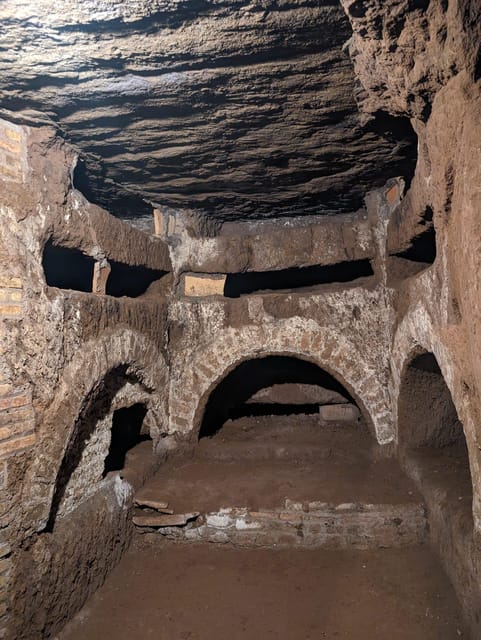
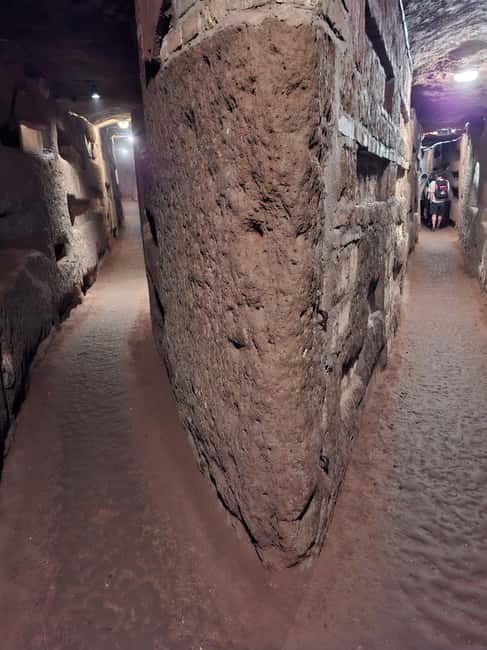
Then you enter the catacombs and follow part of the underground passage system. The route is shorter than some people expect, but that is not necessarily a weakness. A shorter path allows the guide to pause at important areas and explain their use instead of turning the experience into a long walk with scattered facts.
Expect an atmosphere that is quiet, enclosed, and serious. The subject is death and burial, so the tone sometimes needs to be respectful. At the same time, the guides are praised for humor and warmth. Heather is noted for making difficult material fresh without treating it lightly, while Sean is described as both entertaining and deeply informed.
Tombs, rituals, and the move from pagan Rome
The catacombs help explain a period when Rome’s religious identity was not fixed. The tour connects burial practices with the wider change from pagan belief systems to Christianity, giving you a clearer sense of how faith shaped daily life and death.
You’ll learn about burial rites and the way early Christian communities used underground spaces. The subject is not only where people were buried, but why these places mattered and how the practices reflected religious ideas and community life.
The tombs of Nereus and Achilleus are among the named sights associated with the visit. Their presence gives the guide a concrete point around which to tell the story of early Christian Rome. Ancient names can otherwise feel remote, but a specific tomb helps connect broad historical change to individual people and places.
The tour also covers the catacombs as part of Rome’s underground society. The experience description refers to secret societies, though you should not expect a sensational adventure story. The real interest lies in understanding how communities worshipped, buried their dead, and maintained religious identity during periods of pressure.
More catacombs and Appian Way trips:
- Rome: Crypts and Catacombs Underground Tour with Transfers
★ 4.6 · 5,341 reviews - The Original Roman Crypts and Catacombs Tour with Transfers
★ 4.5 · 4,896 reviews - Rome: Catacombs of St. Callixtus Entry Ticket & Guided Tour
★ 4.6 · 3,037 reviews - Rome: Guided Roman Catacombs Tour with Transfers
★ 4.6 · 1,830 reviews
Early Christian artwork in an underground setting
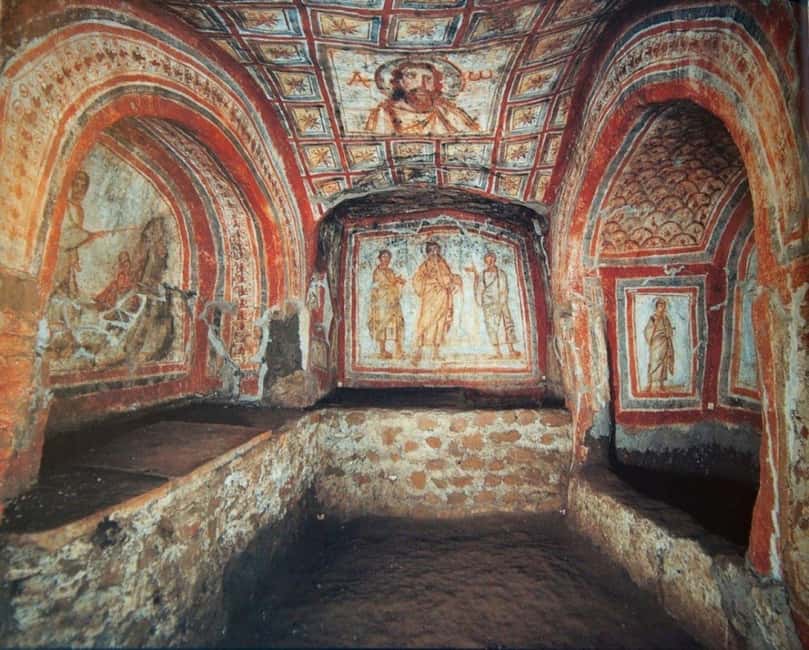
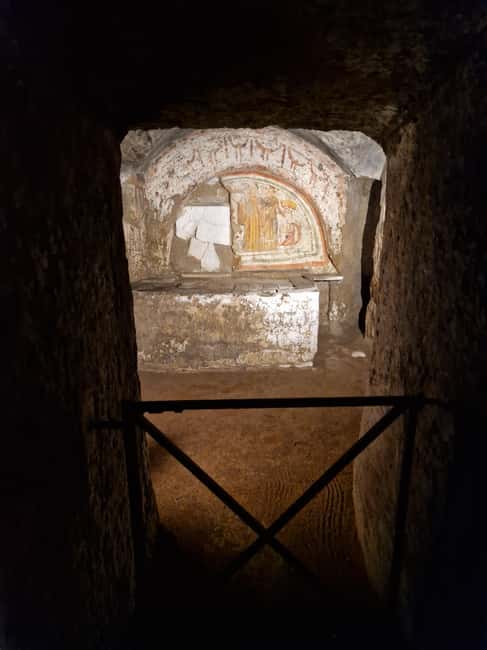
One of the strongest reasons to choose this visit is the art. San Domitilla contains some of the earliest Christian artwork available to see in Rome, and the guide helps you understand why it matters.
The art is not presented like a standard gallery collection. You encounter it in the place where it was created and used, among burial spaces and underground passages. That setting gives the images a different force. The art becomes part of a living religious and funerary environment rather than an isolated object behind glass.
Your guide can also explain how the artwork fits into the larger change in Roman belief. You may find that the visual material is easier to remember after hearing the background first. This is one reason the pre-tour introduction is valuable: it gives the symbols, names, and historical period a framework.
Photography is not allowed inside. That may disappoint anyone hoping to collect underground images, but it also keeps the visit focused. You’ll need to pay attention while you are there and rely on memory rather than a camera roll afterward.
The guides make the difference
The guide is central to this experience. The underground route alone would be interesting, but the tour’s strongest feature is the way the guides bring the history into focus.
John is praised for humor, friendly delivery, and a native level of English. That last point matters if you want to follow historical detail without struggling with pronunciation or speed. He is also described as patient with guests who speak English less fluently.
Divan, also referred to as Diwan or Devon in guide feedback, receives repeated praise for his clear structure and passion. One especially useful quality is his ability to handle a large amount of information without making the presentation confusing. He is also described as welcoming questions, which is helpful if you want to explore a point beyond the standard explanation.
Heather is praised for storytelling that balances humor with respect. She has also kept young children engaged, which makes her style appealing to families. Mike receives similar praise for patience and for making the tour accessible to a three-year-old through lively storytelling.
Sean is described as witty, charming, and good at setting the historical scene before the group enters the tunnels. You should not book based on one particular guide, since the guide assigned to your time may differ. But the repeated praise for several members of the team suggests that the experience does not depend on only one personality.
Is the small-group format worth paying for?
The price is $54.66 per person. That is not the cheapest way to see a Roman site, but it includes the catacomb ticket and an English-speaking guide, and it avoids the ticket line.
The value depends on how you like to visit historic places. If you are happy reading signs and looking around independently, you may find the price high for a two-hour activity. Catacombs can be difficult to understand without context, though, and this is a site where a guide adds real value.
I think the small group makes the cost easier to justify. Underground spaces can carry sound in strange ways, and a large crowd can make it harder to hear or ask questions. A smaller group gives you a better chance to stay close to the guide and follow the story.
Private tour options are also available, according to the activity details. The price supplied here is per person, but availability and final pricing can depend on the option and time you select. Check those details before payment.
The reserve-now, pay-later option is useful if your Rome schedule is still changing. You can also cancel up to 24 hours in advance for a full refund. Those policies reduce the risk of booking early, though you still need to arrange your own transport to the starting point.
Comfort, clothing, and the narrow passage question
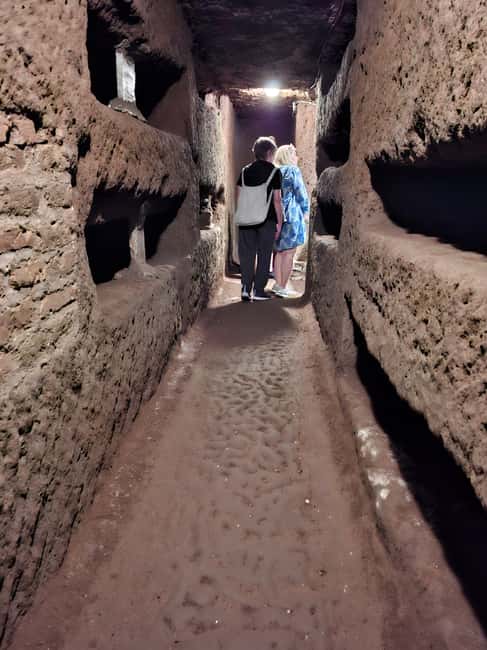
Wear comfortable shoes. You will be underground for two hours, and even a relatively short route is better handled in shoes that feel secure.
Bring a jacket, even in warm weather. The underground environment may feel cool, and the tour information specifically recommends one. Weather-appropriate clothing is also sensible for the garden meeting point and any time spent reaching the site.
The catacombs may include narrow passages and limited exits. One participant described feeling uneasy about that setting but found the guide encouraging and thoughtful. If enclosed spaces make you anxious, consider this honestly before booking. The guide can help you feel more at ease, but the physical nature of the site will not change.
The experience is not suitable for wheelchair users. No transfer is included, and the tour begins and ends at the same garden meeting point. Families can enjoy it, and a three-year-old has reportedly remained engaged, but you should judge your own child’s comfort with darkness, enclosed spaces, and a serious subject.
What this tour does not include
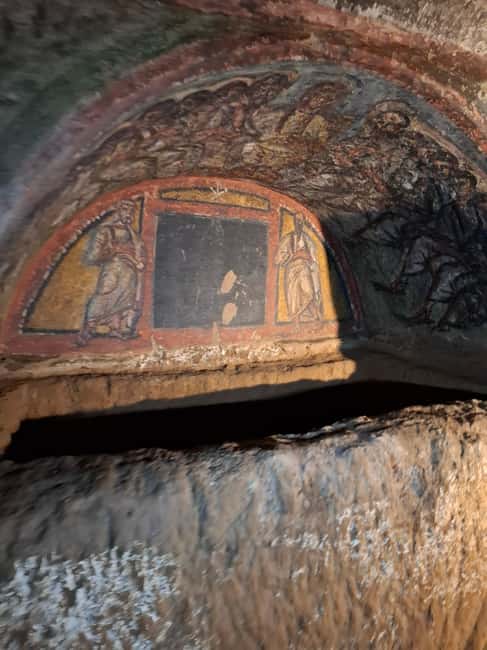
It is important to set your expectations correctly. The catacombs are not a theatrical show, a ghost tour, or a chance to wander through every tunnel in the system. You visit a selected section of a much larger underground network.
You also should not assume that the tour includes visible bones. The focus is on burial sites, tombs, artwork, rituals, and history, and one guide note specifically clarifies that the experience does not really include bones. If you want graphic displays, this may not be the right Roman attraction.
The tour is also not a general ancient Rome overview. It connects the catacombs to the Roman Empire and the change from pagan to Christian Rome, but the setting remains the main subject. Choose it because you want underground Christian history, not because you need another broad introduction to every period of Rome.
Who will enjoy San Domitilla most?
I would recommend this tour to you if you have already seen several of Rome’s major monuments and want a less familiar side of the city. It also suits history lovers who enjoy burial customs, religious change, early art, and stories about how communities lived.
Families may find it a good choice when the guide is lively and patient. The reports about Mike, Heather, and Divan suggest that children can remain involved when the storytelling is strong. Still, the underground setting and serious subject mean that very young children may respond differently from one another.
The tour is also a good match if you value clear English. A strong level of English is required, but guides such as John are praised for native-level delivery and clear explanations.
I would hesitate if you dislike enclosed spaces, need step-free access, want to take photographs, or have only a short window in central Rome and cannot comfortably reach Via delle Sette Chiese. The lack of included transfer is the biggest planning issue.
Should you book this catacombs tour?
Book it if you want a focused, well-explained look at early Christian Rome rather than another crowded monument. The combination of San Domitilla’s burial spaces, the tombs of Nereus and Achilleus, early Christian art, and strong guide-led storytelling gives the two hours a clear purpose.
Skip it if your main goal is to see bones, take photographs, or explore a vast stretch of tunnels on your own. For most visitors who can manage the underground setting and arrange their own transport, the $54.66 price is reasonable because the ticket and English guide are included, and the small-group format helps the history land.
FAQ
How long does the San Domitilla Catacombs tour last?
The guided visit lasts two hours. Check availability for the starting times offered on your chosen date.
Where does the tour start?
It starts at Via delle Sette Chiese, 282. Meet in the garden at the picnic tables near the white gazebo or umbrellas.
Where does the tour end?
The activity ends back at the same meeting point on Via delle Sette Chiese, 282.
Is transportation included?
No. Transfers are not included, so you must arrange your own transport to and from the meeting point.
Is the ticket included?
Yes. The skip-the-line ticket for the catacombs is included.
What language is the tour conducted in?
The tour is conducted in English with a live English-speaking guide. A strong level of English is needed.
Can I take photographs inside the catacombs?
No. Photography is not allowed inside.
Is the tour suitable for wheelchair users?
No. The activity is not suitable for wheelchair users. Comfortable shoes, a jacket, and weather-appropriate clothing are recommended.
More Fast-Track Entries
- Vatican, Sistine Chapel & St. Peter’s Skip-the-Line Tour
★ 4.5 · 7,770 reviews - Skip-the-Line Vatican, Sistine Chapel & St. Peter’s | Small Group
★ 5.0 · 7,060 reviews - Vatican: Vatican Museums Sistine Chapel Skip-the-Line Ticket
★ 4.2 · 6,682 reviews - Castel Sant’Angelo Skip-the-Line Entry & Optional Audioguide
★ 4.4 · 5,233 reviews
Just added around Rome
- Rome City, Pantheon, and Trevi Fountain Walking Tour★ 5.0 · 249 reviews
- Rome: Skip the line Vatican Museums & Sistine Chapel Tour★ 4.2 · 251 reviews
- Rome: Tivoli Day Trip with Villa d’Este and Villa Adriana★ 4.5 · 251 reviews
- Transfer Rome center – Ciampino Airport★ 4.5 · 251 reviews
- Rome: Cannondale E-Bike Evening Tour with Optional Dinner★ 4.9 · 251 reviews
- VIP Colosseum, Roman Forum & Palatine Hill & Special Access Sites★ 4.5 · 252 reviews
- Private Vatican Museums Hidden Gems Tour with Optional Pick-Up★ 5.0 · 253 reviews
- Vatican Museums & Sistine Chapel Skip-the-Line Guided Tour★ 4.6 · 254 reviews
Skip the Line, compared.

Skip-The-Line Uffizi Gallery Timed Entry Ticket
Read our review →
Vatican Museums & Sistine Chapel Skip-the-Line Entry Ticket
Read our review →
Skip-the-Line Group Tour of the Vatican, Sistine Chapel & St. Peter’s Basilica
Read our review →
Michelangelo’s David Skip-the-Line Entry Ticket
Read our review →
Vatican Museums & Sistine Chapel Skip-The-Line Ticket
Read our review →
Vatican, Sistine Chapel & St. Peter’s Skip-the-Line Tour
Read our review →
Skip-the-Line Vatican, Sistine Chapel & St. Peter’s | Small Group
Read our review →
Vatican: Vatican Museums Sistine Chapel Skip-the-Line Ticket
Read our review →Browse the lists this tour appears in