
Review · MUSEUMS
Rome: Borghese Gallery Guided Tour with Tickets
Great art needs the right guide. I like the small-group format, which makes it easier to hear explanations and move through the rooms without losing your place. I also like the reserved entry, since the Borghese Gallery limits access and a timed ticket matters here. The main drawback is simple: two hours can feel short when every room is packed with masterpieces.
The tour costs about $57 per person, a fair price if you want the collection explained rather than simply admired. Guides such as Henry, Victoria, Federica, Irene, and Francesco have been praised for bringing the art to life, though one visitor found the commentary a little rushed and another had trouble hearing a poorly placed microphone.
In This Review
- Key Points to Know Before You Go
- Why the Borghese Gallery Feels Different
- Meeting at Piazzale del Museo Borghese
- The Ground-Floor Sculptures: Bernini in Motion
- Caravaggio’s Dark Drama
- Raphael, Titian, and the Quiet Power of Painting
- The Villa’s Mosaics, Frescoes, and Floors
- What the Two-Hour Route Is Really Like
- Is $57 a Fair Price?
- Who Should Book This Tour?
- Practical Tips for a Better Visit
- Final Verdict: Book It If You Want More Than Famous Names
- FAQ
- How long does the Borghese Gallery guided tour last?
- What is included in the tour?
- Which languages are available?
- Where does the tour meet?
- Can I bring a large bag or luggage?
- Is the tour accessible for wheelchair users?
Key Points to Know Before You Go
- Bernini takes center stage: Apollo and Daphne and other sculptures show why his marble figures remain the gallery’s great crowd-pullers.
- Caravaggio gets serious attention: You see works such as David with the Head of Goliath and Boy with a Basket of Fruit in one of the strongest single collections of his paintings.
- The villa is part of the experience: Roman mosaics, painted ceilings, decorated walls, and frescoes frame the art at every turn.
- Priority entry saves valuable time: Your reserved ticket uses an express security check, allowing you to spend more of your visit inside the gallery.
- The guide makes the difference: The best guides connect artistic technique with the lives, politics, and ambitions behind the works.
- Pack light: Large bags, luggage, strollers, pets, weapons, and sharp objects are not allowed inside, although a free cloakroom accepts larger bags.
Why the Borghese Gallery Feels Different
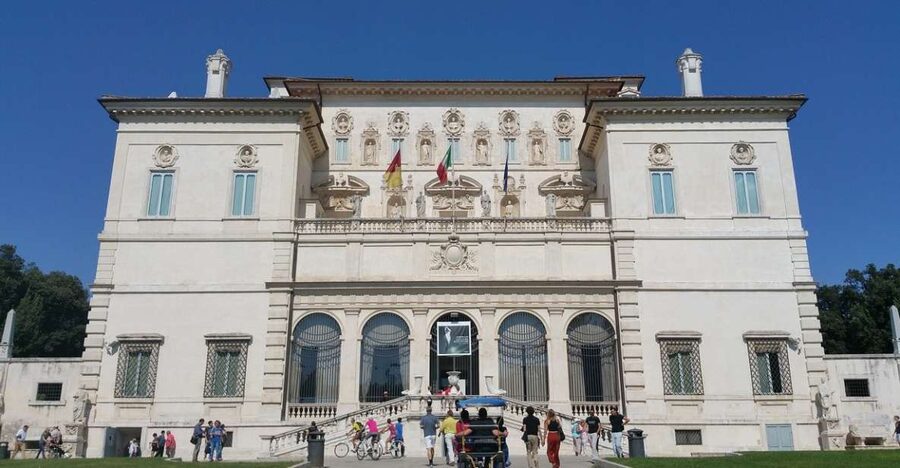
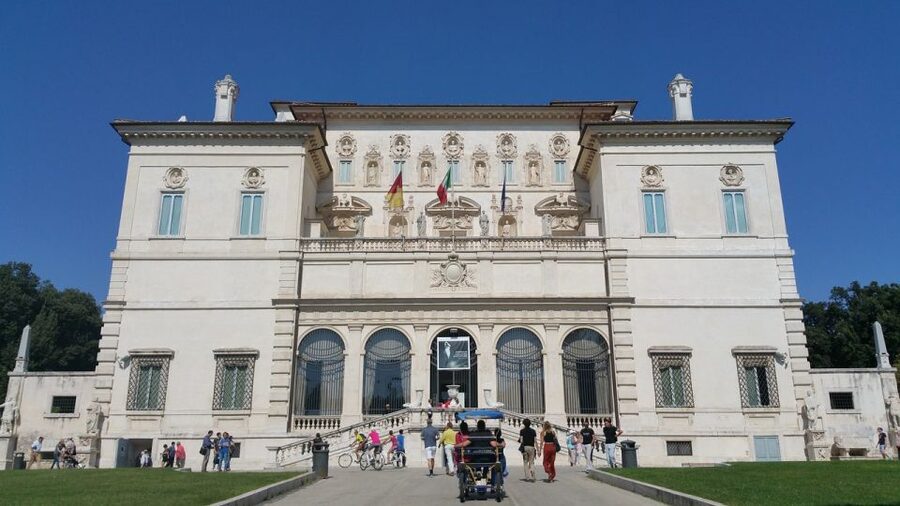
The Borghese Gallery is not a vast museum where you march past hundreds of rooms trying to remember what you saw. It occupies a grand 17th-century villa, and the setting is intimate enough for individual works to hold your attention.
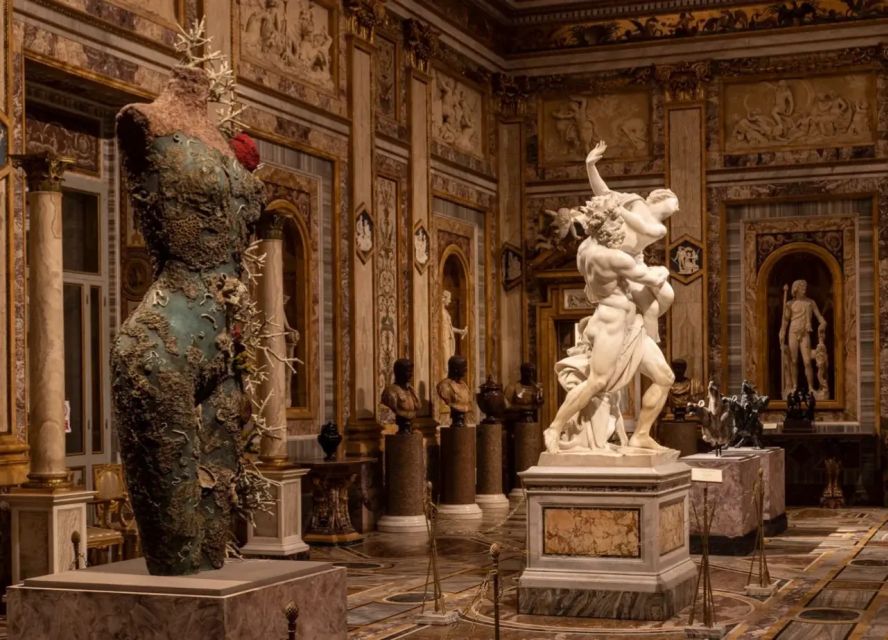
That scale matters. You can look closely at the curve of a marble hand, the angle of a painted face, or the way a figure seems to twist out of the stone. The building itself is highly decorated, with hand-painted frescoes, ornate rooms, and Roman floor mosaics. You are not visiting a plain white-box museum. The architecture keeps reminding you that this collection was built to impress.
The collection began with Cardinal Scipione Borghese, an ambitious art patron with a sharp eye and considerable power. A guide can help explain how his tastes shaped the villa and how the artworks were gathered. That background gives the paintings and sculptures a human story, rather than leaving them as famous names on a wall label.
I especially value this context if you do not normally spend much time in art museums. A good explanation turns a difficult-looking sculpture into a scene of jealousy, pursuit, grief, or desire. It also shows you why an artist made a particular choice, rather than simply telling you the date and title.
More Museum Tours in Rome
- Vatican: Museums & Sistine Chapel Entrance Ticket
★ 4.5 · 144,003 reviews - Vatican Museums & Sistine Chapel Tour with Optional Basilica
★ 4.3 · 67,413 reviews - Vatican Museums, Sistine Chapel & St Peter’s Basilica Guided Tour
★ 4.5 · 39,149 reviews
Meeting at Piazzale del Museo Borghese
The tour offers two possible starting points: Fontana dei Mascheroni or Piazzale del Museo Borghese. Your exact meeting place depends on the option you book, so check the confirmation carefully before setting out.
Arrive with your passport or identity card. The gallery’s security rules are strict about what can enter. Small bags and purses are allowed, but large bags and luggage must be left at the free cloakroom. Baby strollers are not permitted inside, and pets, weapons, sharp objects, alcohol, and drugs are prohibited.
The meeting point detail sounds minor, but it can matter in the Villa Borghese park, where paths and entrances can be confusing. Give yourself enough time to reach the correct place. You do not want to begin your Roman art lesson by sprinting through the park.
The tour includes headsets and radios. That is useful in a small room or when the group spreads out around a sculpture. Still, sound quality depends on where the guide wears the microphone. One piece of practical advice from the feedback is worth keeping in mind: if you cannot hear clearly, tell the guide at once rather than trying to follow by lip-reading.
The Ground-Floor Sculptures: Bernini in Motion
The first major portion focuses on the ground-floor sculpture rooms and lasts about 50 minutes. This is where the tour makes its strongest impression.
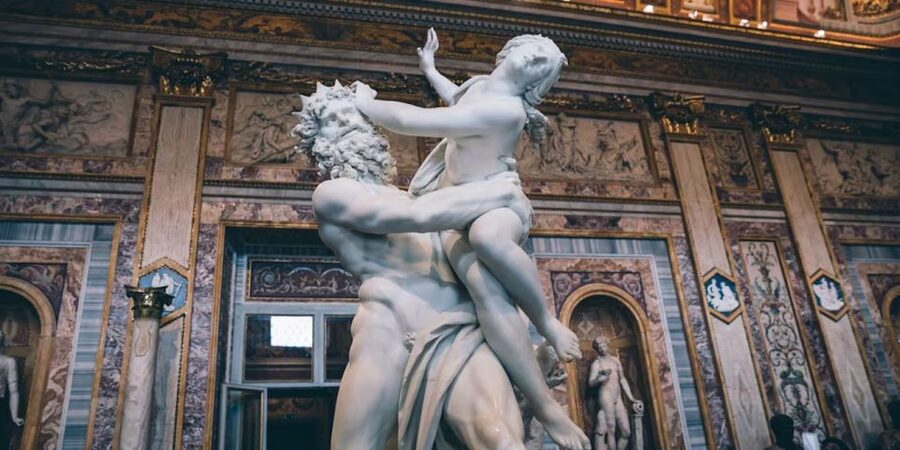
Bernini’s sculptures are not passive objects. They seem to catch people in the middle of an event. In Apollo and Daphne, the myth unfolds as Apollo reaches for Daphne and she transforms into a laurel tree. Marble becomes bark, hair, fingers, and leaves. A guide can direct your attention to the details that are easy to miss when you are simply admiring the overall shape.
Look for the contrast between movement and stillness. Apollo lunges forward, while Daphne’s body changes beneath his hands. The sculpture asks you to walk around it, because each angle reveals another part of the story. Without that nudge, you might stay in front of it and miss the cleverest details.
Other Bernini works bring the same energy, emotion, and physical drama. The point is not only that the sculptures are technically impressive. They were designed to make the viewer feel something. A strong guide explains how Bernini used the limits of stone to suggest soft flesh, flowing fabric, and sudden action.
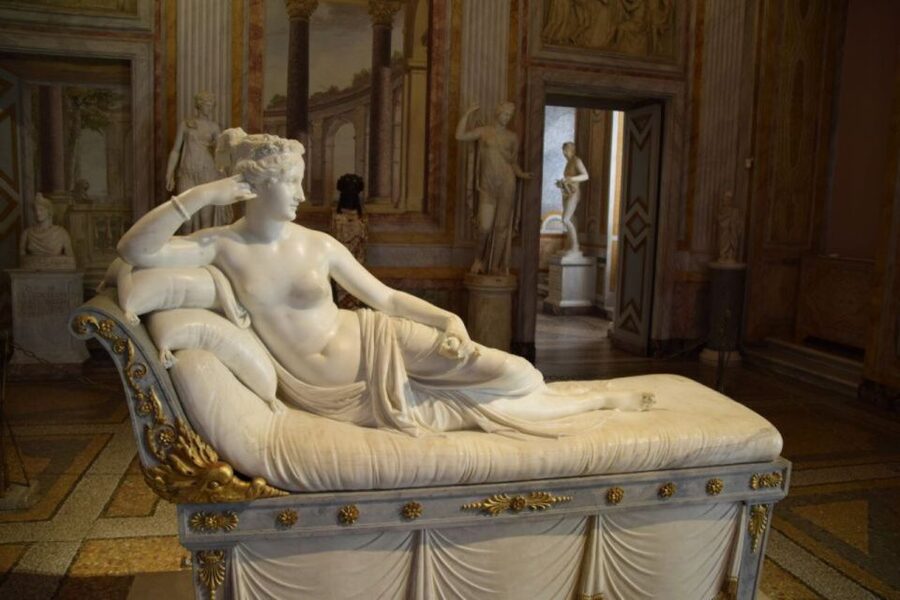
The gallery also includes works by Antonio Canova and other important sculptors. Canova offers a different kind of beauty, with smoother surfaces and a more polished calm. Seeing these artists within the same visit helps you compare changing ideas about the human body, ideal beauty, and emotional expression.
The ground-floor rooms can be absorbing, but they are also where time disappears. If Bernini is your main reason for coming, tell your guide early. The route can vary, and the guide must balance the group’s interests with the two-hour schedule.
Caravaggio’s Dark Drama
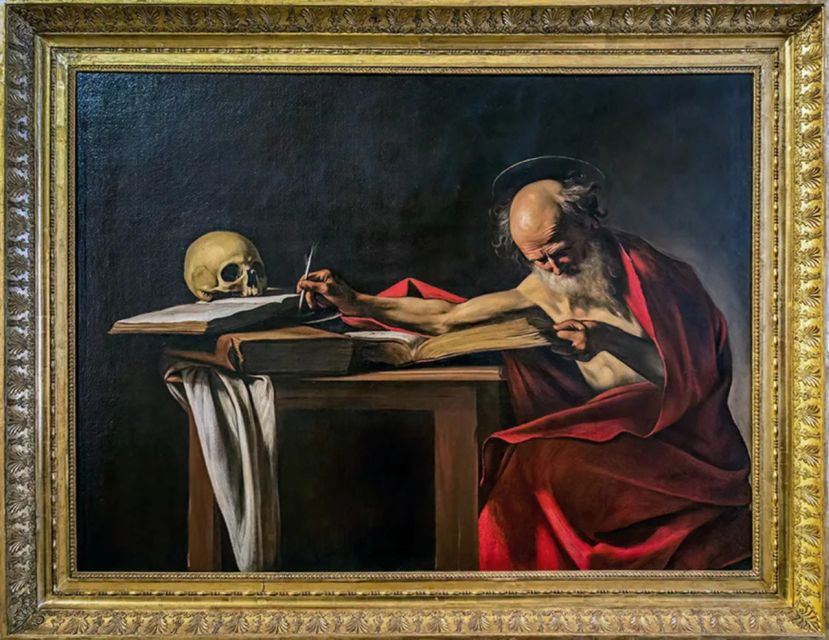
Caravaggio’s paintings give the visit a sharp change of mood. His use of light and shadow is famous, but you get more from the paintings when you look at what that light does to the people in the scene.
David with the Head of Goliath is especially unsettling. The subject is biblical, yet Caravaggio makes it feel immediate and personal. The light isolates the faces and the gruesome trophy, while the dark background removes distractions. Your guide may also discuss the unusual emotional connection between David and Goliath, which gives the painting more weight than a simple scene of victory.
Boy with a Basket of Fruit looks gentler at first. The boy’s face, the basket, and the fruit seem close enough to touch, but the picture also carries a sense of fragility. The fruit is ripe and beginning to decay. A guide can help you notice how Caravaggio turns an ordinary model and everyday objects into a study of beauty that will not last.
The Borghese Gallery is known for holding the largest gathering of Caravaggio’s works in a single collection. That makes the museum especially valuable for understanding his style. You can compare his handling of light, skin, expression, and ordinary human subjects across several works instead of seeing one painting in isolation.
I would not expect to study every Caravaggio at length during this tour. Two hours is enough for a strong introduction, not a full scholarly examination. If you already know the paintings well, you may want to linger after the guide moves on, assuming the schedule and gallery rules allow it.
More Borghese Gallery bookings:
- Rome: Borghese Gallery and Gardens Guided Small-Group Tour
★ 4.6 · 2,783 reviews - Rome: Borghese Gallery Guided Tour with Skip-the-Line Entry
★ 4.8 · 2,649 reviews - Rome: Borghese Gallery Skip-the-Line Tickets with Audioguide
★ 4.6 · 2,562 reviews - Rome: Borghese Gallery Entry Ticket & Optional Guided Tour
★ 4.5 · 2,237 reviews
Raphael, Titian, and the Quiet Power of Painting
The Borghese Gallery is not only a Bernini and Caravaggio stop. Raphael’s works bring a calmer mood, with balanced compositions and a graceful sense of proportion. After Bernini’s action and Caravaggio’s hard-edged drama, Raphael shows another path to emotional power.
Titian adds yet another voice, with color and rich surface effects that reward patient looking. Your guide can help place these artists within the wider development of European painting from the Renaissance through the Baroque period.
One useful feature of a guided visit is the way it links different rooms. You begin to see that artistic change did not happen in neat boxes. Artists borrowed from earlier masters, challenged accepted ideas, and responded to patrons who wanted art to educate, impress, or move the viewer.
A request from one visitor was to identify the five major artists who shaped styles from the 15th through the 18th centuries. That is a good question to ask your guide. The tour already connects several periods, and asking for a short list of influences can help you organize what you are seeing.
The Villa’s Mosaics, Frescoes, and Floors
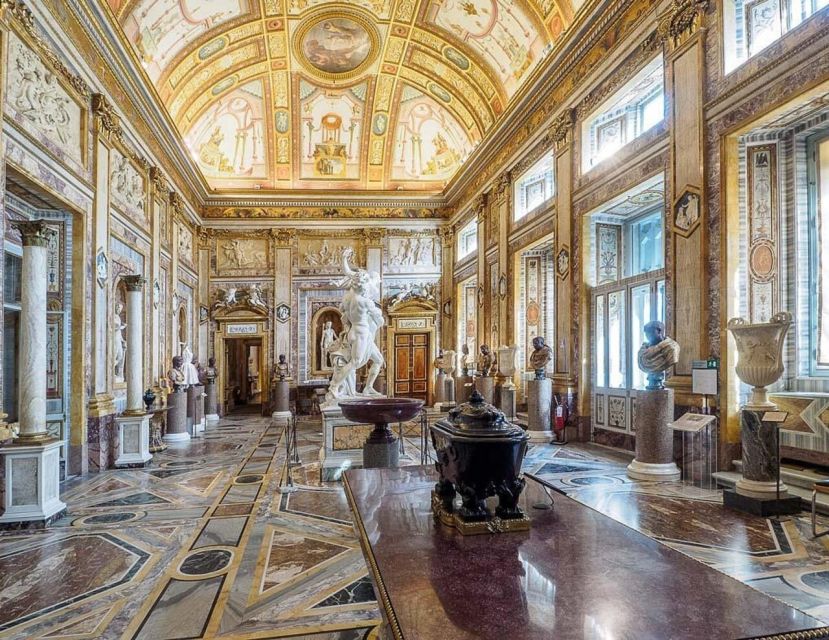
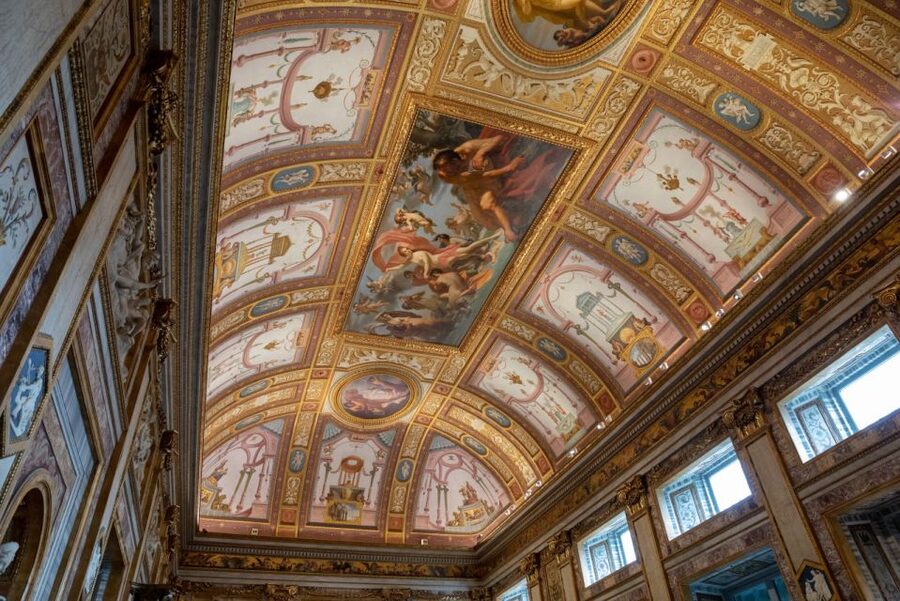
Do not stare only at the famous paintings. Look down at the Roman floor mosaics and up at the frescoed ceilings. These details are not filler between the masterpieces. They show the taste and wealth of the villa’s owners.
The hand-painted decoration creates a particular challenge. There is so much to see that you can become visually tired before reaching the final rooms. I recommend pausing now and then to take in the room as a whole. The gallery works best when you treat the building and collection as one experience.
The decorated interiors also explain why a visit here can feel more personal than a stop at a huge national museum. You are moving through rooms designed for concentrated display, with sculpture, painting, architecture, and ornament working together.
Some areas may close for restoration, and the route can change with current exhibitions. Do not build your whole Rome schedule around seeing one specific room. The essential experience is the quality of the collection, even if a particular work or section is temporarily unavailable.
What the Two-Hour Route Is Really Like
The itinerary breaks down into roughly 50 minutes with the ground-floor sculptures, 40 minutes in the Borghese Gallery’s painting and collection rooms, and another 30 minutes returning to sculpture areas and related works. In practice, the route is designed to cover the major highlights at a steady pace.
That pace generally works well for a first visit. Several people have praised guides for choosing the right works and keeping the group moving without making the tour feel mechanical. Guides described as passionate and clear, including Henry, Victoria, Federica, and Irene, received especially warm praise for explaining technique alongside story.
Still, the pace depends on the guide and the size of the group. Private or small-group options are available, and they should appeal to anyone who wants to ask questions or move at a less crowded rhythm. A larger group may be less personal, though the provided headsets help you follow along.
You should also accept that you will not see every corner in detail. One visitor who had visited the gallery before still felt there was too much to take in during a single visit. That is not a failure of the tour. It is a sign that the collection rewards returning, especially if you want time for quiet observation.
Is $57 a Fair Price?
At $57 per person, this is not the cheapest way to enter a museum. The value comes from three things: the reserved ticket, the art historian guide, and the structure of a short visit.
A standard museum visit can leave you wandering from room to room, unsure which works deserve your limited time. Here, your two hours are organized around the gallery’s strongest material. The guide helps you see details, explains why the works matter, and connects the art with the Borghese family and the period in which each piece was made.
Priority entry also has practical value. The Borghese Gallery uses timed admission and controlled access, so showing up without a plan is not ideal. The express security check does not mean you can ignore the meeting time, but it reduces the friction at the entrance.
I think the price makes the most sense for a first visit, a short stay in Rome, or anyone who feels uncertain around art. If you already have a strong background in Bernini and Caravaggio, you may prefer an independent visit if you can secure an entry time. The guided option earns its cost through interpretation, not just access.
Free cancellation up to 24 hours before the start and a reserve-now, pay-later option add useful flexibility. These policies are helpful when your Rome plans are still shifting.
Who Should Book This Tour?
I would choose this tour if you want the Borghese Gallery to feel understandable, not merely beautiful. It suits couples, families with older children, solo visitors, and anyone who likes art best when a person explains the story behind it.
It is also a good fit for people who are not serious art specialists. One visitor arrived with little interest in art and ended up staying with the group because the guide made the explanations lively and accessible. That is exactly what a good museum tour should do.
Private and small-group choices are worth considering if you have particular artists in mind or want more room for questions. If you prefer to set your own pace, take photographs where permitted, or linger silently in front of one painting, a guided route may feel restrictive.
The experience is not suitable for wheelchair users, according to the provided access information. Visitors with mobility concerns should confirm current conditions directly before booking.
Practical Tips for a Better Visit
- Choose an earlier time if you can. The collection is large, and an early slot gives you more of the day afterward to think about what you saw.
- Bring only essentials. Small purses and bags are allowed, while larger items go into the free cloakroom.
- Carry identification. You are asked to bring a passport or ID card.
- Tell the guide what interests you. Bernini, Caravaggio, Raphael, Canova, and Titian all deserve attention, but two hours requires choices.
- Use the headset properly. If the guide is difficult to hear, speak up immediately.
- Allow time for Villa Borghese park. The surrounding park makes a pleasant setting for a walk before or after the museum, as long as your schedule permits.
- Expect changes. Restoration work or temporary exhibitions may alter the route.
Final Verdict: Book It If You Want More Than Famous Names
I would book the Rome Borghese Gallery guided tour if this is your first visit or if you want the collection placed in context. Bernini’s sculptures, Caravaggio’s intense paintings, Raphael’s grace, Roman mosaics, and the villa’s painted rooms give you plenty to admire. The guide is what turns those attractions into a coherent visit.
The strongest reason to go is the repeated praise for clear, passionate guides who answer questions and keep the pace under control. The main caution is time. You will see the major highlights, but you will not absorb every work in two hours.
For $57, priority entry and an art historian’s guidance make this a sensible choice for most visitors. Pack light, check the meeting point, arrive prepared, and let the guide show you why the Borghese Gallery is one of Rome’s essential art stops.
FAQ
How long does the Borghese Gallery guided tour last?
The tour lasts two hours.
What is included in the tour?
The price includes an art historian guide, a skip-the-line Borghese Gallery entry ticket, and headsets with radios so you can hear the guide clearly.
Which languages are available?
Live tours are available in English, Japanese, French, German, Portuguese, and Russian.
Where does the tour meet?
There are two possible starting locations: Fontana dei Mascheroni and Piazzale del Museo Borghese. The exact meeting point depends on the option booked.
Can I bring a large bag or luggage?
No. Only small bags and purses are allowed inside. Larger bags and luggage can be stored in the free cloakroom at the entrance.
Is the tour accessible for wheelchair users?
The experience is listed as not suitable for wheelchair users.
More Galleries and Collections
- Rome: Vatican Museums, Sistine Chapel & Basilica Tour
★ 4.3 · 13,872 reviews - Vatican Museums & Sistine Chapel Skip-the-Line Entry Ticket
★ 4.4 · 13,838 reviews - Rome: Vatican Museums, Sistine Chapel & Basilica Tour
★ 4.7 · 13,217 reviews - Rome: Vatican Museums & Sistine Chapel Guided Tour
★ 4.3 · 12,117 reviews
Just added around Rome
- Rome City, Pantheon, and Trevi Fountain Walking Tour★ 5.0 · 249 reviews
- Rome: Skip the line Vatican Museums & Sistine Chapel Tour★ 4.2 · 251 reviews
- Rome: Tivoli Day Trip with Villa d’Este and Villa Adriana★ 4.5 · 251 reviews
- Transfer Rome center – Ciampino Airport★ 4.5 · 251 reviews
- Rome: Cannondale E-Bike Evening Tour with Optional Dinner★ 4.9 · 251 reviews
- VIP Colosseum, Roman Forum & Palatine Hill & Special Access Sites★ 4.5 · 252 reviews
- Private Vatican Museums Hidden Gems Tour with Optional Pick-Up★ 5.0 · 253 reviews
- Vatican Museums & Sistine Chapel Skip-the-Line Guided Tour★ 4.6 · 254 reviews
Museums, compared.

Vatican: Museums & Sistine Chapel Entrance Ticket
Read our review →
Vatican Museums & Sistine Chapel Tour with Optional Basilica
Read our review →
Vatican Museums, Sistine Chapel & St Peter’s Basilica Guided Tour
Read our review →
Skip-The-Line Uffizi Gallery Timed Entry Ticket
Read our review →
Vatican Museums, Sistine Chapel & Basilica Tour
Read our review →
Vatican Museums & Sistine Chapel Skip-the-Line Entry Ticket
Read our review →Vatican Museums, Sistine Chapel & Basilica Tour
Read our review →
Vatican Museums & Sistine Chapel Guided Tour
Read our review →Browse the lists this tour appears in