
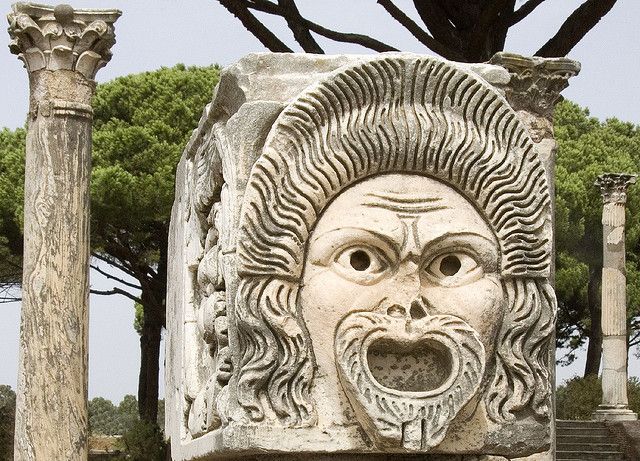
Review · TRAIN EXPERIENCES
From Rome: Ostia Antica Guided Half-Day Trip by Train
Ancient Rome is hiding by the sea. This four-hour outing takes you by train from central Rome to Ostia Antica, a huge former harbor town where streets, baths, shops, mosaics, and theaters make daily Roman life easier to picture. I especially like the short, simple train ride and the small groups of no more than 12 people. I also like that you can stay afterward to explore more ruins, visit the modern town, or continue to the beach. The main drawback is that the archaeological park is large, sunny, and uneven, so this is not a good choice for wheelchair users or anyone wanting a slow, fully shaded walk.
The guide makes a real difference here. Guides including Rob, Cat, Alberto, Laura, Caterina, and Roberto have been praised for clear storytelling, good pacing, humor, and careful group management. The tour gives you a useful route through the major sights, but you will not see every corner of the park in three hours. If you want the museum and lesser-known buildings too, plan to remain after the guided portion.
In This Review
- Key points at a glance
- Why Ostia Antica makes a smart break from central Rome
- Meeting at Piramide and taking the train
- Entering a port city on the Decumanus Maximus
- Baths, mosaics, and the public washrooms
- Taking your place in the ancient amphitheater
- How much of the site will you see?
- Staying on for Ostia town or the beach
- The guide is the deciding factor
- Who should book this Ostia Antica tour?
- Should you book it?
- FAQ
- How long does the Ostia Antica tour last?
- Where does the tour meet in Rome?
- How do I recognize the guide?
- Is the train ticket included?
- Is entry to Ostia Antica included?
- Can I stay at Ostia Antica after the guided tour?
- Is the tour suitable for wheelchair users?
- What should I bring?
- What happens if public transportation is disrupted?
Key points at a glance
- A quick train ride from Rome: Meet beside Piramide Metro Station and reach Ostia Antica by train in roughly 15 minutes.
- Ancient city, not just scattered ruins: Walk along the Decumanus Maximus through former shops, warehouses, taverns, baths, public toilets, and theaters.
- The Baths of Neptune are a highlight: A large mosaic shows Neptune riding a four-horse chariot across the sea.
- Small groups help: With a maximum of 12 participants, it is easier to hear the guide and ask questions.
- You can extend the day: Stay at the site, visit the modern town of Ostia, or head toward the beach after the tour.
- Expect a substantial walk: Comfortable shoes, water, sun protection, and sensible clothing matter.
Why Ostia Antica makes a smart break from central Rome
Rome offers famous monuments at every turn, but its major sites can feel crowded and tightly scheduled. Ostia Antica gives you a different view of Roman power. This was a working port town, founded in the 4th century BC and tied closely to Rome’s food supply, commerce, and military reach.
That practical role is what makes the site so useful. You are not only looking at temples and grand monuments. You are walking through places where people bought food, stored goods, washed, watched performances, used public toilets, and went about ordinary business.
The remains are unusually readable. Long stretches of walls still rise above you, and some buildings retain mosaics, frescoes, columns, and traces of upper floors. You might find it easier to picture an entire Roman town here than in central Rome, where later buildings often cover or crowd the ancient remains.
Ostia is also quieter than Pompeii. Several people who have visited both sites preferred Ostia because it felt less crowded and easier to appreciate. That comparison is personal, of course, but the practical point is clear: you get a major archaeological site without spending hours traveling south to Pompeii.
More Day Trips in Rome
- From Rome: Pompeii, Amalfi Coast, and Sorrento Day Trip
★ 4.6 · 7,031 reviews - From Rome: Pompeii, Amalfi Coast and Positano Day Trip
★ 4.6 · 6,620 reviews - Pompeii, Amalfi Coast and Positano Day Trip from Rome
★ 4.5 · 6,250 reviews
Meeting at Piramide and taking the train
The tour begins at Cafe Piramide, at Piazzale Ostiense, 9. When you face the Piramide Metro Station on Line B, the cafe is on your right, near the train tracks and the station exit. White umbrellas outside help identify it, and the guide carries a City Wonders sign.
Give yourself extra time to find the cafe. The meeting point is close to the station, but a first visit to Rome can make the area feel confusing. One useful tip is to look for the cafe immediately after leaving the station rather than crossing the street toward other white umbrellas.
Your guide provides the return train ticket and accompanies the group to Ostia Antica. The outward trip takes about 15 minutes, making this one of the easiest archaeological excursions from Rome. The train portion also gives the guide time to explain the plan and set the historical scene.
Public transport is part of the appeal, though it comes with the usual uncertainty of a city train system. If a strike or another serious transport problem affects the route, a minibus is provided at no extra cost. The return train ticket is included, but the trip back to Rome after the guided tour is unescorted.
The official end point is Piramide Metro Station at approximately 1:00 PM. Your guide normally explains the return route, so you are not left to guess where to go. Still, if you stay at Ostia, you handle your own return journey.
Entering a port city on the Decumanus Maximus
From the Ostia Antica station, the archaeological site is less than five minutes away on foot. The tour then spends about three hours inside the ruins, using the main Decumanus Maximus as a kind of ancient spine.
This broad thoroughfare once carried people, carts, and commercial traffic through the city. Walking it gives you a strong sense of scale. You pass walls and building fronts instead of isolated objects in glass cases, and Roman statues line parts of the route.
Your guide’s job here is not just to name buildings. The best guides explain how each place fit into the town’s daily routine. Rob has been praised for using small acts and lively storytelling to bring the setting to life. Cat and Alberto have also been singled out for choosing the major sights, keeping the group moving, and stopping long enough for questions.
That balance matters. Ostia Antica is large enough to overwhelm a first-time visitor. Without a plan, you could spend your energy wandering between ruins without understanding what you are seeing. A guide gives you a clear route and a story that links the buildings together.
The small group limit helps. Twelve people is still large enough to feel social, but small enough that you can usually hear explanations and speak up when something catches your attention. Several guides have also been praised for watching the group carefully, especially while crossing the open site and boarding the train.
Baths, mosaics, and the public washrooms
The Baths of Neptune are one of the tour’s strongest stops. Their most famous feature is an impressively preserved mosaic of the sea god being pulled by four horses. The image gives the building a visual punch that plain stone walls cannot match.
Your guide can help you read the mosaic as part of a larger bathing complex rather than treating it as a stand-alone artwork. The thermal baths were social spaces as well as places for washing, and the surviving rooms help show the scale and decoration Roman citizens expected.
The communal Forica offers a less polished but more revealing look at Roman life. A marble bench runs along four walls, with 20 evenly spaced holes in a large open room. It is an amusing stop, but it also makes an important point: archaeology is not only about emperors and temples. Public sanitation was part of the city’s everyday machinery.
The tour also passes former taverns, warehouses, shops, and other commercial buildings. These places explain why Ostia mattered to Rome. The town was not simply a quiet settlement by the water. It was a commercial and military port serving a much larger power.
Some remains are beautifully preserved, while others show age and limited upkeep. One guide described the site as needing more publicity and funding for maintenance. That is worth keeping in mind. You are visiting an important place, but not a polished theme park with every surface restored.
A few more reviews worth comparing before you book
- Rome to Pompeii Guided Tour with Wine & Lunch by High Speed Train
★ 5.0 · 1,379 reviews - Ancient Ostia Antica Semi-Private Day Trip from Rome by Train with Guide
★ 4.5 · 579 reviews - Rome: Pompeii Tour with Wine and Lunch by High Speed Train
★ 4.8 · 485 reviews - Venice Day Trip from Rome by High-Speed Train with Happy Hour
★ 4.5 · 445 reviews
Taking your place in the ancient amphitheater
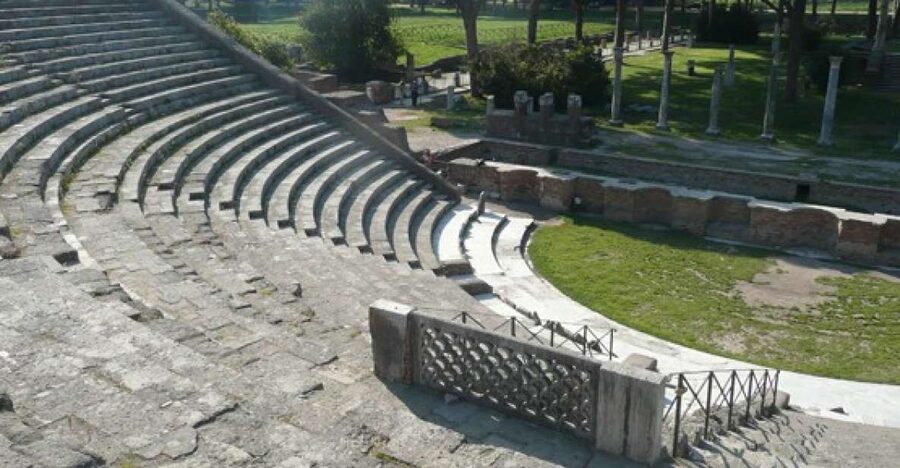
The amphitheater dates to 12 BC and once held about 3,500 spectators. Sitting or standing in the seating area gives you a quick sense of how public entertainment worked in a Roman town of this size.
The theater is not as enormous as Rome’s Colosseum, and that is part of its charm. Its scale feels local. You can imagine residents of Ostia gathering for a shared afternoon rather than picturing only the imperial capital.
A guide is especially useful here because the remains are easier to understand from a good viewpoint. The walls, rows of seating, and stage area are clear enough to recognize, but the guide supplies the missing sounds, movement, and social context.
The amphitheater also helps break up the walking route. After passing through commercial streets and bathing buildings, you reach a place designed for crowds and spectacle. It shows another side of life in the port town.
How much of the site will you see?
Three hours inside Ostia Antica sounds generous, but the park is vast. The route concentrates on the main sights, including the Decumanus Maximus, Baths of Neptune, Forica, amphitheater, commercial areas, and other major remains.
That is a sensible choice for a half-day tour. You get a coherent introduction without spending the entire day trying to cover every alley. Several guides allow short breaks, sometimes around 15 minutes, when you can look around on your own, use the toilet, or buy a snack and drink at the snack bar.
The tour may finish inside the archaeological park, near the museum, rather than instantly sending everyone back to the station. This can be a real advantage. You are free to continue exploring areas not included in the guided route, and you can visit the museum if it is open.
Check museum hours on the day you go, especially in winter. One visitor found that the museum closed early, around 1:30 PM, so visiting it soon after the guided tour made sense. Opening times can affect how you use your extra time.
Wear shoes with solid support. The site involves a lot of walking across uneven ground, and sports shoes are specifically recommended. Bring a towel and beachwear only if you expect to continue to the coast. Baby strollers are not permitted, and the tour is not suitable for wheelchair users.
Staying on for Ostia town or the beach
The tour ends at a useful point in your day rather than forcing you onto the return train. You can remain in the archaeological park, explore the modern town of Ostia, or head to a nearby beach.
This flexibility makes the $58 price easier to assess. You are paying for the return train ticket, entry to the archaeological site, and a three-hour guided visit. You are also buying a practical route through a large place that can be difficult to understand alone.
If you want only a quick look at Roman ruins, the tour may feel more than you need. If you value context and want to avoid figuring out public transport and the site map yourself, it offers solid value. The small group and live English guide strengthen that value.
The beach option is best treated as an add-on, not the main point of the excursion. Bring beachwear and a towel if you plan to continue there, but remember that the guided service ends in Rome at about 1:00 PM and your return from Ostia is on your own.
A half-day at the ruins is enough for the guided route. A full day gives you time for the museum, more of the archaeological park, the modern town, or the coast. Several people chose to stay after the guide left and felt that the extra time was worthwhile.
The guide is the deciding factor
The site is impressive, but the guide determines how much you get from it. The strongest praise has gone to guides who combine historical detail with clear delivery, humor, good timing, and attention to the group.
Rob has been praised for funny anecdotes, occasional role-playing, and an ability to make Roman life feel immediate. Cat has been described as friendly, efficient, and good at selecting the key areas without rushing. Alberto is often noted for his clear explanations, warmth, and ability to find shade on hot days.
Laura and Caterina have also received strong praise for adapting to mixed groups, including families with children. Roberto has been noted for vivid stories about ordinary Roman life. Angellina Militello was praised for combining academic depth with an easy, down-to-earth manner.
You cannot necessarily choose a specific guide when booking, so consider those names examples of the standard to hope for rather than a promise. The consistent pattern is encouraging: the guides are expected to do more than recite dates. They explain buildings, art, commerce, architecture, and social life in a way that keeps the walk moving.
That said, no guide can remove every challenge. Hot weather, exposed paths, and the size of the park still require stamina. If you prefer to stop for long stretches at each ruin, a self-guided full-day visit may suit you better.
Who should book this Ostia Antica tour?
I would recommend it to anyone who has several days in Rome and wants more than the standard imperial monuments. It is especially good for people interested in ordinary life, trade, public services, architecture, and the practical workings of the Roman world.
Families can benefit from the stories and manageable four-hour format, though young children must cope with a lot of walking and strollers are not allowed. History fans who have already visited Pompeii may find Ostia a useful comparison, especially because it focuses on a port city close to Rome.
It is less suitable if you need step-free access, dislike uneven ground, or want hotel pickup. You must reach the meeting point yourself at Piramide, and the trip back from Ostia is unescorted.
The best plan is to book an early tour, wear comfortable sports shoes, bring water and sun protection, and decide before you arrive whether you want to continue to the museum or beach. Keep your return ticket safe, and do not assume the museum will remain open late.
Should you book it?
Book this tour if you want a clear introduction to one of Rome’s most important ancient satellite cities without spending a full day on a distant excursion. The train ride is short, admission and transport are included, and the small group keeps the experience personal.
I would especially choose it over a solo visit if this is your first time at Ostia Antica. The ruins are extensive, and a good guide helps you understand why a warehouse, bath, toilet, mosaic, or theater mattered.
Skip it only if you need accessible routes, private transport, or a very relaxed pace. For most history-minded visitors, the combination of quiet ruins, strong surviving buildings, and lively English commentary makes this a very worthwhile $58 half-day from Rome.
FAQ
How long does the Ostia Antica tour last?
The experience lasts about four hours. The guided visit inside Ostia Antica takes approximately three hours, with train travel included.
Where does the tour meet in Rome?
The meeting point is Cafe Piramide at Piazzale Ostiense, 9. It is beside Piramide Metro Station on Line B, on the right when you face the station, near the train tracks and station exit.
How do I recognize the guide?
The guide carries a City Wonders sign showing the name of the tour. The cafe can also be identified by its white umbrellas.
Is the train ticket included?
Yes. The return train ticket from Rome to Ostia Antica is included. The guide accompanies you on the outward journey, but the return journey is unescorted if you take it after the tour.
Is entry to Ostia Antica included?
Yes. The archaeological site entry ticket is included in the tour price.
Can I stay at Ostia Antica after the guided tour?
Yes. You can remain in the archaeological park, explore the modern town of Ostia, or go to a nearby beach. You arrange your own return if you stay behind.
Is the tour suitable for wheelchair users?
No. The experience is not suitable for wheelchair users. Baby strollers are also not allowed.
What should I bring?
Bring comfortable or sports shoes. If you plan to go to the beach, bring beachwear and a towel. You will also have a toilet break and time for a snack or drink at the snack bar.
What happens if public transportation is disrupted?
If a transportation strike or another unforeseen public transport problem affects the trip, a minibus is provided at no extra cost to take participants to and from Ostia Antica.
More Full-Day Escapes
- Pompeii and Mount Vesuvius Day Trip from Rome with Pizza Lunch
★ 4.5 · 6,151 reviews - Rome: Tuscany & Montepulciano Day Trip with Lunch & Wine Tasting
★ 4.5 · 5,232 reviews - From Rome: Pompeii Day Trip with Optional Vesuvius and Lunch
★ 4.6 · 5,067 reviews - Rome: Amalfi Coast & Positano Day Trip with Coastal Cruise
★ 4.4 · 2,511 reviews
Just added around Rome
- Rome City, Pantheon, and Trevi Fountain Walking Tour★ 5.0 · 249 reviews
- Rome: Skip the line Vatican Museums & Sistine Chapel Tour★ 4.2 · 251 reviews
- Rome: Tivoli Day Trip with Villa d’Este and Villa Adriana★ 4.5 · 251 reviews
- Transfer Rome center – Ciampino Airport★ 4.5 · 251 reviews
- Rome: Cannondale E-Bike Evening Tour with Optional Dinner★ 4.9 · 251 reviews
- VIP Colosseum, Roman Forum & Palatine Hill & Special Access Sites★ 4.5 · 252 reviews
- Private Vatican Museums Hidden Gems Tour with Optional Pick-Up★ 5.0 · 253 reviews
- Vatican Museums & Sistine Chapel Skip-the-Line Guided Tour★ 4.6 · 254 reviews
Train Experiences, compared.
Bernina Red Train, Swiss Alps & St Moritz From Milan
Read our review →
Swiss Alps Bernina Red Train and St.Moritz Tour from Milan
Read our review →

Rome to Pompeii Guided Tour with Wine & Lunch by High Speed Train
Read our review →
Small-Group Lake Como & Lugano by Swiss Train + Boat Cruise
Read our review →
Guided tour of Pompeii skip-the-line and round-trip train
Read our review →
Pompeii Express Guided Tour by Train from Sorrento
Read our review →Browse the lists this tour appears in