
Review · MUSEUMS
Borghese Gallery, Canova’s Masterpieces Skip-the-Line Guided Tour
Rome saves some of its finest art for a villa. This two-hour Borghese Gallery tour pairs a small-group guided visit with time around Villa Borghese, making it a smart choice if you want context instead of simply wandering from statue to statue. I especially like the timed entry, which avoids the gallery’s long queues, and the guides, including Mattia, Agnese, Guido, Silvia, and Virginia, are often praised for making the art easy to follow. The main caution is time: the gallery visit can feel rushed, and the title puts heavy emphasis on Canova even though the tour also focuses strongly on Bernini, Caravaggio, and Raphael.
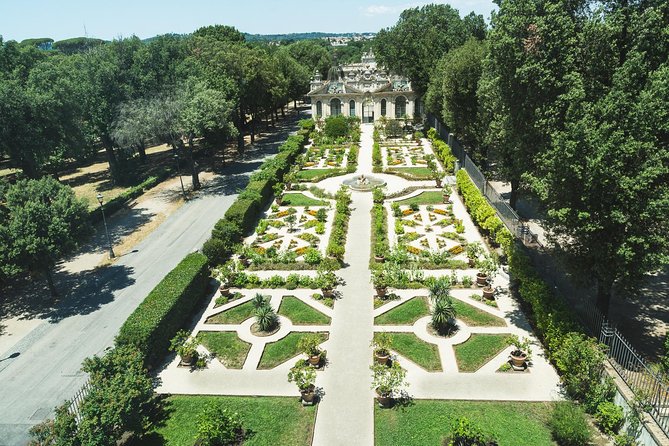
The setting helps make this more than a museum stop. You begin near the gardens, then enter the former Villa Borghese collection, where marble figures, ceiling frescoes, polished floors, and dramatic paintings compete for your attention. The group can include up to 20 people, so it is more intimate than a large coach tour, but your experience will still depend on the guide’s English and pace.
In This Review
- Key points to know before booking
- Why the Borghese Gallery deserves a place in your Rome plans
- Beginning at Piazzale del Museo Borghese
- Inside the gallery: a compact collection with a lot to see
- Bernini’s marble figures take center stage
- Caravaggio brings darkness and drama to the walls
- Canova’s Paolina and the title’s important caveat
- Raphael and the gallery’s wider collection
- What the two-hour limit means for you
- The garden walk after the art
- Price, group size, and practical value
- Who will enjoy this tour most
- Should you book the Borghese Gallery tour?
- FAQ
- Where does the Borghese Gallery tour begin?
- Where does the experience end?
- How long does the tour last?
- Is admission to the Borghese Gallery included?
- Is the tour offered in English?
- How many people can join the tour?
- Can I bring a bag inside the Borghese Gallery?
- Can I cancel for a full refund?
Key points to know before booking
- Bernini is the main event: Expect close attention to Apollo and Daphne, David, and The Rape of Proserpina.
- Canova is included, but not the whole story: Paolina Bonaparte appears among the major works, while the tour also gives serious time to Caravaggio and Raphael.
- Timed entry saves precious Rome time: You skip the long admission line, though the museum’s fixed visit period can still make the tour feel short.
- Villa Borghese adds breathing room: A short garden walk frames the museum visit with trees, open paths, and a calmer side of Rome.
- The guide makes the difference: Strong guides such as Agnese, Mattia, Guido, and Virginia have been praised for clear storytelling and useful historical context.
- Pack light: Large and small bags are not permitted inside the gallery and must be left at the cloakroom.
Why the Borghese Gallery deserves a place in your Rome plans
The Borghese Gallery is not a giant museum where you need half a day just to find the famous rooms. It is a compact, highly focused collection inside the former Villa Borghese Pinciana.
That scale matters. You can see major works by Bernini, Caravaggio, Canova, and Raphael without crossing endless corridors. The rooms themselves are part of the experience, with frescoed ceilings, decorative floors, and the grand setting of a cardinal’s former residence.
The collection grew from Cardinal Scipione Borghese, a powerful 17th-century patron with a keen eye for art and a strong desire to acquire it. His taste shaped what you see today. The gallery is especially rewarding because sculpture and painting sit close together, allowing you to compare different ways artists created movement, drama, beauty, and emotion.
I would not treat this as a quick stop for people who only want a few famous photographs. The best reason to go with a guide is to understand how the works function in their rooms and in their period. A good explanation can show you why Bernini’s marble looks soft, how Caravaggio uses light to direct your eye, and how patronage and papal Rome influenced what artists made.
More Museum Tours in Rome
- Vatican: Museums & Sistine Chapel Entrance Ticket
★ 4.5 · 144,003 reviews - Vatican Museums & Sistine Chapel Tour with Optional Basilica
★ 4.3 · 67,413 reviews - Vatican Museums, Sistine Chapel & St Peter’s Basilica Guided Tour
★ 4.5 · 39,149 reviews
Beginning at Piazzale del Museo Borghese
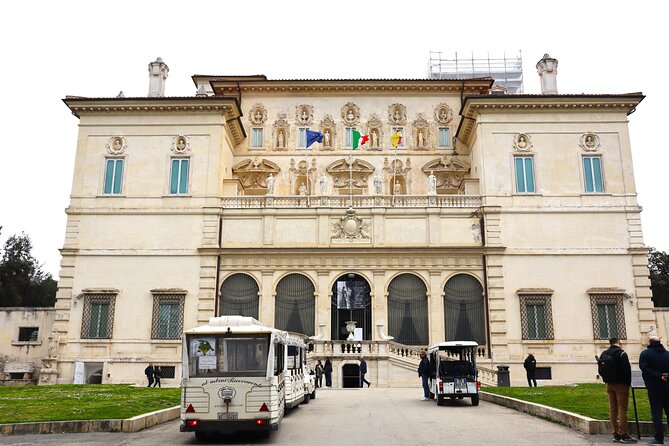
The meeting point is Piazzale del Museo Borghese, at the gallery itself. The tour begins with a short introduction to Villa Borghese, lasting about 15 minutes.
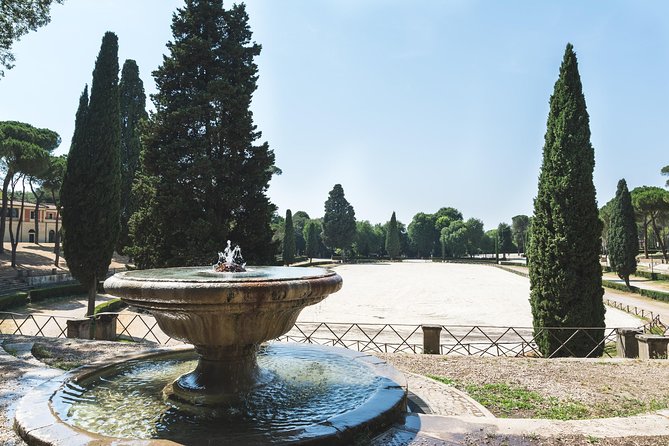
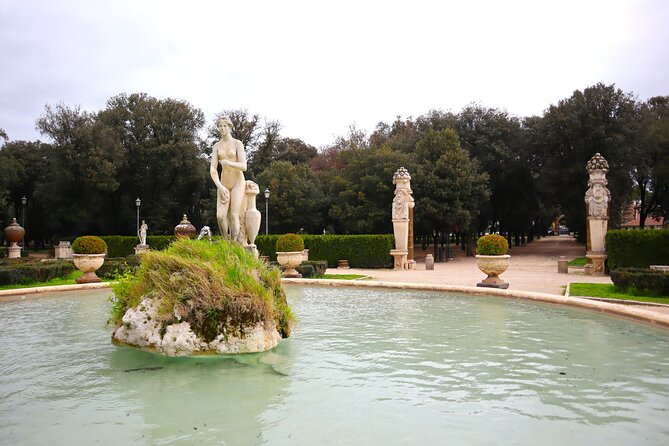
This opening gives you a sense of place before the indoor visit. Villa Borghese is Rome’s third-largest public park, and the grounds offer a welcome pause from traffic and stone streets. The garden portion is not a guided walk in the same way as the gallery visit, so you should not expect a detailed botanical or architectural tour.
Still, the setting is useful. The villa was designed as a retreat from the city, and the grounds help you understand the original purpose of the property. A marble inscription at the villa presents the space as open to free people, with courtesy as its main rule. It is an unusual and memorable touch, especially before entering a house once controlled by one of Rome’s most powerful families.
The gardens also give you a practical chance to get your bearings. If you arrive early, you can take in the surroundings before meeting the guide. The end point is back at the meeting point, so you are not left in an unfamiliar part of Rome after the visit.
Inside the gallery: a compact collection with a lot to see
The main museum visit lasts about one hour and 45 minutes within the stated two-hour experience. Admission is included, and the timed entry helps avoid the long public line.
That does not mean the gallery will feel empty. One person described the museum as limited in crowd size but still wished for more time. This is an important distinction. Controlled entry makes the rooms easier to enjoy, but it does not turn the visit into a private viewing.
The group size can reach 20 people. That is small enough for a guide to remain close to the group, and the tour may include an audio system that helps you hear explanations in busy rooms. One person specifically praised the audio equipment, while another found that the tour moved too quickly. I would stand near the guide if possible, especially if you want to ask questions or hear the details of a sculpture.
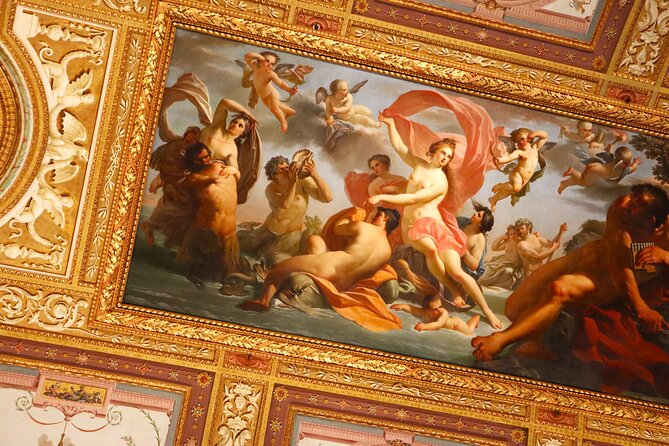
The gallery rewards looking up and down. The paintings and statues receive most of the attention, but the ceilings and floors are also carefully designed. If you only follow the guide’s central stops, you could miss some of the building’s best decorative work.
Bernini’s marble figures take center stage
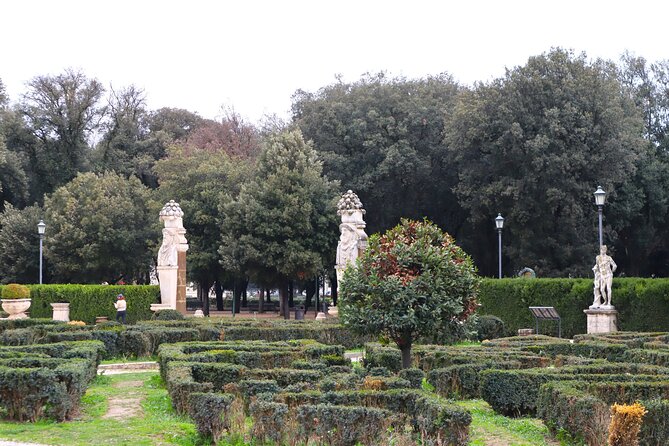
Bernini is the artist most likely to define your visit. The gallery holds several of his major sculptures, including Apollo and Daphne, David, and The Rape of Proserpina.
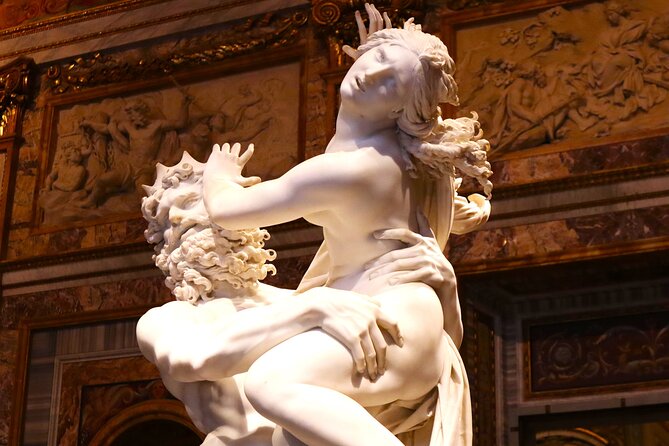
These works are powerful because they are built around action. Bernini does not present a figure as still and detached. He catches a moment of change: a body turning, a face reacting, fingers pressing into flesh, or a figure reaching toward something just beyond the viewer.
Apollo and Daphne is a good example of why a guide helps. The sculpture demands that you walk around it and study the changing views. The story is mythological, but the real marvel is the handling of marble. Hair, leaves, skin, and fabric appear to take on different textures even though the material is the same.
David also asks you to think about viewpoint. Instead of presenting a calm hero after victory, Bernini shows David in the middle of effort. The sculpture’s pose sends energy out into the room, and you become part of the scene by standing in front of him.
The Rape of Proserpina can be emotionally difficult because of its subject. A guide can provide context about the myth, the patron, and the way the sculpture was meant to be seen. You should expect the tour to discuss both artistic skill and the troubling power dynamics contained in the story.
Several guides, including Guido and Mattia, have been praised for explaining these works with care and for connecting them to the period that produced them. The strongest guides do not simply list dates and names. They help you see how the sculptures were intended to affect the person standing in front of them.
More Skip-the-Line Tickets in Rome
- Vatican Museums & Sistine Chapel Skip-the-Line Entry Ticket
★ 4.4 · 13,838 reviews - Skip-the-Line Group Tour of the Vatican, Sistine Chapel & St. Peter’s Basilica
★ 4.5 · 12,779 reviews - Rome: Vatican Museums & Sistine Chapel Skip-The-Line Ticket
★ 4.2 · 11,708 reviews - Vatican, Sistine Chapel & St. Peter’s Skip-the-Line Tour
★ 4.5 · 7,770 reviews
Caravaggio brings darkness and drama to the walls
The Borghese Gallery is also an excellent place to study Caravaggio. The collection includes Young Sick Bacchus and Boy with a Basket of Fruit, along with other important paintings.
Caravaggio’s method feels different from the polished grandeur of the sculptures. His figures come forward from dark backgrounds, and light often seems to enter the painting from one precise direction. The effect can be immediate and theatrical, but the details are grounded in ordinary human faces, worn skin, fruit, fabric, and gesture.
A guide can point out how Caravaggio uses light as a storytelling tool rather than simple decoration. You may also hear about the social and religious setting around his work. The paintings become easier to read when you understand what the artist wanted the viewer to notice first.
The tour’s historical approach has earned strong praise from people who knew little about Italian art before arriving. That is where an English-speaking art guide can offer real value. You do not need to memorize every artist or period. You need someone to show you how to look.
If you already know Caravaggio well, the visit may feel more like a refresher than a full study. The short time period limits how long the guide can spend on each painting. Still, the combination of Caravaggio’s paintings and Bernini’s sculptures gives the gallery a powerful contrast in mood and technique.
Canova’s Paolina and the title’s important caveat
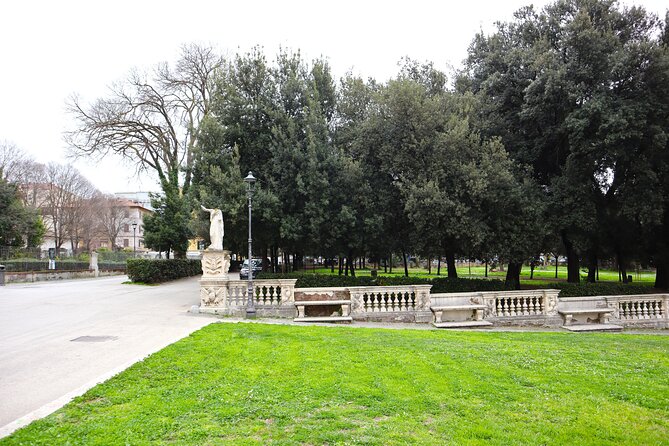
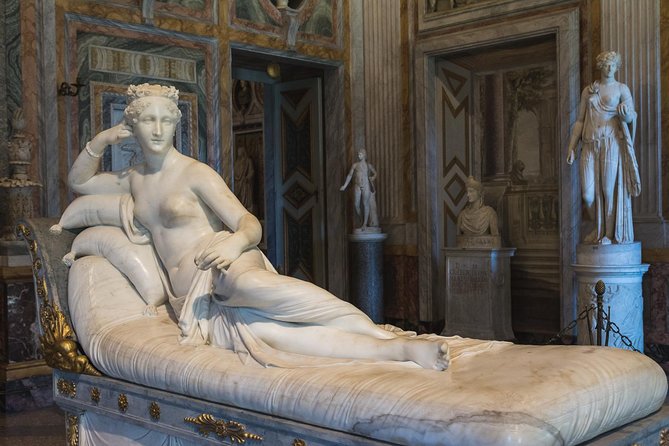
The tour title highlights Canova’s masterpieces, and Paolina Bonaparte is an important part of the collection. Canova’s sculpture presents Napoleon’s sister as Venus Victrix, reclining with controlled elegance and a confident gaze.
The piece is famous for its smooth finish and polished surface. It also raises useful questions about image, status, beauty, and political power. A guide can explain why the sculpture was created and how Paolina’s pose shaped the way the work was received.
But you should book with realistic expectations. This is not a Canova-only tour. The visit gives major attention to Bernini, Caravaggio, Raphael, and other artists, with Canova included as one of the essential highlights.
That may actually suit most visitors. The Borghese Gallery is far too good to reduce to one sculptor. If you want a broad introduction to the museum’s best-known works, the tour delivers more than its title suggests. If Canova is your main reason for booking, check the guide’s emphasis at the start and ask your questions early.
Raphael and the gallery’s wider collection
Raphael’s Entombment of Christ is another major stop. It gives the tour a chance to move beyond Baroque sculpture and dramatic lighting into the world of Renaissance composition.
The painting is important not only for its subject but also for the way the figures are arranged and the emotional movement across the scene. A strong guide can show you how Raphael balances order and feeling, and how his approach differs from Caravaggio’s later, more direct drama.
The collection also includes works by artists such as Raffaello and Algardi. One particularly praised guide, Guido, was described as bringing together art, Italian history, and the role of the papacy. That wider context is useful because the gallery is not just a room full of beautiful objects. It reflects the ambitions, religious beliefs, wealth, and politics of the people who commissioned and collected them.
Your guide’s personal approach will shape this section. Some guides may focus on technique. Others may spend more time on history, patronage, or the religious background of the art. The experience is strongest when you ask questions instead of treating the tour as a one-way lecture.
What the two-hour limit means for you
Two hours sounds reasonable for a small museum, but the Borghese Gallery can easily fill more time. One person felt that 90 minutes was not enough, and another noted that a scheduled evening visit ended when the museum closed, making the actual time shorter than expected.
I would treat the stated duration as an approximate maximum, not a promise that every minute will be spent inside the galleries. The museum controls entry and exit, so the guide cannot simply extend the visit if the building closes or the assigned time ends.
That fixed schedule has a benefit: you know the experience will not swallow your entire day. It also creates a tradeoff. You will see the major works efficiently, but you may not have time to linger over every painting, revisit a favorite statue, or explore side rooms at your own pace.
If you have only a basic background in art, the guided format is likely worth it. The guide helps you prioritize. If you already know the collection and prefer a slow, quiet visit, a self-guided visit might give you more control, assuming you can secure admission separately.
The garden walk after the art
After the indoor visit, the experience returns to Villa Borghese. The garden walk is not guided, but it gives you a calm finish away from Rome’s traffic and crowded streets.
I like this pairing because art museums can leave you saturated. A short walk outside gives your eyes and mind a reset. You can also use the time to think about the contrast between the villa’s private origins and its current public role.
Do not expect the garden portion to add another major sightseeing program. It is a pleasant setting and a useful transition, not a separate guided attraction. The value comes from the atmosphere and the chance to slow down.
Price, group size, and practical value
At $59.26 per person, this is not the cheapest way to enter the Borghese Gallery. You are paying for admission, timed access, an English-speaking guide, and the convenience of having the collection organized for you.
The price makes the most sense if you value interpretation. Without a guide, you would still see extraordinary art, but you might miss why specific works matter or how they relate to one another. The strongest guides, including Virginia, Agnese, Mattia, and Silvia, have been praised for clear English, strong storytelling, and careful answers to questions.
The value is less certain if you want a long museum visit. The limited time means you are buying an efficient introduction, not unlimited access. You should also remember that food, drinks, and transport to the meeting point are not included.
The tour is offered in English and uses a mobile ticket. Confirmation arrives when you book, and the experience is near public transportation. Smart casual clothing is requested.
Pack only what you need. Small and large bags are not permitted inside the gallery and must be checked at the cloakroom for collection afterward. This is an easy rule to overlook, so avoid arriving with a large daypack or bulky luggage.
The tour is booked, on average, about 14 days ahead. That is a useful planning signal for Rome, where popular museum times can disappear during busy periods. Free cancellation is available if you cancel at least 24 hours before the start time. Changes or cancellations made later are not refunded.
Who will enjoy this tour most
I would recommend it to you if:
- You want the gallery’s major works explained in plain English.
- You enjoy art but do not feel confident identifying styles or artists.
- You want timed entry and a planned route.
- You prefer a small group to a large sightseeing crowd.
- You want to combine a leading museum with a quiet park setting.
- You are visiting the Vatican later and would like an earlier, more intimate introduction to powerful Roman patronage and art.
It is also a good fit for families with older children or teenagers who respond better to stories than to labels. One guide was praised for keeping a 12-year-old engaged.
I would hesitate if you dislike guided pacing or want to spend a long time with one particular painting. I would also check the exact start time carefully, especially for evening departures, since the museum’s closing schedule can reduce the practical length of the visit.
Guide quality can vary. Most of the named guides received warm praise for passion, clear explanations, and storytelling, but one person found the English hesitant and the answers unfocused. That is a fair reminder that even a famous collection cannot rescue a weak presentation.
Should you book the Borghese Gallery tour?
Yes, if you want a focused introduction to Rome’s finest sculpture and painting in a grand but manageable setting. The combination of Bernini, Caravaggio, Canova, Raphael, and Villa Borghese gives you a lot in two hours, and timed admission removes one of Rome’s most annoying delays.
Book it with the understanding that Canova is one part of a wider art tour, not the sole subject. Pack light, arrive at Piazzale del Museo Borghese on time, and stay alert for the ceilings and floors as well as the famous statues.
For most first-time visitors, the guide is the reason to choose this experience. A good guide such as Agnese, Mattia, Guido, Virginia, or Silvia can turn an impressive room into a story you remember long after leaving Rome.
FAQ
Where does the Borghese Gallery tour begin?
It begins at Piazzale del Museo Borghese, 00197 Roma RM, Italy.
Where does the experience end?
The activity ends back at the meeting point.
How long does the tour last?
The experience lasts approximately two hours. The garden introduction takes about 15 minutes, and the gallery visit is listed as lasting about one hour and 45 minutes.
Is admission to the Borghese Gallery included?
Yes. The guided gallery visit and admission are included, with no additional fees or taxes listed.
Is the tour offered in English?
Yes. The experience is offered in English and is led by an English-speaking guide.
How many people can join the tour?
The maximum group size is 20 people.
Can I bring a bag inside the Borghese Gallery?
Small and large bags are not permitted inside the gallery. Bags must be checked at the cloakroom and collected afterward.
Can I cancel for a full refund?
Yes, if you cancel at least 24 hours before the experience start time. Cancellations or changes made less than 24 hours before the start time are not refunded or accepted.
More Galleries and Collections
- Rome: Vatican Museums, Sistine Chapel & Basilica Tour
★ 4.3 · 13,872 reviews - Rome: Vatican Museums, Sistine Chapel & Basilica Tour
★ 4.7 · 13,217 reviews - Rome: Vatican Museums & Sistine Chapel Guided Tour
★ 4.3 · 12,117 reviews - Vatican Museums & Sistine Chapel Skip-the-Ticket-Line Tour
★ 4.3 · 10,486 reviews
More Borghese Gallery Bookings
- Rome: Borghese Gallery and Gardens Guided Small-Group Tour
★ 4.6 · 2,783 reviews - Rome: Borghese Gallery Guided Tour with Skip-the-Line Entry
★ 4.8 · 2,649 reviews - Rome: Borghese Gallery Skip-the-Line Tickets with Audioguide
★ 4.6 · 2,562 reviews - Rome: Borghese Gallery Entry Ticket & Optional Guided Tour
★ 4.5 · 2,237 reviews
Just added around Rome
- Rome City, Pantheon, and Trevi Fountain Walking Tour★ 5.0 · 249 reviews
- Rome: Skip the line Vatican Museums & Sistine Chapel Tour★ 4.2 · 251 reviews
- Rome: Tivoli Day Trip with Villa d’Este and Villa Adriana★ 4.5 · 251 reviews
- Transfer Rome center – Ciampino Airport★ 4.5 · 251 reviews
- Rome: Cannondale E-Bike Evening Tour with Optional Dinner★ 4.9 · 251 reviews
- VIP Colosseum, Roman Forum & Palatine Hill & Special Access Sites★ 4.5 · 252 reviews
- Private Vatican Museums Hidden Gems Tour with Optional Pick-Up★ 5.0 · 253 reviews
- Vatican Museums & Sistine Chapel Skip-the-Line Guided Tour★ 4.6 · 254 reviews
Museums, compared.

Vatican: Museums & Sistine Chapel Entrance Ticket
Read our review →
Vatican Museums & Sistine Chapel Tour with Optional Basilica
Read our review →
Vatican Museums, Sistine Chapel & St Peter’s Basilica Guided Tour
Read our review →
Skip-The-Line Uffizi Gallery Timed Entry Ticket
Read our review →
Vatican Museums, Sistine Chapel & Basilica Tour
Read our review →
Vatican Museums & Sistine Chapel Skip-the-Line Entry Ticket
Read our review →Vatican Museums, Sistine Chapel & Basilica Tour
Read our review →
Vatican Museums & Sistine Chapel Guided Tour
Read our review →Browse the lists this tour appears in