
Review · DOGE'S PALACE TOURS
Venice: St.Mark’s Basilica & Doge’s Palace Tour with Tickets
Venice keeps its best stories behind grand doors. I like the way this three-hour small-group walk pairs St. Mark’s Basilica with Doge’s Palace, and I like the pre-reserved tickets, which can save precious time in crowded St. Mark’s Square. The main drawback is the tight schedule inside the basilica, where religious authorities may limit the group to about 20 minutes.
The guides are a major part of the experience. Clara, Claire, Sarah, Christina, Alessandro, Ioli, and others have been praised for lively storytelling and strong command of Venetian history. Still, one poorly understood guide can spoil the day, and the palace occupies roughly two hours, which may feel long if you mainly want to see the basilica mosaics.
In This Review
- Key points to know before booking
- Why this pairing works in Venice
- Meeting at the Marble Lions in St. Mark’s Square
- St. Mark’s Basilica and its golden mosaics
- Doge’s Palace, where Venice ruled itself
- The Bridge of Sighs and the New Prisons
- What the Correr Museum adds
- Guide quality can make or break the day
- Is $119.72 a fair price?
- Timing, clothing, and meeting advice
- Who should book this Venice tour?
- FAQ
- How long does the tour last?
- Where does the tour begin and end?
- Are tickets to St. Mark’s Basilica included?
- Are tickets to Doge’s Palace included?
- What else can I visit with the ticket?
- What should I wear to enter the basilica?
- What happens if I arrive late?
- My booking recommendation
Key points to know before booking
- Two major sights in one morning or afternoon: You visit St. Mark’s Basilica and Doge’s Palace on a single guided route.
- Timed entry matters: Arrive 15 minutes early because tickets can expire within 5 to 10 minutes.
- The basilica visit is brief: Religious rules may limit time inside to 20 minutes, even with reserved admission.
- A group of up to 16 people: This is more personal than a large coach excursion, though the experience depends on your guide.
- Doge’s Palace gets most of the time: Expect about two hours for the palace, Bridge of Sighs, and New Prisons.
- The price is about $119.72: That is fair if you value narration and queue-saving, but less appealing if you prefer exploring at your own pace.
Why this pairing works in Venice
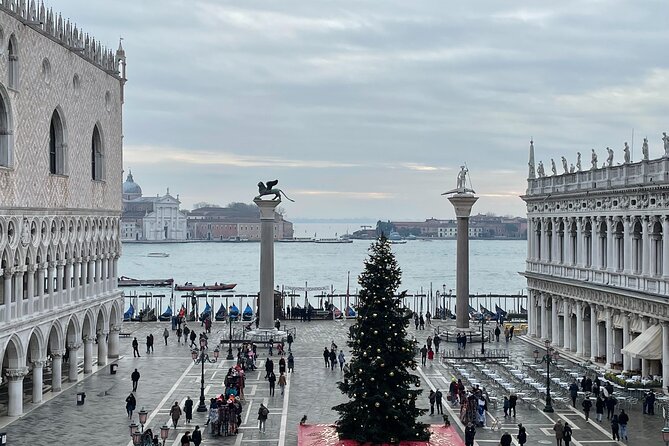
St. Mark’s Basilica and Doge’s Palace face each other across Piazza San Marco, so combining them makes good practical sense. You do not waste time crossing Venice between attractions, and the two buildings explain different sides of the city.
The basilica shows Venice as a wealthy maritime power with a taste for glitter. Doge’s Palace shows how that power was organized, judged, and sometimes punished. One is a church filled with gold mosaics and sacred treasures. The other is a government center wrapped in Gothic stonework, grand halls, paintings, and political theater.
I think the guided format helps most if Venice is new to you. The buildings can be visually overwhelming, and a guide gives you a thread to follow. You learn why the square mattered, how the Doges ruled, and why the Bridge of Sighs has a much darker story than its romantic name suggests.
This is not a quiet, self-directed museum visit. You move at the group’s pace and listen to a running explanation. That makes it efficient, but it also means you may want to return later for a slower look at the rooms that interest you most.
More Doge's Palace visits:
- Venice: Doge’s Palace Reserved Entry Ticket
★ 4.6 · 42,716 reviews - Doge’s Palace & St. Mark’s Basilica with Terrace Access Tour
★ 4.7 · 10,697 reviews - Venice: Doge’s Palace, St Mark’s Basilica, and Pala d’Oro
★ 4.4 · 6,235 reviews
Meeting at the Marble Lions in St. Mark’s Square
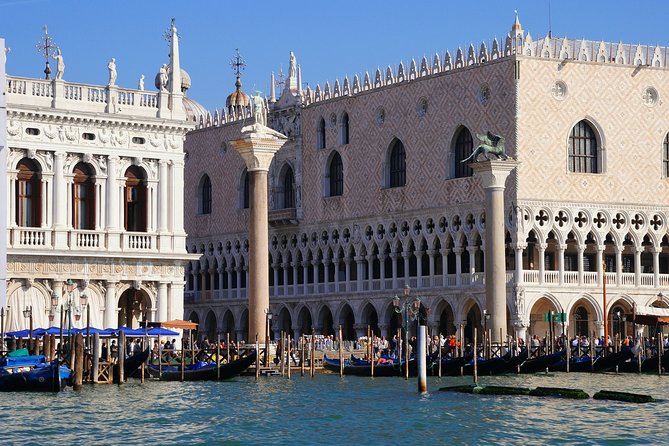
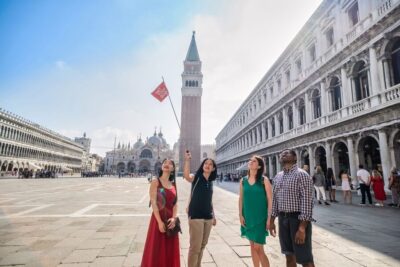
The tour begins near the Colonna di San Marco, close to the Marble Lions in Piazza San Marco. The square is one of Venice’s essential public spaces, but it is also a busy meeting area, so allow extra time to find the exact column and guide.
Your first 30 minutes are spent outside. The guide explains the origins of Venice and the political, social, and historical role of the square. This opening is useful because the piazza is not simply a pretty forecourt. It has long been the city’s ceremonial and civic heart.
You also hear about the Clock Tower and the lions. Those details help turn a quick glance into a more informed look. Instead of photographing the square and moving on, you begin to understand the symbols of Venetian authority around you.
The outdoor introduction can vary a lot by guide. Clara has been praised for learning everyone’s first name quickly and keeping the group involved. That personal touch worked well for many people, though one person felt that too much opening time went into introductions and questions about jet lag.
My advice is simple: arrive early, identify the guide, and use the opening minutes to settle into the group. If you are impatient to enter the basilica, remember that this context makes the interior easier to read.
St. Mark’s Basilica and its golden mosaics
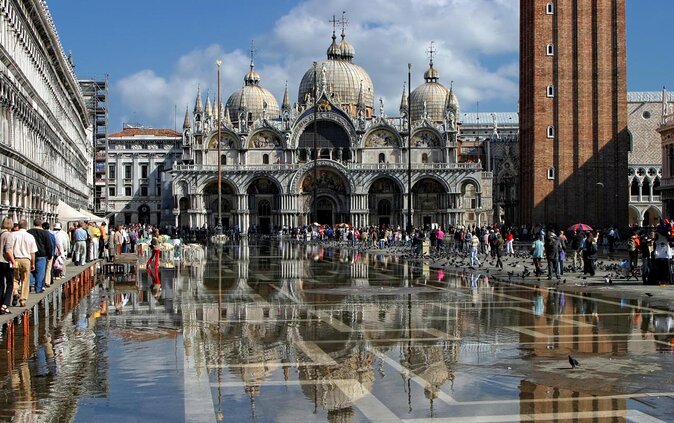
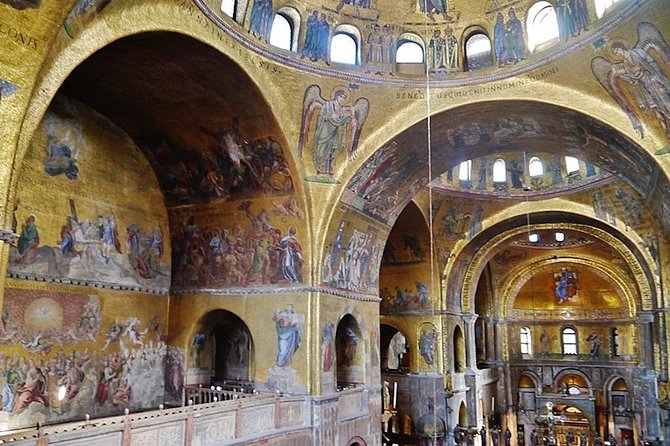
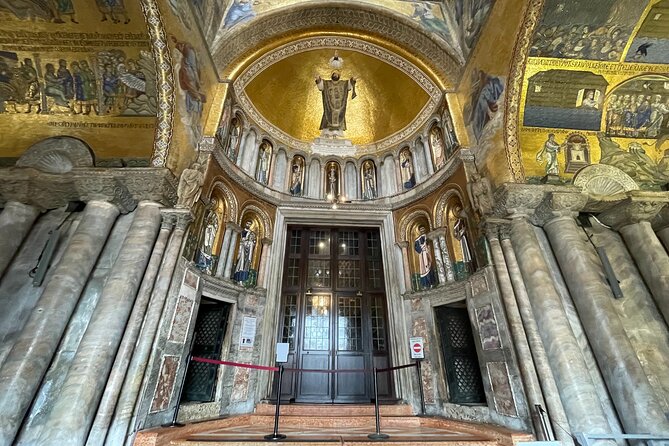
After the square, you enter Basilica di San Marco with a pre-reserved ticket. This is the visual high point for many people. The building’s scale, Eastern influences, and extensive golden mosaics create a very different mood from the Gothic palace next door.
The nickname Church of Gold is easy to understand once you look upward. The mosaics reflect Venice’s former wealth and its close links with the eastern Mediterranean. Your guide explains the design and the basilica’s role as a symbol of Venetian power, not only as a place of worship.
The famous Horses of St. Mark are another focus. Their story connects art, conquest, and the long movement of treasured objects across Europe. The guide can give you the background that a quick walk past the horses would miss.
There is an important limit here. Even with reserved tickets, religious authorities can suspend priority entry when crowds are heavy. The group may also be allowed to remain inside for only 20 minutes. That is enough for an introduction, but not enough for a relaxed inspection of every mosaic and chapel.
High tide can create another delay. Acqua alta may slow entry, and occasional closures can happen for religious observances, flooding, or other official reasons. If the basilica closes, the guide may explain the exterior instead. If access is denied, the arrangement may provide a ticket for an independent visit at an assigned time.
Dress properly. Men and women must cover the belly, shoulders, and knees. Large bags and luggage are not allowed, and there is no storage place at the entrance. Sharp objects and weapons are also prohibited, so do not arrive with a pocketknife or similar item.
Doge’s Palace, where Venice ruled itself
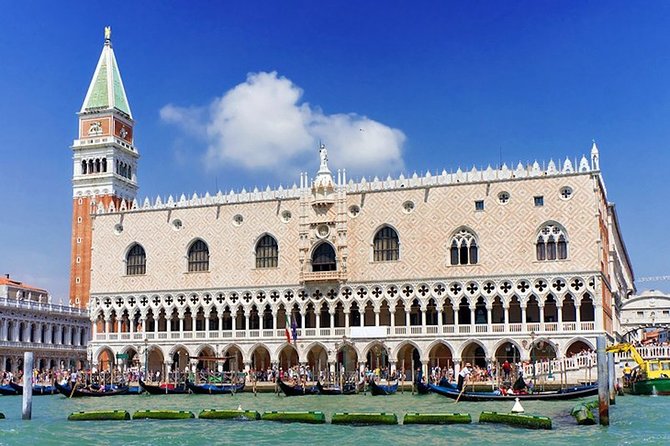
Doge’s Palace receives about two hours, making it the longer and more detailed part of the walk. You enter with a pre-reserved ticket and follow the guide through the ornate Gothic halls and government rooms.
The palace is useful for understanding how Venice functioned as a republic ruled by an elected Doge and a powerful network of councils. The rooms are grand because authority had to look grand. Paintings, carved stone, ceremonial spaces, and immense halls all helped project the city’s power.
The guide also discusses the sculptors who worked on the palace in the 14th century. Look closely at the exterior details when you can, since the stonework is not just decoration. It reflects the city’s taste for elaborate forms and its long contact with different artistic traditions.
Inside, you may spend time in rooms filled with paintings and political imagery. One important caution is that the route can feel uneven depending on the guide. Some guides stop often to explain works and answer questions. Others move quickly through certain rooms. One person specifically wished for more time in the armory and less time sitting among paintings.
If the arms and armor interest you, say so politely at the start. A small group gives you a better chance of asking for a short pause, although the fixed schedule still controls the visit.
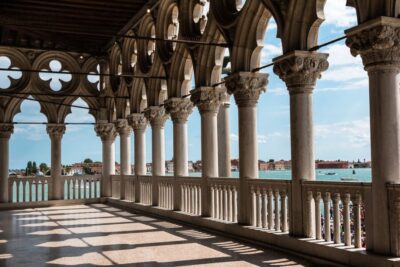
The palace also offers views toward the lagoon. These are a welcome change after the formal interiors, and they help you connect the building to Venice’s watery setting and maritime power.
More St Mark's Basilica visits:
- Legendary Venice: Doge’s Palace, St Mark’s & VIP Terrace Access
★ 4.5 · 5,033 reviews - Venice: Doge’s Palace and St. Mark’s Basilica Tour
★ 4.5 · 3,734 reviews - Venice: St. Mark’s Basilica & Doge’s Palace Tour with Ticket
★ 4.7 · 3,375 reviews - Private 3 hrs Venice Tour: St Mark’s, Walking tour & Boat tour
★ 4.0 · 3,372 reviews
The Bridge of Sighs and the New Prisons
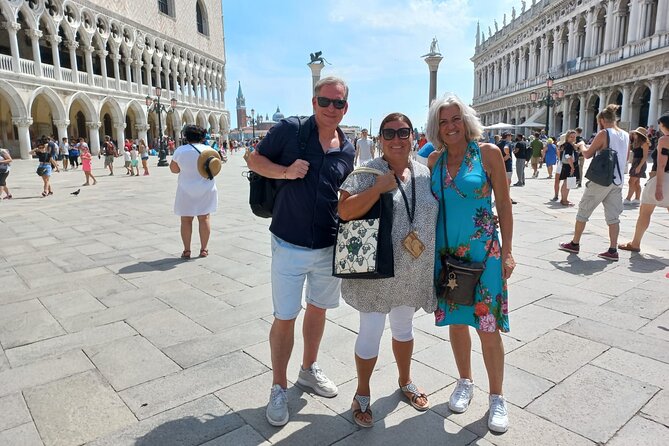
The route includes the New Prisons and the Bridge of Sighs. The bridge is one of Venice’s most photographed structures, but its story is more serious than its name suggests.
You learn why the New Prisons were built and how the bridge connected the palace to the prison complex. The name refers to the sighs of prisoners who caught their final glimpse of Venice through the small stone windows while being led away.
Casanova’s escape is also part of the storytelling. His life in Venice adds a colorful human episode to the official machinery of the palace. This is one reason a guide can add real value. You are not simply looking at a bridge. You are hearing how law, imprisonment, reputation, and personal drama intersected in the old republic.
The palace section can be tiring because it lasts around two hours. Wear comfortable shoes and do not plan another demanding activity immediately afterward. The pace is described as relaxed, but the distance, stairs, and standing still in large rooms can still wear you down.
What the Correr Museum adds
The Doge’s Palace ticket also includes the Correr Museum, the National Archaeological Museum, and Biblioteca Marciana. These are in or around St. Mark’s Square and give you a useful option after the main guided route.
The Correr Museum occupies a building first designed as a residence for Napoleon and later used as the Venetian residence of the King of Italy. That change in purpose gives the museum an interesting connection to the political shifts that followed the old Venetian republic.
The museum is not guided as part of this experience. You can generally visit it after the tour, but timing matters. If you choose the 2:00 PM departure, the museum will be closed before the tour ends, so the ticket is arranged for the next day.
This inclusion improves the value of the package, especially if you enjoy museums and can spare another visit to St. Mark’s Square. If your schedule is tight, do not count the Correr Museum as part of the three-hour guided experience. Treat it as an extra admission benefit.
Guide quality can make or break the day
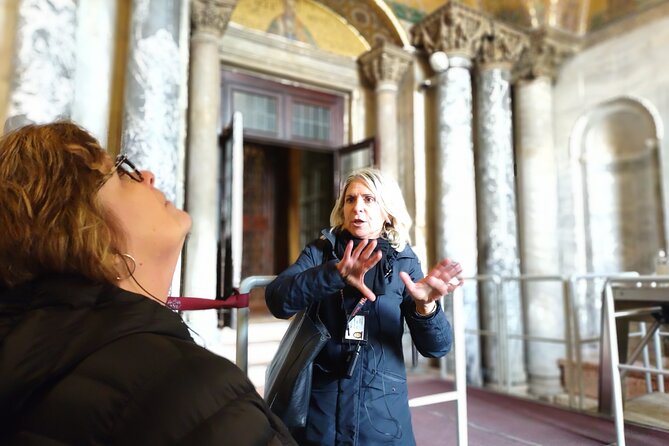
The strongest praise centers on the guides. Clara and Claire are repeatedly described as energetic, clear, and engaging. Sarah is praised for explaining both major buildings in an interesting way, while Christina receives credit for making the history fun. Alessandro is described as an historian who separated fact from popular Venetian myths.
That range matters. A great guide does more than recite dates. The best guides connect architecture to politics, explain why an object matters, answer questions, and keep a group moving without making the visit feel rushed.
Some sessions use audio equipment so everyone can hear, as happened with Matteo’s group. That is helpful in echoing halls and crowded public spaces, though equipment should not be assumed as a guaranteed feature for every departure.
There is also one clear warning. A person left early because the guide’s accent was difficult to understand and the explanations felt too limited. Since the experience is offered in English, clear spoken English is central to its value. If you have trouble hearing at the beginning, move closer to the guide and ask for clarification.
The maximum group size is 16. That is small enough for questions and easier contact with the guide, but it is not a private tour. A group of six can feel very personal. A full group of 16 will feel more structured.
Is $119.72 a fair price?
At about $119.72 per person, this is not a cheap sightseeing walk. You are paying for admission to two major attractions, reserved access, a local guide, and a small group rather than simply buying entry tickets.
The value is strongest during busy periods, when avoiding an ordinary ticket line can protect a large part of your day. It is also strong if you want a clear introduction to Venetian government, art, and religious history without doing extensive preparation yourself.
The value is weaker if you already know these sites well or prefer to linger alone. The basilica visit may be limited to 20 minutes, and the palace route gives you less freedom than an independent visit. You are also paying for the guide’s performance, so guide quality matters.
I would consider it a fair purchase for a first visit, especially if your time in Venice is limited. If you have several days and enjoy reading museum panels or using an audio guide, buying entry separately may suit you better.
Timing, clothing, and meeting advice
The duration is approximately three hours and 10 minutes, though the advertised walking portion is about three hours. The start and end point are both in the St. Mark’s area, and transportation to the meeting point is not included.
Arrive at least 15 minutes early. This is not a casual suggestion. Tickets are timed and can expire within 5 to 10 minutes, and late arrivals cannot join after the tour begins.
Choose an earlier departure if you can. One person found an early start especially rewarding because the buildings were relatively empty on a cold, rainy day. Conditions change, of course, but an early schedule generally gives you more breathing room before the square and entrances become crowded.
Wear clothing that covers your shoulders, knees, and belly. Pack light, leave luggage elsewhere, and avoid carrying sharp items. These rules are enforced at the basilica and can result in denied entry.
Free cancellation is available up to 24 hours before the start time. Changes or cancellations made inside that window are not accepted for a refund, so check your plans before the deadline.
Who should book this Venice tour?
I would choose this experience for a first-time visitor who wants the two major St. Mark’s sights explained in one well-organized outing. It suits people who enjoy history, architecture, and stories about politics as much as photographs.
It is also a good fit for families and mixed-age groups because the guides often use humor and personal interaction to keep the pace lively. Clara’s habit of learning names quickly is a small detail, but it can make a group feel more connected.
I would hesitate if you dislike fixed schedules, need long periods for photography, or have a strong preference for independent museum time. The basilica can be short, and the palace can be long. That balance will feel efficient to some people and lopsided to others.
FAQ
How long does the tour last?
The experience lasts approximately three hours and 10 minutes. The guided walking portion is described as about three hours.
Where does the tour begin and end?
It begins at the Colonna di San Marco near St. Mark’s Square in Venice. The activity ends back at the meeting point.
Are tickets to St. Mark’s Basilica included?
Yes. The experience includes a pre-reserved ticket to St. Mark’s Basilica, subject to closures, high tides, religious observances, and entry restrictions.
Are tickets to Doge’s Palace included?
Yes. Pre-reserved admission to Doge’s Palace is included.
What else can I visit with the ticket?
The ticket includes the Correr Museum, the National Archaeological Museum, and Biblioteca Marciana. These areas are not guided as part of the tour.
What should I wear to enter the basilica?
Your clothing must cover your belly, shoulders, and knees. This rule applies to both men and women.
What happens if I arrive late?
You must arrive 15 minutes before the start. Tickets are timed and may expire within 5 to 10 minutes, and joining after the tour has begun is not possible.
My booking recommendation
I would book this tour if you want efficient access and strong historical storytelling at Venice’s two headline sights. Its best features are the small group, reserved admissions, and guides such as Clara, Claire, Sarah, Christina, and Alessandro, who have been praised for making the past lively rather than dry.
Book with realistic expectations. You may spend only 20 minutes inside the basilica, Doge’s Palace takes most of the outing, and closures can happen because San Marco is an active church. For a first visit, the price is reasonable for the time saved and the context gained. For a return visit, choose it only if you still want a guide to connect the buildings, the government, and the stories behind Venice’s famous stones.
Just added around Venice
- Hard Rock Cafe Venice with Set Lunch or Dinner★ 4.0 · 251 reviews
- Venice Food Tour with 6+ Tastings with Cicchetti, Spritz & More★ 5.0 · 251 reviews
- Venice: Rooftop Terraces Tour with Prosecco★ 4.8 · 257 reviews
- Skip the Line Venice Doge’s Palace and St. Mark’s Basilica Tour★ 4.0 · 263 reviews
- Venice 3,5 hrs tour: Doge’s Palace, St Mark’s and Hidden Gems★ 4.5 · 264 reviews
- Venice: The Ultimate Food Tour with Wine & Spritz★ 4.9 · 264 reviews
- Venice Walking Tour and Gondola Ride Combo★ 4.4 · 266 reviews
- Venice: Sunset Cruise by Typical Venetian Boat★ 4.7 · 268 reviews
Doge's Palace Tours, compared.
Doge’s Palace & St. Mark’s Basilica with Terrace Access Tour
Read our review →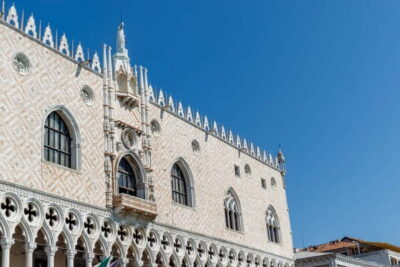
Doge’s Palace, St Mark’s Basilica, and Pala d’Oro
Read our review →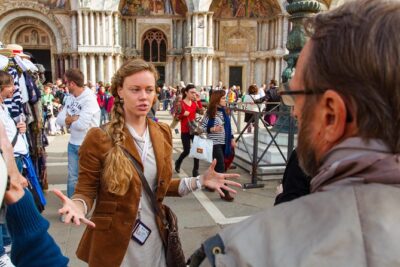
Legendary Venice: Doge’s Palace, St Mark’s & VIP Terrace Access
Read our review →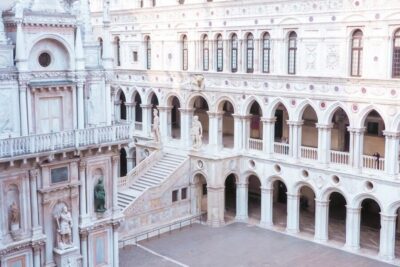
St. Mark’s Basilica & Doge’s Palace Tour with Ticket
Read our review →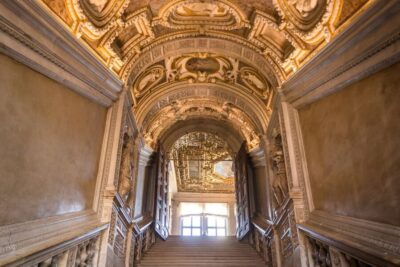
Doge’s Palace, Bridge of Sighs & Prisons Guided Tour
Read our review →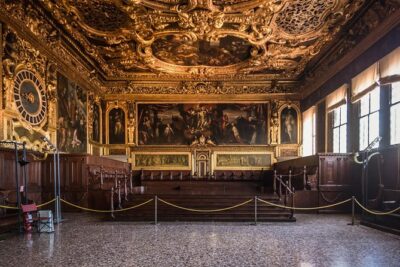
Venice’s Best: Basilica, Doge’s Palace, Gondola & History Gallery
Read our review →Browse the lists this tour appears in