
Review · VENICE TOURS
Venice: Sightseeing Tour with a Local expert
Venice rewards curious walkers. This two-hour English walking tour starts away from the busiest sights and leads you through San Polo, Cannaregio, Rialto, and San Marco with a local guide. I like the route because it shows both famous monuments and quieter lanes, and I like that guides such as Valentina, Julia, Irene, Flavia, and Gianmarco add local stories instead of simply pointing at buildings. The main drawback is that it is entirely outdoors, with no interior visits, and the pace may feel brisk if you need frequent rests.
At $41 per person, this is a fair introduction to Venice, especially if you take it on your first day. You cross the Rialto Bridge, see the resting place of Titian, and finish at St. Mark’s Square with a better sense of how the city fits together. You must arrive early, though: the group can wait no more than five minutes after the start.
In This Review
- Key points to know before booking
- Starting near Ca’ Foscari in Dorsoduro
- Campo San Pantalon and the first lessons in Venice
- Campo San Rocco and the story behind the monuments
- San Polo and Venice’s old commercial center
- Frari Basilica and Titian’s final resting place
- Crossing the Grand Canal on Rialto Bridge
- San Giovanni e Paolo and the Venetian doges
- Finishing in St. Mark’s Square
- The local guides make the difference
- What $41 gets you in practical terms
- Who will enjoy this walking tour most
- Should you book this Venice tour?
- FAQ
- How long does the Venice sightseeing tour last?
- What language is the tour conducted in?
- Where does the tour start?
- Where does the tour finish?
- Is hotel pickup included?
- Are entrance tickets included?
- Will I enter the Frari Basilica?
- What should I bring?
- Can wheelchair users join the tour?
Key points to know before booking
- A useful first-day route: Start in Dorsoduro and finish at St. Mark’s Square, gaining a clear orientation to central Venice.
- Local guides add the value: Guides including Valentina, Julia, Irene, Flavia, and Gianmarco are praised for personal stories, humor, and practical recommendations.
- Famous sights without paid entry: You see Frari Basilica, San Giovanni e Paolo, Rialto Bridge, St. Mark’s Basilica, and Doge’s Palace from outside.
- Less crowded streets are part of the appeal: The route uses narrow lanes, small bridges, and areas you might miss on your own.
- Good walking shoes are essential: Venice means uneven paving, bridges, and plenty of standing while the guide talks.
- English only: This activity is conducted only in English, with no multilingual option listed.
Starting near Ca’ Foscari in Dorsoduro
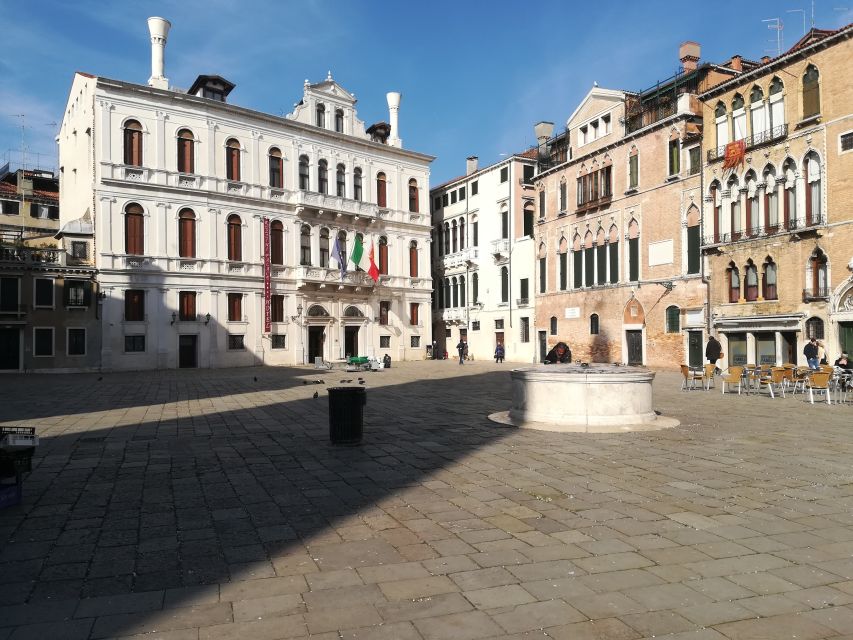
The meeting point is Campiello dei Squelini, near Ca’ Foscari University in the Dorsoduro district, beside a colored wall. This is not the sort of meeting point you should search for at the last second while dragging a suitcase over bridges. Plan to arrive at least 10 minutes early.
The start works well because you begin in a more local-feeling part of Venice rather than jumping straight into the crush around St. Mark’s Square. You get a chance to settle into the city’s maze of passages and small squares before reaching the headline sights.
The guide leads on foot, and the tour includes pickup and drop-off only at the designated meeting and finishing points. There is no hotel pickup. Bring water, since the route cannot add extra stops, and wear shoes that can handle two hours of walking on hard surfaces.
The group is described as small, though one visitor found the group larger than expected and still felt the guide managed it well. Remote earpieces were also praised on one outing, but equipment can vary by departure, so I would not treat that as guaranteed.
A few more reviews worth comparing before you book
- Venice: Doge’s Palace Reserved Entry Ticket
★ 4.6 · 42,716 reviews - Venice: Grand Canal Gondola Ride with App Commentary
★ 4.1 · 18,908 reviews - Boat Trip: Glimpse of Murano, Torcello & Burano Islands
★ 4.3 · 15,699 reviews
Campo San Pantalon and the first lessons in Venice
The first scheduled stop is Campo San Pantalon, where you spend about 15 minutes with the guide. A Venetian campo is more than an attractive square. It is one of the basic units of daily life in a city where ordinary streets and public spaces developed differently from those in mainland towns.
This early stop gives the guide room to explain how Venice grew across islands and waterways. You begin learning to read the city rather than merely photograph it. Small bridges, narrow lanes, and open squares become clues to the way Venice was built.
I appreciate this kind of opening because Venice can feel confusing for the first few hours. The canals break up the city, signs can be easy to miss, and two nearby landmarks may require a winding route between them. A guide who explains the layout early can save you time later in your stay.
The 15-minute format also keeps the tour moving. You hear the main points, then walk on before the explanation turns into a lecture. If you prefer long, detailed talks at every stop, you may find this tour too streamlined.
Campo San Rocco and the story behind the monuments
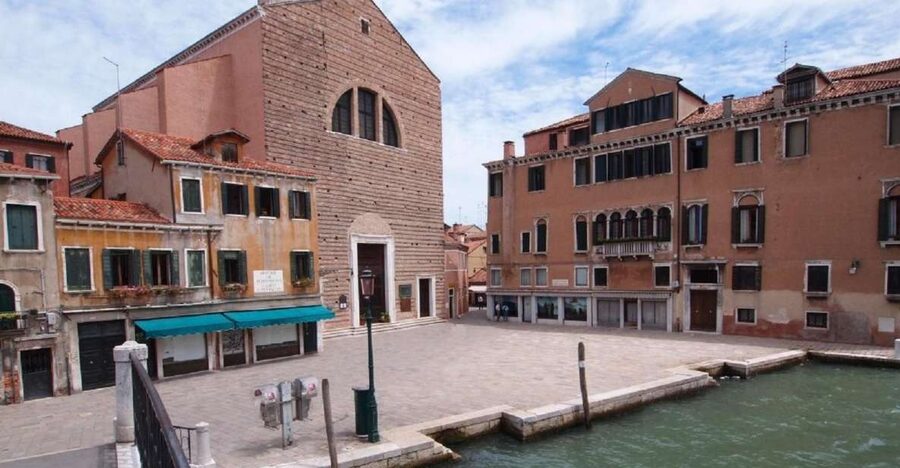
The route continues to Campo San Rocco for another guided stop of roughly 15 minutes. Here, the focus remains on Venice’s past, its public spaces, and the monuments around you.
The strongest part of the experience is the way guides connect visible details to the city’s wider story. Several guides are praised for explaining things that are easy to see but hard to understand without context. A doorway, a narrow passage, or an unusual building detail can seem random until someone explains its purpose or place in Venetian life.
This is also where a local guide can add something a standard sightseeing map cannot. Valentina was praised for her humor and practical tips, while Julia was described as friendly, down-to-earth, and able to answer questions with personal insight. Irene was especially appreciated for her passion for Venice and for steering people toward less obvious corners.
Those personal touches matter. The tour does not simply march from one postcard view to the next. It gives you a framework for noticing the city during the rest of your stay.
San Polo and Venice’s old commercial center
The walk then reaches San Polo, one of the city’s historic districts. The tour explains the area’s connection to Venice’s old trade center during the Venetian Empire.
This part of the route helps explain why Rialto became so important. Venice was not built around one central road. Its power grew through waterborne trade, and its markets, bridges, and landing points developed around that system.
You will be walking through passages and squares rather than entering a museum or market building. That is both the strength and the limit of the tour. You see the setting and hear the background while moving through the real city, but you will not receive a long indoor presentation or have time for extensive browsing.
I like the balance reported by several visitors: steady walking mixed with short stops to talk. The route covers ground without feeling like a forced march, although your comfort will depend on your fitness and the weather. One outing continued pleasantly in the rain, but you should still bring suitable protection if the forecast looks poor.
A different sort of day out around Venice:
- Venice: Grand Canal by Gondola with Live Commentary
★ 4.1 · 13,681 reviews - Venice: La Fenice Opera House Entry Ticket with Audio Guide
★ 4.6 · 11,742 reviews - Doge’s Palace & St. Mark’s Basilica with Terrace Access Tour
★ 4.7 · 10,697 reviews - Venice: Burano, Torcello & Murano Boat Tour w/Glassblowing
★ 4.4 · 10,245 reviews
Frari Basilica and Titian’s final resting place
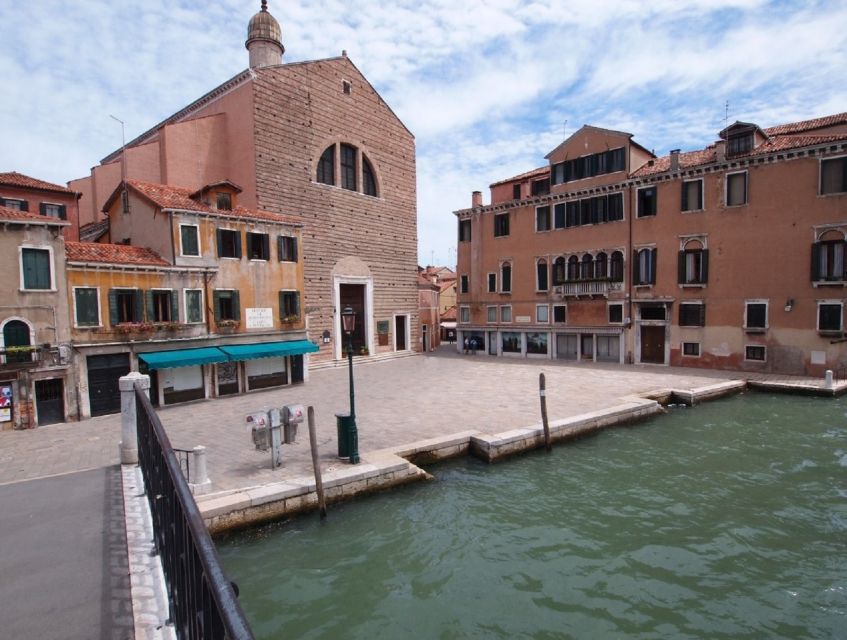
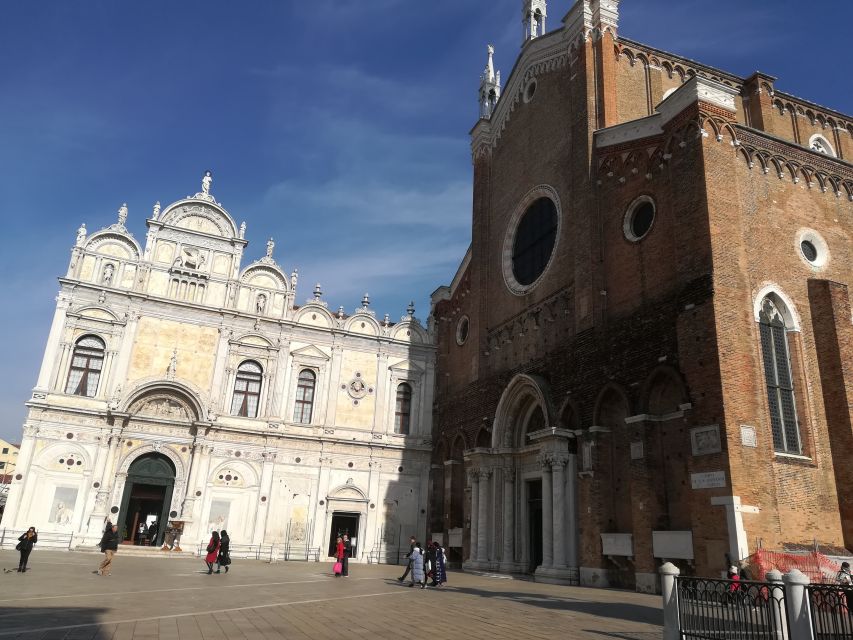
One of the most meaningful stops is the Basilica di Santa Maria Gloriosa dei Frari, usually called the Frari Basilica. Titian, one of Venice’s major painters, is buried here.
The important practical point is that the tour views the basilica from outside. No entrances are included, so you should not expect to see Titian’s tomb or the church interior during this activity. If the Frari is high on your list, plan a separate visit when you can pay for admission and explore at your own pace.
Even from the outside, the stop gives the guide a strong subject. The basilica links Venetian art, religion, architecture, and civic identity in one place. It also helps you understand that Venice’s great sights are spread through different districts, not packed into one museum quarter.
The route next passes through the narrow Campo San Polo. This is a good example of the tour’s broader purpose: you are not just collecting famous names. You are learning how the city’s smaller spaces connect its major landmarks.
Crossing the Grand Canal on Rialto Bridge
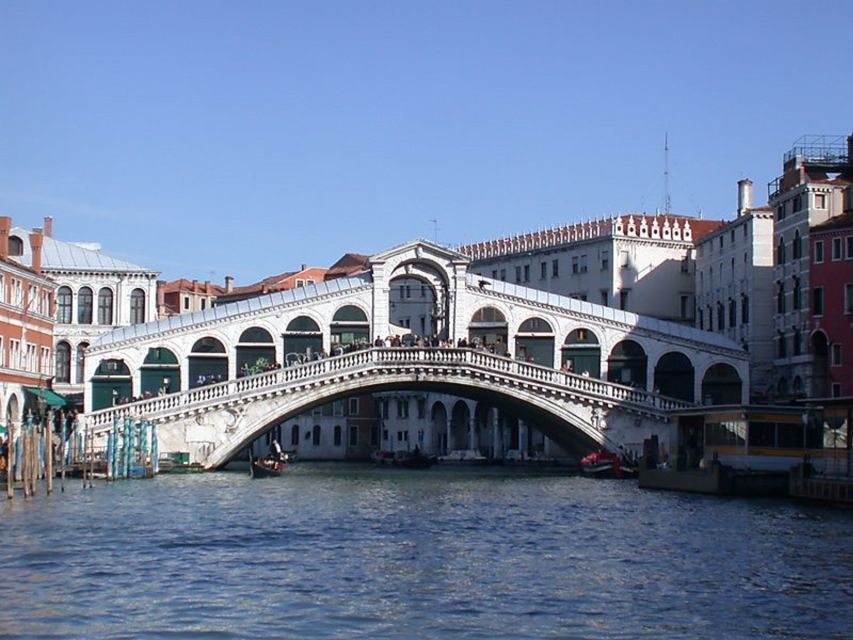
The Rialto Bridge is the route’s major crossing. Walking over it gives you one of the classic views of the Grand Canal, while also placing you in the middle of Venice’s historic movement between districts.
The bridge can be crowded, especially during the busiest part of the day. The guide helps you understand what you are seeing, but do not expect a quiet photo stop. Keep your group in sight, watch your footing, and be ready to pause at the edges rather than blocking the walking flow.
This is one reason the tour is useful early in your visit. Once you have crossed the bridge with a guide and learned the basic route, it becomes easier to return later on your own. Several people used the tour as a map-reading lesson for the rest of their stay and revisited places that caught their interest.
The guide also leads through the historic Rialto area rather than treating the bridge as an isolated photo opportunity. You get a stronger sense of how trade, transport, and city movement were tied together.
San Giovanni e Paolo and the Venetian doges
The broader route includes the Basilica of San Giovanni e Paolo, where 25 doges are buried. The church is in the Castello area, associated with the eastern side of central Venice, and it adds an important political dimension to the tour.
The Frari connects the route to Titian and religious art. San Giovanni e Paolo shifts the focus toward the leaders of the Venetian Republic. Together, these churches show how Venice used its monumental buildings to remember both spiritual and political figures.
Again, the activity is an outdoor walk. You admire the basilica from outside rather than entering it. That means the guide’s explanation is especially useful, since you may otherwise pass the building without understanding why it matters.
The itinerary description also includes the Cannaregio district among the areas explored, although the listed stops emphasize Dorsoduro, San Polo, Rialto, and the final approach to San Marco. Ask your guide at the beginning which streets and districts are planned for that particular departure. Routes may adjust to crowding or local conditions.
Finishing in St. Mark’s Square
The walk ends in Piazza San Marco, Venice’s grandest public space. From here, you can admire St. Mark’s Basilica and Doge’s Palace from outside.
Ending here is smart. You finish with the city’s most recognizable monuments, but you arrive with enough background to appreciate them. After two hours of quieter lanes, small campos, churches, and bridges, the scale of St. Mark’s Square feels more dramatic.
You should not confuse this ending with a guided visit inside either monument. Entry tickets are not included, and the tour does not provide an interior tour of St. Mark’s Basilica or Doge’s Palace. If you want to visit them, arrange that separately and allow extra time.
The final location is also practical. Once the tour ends, you can remain in the square, continue toward nearby sights, or use the guide’s suggestions for food, drinks, and further exploring. Valentina was particularly praised for offering a long list of recommendations at the end, while other guides helped people choose what to see next.
The local guides make the difference
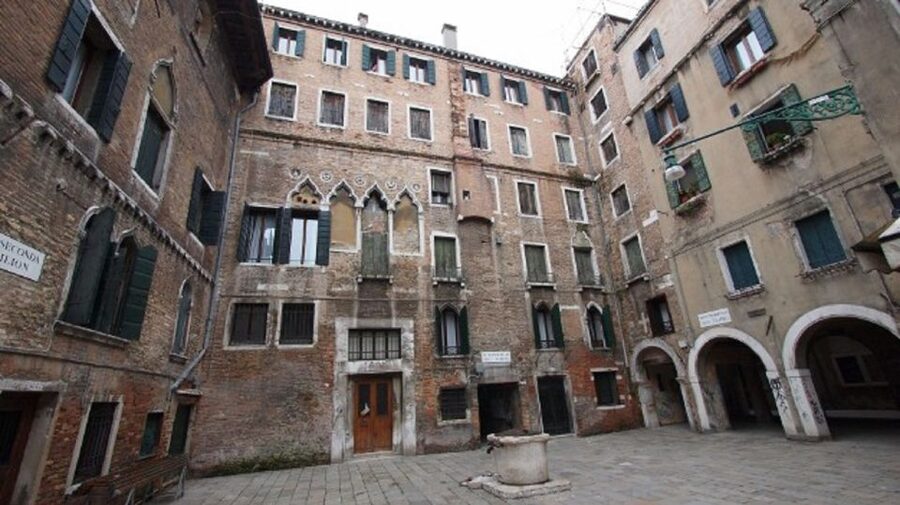
The quality of this experience depends heavily on the person leading your group. The strongest praise goes to guides who combine clear facts with warmth, humor, and a sense of daily Venetian life.
Valentina is repeatedly described as upbeat, funny, proud of Venice, and generous with recommendations. Julia is praised for detailed explanations, personal anecdotes, and a relaxed manner. Irene is valued for her passion and for showing places away from the main tourist flow.
Flavia is described as warm and well organized. Gianmarco is praised for being friendly, engaging, and instructive. Other named guides include Denise, Donata, Olga, Monika, Ana, Daisy, and Desi, all associated with positive comments about energy, clarity, or helpfulness.
You should keep expectations realistic. A live walking tour is not a private custom itinerary, and the exact guide will depend on the date. One group was larger than expected, though the guide still answered questions and kept people involved. If you want total control over the route or a very slow pace, a private tour may suit you better.
What $41 gets you in practical terms
At $41, you are paying for two hours of guided orientation, local interpretation, and a route that links several major districts. You are not paying for transport, admission tickets, food, or a private guide.
I consider the price good value for a first visit. A self-guided walk may cost nothing beyond a map app, but you could easily pass the Frari, San Giovanni e Paolo, or small campos without understanding their importance. The guide also handles navigation through lanes that can be confusing at first.
The value is strongest if you use the tour as a starting point. Take notes on restaurants, sights, and streets that interest you. Then return later for longer visits, paid entries, or photographs when the group is gone.
The tour has a 4.7 rating from 1,425 reviews, which fits the consistent pattern of praise for the guides, route, and balance of walking and explanation. The main criticism to keep in mind is not about the idea of the tour itself. It is about limits: no interiors, no extra stops, English only, and a strict late-arrival rule.
Who will enjoy this walking tour most
I would choose this for a first-time visitor who wants a quick but useful introduction to Venice. It works especially well on day one, when you need help with orientation and want local suggestions for the rest of your stay.
It also suits you if you enjoy history, architecture, and neighborhood walks more than ticking off indoor attractions. The route shows Venice as a working city of bridges, squares, churches, lanes, and water routes.
You may want another option if you use a wheelchair, since the activity is not suitable for wheelchair users. It may also be a poor match if you need frequent breaks, dislike walking on uneven surfaces, or want a tour in a language other than English.
Bring comfortable shoes and water. Arrive early at the colored wall in Campiello dei Squelini, and do not cut it close. The group cannot wait more than five minutes once the tour starts.
Should you book this Venice tour?
Book it if you want a friendly, practical introduction to central Venice without paying for monument admission. The combination of quieter lanes, San Polo, Frari Basilica, Rialto Bridge, San Giovanni e Paolo, and St. Mark’s Square gives you a useful first look at how the city fits together.
I would book it for the first day, then use the guide’s suggestions to plan the rest of your visit. Just remember what you are buying: an outdoor English walking tour with strong local storytelling, not an interior museum visit or a private route.
If that sounds right, $41 is a sensible price for two hours of orientation and context. If your priority is entering St. Mark’s Basilica or Doge’s Palace, book those separately and treat this walk as the city’s opening chapter.
FAQ
How long does the Venice sightseeing tour last?
The tour lasts two hours.
What language is the tour conducted in?
The tour is conducted only in English.
Where does the tour start?
It starts at Campiello dei Squelini, near Ca’ Foscari University in the Dorsoduro district, by the colored wall.
Where does the tour finish?
The tour finishes in Piazza San Marco, near St. Mark’s Basilica and Doge’s Palace.
Is hotel pickup included?
No. Hotel pickup and drop-off are not included. Pickup and drop-off apply only to the designated meeting and finishing points.
Are entrance tickets included?
No. The tour is an outdoor walking tour, and no entrances are included.
Will I enter the Frari Basilica?
No entrance is included at the Frari Basilica. You view the site during the walking tour.
What should I bring?
Bring comfortable shoes and a bottle of water. The activity involves walking through Venice’s lanes and over bridges.
Can wheelchair users join the tour?
No. The activity is not suitable for wheelchair users.
Just added around Venice
- Hard Rock Cafe Venice with Set Lunch or Dinner★ 4.0 · 251 reviews
- Venice Food Tour with 6+ Tastings with Cicchetti, Spritz & More★ 5.0 · 251 reviews
- Venice: Rooftop Terraces Tour with Prosecco★ 4.8 · 257 reviews
- Skip the Line Venice Doge’s Palace and St. Mark’s Basilica Tour★ 4.0 · 263 reviews
- Venice 3,5 hrs tour: Doge’s Palace, St Mark’s and Hidden Gems★ 4.5 · 264 reviews
- Venice: The Ultimate Food Tour with Wine & Spritz★ 4.9 · 264 reviews
- Venice Walking Tour and Gondola Ride Combo★ 4.4 · 266 reviews
- Venice: Sunset Cruise by Typical Venetian Boat★ 4.7 · 268 reviews
Venice Tours, compared.
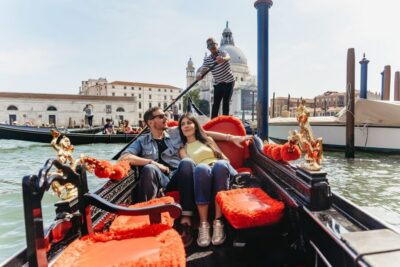
Grand Canal Gondola Ride with App Commentary
Read our review →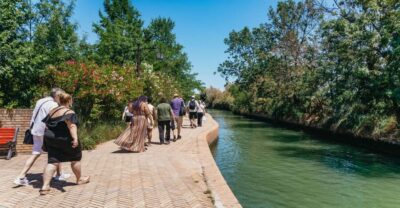
Boat Trip: Glimpse of Murano, Torcello & Burano Islands
Read our review →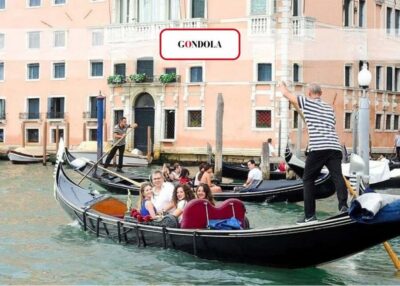

La Fenice Opera House Entry Ticket with Audio Guide
Read our review →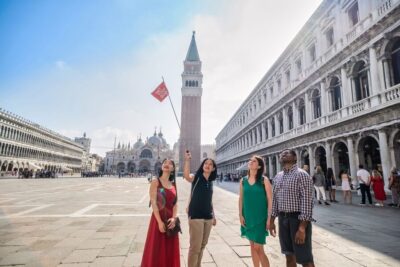
Doge’s Palace & St. Mark’s Basilica with Terrace Access Tour
Read our review →
Burano, Torcello & Murano Boat Tour w/Glassblowing
Read our review →
Murano and Burano Boat Tour with Glass Factory Visit
Read our review →Browse the lists this tour appears in