
Review · VENICE TOURS
The Majestic Teatro La Fenice: Guided Tour in Venice
Opera gets grand at La Fenice. This one-hour guided visit takes you inside Venice’s famous opera house, where Rossini and Bellini premieres helped shape Italian music. I like the chance to see the royal box and the lavish public rooms, and I like that a guide gives the building’s story real shape instead of leaving you to admire the gilt and mirrors in silence. The main drawback is that the visit is short, and backstage access is not part of the standard experience.
The tour costs $28 per person, a fair price for an hour inside one of Venice’s most important cultural buildings. English-speaking guides such as Sara, Nicole, Marina, Matilda, and Sabin have been praised for clear explanations and warm presentation. Still, you should arrive early: one person had trouble finding the entrance, and another noted that the guide sometimes began speaking before the whole group had gathered.
In This Review
- Key points to know before you book
- Why La Fenice matters in Venice
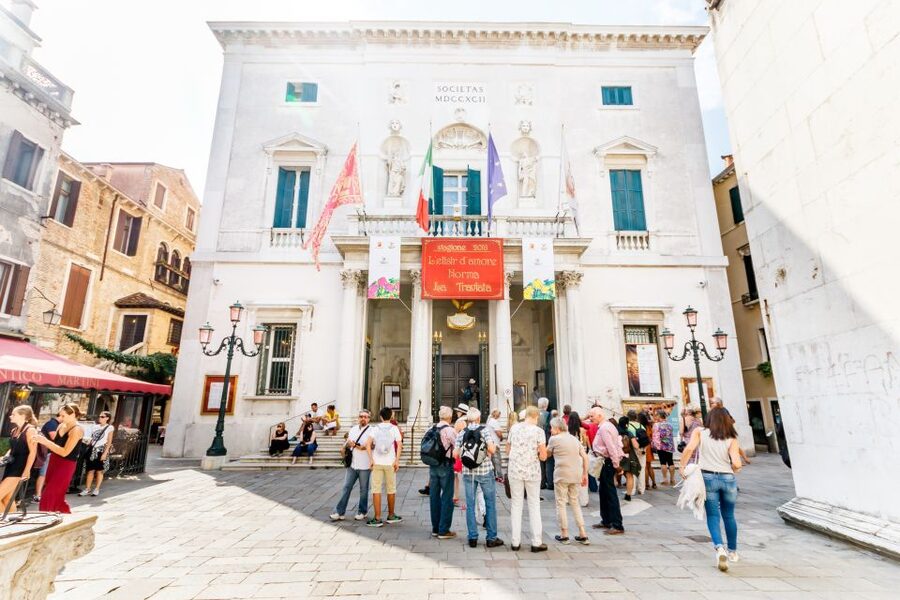
- Meeting the guide in front of the theatre
- The first look inside La Fenice
- The royal box and the theatre’s grand rooms
- The fire, rebuilding, and La Fenice’s second life
- Maria Callas and the opera connection
- A chance to see theatre work in progress
- What the one-hour format does well
- Price, group feel, and overall value
- Who should book this La Fenice visit
- Practical advice for a better visit
- Should you book Teatro La Fenice?
- FAQ
- How long does the Teatro La Fenice tour last?
- How much does the tour cost?
- What language is the tour conducted in?
- Where do I meet the guide?
- Where does the tour finish?
- Can I visit the royal box?
- Can I stay inside after the guided tour?
- Is the tour suitable for wheelchair users?
Key points to know before you book
- Rossini and Bellini premiered major works here: La Fenice connects directly to operas such as Tancredi, Sigismondo, Semiramide, The Capulets and the Montagues, and Beatrice di Tenda.
- The royal box is a highlight: You may be able to step inside and see the theatre from one of its most prestigious positions.
- The tour lasts one hour: It is a compact cultural stop that fits neatly between other Venice plans.
- The building has survived major rebuilding: The theatre’s dramatic past includes extensive reconstruction, making the building itself part of the story.
- You can stay after the guided visit: The ticket allows you to remain inside and take in the theatre at your own pace.
- English is the listed tour language: One experience was conducted in both English and Italian, so confirm the language arrangement when booking if this matters to you.
Why La Fenice matters in Venice
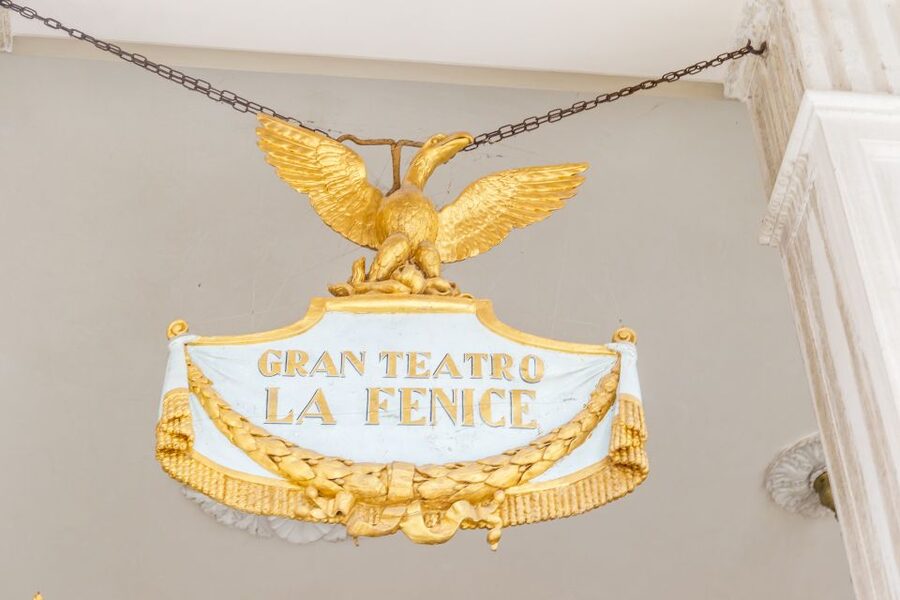
Teatro La Fenice is not simply a pretty theatre with red seats and gold trim. Its name means the phoenix, an apt title for a building that has faced fire and repeated rebuilding while continuing its musical life.
Founded at the end of the 18th century, La Fenice soon became a major stage for new opera. Rossini’s Tancredi, Sigismondo, and Semiramide are tied to its story, as are Bellini’s The Capulets and the Montagues and Beatrice di Tenda. These titles give the tour more weight. You are not just looking at old decoration. You are standing in a place where new works were first heard by Venetian audiences.
The theatre’s story also reaches into modern opera. La Fenice has presented world premieres including Stravinsky’s The Rake’s Progress and Britten’s The Turn of the Screw. That newer chapter matters because it shows the theatre is not frozen in the past. It still looks toward contemporary productions while honoring its earlier composers.
The theatre seats more than 1,000 people. Its performing organization includes a 98-member orchestra and a 66-person opera chorus, supported by a loyal local audience and international following. You may not see the orchestra or chorus during the tour, but these details help you picture La Fenice as a working institution rather than a museum set.
A few more reviews worth comparing before you book
- Venice: Doge’s Palace Reserved Entry Ticket
★ 4.6 · 42,716 reviews - Venice: Grand Canal Gondola Ride with App Commentary
★ 4.1 · 18,908 reviews - Boat Trip: Glimpse of Murano, Torcello & Burano Islands
★ 4.3 · 15,699 reviews
Meeting the guide in front of the theatre
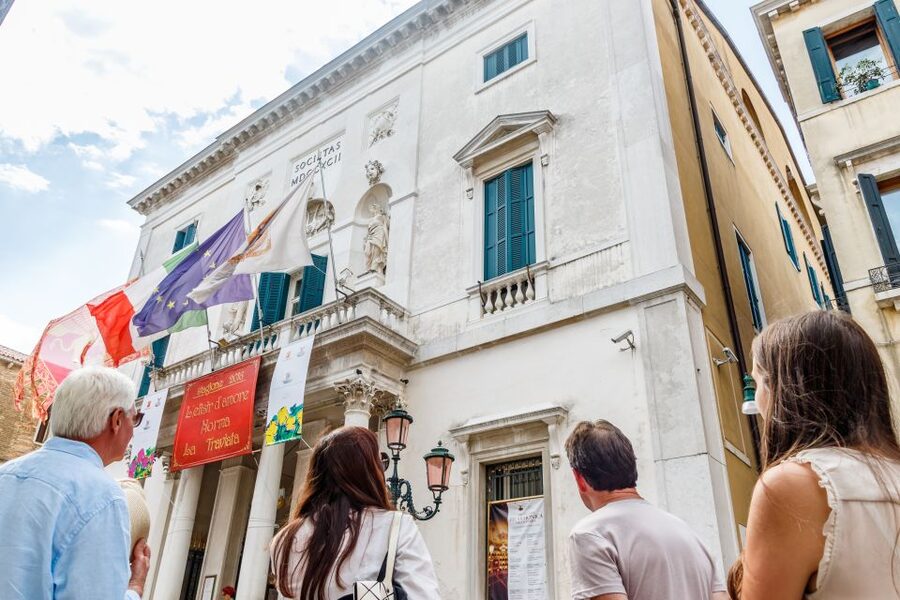
The meeting point is directly in front of the Teatro La Fenice entrance. This sounds simple, but Venice can make simple directions less simple. Narrow lanes, similar-looking façades, and limited street views can slow you down, so I would build in a few extra minutes.
The hostess meets you outside, then takes the group inside. The formal explanation happens inside the theatre, not during a walking approach through Venice. That distinction is useful if you expect a city walk or neighborhood commentary. This is a focused theatre visit, not a tour of the surrounding streets.
The tour starts at the stated time and ends back at the meeting point. Some guides have waited briefly for people who were running late, but you should not count on that. Arriving on time protects your full hour and avoids joining the group after an important introduction.
The experience is in English according to the activity details. One person found the visit partly bilingual, with English and Italian used together, and felt the Italian section received more information. If you need English-only guiding, check the available option before paying.
The first look inside La Fenice
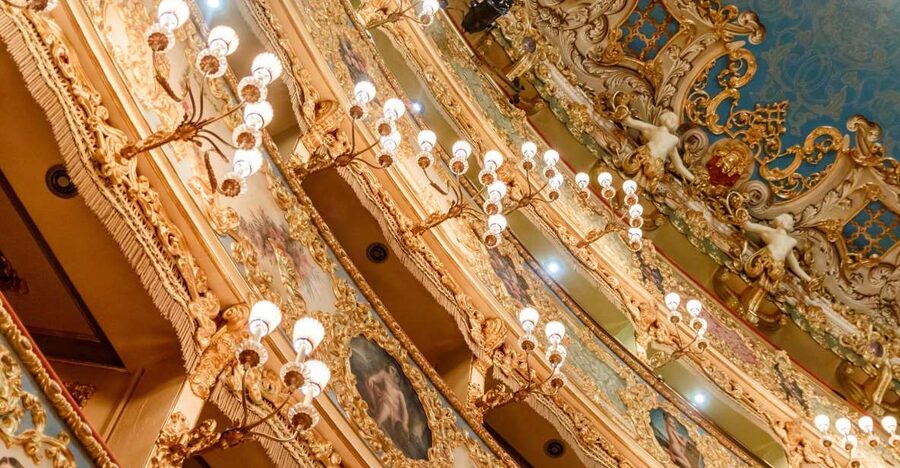
The first interior view is the reason many people book this visit. La Fenice is designed for drama before the curtain even rises. Expect ornate decoration, elegant rooms, and the visual impact of a historic opera house built to impress.
The public areas are more than a quick photo stop. A guide can point out how the building is organized and explain the way performances operate. One especially useful part of the presentation covers both the theatre’s architecture and the practical structure behind an opera production.
This is where a live guide earns the admission price. You can ask a question, pause over a detail, or request a clearer explanation. People with little opera background have still found the talks easy to follow, which makes the visit suitable for first-time opera audiences as well as seasoned fans.
The guide’s style can shape the hour. Sara was praised for being captivating and happy to answer questions. Matilda was described as friendly and clear, while Nicole received praise for offering plenty of information. Marina and Sabin were also singled out for their friendly presentation. Guides can vary, but the overall pattern is encouraging: the best ones turn facts into a story.
The royal box and the theatre’s grand rooms
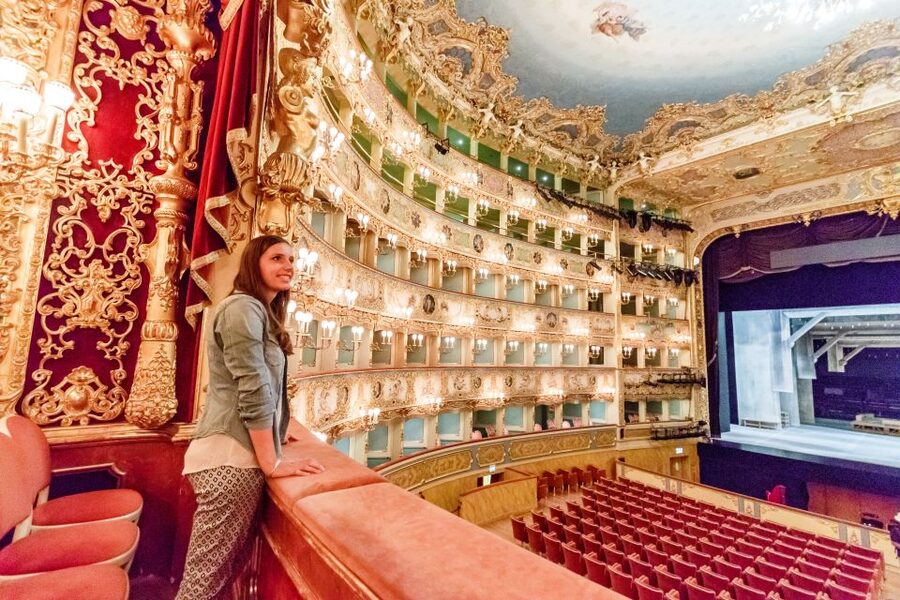
The royal box is one of the most useful moments in the visit because it gives you a special view of the auditorium. Access can depend on theatre operations, but several visits included the chance to step inside.
From this position, you can appreciate the theatre as an audience member of high rank might have seen it. The perspective also helps you understand the relationship between the stage, the seating levels, and the decorated interior. It is a small part of the tour, but it gives the building a human scale.
Other large rooms may be included as part of the route. Their lavish finish reinforces the social role of opera in earlier centuries, when a performance was also a public display of status, fashion, and taste.
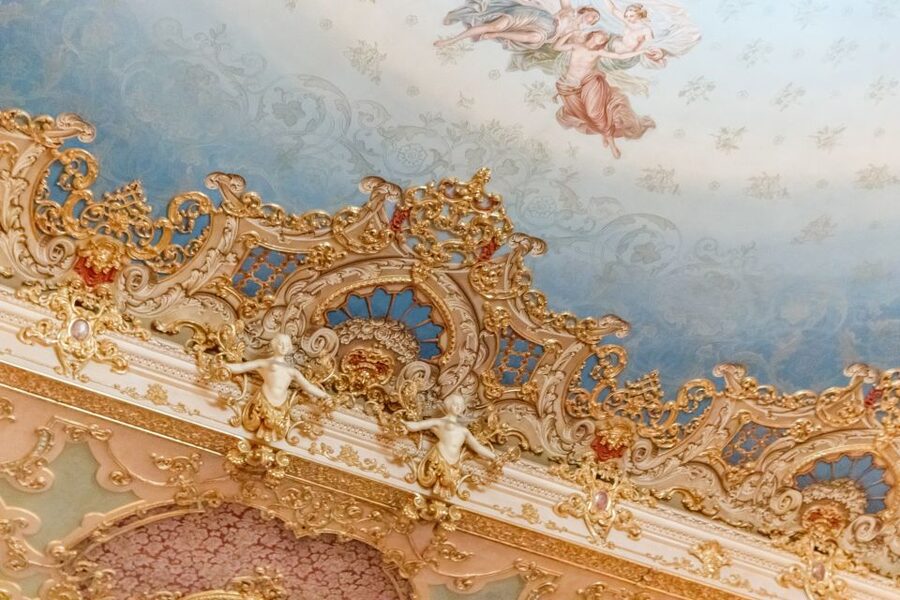
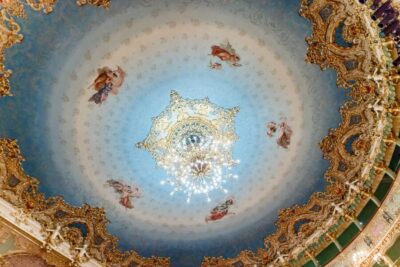
The ceiling receives special praise, including its unusual clock. Details like this are easy to miss if you visit alone. A guide gives you a reason to look upward and explains why a room was designed in a particular way.
A different sort of day out around Venice:
- Venice: Grand Canal by Gondola with Live Commentary
★ 4.1 · 13,681 reviews - Venice: La Fenice Opera House Entry Ticket with Audio Guide
★ 4.6 · 11,742 reviews - Doge’s Palace & St. Mark’s Basilica with Terrace Access Tour
★ 4.7 · 10,697 reviews - Venice: Burano, Torcello & Murano Boat Tour w/Glassblowing
★ 4.4 · 10,245 reviews
The fire, rebuilding, and La Fenice’s second life
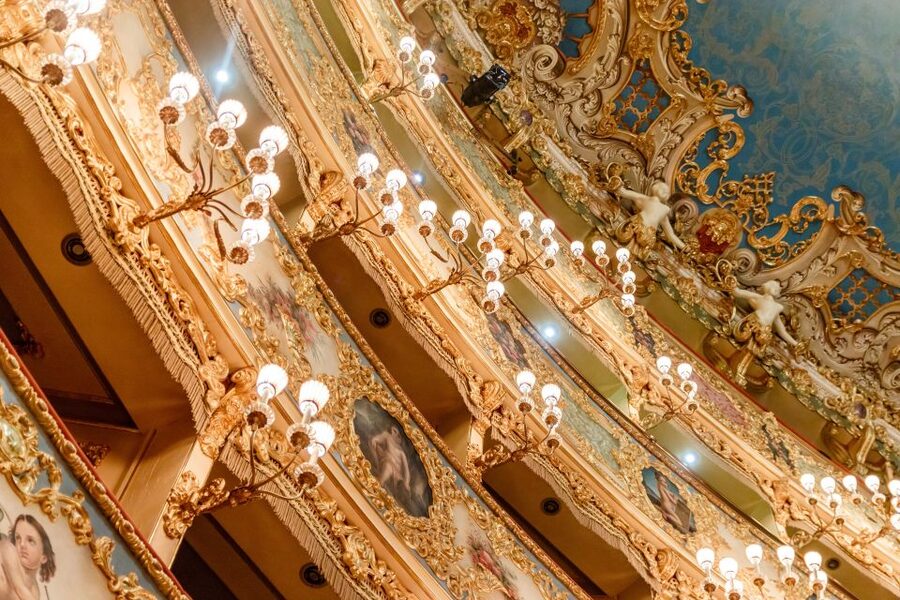
A visit to La Fenice needs its difficult chapters. The building has undergone much rebuilding, and that fact changes how you see the polished interiors. The theatre’s survival is not a minor footnote. It is central to its identity.
Your guide explains the theatre’s eventful past and its new direction. The presentation may include how La Fenice has continued after damage and reconstruction, though the exact balance of architectural and musical detail can vary by guide.
I like this part because it keeps the visit from becoming a parade of pretty rooms. Gold leaf and velvet are pleasant to look at, but the stronger story is the theatre’s ability to return to use and remain important. La Fenice is a place shaped by both artistic ambition and physical loss.
If you care about architecture, listen closely here. Rebuilding raises practical questions about what was restored, what was recreated, and how a modern opera house works inside an old shell. The standard tour does not promise a technical architectural study, but it gives you a useful starting point.
Maria Callas and the opera connection
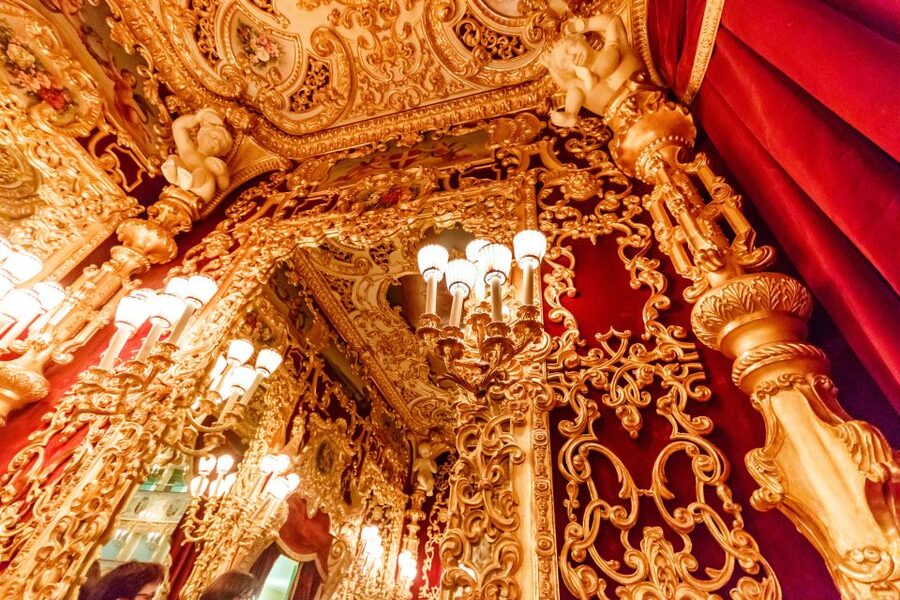
An exhibition devoted to Maria Callas may be part of the visit. One person specifically enjoyed seeing it along with the royal box and other rooms. If the display is open during your visit, it adds a personal connection to the theatre’s musical past.
Callas is an especially fitting figure for La Fenice because opera can feel abstract when reduced to composer names and premiere dates. A display about a celebrated singer brings the human performer back into the story. You begin to think about voices, stage presence, rehearsal, and the demanding work behind the polished performance.
The exhibition should be treated as an added feature rather than the main reason to book. The provided details do not guarantee its exact presentation or availability on every date. Ask the guide what is open when you arrive.
A chance to see theatre work in progress
A few visits have coincided with rehearsals or technical testing. One person was pleased to see rehearsals, while another found that lighting tests changed what could be viewed and required the guide to adjust the route.
These moments can be special because they show La Fenice as a working theatre. Seeing preparation underway gives you a stronger sense of how much labor sits behind a finished opera. At the same time, it can limit access to certain areas or alter the usual presentation.
Do not book this experience expecting a rehearsal. Treat it as a possible bonus. Theatre schedules can change, and technical work may mean that a room is closed or that the guide has to explain parts of the building from a different position.
What the one-hour format does well
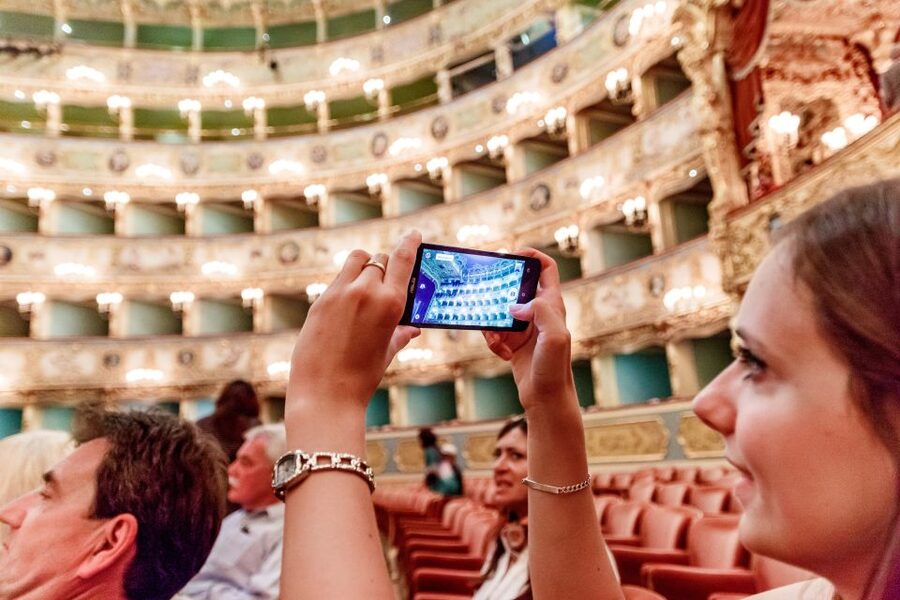
One hour is long enough to make the building meaningful but short enough to fit into a busy Venice day. You can pair it with other central sightseeing without giving up half a day.
The compact schedule also keeps the visit focused. You hear the main chapters of La Fenice’s story, see its important public spaces, and leave with a clearer idea of its role in opera. For many people, that is the right amount of information.
The limitation is depth. You are unlikely to receive a full production history, detailed backstage tour, or extended architectural lecture in 60 minutes. One person specifically wished for backstage access, so opera specialists may want more than this introductory visit provides.
After the guided portion, you can remain inside for as long as the ticket allows. This is a valuable feature. You can revisit a room, look again at the ceiling, examine the decoration, or spend time with an exhibition without having to rush directly back into Venice’s lanes.
A small café is also available inside the theatre. It gives you a place to sit and let the visit settle, though the café is an extra convenience rather than a central attraction.
Price, group feel, and overall value
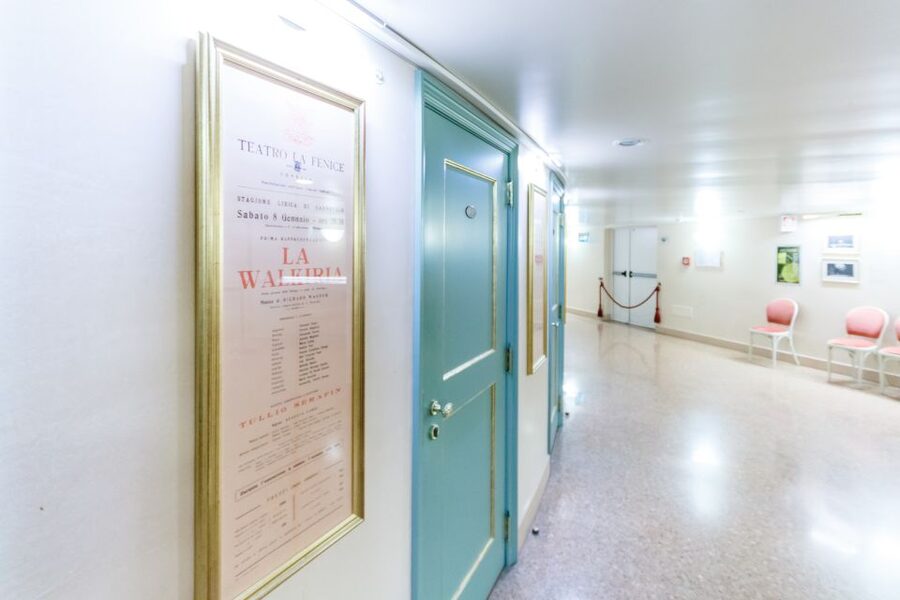
At $28, this is not the cheapest one-hour stop in Venice, but the price compares well with the setting. You are paying for entry to a world-famous opera house plus a live English-language explanation. If you enjoy music, architecture, theatre, or Venetian history, the cost is reasonable.
The value rises when the group is small. One person had only two people on the tour, which made it feel almost private and allowed plenty of questions. Group size can vary, so do not assume you will receive a personal tour, but a small group can make the hour especially rewarding.
The value also depends on your interest. If you only want a quick look at an ornate interior, you may find the visit brief. If you want context, the guided format is much better than simply entering and wandering through rooms without knowing what happened there.
The rating of 4.3 from 513 reviews suggests a strong overall response with some room for variation. The most consistent praise goes to the guides, the theatre’s beauty, the historical explanation, and the chance to see the royal box. The clearest cautions are occasional bilingual delivery, limited backstage access, and route changes during theatre testing.
Who should book this La Fenice visit
I would recommend it to anyone who wants more than a photograph of a grand Venetian interior. It works especially well for:
- First-time opera visitors who want a simple introduction
- Music lovers interested in Rossini, Bellini, Stravinsky, Britten, or Maria Callas
- Architecture fans who enjoy ornate interiors and rebuilding stories
- People with limited time who want a focused one-hour cultural stop
- Anyone attending an opera later the same day, since the visit can add useful context to the performance
You do not need to know opera before you arrive. The strongest guides explain the theatre in plain language and answer questions from people at different levels.
The visit may be less suitable if you need step-free access, since it is listed as not suitable for wheelchair users. It may also disappoint you if backstage areas are essential. The tour focuses on the interior public areas, historical explanation, and theatre atmosphere.
Practical advice for a better visit
Book a time that leaves you breathing room before your next activity. Venice delays are common, and finding the entrance can take longer than expected even when you are close.
Arrive directly in front of the theatre and look for the hostess. Do not expect the guide to provide a walking tour on the way there. The main explanation begins once you are inside.
Listen for the building’s less obvious details. The theatre’s clock, the layout of the auditorium, the royal box, the rebuilding story, and the way performances are organized can make the difference between a quick look and a memorable visit.
If the guide begins before everyone has gathered, move close enough to hear and ask for clarification if needed. That small problem has occurred on occasion, and it is easier to solve immediately than to miss several minutes of the talk.
Leave time after the tour. The option to stay inside is one of the experience’s best practical features. You can take a second look without the pressure of a guide moving the group onward.
Cancellation is free up to 24 hours before the scheduled visit, and you can reserve now while paying later. Those terms are useful if your Venice plans are still shifting.
Should you book Teatro La Fenice?
Yes, if you want a short, well-priced introduction to one of Venice’s most important theatres. The setting is beautiful, the opera connections are substantial, and a strong guide can make the hour far more meaningful than an unguided visit.
I would book it with realistic expectations. You are getting a one-hour interior tour, not a backstage production visit or a complete study of Italian opera. Check the language arrangement, arrive early, and ask about the royal box, exhibitions, and any rehearsal activity on the day.
For $28, La Fenice offers a useful mix of architecture, music, and Venetian drama. It is especially worthwhile before an evening performance, but it earns its place in your itinerary even if you never attend an opera.
FAQ
How long does the Teatro La Fenice tour last?
The guided visit lasts one hour. Starting times vary, so you need to check availability when choosing a date.
How much does the tour cost?
The listed price is $28 per person.
What language is the tour conducted in?
The listed live guide language is English. One experience used both English and Italian, so check the available language arrangement if English-only guiding is important to you.
Where do I meet the guide?
You meet the hostess directly in front of the Teatro La Fenice entrance. The explanation takes place inside the theatre, not during the walk to the entrance.
Where does the tour finish?
The activity ends back at the meeting point in front of the theatre.
Can I visit the royal box?
Access to the royal box has been included during some visits, but the provided information does not guarantee access on every date.
Can I stay inside after the guided tour?
Yes. Your ticket allows you to remain inside after the guided portion, and a small café is available in the theatre.
Is the tour suitable for wheelchair users?
No. The activity is listed as not suitable for wheelchair users.
Just added around Venice
- Hard Rock Cafe Venice with Set Lunch or Dinner★ 4.0 · 251 reviews
- Venice Food Tour with 6+ Tastings with Cicchetti, Spritz & More★ 5.0 · 251 reviews
- Venice: Rooftop Terraces Tour with Prosecco★ 4.8 · 257 reviews
- Skip the Line Venice Doge’s Palace and St. Mark’s Basilica Tour★ 4.0 · 263 reviews
- Venice 3,5 hrs tour: Doge’s Palace, St Mark’s and Hidden Gems★ 4.5 · 264 reviews
- Venice: The Ultimate Food Tour with Wine & Spritz★ 4.9 · 264 reviews
- Venice Walking Tour and Gondola Ride Combo★ 4.4 · 266 reviews
- Venice: Sunset Cruise by Typical Venetian Boat★ 4.7 · 268 reviews
Venice Tours, compared.
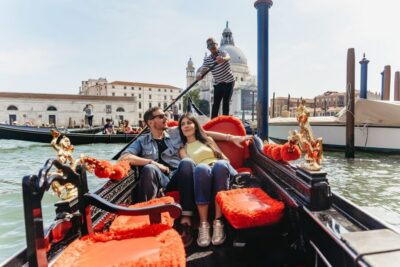
Grand Canal Gondola Ride with App Commentary
Read our review →
Boat Trip: Glimpse of Murano, Torcello & Burano Islands
Read our review →
La Fenice Opera House Entry Ticket with Audio Guide
Read our review →
Doge’s Palace & St. Mark’s Basilica with Terrace Access Tour
Read our review →
Burano, Torcello & Murano Boat Tour w/Glassblowing
Read our review →
Murano and Burano Boat Tour with Glass Factory Visit
Read our review →Browse the lists this tour appears in