
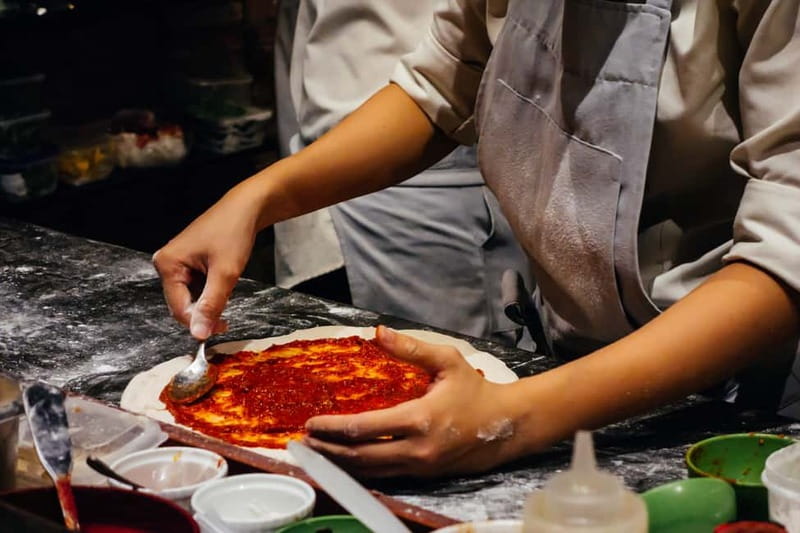
Review · WORKSHOPS
Naples: Premium Pizza-Making Class at a Pizzeria
Pizza gets serious in Naples. This two-hour class puts you at a personal work station inside a 2017 World Pizza Championship-winning pizzeria, where a master pizzaiolo teaches you how four basic ingredients become proper Neapolitan dough. I especially like the small-group format and the fact that you eat the pizza you make, not a pre-prepared substitute.
The class also covers staglio, the old technique used to divide dough into neat portions, plus a sweet fried-dough dessert filled with chocolate spread. The main consideration is timing: two hours is enough for a fun lesson and meal, but not enough for a full fermentation lesson, so the dough you make may be adapted for baking during the class.
In This Review
- Key points at a glance
- Entering a World Champion Neapolitan pizzeria
- Four ingredients, plenty of technique
- Staglio and the making of panetti
- Stretching, topping, and baking your Margherita
- The sweet finish: fried dough and chocolate
- The guides make the language work
- Small groups and personal work space
- What the $67.19 price gets you
- Who will enjoy this class most?
- Practical details before you book
- Should you book the Naples pizza class?
- FAQ
- How long does the pizza-making class last?
- How much does the experience cost?
- Is the class offered in English?
- Do I make my own pizza?
- What ingredients are used for the pizza?
- What food and drinks are included?
- Is cooking experience required?
- Are private bookings available?
- Can I cancel for a refund?
Key points at a glance
- A real pizzeria setting: You learn inside a working Neapolitan pizzeria rather than a generic cooking studio.
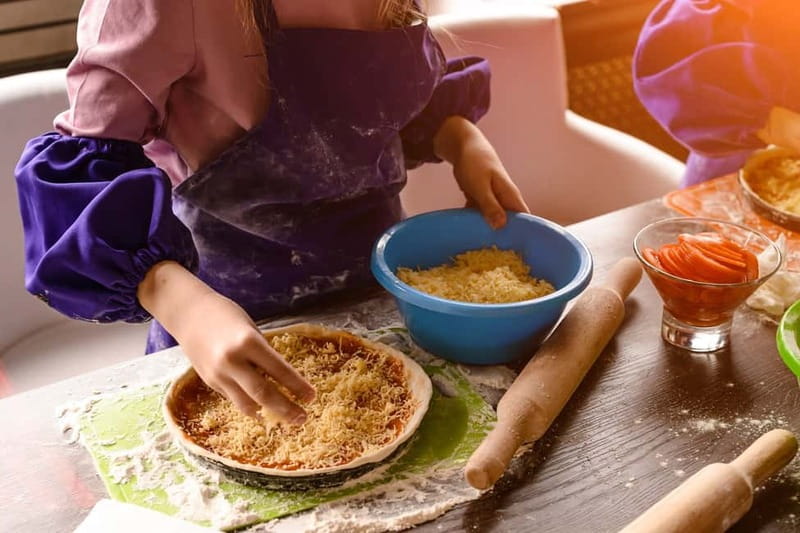
- Your own work station: Every participant gets hands-on time for mixing, kneading, shaping, topping, and baking.
- Four simple ingredients: Water, flour, salt, and yeast form the basis of the lesson.
- Two styles of pizza: You make a classic Margherita, then taste fried dough with a sweet chocolate filling.
- Helpful bilingual teaching: Classes are offered in English and Italian, with guides such as Francesca, Lucia, Sabrina, and Federica helping translate.
- Good value at $67.19: The price includes the lesson, a full meal, a drink, limoncello, water, and a digital recipe.
Entering a World Champion Neapolitan pizzeria
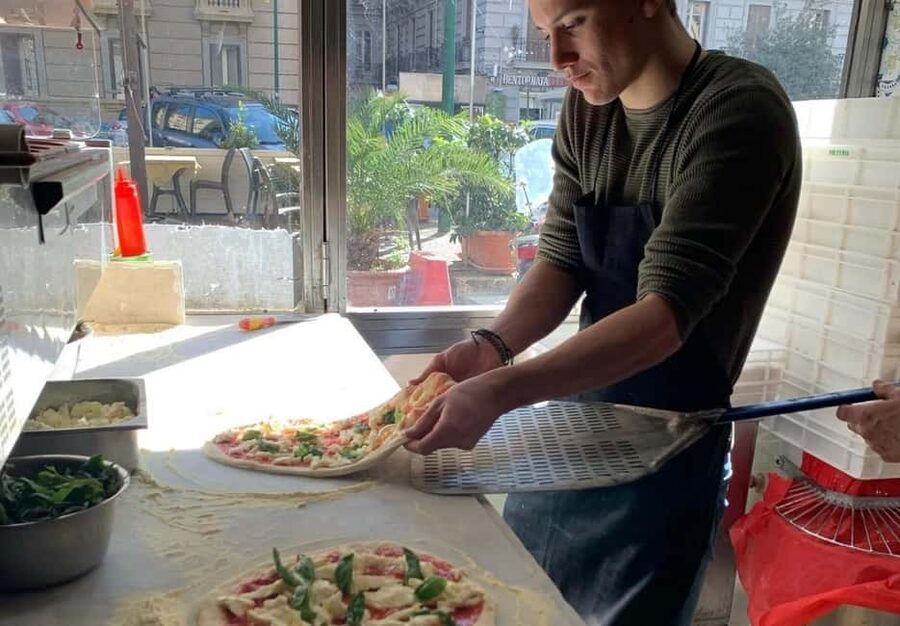
The setting matters here. You are not simply watching a chef toss dough while standing behind a counter. You work inside a pizzeria recognized as a 2017 World Pizza Championship winner, then sit down to eat what you have prepared.
That combination gives the class a useful rhythm. First comes instruction. Then comes the messy, enjoyable work of handling dough. Finally, you get a hot pizza and a drink. You leave with both a meal and a better sense of why Neapolitan pizza can taste so simple yet so precise.
The class lasts about two hours. That is a sensible length for a holiday activity. It fits neatly into a morning or evening in Naples without swallowing half your day, and the food makes it feel like more than a demonstration.
The exact meeting point can vary according to the option you book. Check that detail before setting off, especially if you are arranging the class around dinner or another timed visit.
More pizza and gelato sessions:
- Naples: Pizza-Making Workshop with Drink and Appetizer
★ 4.9 · 5,411 reviews - Authentic Pizza Making Class in Naples with Appetizers and Drink
★ 5.0 · 3,178 reviews - Pompeii & Mt.Vesuvius Day Tour from Naples with Pizza Lunch
★ 4.0 · 2,901 reviews
Four ingredients, plenty of technique
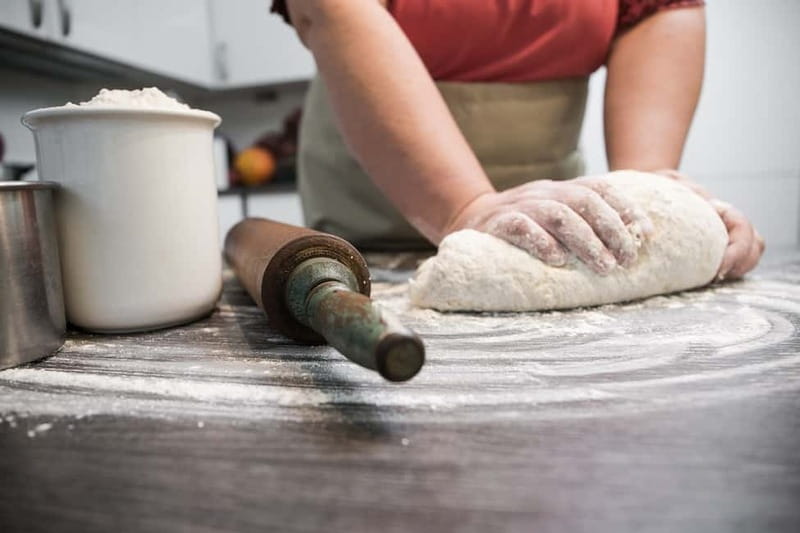
The lesson begins with the basic dough: water, flour, salt, and yeast. That sounds almost too easy, which is part of the point. Neapolitan pizza depends less on a long ingredient list than on correct quantities, handling, and heat.
You learn how the ingredients come together, then follow the pizzaiolo through mixing and kneading. The chef demonstrates the movements, while the guide explains the steps in English when needed. The class is designed for beginners, so you do not need prior cooking experience.
The most useful part is the attention to dough texture and shaping. Several classes are led by chefs who have spent decades making pizza, including Alessandro and Maurizio, with one participant noting that Alessandro had been at the work for 46 years. That kind of experience shows in the small corrections: how to work the dough without tearing it, how to shape it without flattening the edge, and how to avoid trouble when transferring it toward the oven.
You will not become a professional pizzaiolo in two hours. You can, however, learn a repeatable method that makes home pizza less mysterious.
Staglio and the making of panetti
One of the more distinctive parts of the class is staglio. This is the traditional way of dividing a larger mass of dough into individual portions, called panetti.
The technique is more than cutting dough into pieces. Each portion is shaped into a smooth ball so it can rest and develop properly. You get to practice this by hand, which helps you understand why a pizza base can have a soft center and a rounded, airy rim.
This lesson is valuable because it explains a part of pizza making that many casual recipes skip. At home, you might divide dough with a knife and move on. Here, you see how the pizzaiolo creates portions that are ready to become individual pizzas.
The class schedule does create one practical limit. A two-hour session cannot reproduce every stage of a long professional fermentation. One participant explained that dough made during the class could not prove long enough for the planned pizza, so the team used it to make bread instead. That is not a major problem, but you should understand that the lesson is focused on technique and participation, not a complete bakery-style production cycle.
Stretching, topping, and baking your Margherita
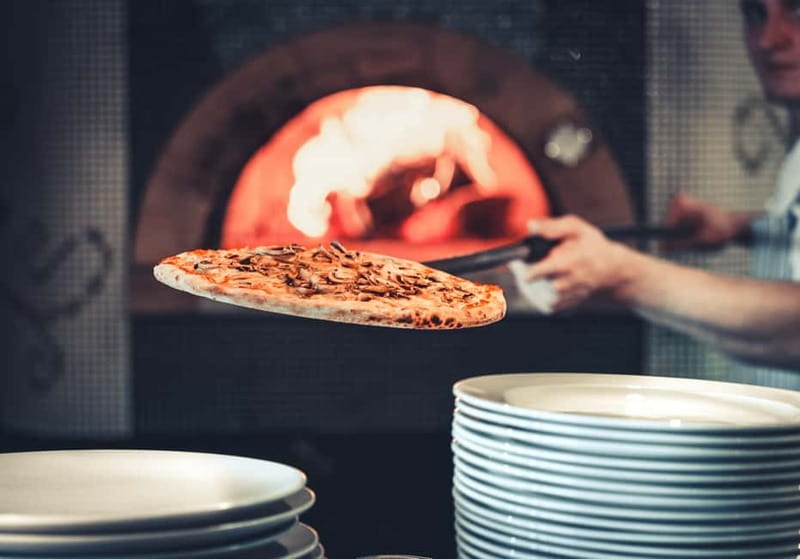
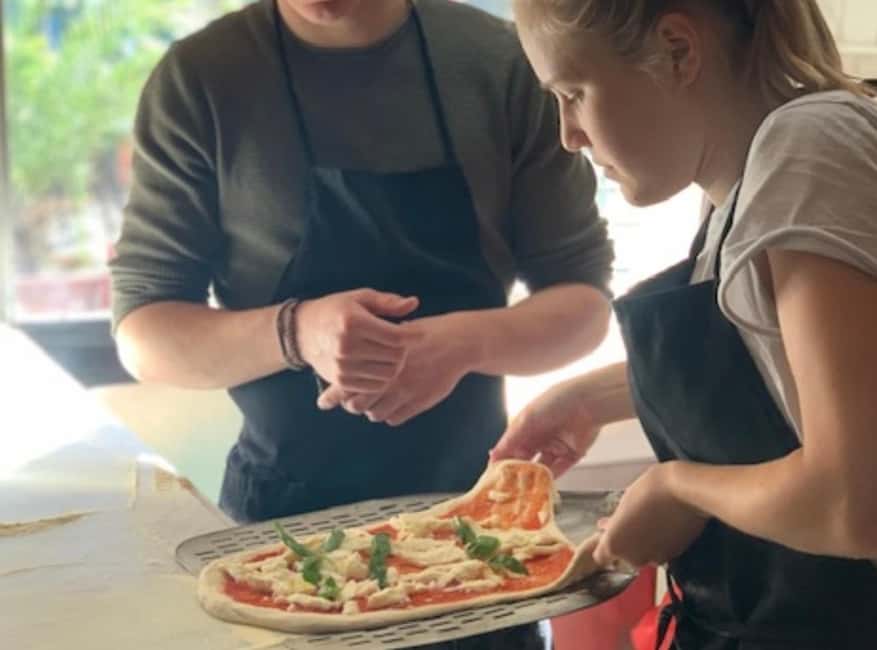
Once your dough is ready, you shape it into a pizza base. The chef shows you how to stretch it by hand while protecting the outer rim. This is where the lesson becomes both practical and entertaining. A little confidence helps, but careful hands matter more than speed.
Your pizza is topped with familiar local ingredients:
- San Marzano tomatoes
- Buffalo mozzarella
- Fresh basil
- DOP extra virgin olive oil
These ingredients keep the focus on classic Neapolitan balance. The tomato gives the base its bright flavor, the mozzarella adds creaminess, basil brings fragrance, and the olive oil ties everything together.
You are not piling on meat, vegetables, and sauces. That restraint is the lesson. Good pizza here depends on a few ingredients used well.
The pizzaiolo then handles the wood-fired oven. The oven is a key part of the experience, since its intense heat produces the familiar combination of a soft center, blistered crust, and lightly charred edges. Your role is hands-on, but the chef’s judgment remains essential at this stage.
After baking, you sit down with your own Margherita. The class includes one glass of wine, water, or beer, so you can turn the final tasting into a relaxed meal rather than a quick bite at the work counter.
A few more reviews worth comparing before you book
- Naples: Pasta Making Class with Starter and Drink
★ 4.9 · 1,060 reviews - Naples: Neapolitan Pizza and Tiramisù Making Class
★ 4.8 · 839 reviews - Naples Pasta Class: Fettuccine & Ravioli with Grandma’s Recipe
★ 5.0 · 506 reviews - Naples: Pasta Cooking Class with Tiramisù and a Drink
★ 4.6 · 415 reviews
The sweet finish: fried dough and chocolate
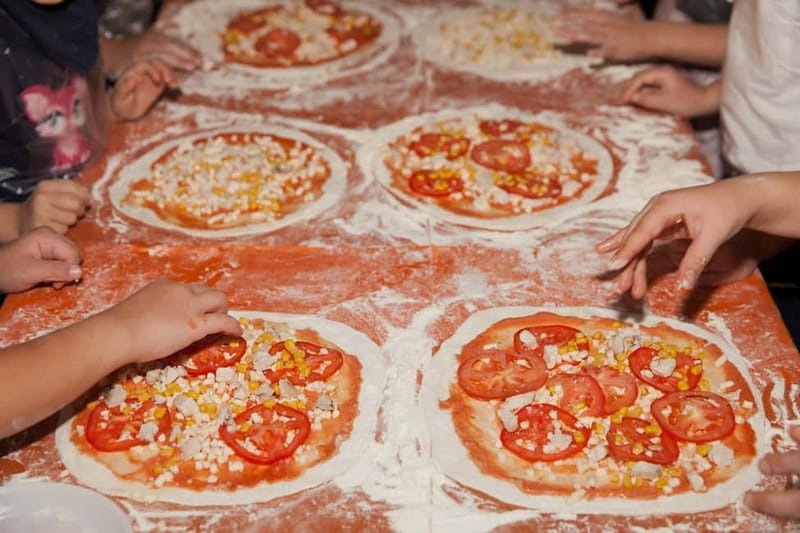
The class does not end with the savory pizza. The remaining dough is used for crispy fried bites filled with the world’s most famous chocolate spread.
This is a playful introduction to the sweeter side of Neapolitan street food. It also gives you a second way to think about the dough. Instead of baking it with tomatoes and cheese, you taste it fried, crisp, warm, and rich.
Some people may find the dessert a little heavy after a full Margherita. One participant would have preferred a smaller dessert such as tiramisu or ice cream. Still, the fried dough is one of the class’s more local-feeling touches, and several families and young participants especially enjoyed it.
You may also encounter savory fried pizza in the pizzeria. A version filled with ricotta, local sausage, and cheese was praised as a memorable extra. The included class focuses on the sweet preparation, so any additional food depends on the option you book or what you order separately.
The meal finishes with limoncello. Along with the wine, beer, or water, it gives the class a distinctly Neapolitan close.
The guides make the language work

The teaching team can include a guide and a pizzaiolo, with the guide translating the chef’s Italian instructions into English. This arrangement works well because the chef can concentrate on demonstrating the technique while the guide keeps the group informed.
Francesca is praised for explaining the history of pizza, the importance of correct quantities, and the role of good ingredients. Lucia is described as warm, patient, and clear, including when accommodating a food intolerance. Sabrina has been noted for strong English and an easy partnership with the chef, while Federica helped keep a group together by asking questions and translating instructions.
The chef may not speak English, so do not expect every conversation to be direct. That is a small trade-off for learning from the person actually making the pizza. The guide fills the gap, and the demonstrations make the method easy to follow.
The atmosphere appears friendly rather than formal. Guides have helped people who arrived late or missed their scheduled class, although you should not count on special arrangements. Arrive at the stated meeting point with enough time to spare.
Small groups and personal work space
The small-group format is one of the best reasons to choose this class over a larger cooking demonstration. Each person has an individual station, so you do not need to share every step with a stranger or stand at the back hoping for a view.
A group of four was considered especially comfortable. Small numbers also make it easier to ask questions, receive help with dough shaping, and watch the chef’s hands closely.
The class can be booked as a private or small-group experience. A private booking may suit couples, families, or friends who want a more personal pace, while the shared option can be a pleasant way to meet people over dinner.
This is a hands-on activity, so expect to touch flour, dough, sauce, and toppings. If you prefer simply eating pizza, book a restaurant table instead. If you want to understand why your pizza behaves the way it does, the work space is a real advantage.
What the $67.19 price gets you
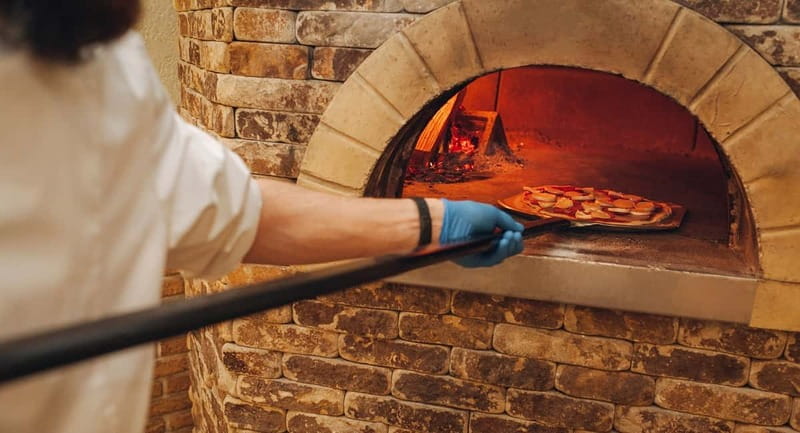
At $67.19 per person, the class is not the cheapest pizza meal in Naples. You can certainly buy a Margherita for far less.
The value comes from the complete package. Your fee covers a two-hour lesson, personal participation, a savory pizza, a sweet preparation, a glass of wine, beer, or water, limoncello, and a digital recipe. You also get instruction from a master pizzaiolo in a pizzeria with a major competition title.
I consider that fair value if you want an activity as well as dinner. The class is particularly useful early in your Naples visit, since it helps you understand the city’s signature food before you spend the rest of your trip sampling it.
The recipe adds value after you return home. Several people felt confident enough to reproduce the dough themselves, even while admitting that a domestic oven would not match a wood-fired pizza oven. The method can still improve your results, especially in dough mixing, portioning, and shaping.
The digital recipe is normally part of the experience. One person had not received it immediately, so keep an eye out for the follow-up message if it does not arrive.
Who will enjoy this class most?
I would recommend this experience to:
- First-time visitors who want a classic Naples food experience
- Couples looking for a relaxed evening activity
- Families with children or teenagers who enjoy making their own food
- Beginners who want clear instruction without a formal culinary-school atmosphere
- Pizza fans interested in dough technique, not only toppings
- People who appreciate small groups and direct help
Teenagers who already eat plenty of pizza may be hard to impress, but this class has won over even enthusiastic young pizza eaters. The chance to shape and bake a personal pizza gives them something to do, and the meal comes immediately afterward.
It also suits visitors with limited cooking experience. The steps are demonstrated clearly, and the guides help you through the process. If you have an intolerance or dietary concern, contact the provider before booking. One class accommodated an intolerance, but the available information does not promise that every request can be handled.
You may want to skip it if you are seeking a quiet, polished tasting menu, a long technical course on fermentation, or a dessert lighter than fried dough and chocolate.
Practical details before you book
The experience is offered in English and Italian. Since the chef may teach in Italian with translation, an English-speaking guide is important if you do not understand Italian.
The meeting point may change depending on the option you select, and the activity ends back at that meeting point. Check the exact location and starting time before planning transport or another reservation.
You can cancel up to 24 hours before the activity for a full refund. The reserve-now, pay-later option also helps if your Naples plans are still shifting.
The class is listed at two hours, but allow a little flexibility around the start and finish if you are arranging a train, museum entry, or another timed activity. The meal is part of the session, so you are not simply collecting a pizza and leaving.
Should you book the Naples pizza class?
Book it if you want to do more than eat pizza. The strongest parts are the personal work station, the small group, the clear demonstrations, and the chance to learn staglio from an experienced pizzaiolo.
The class gives you a Margherita, fried sweet dough, a drink, limoncello, and a recipe for $67.19. That is a good deal for a two-hour food experience, though not for anyone comparing the price with a simple pizzeria meal.
I would choose it for a first or second day in Naples, when you want a friendly introduction to local food and a practical activity. Just remember that a short class cannot provide a full professional fermentation schedule, and the guide may need to translate between you and the chef.
If those limits sound reasonable, this is a warm, useful, and very tasty way to spend two hours in Naples.
FAQ
How long does the pizza-making class last?
The class lasts two hours. Starting times vary, so check availability for the date you want.
How much does the experience cost?
The listed price is $67.19 per person.
Is the class offered in English?
Yes. The activity is offered in English and Italian, with guides available to translate instructions when needed.
Do I make my own pizza?
Yes. Each participant has an individual work station and takes part in preparing, shaping, topping, and baking a Neapolitan pizza.
What ingredients are used for the pizza?
The dough uses water, flour, salt, and yeast. Toppings include San Marzano tomatoes, buffalo mozzarella, basil, and DOP extra virgin olive oil.
What food and drinks are included?
The experience includes your savory pizza, a sweet fried-dough dessert filled with chocolate spread, one glass of wine, water, or beer, plus limoncello.
Is cooking experience required?
No. The class is suitable for beginners, and the chef demonstrates each step.
Are private bookings available?
Yes. The experience can be booked as a private or small-group activity.
Can I cancel for a refund?
You can cancel up to 24 hours in advance for a full refund. Reserve-now, pay-later booking is also available.
Just added around Naples
- From Naples/Salerno: Pompeii, Sorrento, and Positano Tour★ 4.5 · 250 reviews
- Pompeii: Day Tour of Pompeii and Vesuvius with Bus Transfer★ 4.2 · 250 reviews
- Ischia: Island Boat Tour with Neapolitan Lunch & Snorkeling★ 4.9 · 253 reviews
- Explore Naples & Pompeii in One Day – Guided Half-Day Tour★ 4.5 · 253 reviews
- Discover Pompeii: French Walking Tour of the Buried City★ 4.8 · 253 reviews
- Private Transfer from Naples to Sorrento or from Sorrento to Naples★ 5.0 · 254 reviews
- From Pompeii: Mount Vesuvius Guided Tour with Transfer★ 4.8 · 255 reviews
- Private Transfer from Naples to Positano or Amalfi or vice versa★ 5.0 · 265 reviews
Workshops, compared.

3 in 1 Cooking Class near Navona: Fettuccine, Ravioli & Tiramisu
Read our review →
Florence Pizza or Pasta Class with Gelato Making at a Tuscan Farm
Read our review →
Pasta & Tiramisu Cooking Class with Unlimited Wine
Read our review →
Pizza-Making Workshop with Drink and Appetizer
Read our review →
Pasta & Tiramisu Class with Fine Wine by the Vatican
Read our review →
Cooking Class and Lunch at a Tuscan Farmhouse with Local Market Tour from Florence
Read our review →Browse the lists this tour appears in