
Review · SKIP THE LINE
Milan: La Scala Theatre Skip-the-line Guided Tour
Opera gets personal at La Scala. This one-hour tour gives you fast entry and a lively guide who explains the theater through stories about Verdi, Toscanini, Barenboim, and famous singers. I especially like the neoclassical auditorium and the chance to see costumes, set designs, instruments, and the Maria Callas collection in the museum. The main catch is that rehearsals can block the stage, and the tour does not offer a refund for that.
At $44 per person, this is not the cheapest one-hour stop in Milan, but it is a fair price if you want context rather than a quick look around. Guides such as Gianluca, Bea, Lara, Maria, and others have earned praise for their warmth and strong command of opera. The tour is offered in English or French, and headsets are supplied for groups larger than five.
In This Review
- Key points to know before booking
- Why La Scala deserves a place in your Milan plans
- Meeting at Largo Antonio Ghiringhelli, 1
- Entering the theater and seeing the auditorium
- The stories behind Verdi, Toscanini, and Barenboim
- The La Scala Museum and Maria Callas display
- How the one-hour format works
- Crowds, rehearsals, and the working opera house
- Is $44 a fair price?
- Who will enjoy this tour most?
- Practical tips for a better visit
- Should you book the La Scala guided tour?
- FAQ
- Where does the La Scala tour meet?
- How long does the tour last?
- What languages are available?
- Does the tour include skip-the-line entry?
- Will I definitely see the stage?
- Are headsets provided?
- Can I cancel the booking?
Key points to know before booking
- The meeting point is easy to find: Meet at Largo Antonio Ghiringhelli, 1, in front of the La Scala ticket office, where the guide holds a Wander in Italy sign.
- The theater and museum are both part of the visit: You see the famous auditorium, then explore displays of costumes, set designs, instruments, and opera memorabilia.
- The stage may be hidden: Rehearsals can close the stage area, and no refund is given if you cannot view it.
- The guide makes the difference: The best part of the tour is the storytelling, with anecdotes about composers, conductors, singers, and Milan’s opera tradition.
- It is short but focused: The visit lasts one hour, a useful length if you are fitting La Scala between the Duomo and Galleria Vittorio Emanuele II.
- Mobility matters: The experience is not suitable for people with mobility impairments.
Why La Scala deserves a place in your Milan plans
Milan is often treated as a city of fashion, shopping, and the Duomo. That misses one of its most important cultural stories. La Scala is where Milan’s musical identity comes sharply into focus.
The theater opened in 1778 and has been tied to major figures in opera and classical music. A guided visit helps you understand why this building matters beyond its elegant ceiling and crystal chandelier. You hear about the artists who shaped the stage, the conductors who set standards, and the audience traditions that made La Scala famous.
I would not book this tour simply to admire a pretty room. You can do that quickly. I would book it because the guide turns the room into a place with drama, rivalry, ambition, and artistic risk.
You do not need a serious background in opera. One of the tour’s strengths is its accessibility. The guides explain the subject in plain language, invite questions, and use humor to keep the hour moving. If you already know your Verdi from your Puccini, you may want more detailed discussion of individual operas. For most people, though, the balance of history, personalities, and architecture works well.
More Skip-the-Line Tickets in Milan
- Milan Duomo & The Last Supper Skip-the-Line Small Group Tour
★ 4.5 · 2,761 reviews - Historic Milan Tour with Skip-the-Line Last Supper Ticket
★ 4.5 · 1,976 reviews - Milan Super Saver: Skip-the-Line Duomo and Rooftop Guided Tour
★ 4.5 · 1,501 reviews
Meeting at Largo Antonio Ghiringhelli, 1
The tour begins outside the La Scala ticket office at Largo Antonio Ghiringhelli, 1. Look for the guide holding a sign with the tour name and the Wander in Italy logo.
This is a much better arrangement than wandering around Piazza della Scala trying to identify a group. Give yourself enough time to reach the meeting point, especially if you are coming from the Duomo area and have a timed visit afterward.
Your guide handles the entrance and reservation arrangements. That matters at a major opera house, where ticket queues and tour groups can slow down a short visit. The skip-the-line benefit is practical rather than glamorous, but it protects your limited time in central Milan.
The meeting point is also useful for planning the rest of your day. La Scala is close to the Duomo, Galleria Vittorio Emanuele II, and central shopping streets. You can pair the theater with those sights without arranging extra transport or a hotel pickup.
Entering the theater and seeing the auditorium
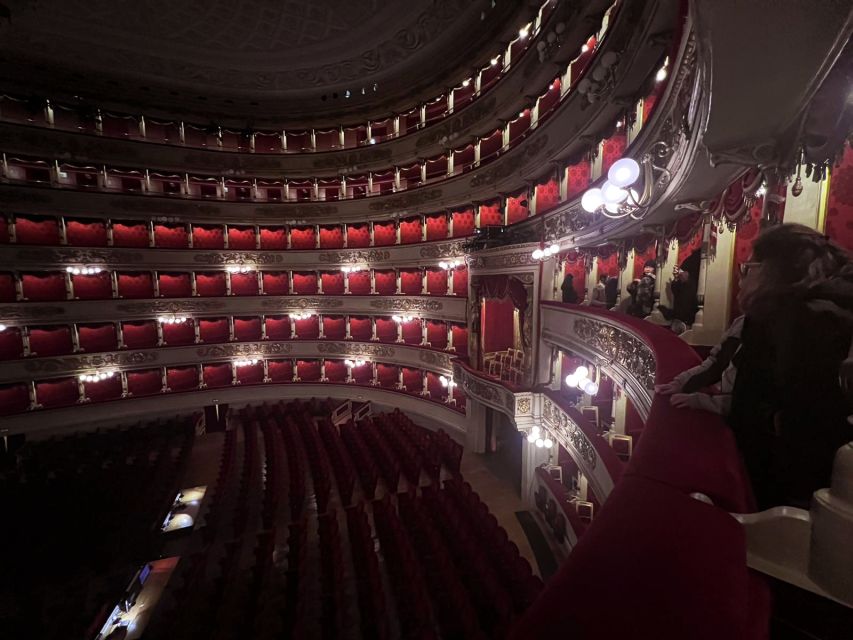
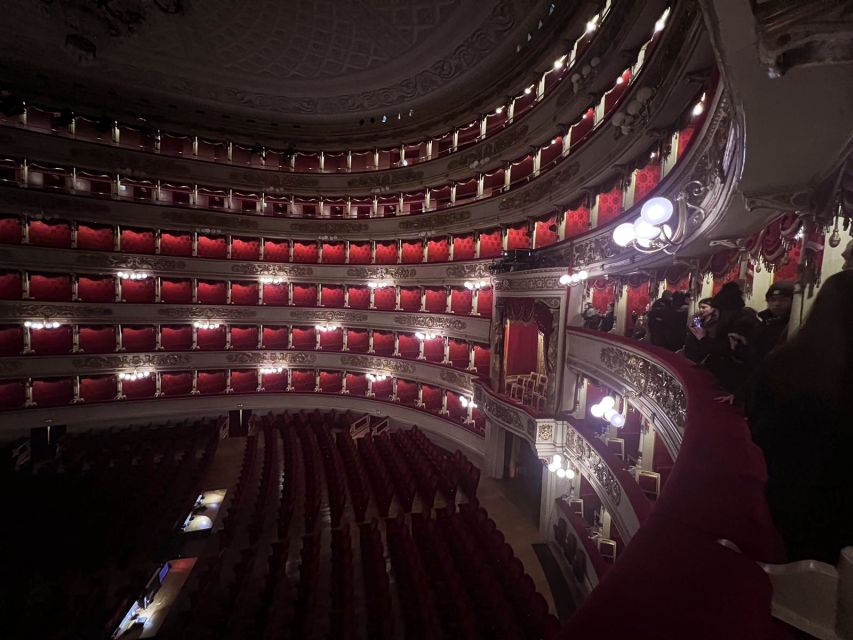
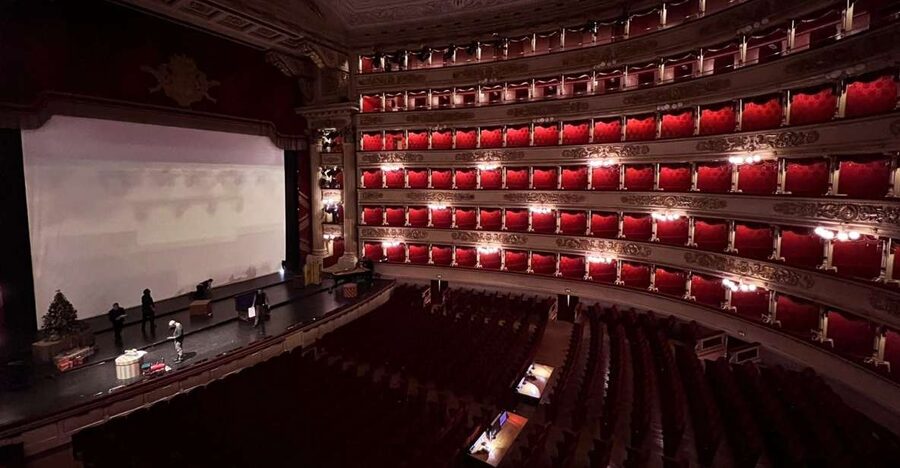
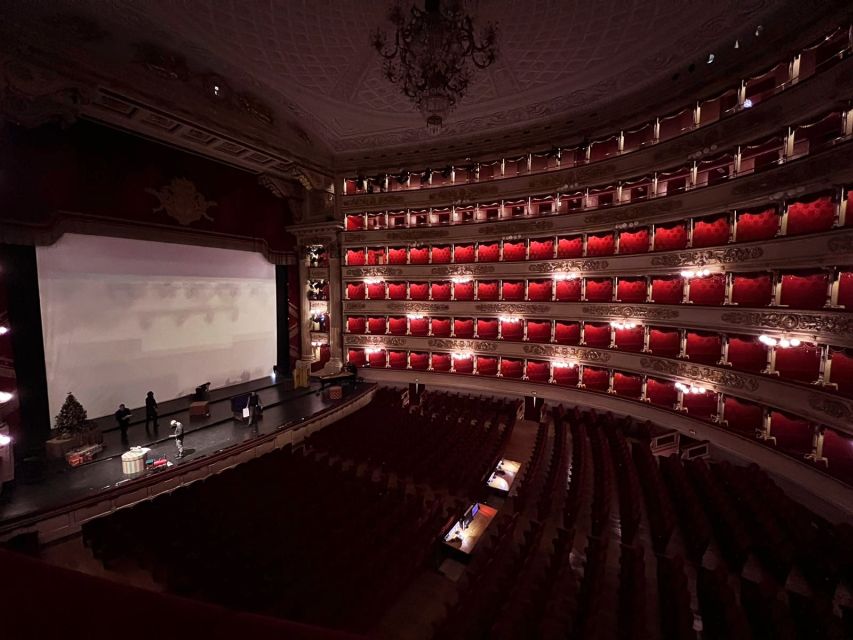
The interior is the emotional center of the visit. La Scala’s neoclassical design gives the theater a formal, carefully ordered look, while the auditorium itself carries the sense of performance and ceremony you came to see.
The crystal chandelier draws the eye immediately. It is an easy detail to overlook if you are moving through on your own, but a guide can point out features and explain how the room functions as a performance space.
The auditorium is also the reason I would choose a guided visit over a quick museum ticket if your schedule allows. You are not just looking at balconies and decoration. You are hearing why this room became linked with some of Europe’s greatest opera careers.
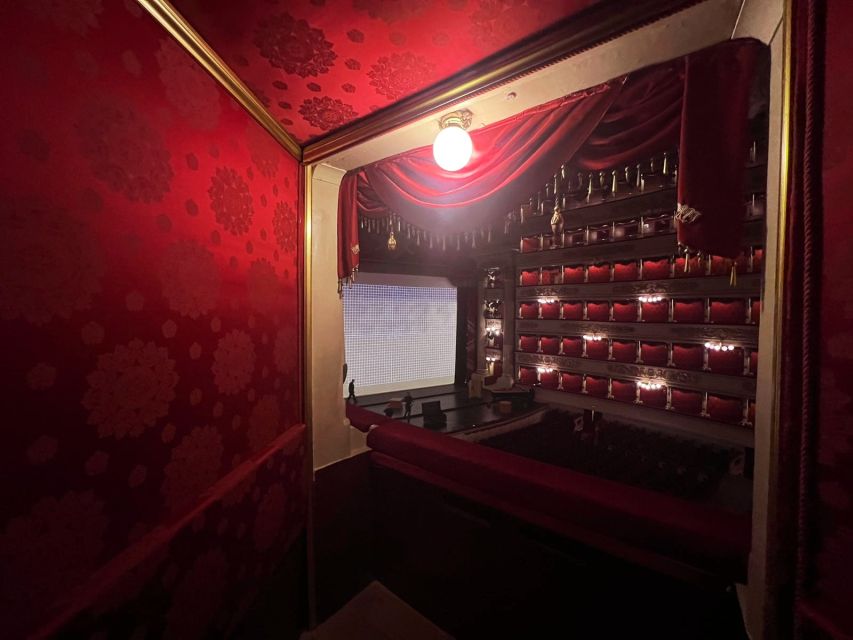
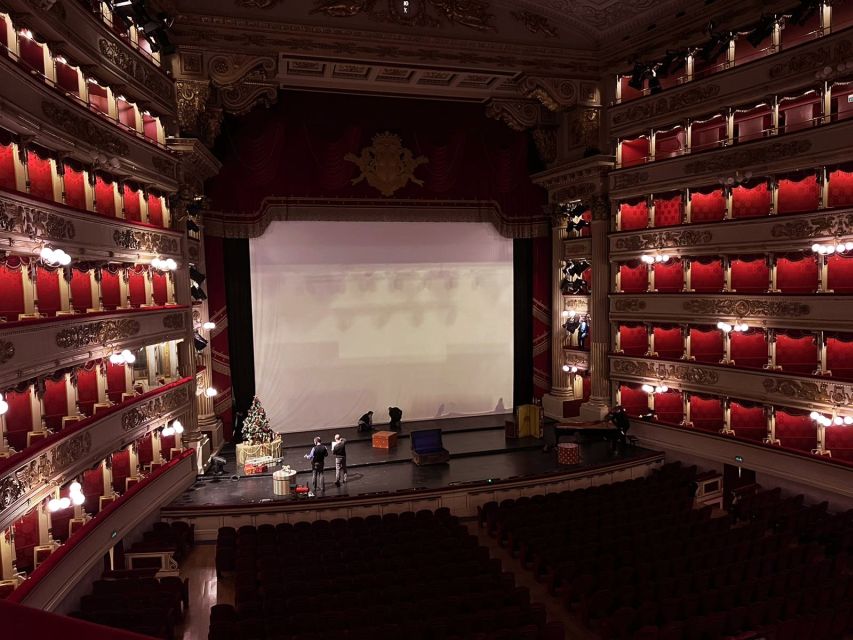
There is one important condition. The stage may not be visible during rehearsals. Staff sometimes close parts of the theater, and the tour operator does not issue refunds if the stage cannot be seen. This is not a flaw unique to this experience. La Scala is an active opera house, not a frozen monument, and working rehearsals take priority.
That uncertainty cuts both ways. You may see only the auditorium, or you may get a glimpse of artists preparing for a performance. One visit even included musicians preparing for what felt like a private concert. Treat that as a lucky bonus, not a promised part of the tour.
The stories behind Verdi, Toscanini, and Barenboim
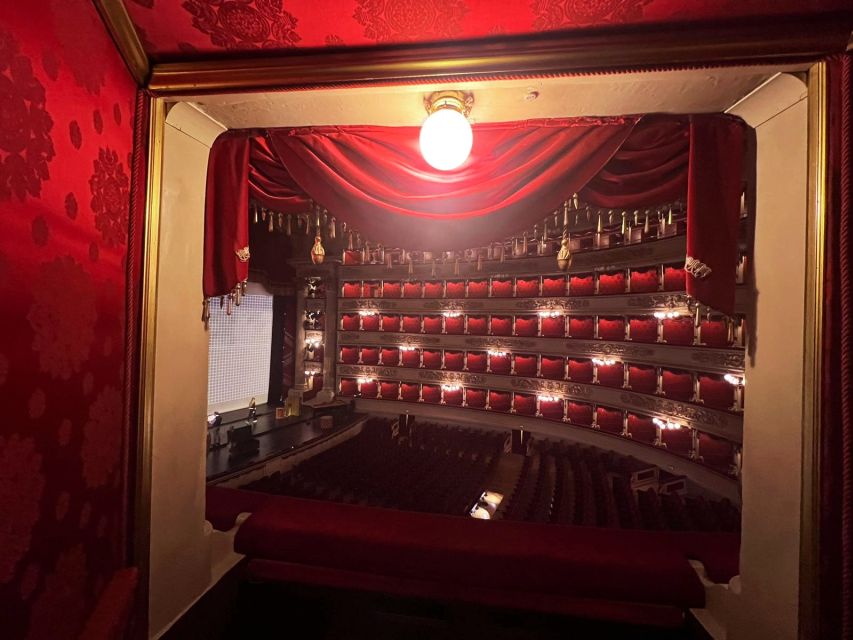
A good guide gives La Scala a human voice. The tour focuses on major names such as Verdi, Toscanini, and Barenboim, along with anecdotes about singers, composers, and the sometimes colorful world around opera.
This storytelling is where the $44 price earns its keep. A self-guided visit can show you objects and architecture, but it cannot easily explain how the theater’s artistic reputation developed. A strong guide adds the links between the people, the music, and the building.
The guides praised most highly are not simply reciting dates. Gianluca was singled out for his passion for Milan, art, music, and La Scala. Lara was praised for mixing facts, humor, and personal enthusiasm. Other guides, including Bea and Maria, were described as precise, friendly, and energetic.
That range of guide styles is worth keeping in mind. Your exact experience will depend on who leads your departure. The consistent strength is the subject matter and the guide’s role in making it approachable.
Some people may want more time on the operas themselves. If you are looking for a detailed study of musical composition or a full account of every famous production, one hour will feel brief. This is an introduction with memorable stories, not an academic seminar.
More fast-track entries:
- Milan: Last Supper Skip-the-Line Entry Ticket & Guided Tour
★ 4.8 · 1,451 reviews - Milan: Guided Walking Tour with Last Supper Skip-the-Line
★ 4.7 · 1,143 reviews - Milan Last Supper and S. Maria delle Grazie Skip the Line Tour
★ 5.0 · 1,031 reviews - Milan: Skip-the-Line Guided Walk and “The Last Supper”
★ 4.5 · 606 reviews
The La Scala Museum and Maria Callas display
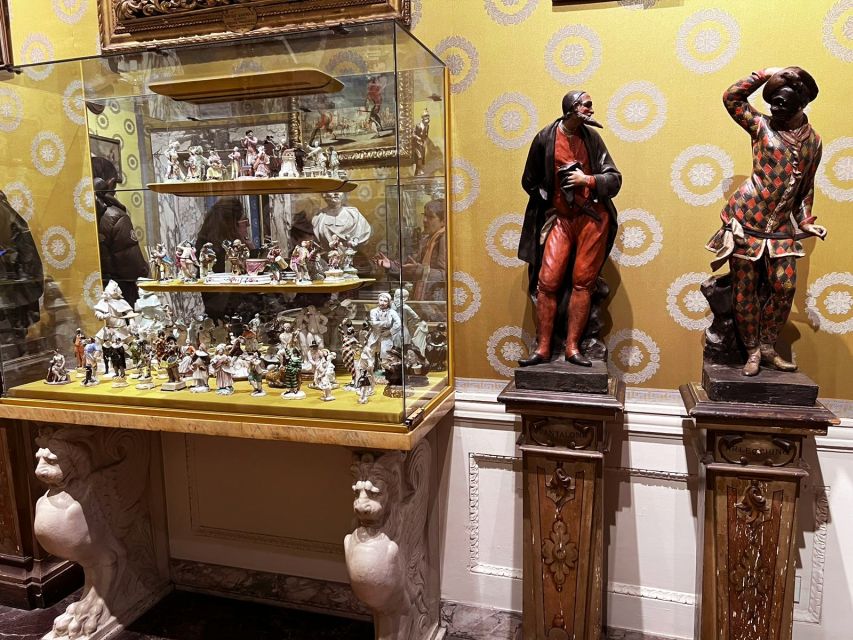
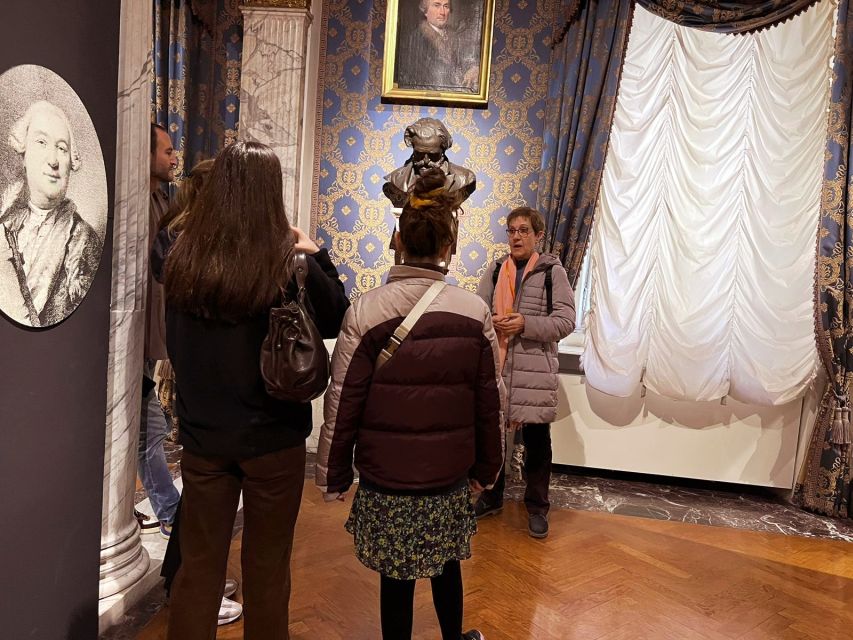
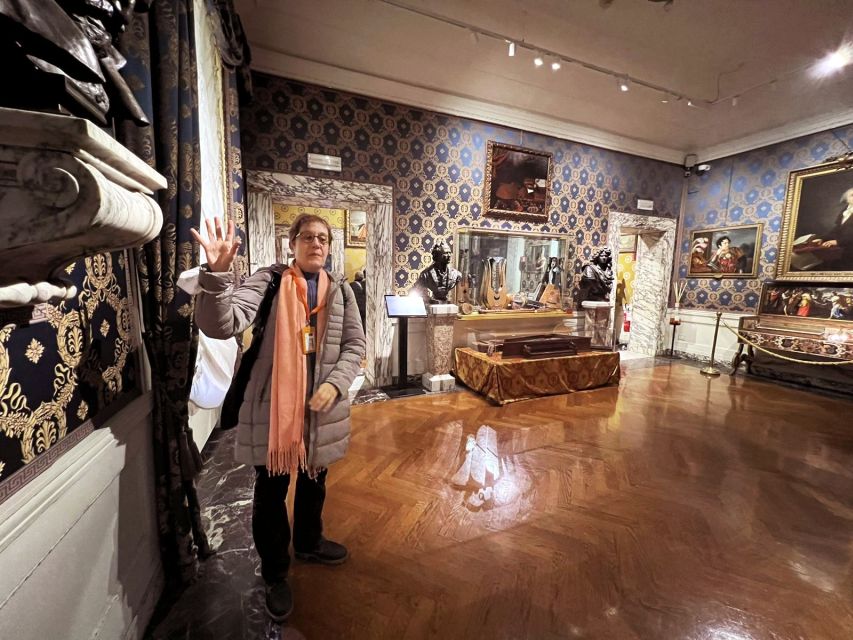
The museum gives the tour more substance than a quick peek into the theater. Its collection includes set designs, costumes, and musical instruments, allowing you to see the work behind an opera production.
A costume can tell you about character and period. A set design shows how artists create an entire world for a performance. Instruments connect the visual displays with the sound that defines the house. These objects make the theater’s work easier to understand, even if you are not already interested in opera.
The museum also includes a Maria Callas display, which adds a strong personal focus to the visit. Callas is one of the names most closely linked with twentieth-century opera, and her connection to La Scala gives the collection added weight.
I like the museum because it prevents the tour from becoming an architecture-only visit. You get the grand room, then the artifacts and personal stories that explain how performances come together.
Still, the museum may not appeal equally to everyone. If opera memorabilia is not your thing, the displays can feel less exciting than the theater itself. One participant enjoyed the building but found the museum section too focused on opera objects. The guide helps by adding context, but you should know where your own interest lies.
How the one-hour format works
The advertised duration is one hour, beginning and ending at the Teatro alla Scala Museum. That makes it easy to fit into a busy Milan itinerary.
I see the short format as a benefit for most people. You get a clear introduction without giving up half a day. The tour has enough time for the museum, the main theater space, and the guide’s explanations, but it does not drag.
The tradeoff is depth. You will not cover every room, every composer, or every piece in the collection. If you are passionate about opera, you may leave wanting more. That is a good reason to attend a performance later, if your schedule and budget permit, but the guided visit itself remains useful even without a ticket to a show.
Groups can vary. Smaller departures can feel almost private, and one group of four found the experience especially personal. Larger groups receive headsets when more than five people are present, which helps you hear the guide in a busy building.
The headset detail matters. La Scala can be crowded, and staff may be moving equipment during working hours. Without audio support, a soft-spoken guide could be difficult to follow. With headsets, you can pay attention to the building instead of standing shoulder to shoulder just to catch each sentence.
Crowds, rehearsals, and the working opera house
La Scala is a functioning theater, so you should expect a little uncertainty. Rehearsals may close the stage, staff may move equipment, and several tour groups may be in the building at once.
One visit was described as busy and somewhat chaotic, with people moving around and work taking place nearby. That is a fair warning. If you want a perfectly quiet museum experience, this may not be it.
At the same time, the activity can make the visit feel more real. You are seeing a workplace that still stages performances, not just a decorative historic shell. If you happen to glimpse artists preparing, the ordinary restrictions suddenly seem worthwhile.
The operator may contact you before the tour if a rehearsal affects the planned time. A small schedule adjustment helped one group see more of the theater and avoid a closure. Keep some flexibility if you can. A slight change may protect the best part of the visit.
Rain will not cancel the tour. It takes place in all weather, but almost all of the experience is indoors once you enter La Scala. Weapons and sharp objects are not allowed.
Is $44 a fair price?
At $44, this is a midrange cultural activity for a one-hour visit. You are paying for entrance, reservation fees, and a professional live guide, not just access to the building.
The value depends on your travel style. If you are happy reading labels and walking through at your own pace, a guided tour may feel expensive. If you want the theater’s stories, quick entry, and a chance to ask questions, the price is easier to justify.
I consider it good value for a first visit to La Scala, particularly if you have limited time in Milan. The guide adds information you would probably miss on your own, and the skip-the-line arrangement reduces wasted time.
The price does not guarantee a view of the stage, and that is the key limitation. You should book because you want the theater, museum, and interpretation as a whole, not because you expect a stage visit under every condition.
The reserve-now-and-pay-later option also gives you some flexibility. You can hold a place without paying immediately, and cancellation is available up to 24 hours before the tour for a full refund. Those terms help if your Milan schedule is still taking shape.
Who will enjoy this tour most?
I would recommend it to first-time visitors who want a clear introduction to Milan’s opera tradition. It also suits anyone who appreciates architecture but wants more than a silent walk through a grand interior.
The tour works well for:
- People with one hour between major Milan sights
- First-time La Scala visitors
- Anyone curious about Verdi, Toscanini, Barenboim, or Maria Callas
- Visitors who prefer spoken explanation to reading museum labels
- Small groups seeking a focused cultural activity
- People who want English or French guiding
You do not need to be an opera expert. The guides explain the subject in a welcoming way, and several departures have been praised for humor and clear answers to questions.
I would think twice if you have mobility impairments, since the activity is not listed as suitable for you. I would also reconsider if your only goal is to see the stage. Rehearsals can prevent that, with no refund for the change.
Practical tips for a better visit
Arrive at the ticket office meeting point with enough time to identify the guide and settle in. The sign and provider logo make the group easier to spot.
Keep your plans flexible around the tour. If the theater announces a rehearsal, a time adjustment may be offered. That can be helpful rather than inconvenient, especially if it improves your chance of seeing the main auditorium or stage area.
Bring your curiosity, not prior opera knowledge. I would prepare by learning the names of one or two figures connected with La Scala, but you do not need to study a long reading list.
Listen closely in the museum. The costumes, instruments, and set designs may look like static objects at first, yet the guide’s explanations give them purpose.
If you are in a larger group, use the headset and stay aware of the guide’s position. The building may be active and crowded, and it is easy to lose the thread while looking up at the chandelier or balconies.
Should you book the La Scala guided tour?
Book it if you want a short, well-organized introduction to one of Milan’s defining cultural institutions. The strongest reasons are the fast entry, the beautiful auditorium, the museum collection, and guides who bring the subject alive with humor and opera stories.
Skip it if you dislike guided visits, want a long technical study of opera, or need a guaranteed view of the stage. The rehearsal policy is the one real uncertainty, and the museum may feel too specialized if your interest is only architecture.
For most first-time visitors, I think the tour is worth the $44. It gives you the grand room, the objects behind the performances, and enough background to understand why La Scala matters. Just arrive ready for a working theater, not a perfectly controlled museum.
FAQ
Where does the La Scala tour meet?
Meet at Largo Antonio Ghiringhelli, 1, in front of the La Scala ticket office. The guide holds a sign with the tour name and the Wander in Italy logo.
How long does the tour last?
The guided visit lasts one hour and begins and ends at the Teatro alla Scala Museum.
What languages are available?
The live tour guide is available in English or French.
Does the tour include skip-the-line entry?
Yes. Entrance and reservation fees are included, and the activity provides skip-the-ticket-line access.
Will I definitely see the stage?
No. The stage may be closed during rehearsals. If the stage cannot be viewed, no refund is issued for that reason.
Are headsets provided?
Headsets are provided when the group has more than five people.
Can I cancel the booking?
You can cancel up to 24 hours in advance for a full refund. The reserve-now-and-pay-later option lets you hold your place without paying immediately.
Just added around Milan
- Milan Sights by Segway Small Group Tour★ 5.0 · 249 reviews
- Unveil the Masterpiece: Guided Tour of Da Vinci’s Last Supper★ 4.5 · 251 reviews
- Milan: Pasta & Tiramisu Cooking Class with Premium Products★ 5.0 · 255 reviews
- Milan Semi-Private Max 6 People Tour with Last Supper and Duomo★ 5.0 · 258 reviews
- Skip The Line: Best Of Milan Tour With Last Supper & Milan Duomo★ 4.5 · 260 reviews
- Milan: Duomo & Rooftop Tour with Optional Hop-On Hop-Off Bus★ 4.5 · 262 reviews
- Stresa: 1-Day 3 Borromean Islands Hop-On Hop-Off Boat Tour★ 4.0 · 262 reviews
- Milan Centre Food Tour of 7+ Italian Tastings with Risotto & Wine★ 5.0 · 264 reviews
Skip the Line, compared.

Skip-The-Line Uffizi Gallery Timed Entry Ticket
Read our review →
Vatican Museums & Sistine Chapel Skip-the-Line Entry Ticket
Read our review →
Skip-the-Line Group Tour of the Vatican, Sistine Chapel & St. Peter’s Basilica
Read our review →
Michelangelo’s David Skip-the-Line Entry Ticket
Read our review →
Vatican Museums & Sistine Chapel Skip-The-Line Ticket
Read our review →
Vatican, Sistine Chapel & St. Peter’s Skip-the-Line Tour
Read our review →
Skip-the-Line Vatican, Sistine Chapel & St. Peter’s | Small Group
Read our review →
Vatican: Vatican Museums Sistine Chapel Skip-the-Line Ticket
Read our review →Browse the lists this tour appears in