

Review · MUSEUMS
Guided tour of the Trapani Salt Pans and Salt Museum
Salt has a surprisingly good story. At the Culcasi salt pans near Trapani, you walk beside working evaporation pools, touch newly formed salt, taste flavored fleur de sel, and visit an old mill and museum run by a family with four generations in the trade. I especially like the hands-on salt gathering and the chance to connect a familiar kitchen staple with sea, sun, clay, and patient labor. The main caution is simple: the outdoor route takes about an hour on foot, and that fitness requirement may not be clear enough when you first book.
This is a small, focused experience rather than a grand sightseeing circuit. You get a guided walk through the Saline Culcasi of Nubia, part of a protected WWF area, followed by the ancient salt museum. The $21 price is fair for the guided access, tasting, and museum visit, though you should come prepared for sun, open ground, and comfortable walking shoes.
In This Review
- Key details to know before you go
- Why Trapani’s salt pans are worth your time
- The walk from the windmill to the salt tanks
- Touching the salt makes the process real
- Inside the salt museum and 1400s mill
- Is $21 a good value?
- Practical comfort and accessibility
- Who will enjoy the Culcasi salt pans most?
- Languages, timing, and what to expect from the guide
- My verdict: book it if you want salt with your scenery
- FAQ
- Where does the tour begin?
- How long does the experience last?
- What languages are available?
- Is the salt tasting included?
- Can I touch the salt during the tour?
- What does the outdoor route include?
- Is the salt museum included?
- What historic building does the museum include?
- Is the tour wheelchair accessible?
- What should I bring?
- Can I cancel for a refund?
- Do I have to pay when I reserve?
Key details to know before you go

- You can pick up salt with your hands: The tour lets you touch and collect salt as it forms in the production tanks.
- Four generations work the pans: The Culcasi family has kept this trade alive, giving the visit a personal connection beyond the scenery.
- The tasting is part of the ticket: You sample whole salt and flavored fleur de sel, including varieties linked to the Slow Food Presidium.
- The walk has changing colors: White salt, blue sea, gray clay, and pink-toned pools give the route its visual character.
- The museum sits in a 1400s mill: The ancient farmhouse and mill show how salt production shaped work and family life.
- The total visit lasts 75 minutes: Plan for roughly an hour outside, followed by the museum portion.
Why Trapani’s salt pans are worth your time
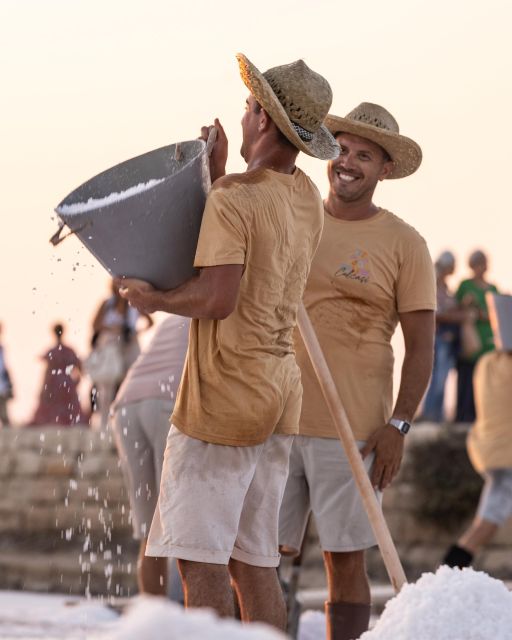
Trapani’s salt pans make sense only when you see the process up close. Seawater enters shallow tanks and loses water under the sun. As the water changes, salt begins to form, and workers move it through the stages until it becomes the crystals you know from your kitchen.
That process is slow, physical, and easy to miss when salt arrives in a neat packet. Here, the salt is not just a product on a shop shelf. You see it growing in the tanks, notice how the water reflects the sky, and learn why the banks and shallow pools matter.
I like the way this tour links nature and work without turning either into a museum display. The pools are part of a protected WWF reserve, so the route also gives you a look at plants and birds connected to this coastal setting. The focus remains on salt, but the surroundings add a welcome sense of place.
The best part for me is the direct contact. You are allowed to collect salt from the tanks with your hands. That small act makes the process memorable, especially for children and anyone who enjoys learning by doing rather than simply listening.
More galleries and collections:
- Vatican: Museums & Sistine Chapel Entrance Ticket
★ 4.5 · 144,003 reviews - Vatican Museums & Sistine Chapel Tour with Optional Basilica
★ 4.3 · 67,413 reviews - Vatican Museums, Sistine Chapel & St Peter’s Basilica Guided Tour
★ 4.5 · 39,149 reviews
The walk from the windmill to the salt tanks
Start at Via Salina Chiusa, 1, at the ticket office in the forecourt below the windmill. Find the guide behind the salt sales counter. This detail matters because the salt pans include working areas and sales facilities, so do not wander off looking for a separate museum entrance.
The first part follows the perimeter of the salt pan. Expect a relaxed pace, but do not mistake relaxed for effortless. The outdoor section lasts about an hour, and the route requires a basic level of fitness. Comfortable shoes, a hat, and light, comfortable clothing are sensible choices.
The color changes are one of the pleasures of the walk. You may see broad white stretches where salt has gathered, blue water reflecting the sky, gray clay along the banks, and pink shades in some pools. These colors are not painted scenery. They come from the salt, minerals, water, and conditions inside the pans.
The water mirrors the sky in places, giving the route a calm, open feel. At other points, the clay and salt banks remind you that this is a working site, not simply a photo stop. The guide explains how seawater changes as it moves through the tanks and how the finished salt forms.
You also get a closer look at the protected setting. Plants and birds are part of the reserve, and the guide places the salt work within that natural environment. If you want a full bird-watching outing, this is not described as one. Still, the wildlife adds another reason to keep your eyes away from the salt for a moment.
Touching the salt makes the process real
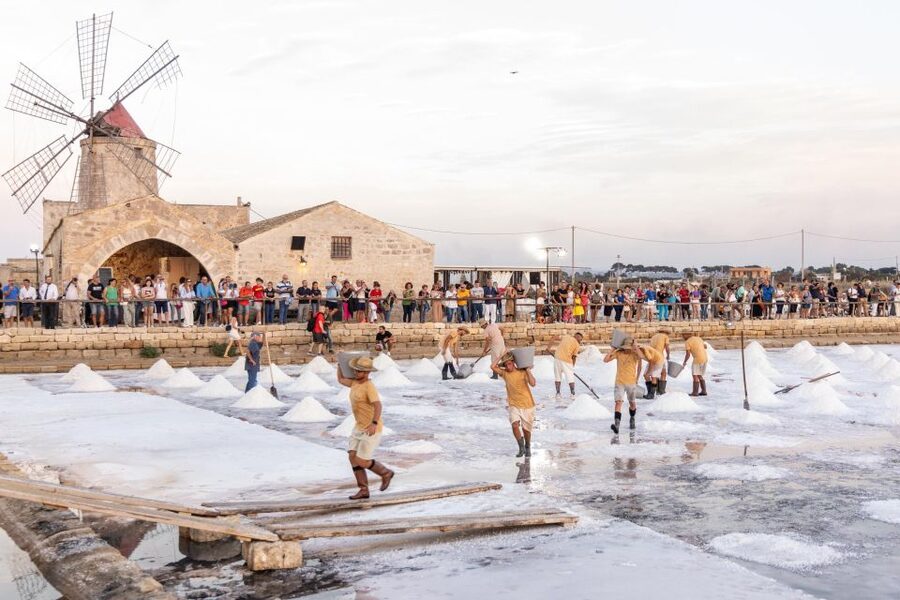
Many food tours end with a taste. This one gives you something to do first. You can touch the salt inside the production tanks and collect some as it forms. That simple moment gives the tour a practical edge and helps you understand the difference between seeing a salt pan and watching salt production.
The tour also includes a tasting of whole salt and fleur de sel in different flavors. Fleur de sel is the delicate salt that forms at the surface of the water, and the flavored versions are produced by the Culcasi operation. The tasting is connected to the Slow Food Presidium, which gives this local product added importance.
I like this part because it turns a technical explanation into something you can judge for yourself. You can compare the varieties rather than hearing only a description. The tasting also gives you a useful reason to visit the sales counter after the tour, especially if you want a small food souvenir from Sicily.
Keep your expectations grounded. This is a salt tasting, not a full meal or a cooking class. The included tasting adds value to the $21 ticket, but the main purpose is still the guided walk and museum visit.
Inside the salt museum and 1400s mill

The second part moves indoors to the salt museum, located inside an ancient farmhouse. The site includes an old mill from the 1400s, which gives the visit a strong connection to earlier salt production.
The museum explains the work behind the salt rather than presenting only finished products. You retrace the labor involved in the pans and learn about the Culcasi family, who have worked as salt producers for four generations. That family story is one of the most personal features of the experience.
The mill also helps you picture the older tools and methods connected with salt work. The museum is included in the official guide of the European Union, according to the tour information, so it is more than a sales room attached to a scenic walk. It is presented as a recognized cultural stop.
I find the shift from open pools to an old farmhouse useful. Outside, you see the natural forces at work: sea, sun, water, and evaporation. Inside, you get the human side: family labor, machinery, tradition, and the long relationship between salt and the sea.
The museum portion may appeal most to you if you enjoy local industry and working history. If you are mainly visiting for views and photographs, the outdoor section will likely be your favorite. The complete tour works because the two parts support each other.
A few more reviews worth comparing before you book
- From Trapani: Cruise to Favignana and Levanzo with lunch
★ 4.2 · 2,286 reviews - Agrigento: Valley of the Temples Skip-the-Line Sunset Tour
★ 4.5 · 1,512 reviews - From Trapani: Day Cruise to Favignana & Levanzo with Lunch
★ 4.3 · 1,483 reviews - Stromboli: Sunset Trekking at Sciara del Fuoco
★ 4.6 · 1,372 reviews
Is $21 a good value?
At $21 per person, the price is reasonable for a 75-minute guided experience. Your ticket includes admission to the Culcasi salt pan, a live guide in English or Italian, the salt museum, and a tasting of whole salt and flavored fleur de sel.
The value is strongest if you want context. You could look at the salt pans from outside, but you would miss the explanation of the production stages, the chance to touch the salt, and the family story inside the museum. The tasting also gives you something concrete to take away, even if you buy nothing afterward.
The price is less compelling if you want a long nature walk or a full day of activities. This is a short visit with a clear subject. You are paying for access, interpretation, and a hands-on look at salt making, not for several hours of entertainment.
At the end, you can add an aperitif with a broad view or have dinner at the restaurant. Those extras are not included in the stated tour price, so treat them as optional additions. They could turn the visit into a longer stop, but the core experience does not depend on them.
Practical comfort and accessibility

Bring a hat. The route is outdoors around open salt pans, and the information specifically recommends comfortable clothing and shoes. Sun protection is a practical concern even when the walk itself feels easy.
The tour is listed as wheelchair accessible, but the same information says the first part is a one-hour hike and requires basic fitness. Those details deserve a careful look if you use a wheelchair or have limited stamina. Ask the provider in advance about the exact surface and route conditions before booking.
A previous booking problem came from the walking requirement becoming clear too late. If you are recovering from illness, have breathing or mobility limits, or simply dislike walking in open sun, check this point before you pay. Free cancellation is available up to 24 hours before the start time, but it is better to choose the right activity from the beginning.
You can reserve now and pay later, which helps if your Sicily plans are still shifting. Starting times vary, so check availability for your date. The duration is fixed at 75 minutes, but the available start time is not.
Who will enjoy the Culcasi salt pans most?
I would recommend this tour to you if you like local food, traditional work, and places where nature still controls the schedule. It suits families because children can touch the salt and see a real production process. The short length also fits well between other stops in the Trapani area.
It is a good choice for anyone curious about Slow Food products. The flavored fleur de sel tasting gives you a direct introduction to a local specialty, while the museum explains how that product connects to generations of work.
You should also consider it if you want something different from churches, ruins, and city streets. The salt pans offer a quieter change of pace, with wide views, water, clay, birds, and working pools.
This may not be the right pick if you want a major historical monument, a long guided hike, or a tour with many unrelated sights. The subject is narrow by design. You spend the full visit learning about salt, and that focus is either the attraction or the limitation.
Languages, timing, and what to expect from the guide

Live guiding is available in English and Italian. Since the walk follows the salt production process, the guide’s explanations are important. You are not simply handed a map and sent around the pans.
The guide meets you at the sales counter below the windmill, then leads the route around the salt pan before taking you into the museum. The order gives the visit a sensible rhythm: first see the salt in its natural setting, then learn how the family and older equipment fit into the story.
Allow the full 75 minutes rather than planning a tight connection with another activity. The walk may be relaxed, but the outdoor portion takes time, and the museum is a separate part of the visit. If you plan to stay for an aperitif or dinner, leave extra time beyond the tour itself.
The experience has earned a 4.7 rating from 423 reviews, with especially strong praise for the information about salt, the harvest, and the tasting of different salts and spice salts. That matches the tour’s strongest features: clear subject matter, physical access to the process, and a local product you can taste.
My verdict: book it if you want salt with your scenery
Book this tour if you want a short, unusual stop that combines coastal nature, family tradition, food tasting, and hands-on learning. I especially like that the visit does not stop at pretty pools. You get to touch the salt, follow its production, taste several forms, and enter a historic mill.
The main decision comes down to walking. You need to manage roughly one hour on foot, and you should not wait until after booking to discover that this is more than a quick stroll. Wear a hat and solid comfortable shoes, and ask about route conditions if accessibility is important to you.
For $21, the Culcasi salt pans offer good value when you appreciate local craft and food. If that sounds like your kind of Sicily, this is an easy stop to add near Trapani. If you are looking only for a fast viewpoint, skip the tour and save your time for another sight.
FAQ
Where does the tour begin?
The meeting point is the ticket office at Via Salina Chiusa, 1, in the forecourt below the windmill. Find the guide behind the salt sales counter.
How long does the experience last?
The guided tour lasts 75 minutes. About one hour is spent walking around the salt pans, followed by the museum portion.
What languages are available?
Live guiding is available in English and Italian.
Is the salt tasting included?
Yes. The ticket includes a tasting of whole salt and fleur de sel in different aromas produced by the Culcasi operation.
Can I touch the salt during the tour?
Yes. You can touch the salt inside the production tanks and collect some as it forms.
What does the outdoor route include?
The walk follows the perimeter of the salt pan and reaches the banks of the pools. You can see white salt, blue water, gray clay, and pink tones in some pools, along with protected plants and birds.
Is the salt museum included?
Yes. Admission to the ancient salt museum is included in the tour ticket.
What historic building does the museum include?
The museum is inside an ancient farmhouse and includes an old mill dating from the 1400s.
Is the tour wheelchair accessible?
The activity is listed as wheelchair accessible. At the same time, the outdoor section is described as a one-hour hike requiring basic fitness, so confirm the route details in advance if you have mobility concerns.
What should I bring?
Bring comfortable shoes, a hat, and comfortable clothing. The information also recommends a basic level of fitness for the outdoor walk.
Can I cancel for a refund?
You can cancel up to 24 hours before the activity for a full refund.
Do I have to pay when I reserve?
No. A reserve-now, pay-later option is available, allowing you to book without paying immediately.
Just added around Sicily
- Trapani: Salt Pans Sunset Tour and Flamingo Way★ 4.4 · 252 reviews
- Agrigento: Valley of the Temples Entry Ticket & Audio Guide★ 4.1 · 268 reviews
- Classic Boat Tour in Palermo★ 5.0 · 268 reviews
- Stromboli: sunset trekking to Sciara del Fuoco – Ashàra★ 4.5 · 270 reviews
- Mini Cruise to Favignana and Levanzo with lunch on board★ 4.0 · 270 reviews
- Etna, Summit Craters★ 5.0 · 272 reviews
- Etna – Trekking to the summit craters (only guide service) experienced hikers★ 5.0 · 286 reviews
- Trapani: 2-Hour Salt Flats Tour★ 4.9 · 286 reviews
Museums, compared.

Vatican: Museums & Sistine Chapel Entrance Ticket
Read our review →
Vatican Museums & Sistine Chapel Tour with Optional Basilica
Read our review →
Vatican Museums, Sistine Chapel & St Peter’s Basilica Guided Tour
Read our review →
Skip-The-Line Uffizi Gallery Timed Entry Ticket
Read our review →
Vatican Museums, Sistine Chapel & Basilica Tour
Read our review →
Vatican Museums & Sistine Chapel Skip-the-Line Entry Ticket
Read our review →Vatican Museums, Sistine Chapel & Basilica Tour
Read our review →
Vatican Museums & Sistine Chapel Guided Tour
Read our review →Browse the lists this tour appears in