
Review · CATANIA TOURS
Benedictine Monastery of Catania – English Guided Tour
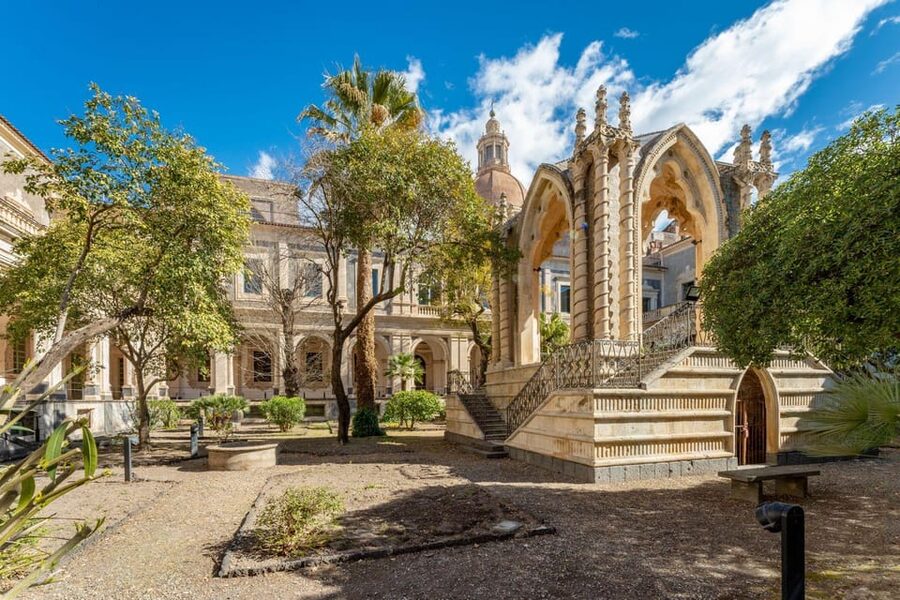
History is hiding under the floor. The Benedictine Monastery of Catania packs Roman remains, grand late-Baroque rooms, quiet cloisters, and a university library into one 75-minute tour. I especially like the access to areas normally closed to the public and the way guides connect the building to Catania’s wider story. At $11, it offers unusually good value. One consideration: access to the viewing platform may depend on your departure time, so ask before booking if that view matters to you.
I also like that this is not a tour of a frozen religious monument. Students now use parts of the complex, including the former cellar library, so you see old stone and modern university life sharing the same building. Guides such as Carmen, Giovanni, Nicola, and others have earned praise for clear English, humor, and thoughtful answers. The only possible drawback is that the monastery is large and maze-like, so you will get far more from it with a guide than by wandering alone.
In This Review
- Key details of the monastery tour
- Why this monastery matters in Catania
- Finding the entrance at Piazza Dante
- The cloisters and the scale of monastic life
- The Roman house beneath the university library
- The lava-built cellar and university library
- Kitchens, dining rooms, and the novices’ garden
- Vaccarini’s Baroque design and the monumental staircase
- Restoration from old monastery to modern university
- What the English guiding is really like
- Timing, access, and the $11 price
- Who will enjoy this tour most
- Should you book the Benedictine Monastery tour?
- FAQ
- How long does the Benedictine Monastery tour last?
- What is the price of the tour?
- Where does the tour begin?
- Is the tour conducted in English?
- What areas are included in the visit?
- Is the monastery wheelchair accessible?
- Can I cancel or pay later?
Key details of the monastery tour
- Two thousand years beneath one roof: Roman houses, medieval religious history, Baroque rebuilding, and a modern university all appear during the visit.
- Rare access inside: The tour includes areas not normally open to independent visitors, including working parts of the former monastic complex.
- A cellar built over lava: The 16th-century cellar now houses the Humanities Department library, with volcanic stone and student study areas side by side.
- An unusually strong English guide: Carmen, Giovanni, and Nicola are among the guides praised for clear delivery, humor, and lively storytelling.
- A useful 75-minute stop: The tour is long enough to explain the place properly but short enough to fit into a busy day in Catania.
- Good value at $11: The price includes admission, a live English guide, and baggage storage at the meeting point.
Why this monastery matters in Catania
The Benedictine Monastery of San Nicolò l’Arena is not simply a church with a few decorated rooms. It is a huge monastic complex that changed with Catania over many centuries.
Your route moves from Roman remains to the age of the Benedictine monks, then to the grand rebuilding that produced the late-Baroque interiors. The building later became part of the University of Catania, and that change is central to what makes the visit so interesting. You are not only looking at the past. You are seeing how an old institution found a new life.
The monastery also gives you a useful lesson in Catania itself. The city has been rebuilt, altered, and adapted over time, and the monastery carries those layers in a very visible way. The guide places the rooms, architectural changes, and archaeological remains into that wider story.
I find this especially helpful if you are new to Sicily. A good guide can explain not only who lived here, but how Catania developed around the monastery and how local people relate to the city today. One guide even used the image of Mount Etna as a stern but loving mother, a memorable way to explain how strongly the volcano shapes local identity.
A few more reviews worth comparing before you book
- Catania: Mount Etna Morning or Sunset Day Trip with Tasting
★ 4.8 · 4,028 reviews - Mount Etna: Guided Volcano Summit Hiking Tour with Cable Car
★ 4.7 · 3,784 reviews - Catania: Sunset Jeep Tour of Mount Etna and Lava Flow Caves
★ 4.8 · 2,113 reviews
Finding the entrance at Piazza Dante
The meeting point is inside the main gate on Piazza Dante. Once you pass through, look for the information point in the courtyard on the right.
This is worth knowing because the monastery entrance can feel less obvious than a standard museum doorway. You do not need to search around the surrounding streets after arriving at Piazza Dante. Go through the gate, then head directly to the courtyard information point.
Baggage storage is included at the meeting point. That is useful if you are carrying luggage or want to visit between other plans, though the available storage area may have practical limits. The tour also includes skip-the-line access, which saves a little time at a busy period.
The experience is wheelchair accessible. The tour is conducted in English, and written translations in French or Spanish can be provided if English is not your first language.
The cloisters and the scale of monastic life
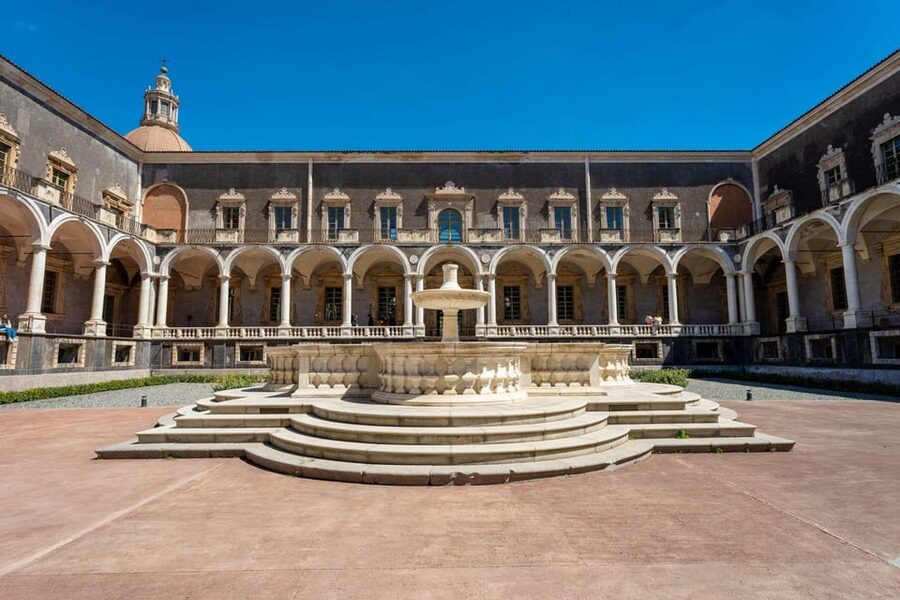
The first major impression is scale. This was built for a large Benedictine community, not for a handful of isolated monks, and the courtyards and corridors help you understand the wealth and reach of the order.
The two cloisters give the tour breathing room. Their open spaces contrast with the long interior passages, and they make it easier to grasp the monastery’s layout. Your guide explains how these areas served daily religious and communal life, rather than treating them as pretty architectural backdrops.
I like this section because the cloisters provide a clear starting point. Before you enter the more complicated parts of the building, you can see how the complex was organized around shared spaces. From there, the route becomes a walk through rooms with different functions and different periods.
The monastery’s size also makes the wealth of the Benedictine order visible. You do not need a long lecture about power and money when the building itself provides the evidence: monumental spaces, decorated interiors, broad stairways, and a complex designed to support a substantial community.
The Roman house beneath the university library
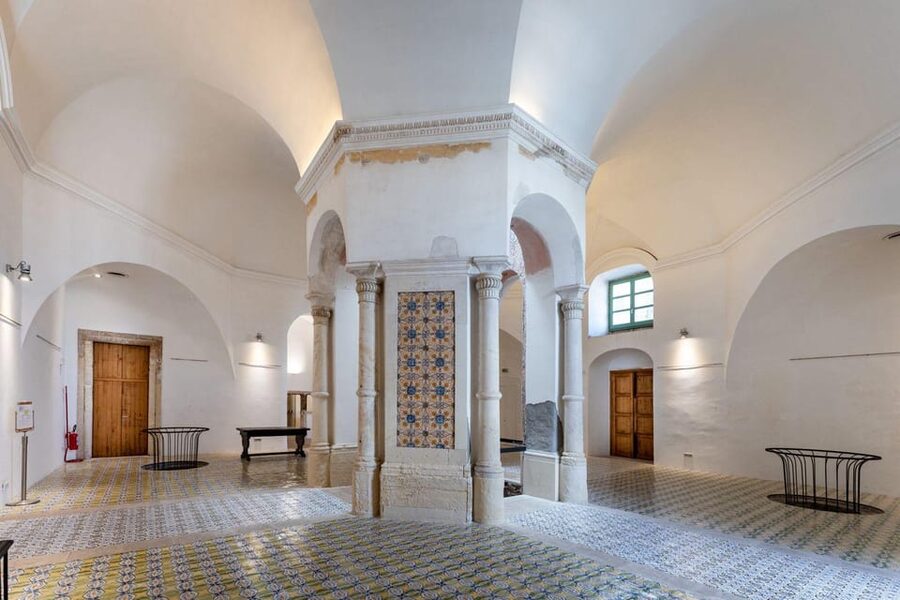
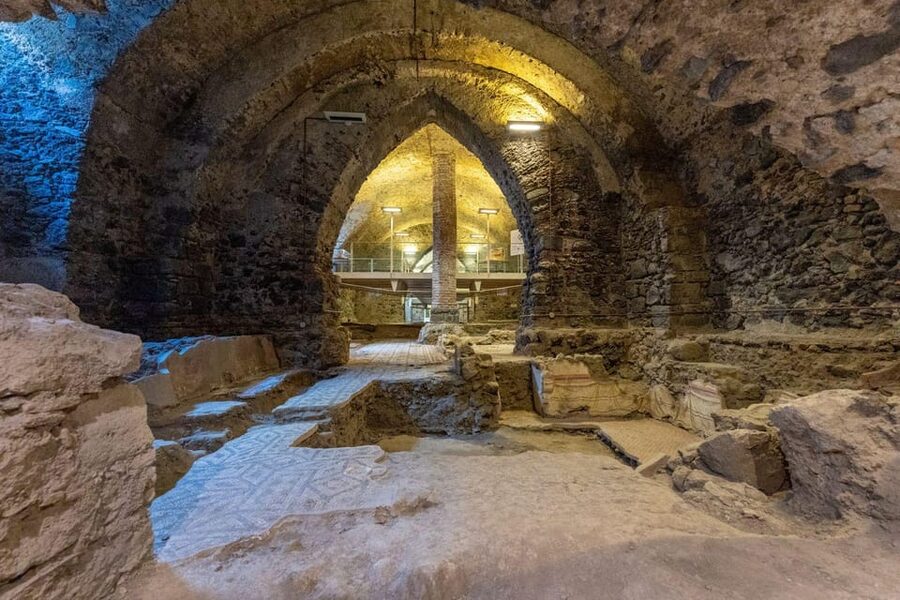
One of the most striking stops is the Roman House, visible beneath a modern mezzanine used by students as part of the university library.
This is where the monastery’s layers become almost physical. A Roman structure sits below a modern study area, while the monastic complex surrounds both. You can look at ancient archaeology and present-day university use in the same section of the building.
The arrangement is more revealing than a separate archaeological display would be. It shows how Catania was repeatedly built over, adapted, and reused. It also explains why a guided visit helps. Without someone pointing out the Roman remains below the mezzanine, you could easily mistake the area for an unusual part of the library and move on.
The archaeological portions are among the most praised parts of the experience. If you have seen Roman sites elsewhere in Sicily, this still offers a different angle because the remains are woven into a living university complex instead of being presented as a standalone ruin.
A different sort of day out around Catania:
- Mount Etna: Trek to 3000m with cable car and jeep
★ 4.7 · 1,978 reviews - Mount Etna: Summit Crater Trek with Cable Car
★ 4.8 · 1,875 reviews - Sicily: Etna and Alcantara Gorges Full-Day Tour with Lunch
★ 4.8 · 1,766 reviews - Mount Etna: Roundtrip Cable Car and 4×4 Bus Ticket
★ 4.3 · 1,602 reviews
The lava-built cellar and university library
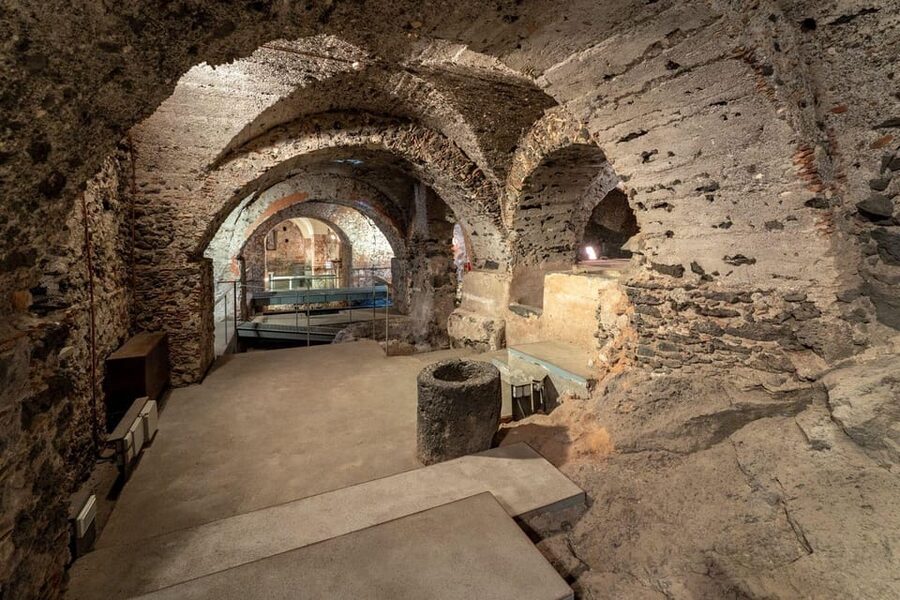
The 16th-century cellar is another highlight. It was built on lava and is now used as the Library of the Department of Humanities at the University of Catania.
The stonework gives the room a different mood from the grander Baroque areas. It feels grounded and practical, while the modern library use adds an unexpected sense of continuity. Students work in a space that once belonged to the monastery, and the building remains part of daily life rather than being sealed off from it.
Several people particularly enjoyed reaching the lower levels during hot weather. The cellar can feel cooler and more refreshing than the bright exterior spaces, although comfort is not the main reason to visit. Its real value is the combination of volcanic material, old construction, archaeological context, and current academic use.
This is also a good example of the monastery’s restoration story. The modern refurbishment project, led by architect Giancarlo De Carlo, lasted more than 30 years. The aim was not simply to polish the building into a museum. It was to make the old structure usable while preserving its many historical layers.
Kitchens, dining rooms, and the novices’ garden
The tour continues through practical monastic spaces, including the famous 18th-century kitchens, dining rooms, and the Garden of the Novices.
These rooms help correct a common mistake people make when visiting grand religious buildings. It is easy to focus on architecture and forget that monasteries were working communities. Kitchens, food storage areas, gardens, and dining rooms tell you how people actually lived.
The kitchens are especially useful for imagining the size of the community. Their scale reflects the monastery’s resources and the number of people it supported. The garden adds a quieter counterpoint, showing that monastic life also depended on open space, cultivation, and routine.
The Garden of the Novices has a different purpose from the main cloisters. It relates to the training and daily life of new members of the order, giving the guide a chance to explain the social structure inside the monastery. This is the kind of detail that turns a sequence of rooms into a story about people.
Vaccarini’s Baroque design and the monumental staircase
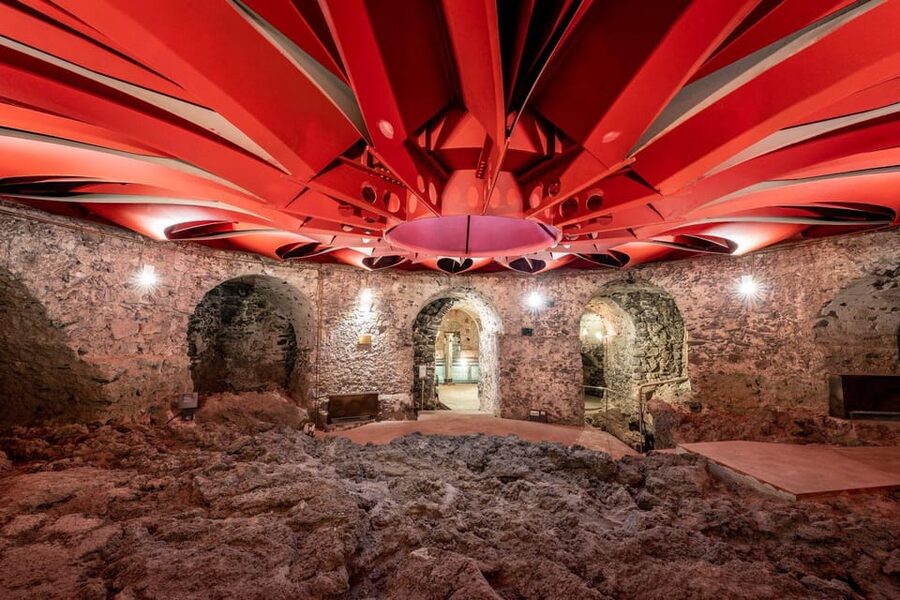
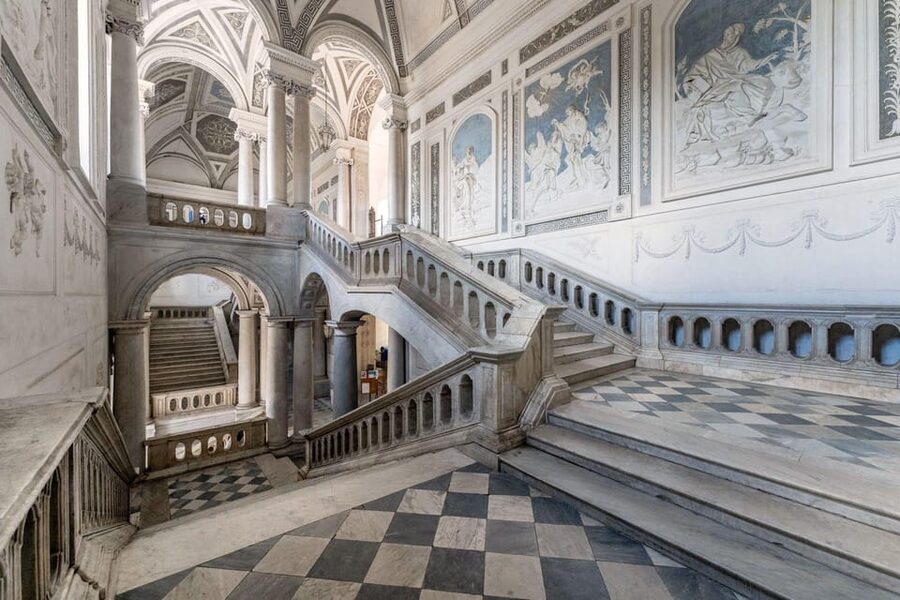
The monastery’s late-Baroque architecture is one of its main visual rewards. You will see the work associated with architect Giovanni Battista Vaccarini, including the monumental staircase.
The staircase gives the complex a strong sense of ceremony. It was not designed merely to get people from one floor to another. Its proportions and decoration reflect the status the Benedictine order wanted to project.
Your guide can help you read these details without turning the visit into a technical architecture class. Look for the contrast between the formal, grand spaces and the plain, functional areas used by the monastic community. That contrast says a great deal about how religious institutions presented themselves while managing ordinary daily tasks.
The architecture is also easier to appreciate after seeing the Roman house and cellar. You begin to understand that the monastery is not one single design from one single period. It is a long process of construction, damage, adaptation, and repair.
Restoration from old monastery to modern university
The restoration story is one of the tour’s most valuable parts. The work took more than 30 years and was shaped by the architect Giancarlo De Carlo.
That length of time tells you something important. Preserving a complex this large is not a quick renovation job. The building had to remain useful, archaeological remains had to be protected, and modern users needed safe, practical spaces.
The result is a sometimes surprising mixture. You may pass from a historic corridor into an area used by students, or see a modern mezzanine above Roman remains. For some people, this may feel less like a traditional museum visit. I consider that a strength, because it shows preservation as an active process rather than a way of stopping a building in the past.
It also makes the monastery feel connected to Catania today. The building is not only admired for its old stones. It continues to serve an educational purpose, just as it once served a religious one.
What the English guiding is really like
The guide can make or break a visit to a building this complicated. Here, the strongest pattern in the feedback is praise for the English delivery, pacing, humor, and ability to answer questions.
Carmen is repeatedly singled out for clear explanations and a lively presentation. Giovanni is praised for making the history fun as well as informative. Nicola also receives praise for engaging storytelling, including memorable anecdotes about the rooms and the monastery’s past.
That does not mean every guide will use the same style. It does mean you can expect more than a memorized list of dates. Guides explain the lives of the monastery’s inhabitants, the architecture, Catania’s history, and the restoration project.
I particularly value the balance reported by several people: enough information to understand the place, but not so much that the 75 minutes becomes a lecture. Questions are welcomed, and the guides are described as patient and personable.
If English is not your main language, ask about written translations in French or Spanish. The spoken tour itself is in English, so this option may help you follow architectural or historical terms more easily.
Timing, access, and the $11 price
At $11 per person, this is one of the easier sightseeing decisions in Catania. The price includes entry to the monastery, a live English guide, access to sections not normally open to the public, and baggage storage at the meeting point.
The value comes from the guide-led access. You could perhaps see part of the complex alone, but the Roman House, cellar, restoration work, and former monastic rooms make more sense when someone explains what you are looking at. The tour also takes you through a maze of corridors that would be hard to interpret without help.
Seventy-five minutes is a sensible length. You get a focused look at the major spaces without giving up half a day. It works well before or after other sights in central Catania, especially if you want a cultural stop that is substantial but not exhausting.
One detail needs checking before you go: access to the viewing platform may vary by departure time. A visitor specifically wished they had known that a later tour might be required. If the upper view is important to you, confirm the starting time and included areas at the information point.
Free cancellation is available up to 24 hours before the tour for a full refund, and you can reserve now and pay later. These terms are useful if your Catania plans depend on weather, transport, or a changing Sicily itinerary.
Who will enjoy this tour most
I would recommend this tour to anyone who likes architecture, archaeology, religious history, or buildings that continue to serve a modern purpose.
It is particularly good for:
- First-time visitors to Catania: You get a compact introduction to the city’s past as well as the monastery.
- Architecture fans: Vaccarini’s Baroque work, the staircase, cloisters, and restoration project provide plenty to study.
- History enthusiasts: The route reaches from the Roman age to the present university.
- Families with older children: The Roman remains, underground spaces, kitchens, and stories give young people more to notice than a room-by-room art tour.
- People with limited time: Seventy-five minutes is long enough to feel worthwhile and short enough to fit into a packed day.
- Anyone who prefers context: The building is much easier to understand with a guide than by walking through it without explanation.
You may be less interested if you want only a traditional church visit or prefer to explore completely alone. The tour follows a set route, and the monastery’s educational and archaeological focus may be more important than religious ceremony.
Should you book the Benedictine Monastery tour?
Yes, I would book it, especially at $11. The strongest reasons are the unusual access, the mix of Roman remains and Baroque architecture, and the guides’ clear, good-humored approach.
Book it if you want to understand how Catania has been built over and rebuilt across two thousand years. Skip it only if your schedule is extremely tight or you have no interest in historic buildings being used in modern ways.
Choose a departure time carefully if you want the viewing platform. Otherwise, this is a practical, inexpensive way to see one of Catania’s most impressive interiors and understand why the monastery remains important today.
FAQ
How long does the Benedictine Monastery tour last?
The guided tour lasts 75 minutes.
What is the price of the tour?
The price is $11 per person.
Where does the tour begin?
It begins at the Benedictine Monastery of San Nicolò l’Arena. After passing through the main gate on Piazza Dante, find the information point in the courtyard on the right.
Is the tour conducted in English?
Yes. The tour has a live English guide. Written translations in French or Spanish can be provided if English is not your main language.
What areas are included in the visit?
The tour includes the two cloisters, the 16th-century cellar and university library, the Roman House, Garden of the Novices, 18th-century kitchens, dining rooms, cellars, Vaccarini’s architectural work, and the monumental staircase.
Is the monastery wheelchair accessible?
Yes, the activity is listed as wheelchair accessible.
Can I cancel or pay later?
You can cancel up to 24 hours in advance for a full refund. You can also reserve your place and pay later.
Just added around Catania
- Catania: Opera Concert – Tribute to Vincenzo Bellini★ 4.8 · 249 reviews
- Etna and Alcantara Gorges Excursion★ 4.5 · 256 reviews
- Mount Etna: Half-Day Guided Tour and Hike★ 4.4 · 264 reviews
- Syracuse, Ortigia and Noto walking tour from Catania★ 5.0 · 273 reviews
- The Godfather Movie Tour★ 5.0 · 275 reviews
- Mount Etna: Summit Trek with Cable Car and snack included★ 4.7 · 278 reviews
- Mt Etna and Wine tasting tour from Catania★ 5.0 · 282 reviews
- From Taormina, Naxos, & Letojanni: Mount Etna Half-Day Trip★ 4.9 · 296 reviews
Catania Tours, compared.
Mount Etna Morning or Sunset Day Trip with Tasting
Read our review →
Mount Etna: Guided Volcano Summit Hiking Tour with Cable Car
Read our review →
Sunset Jeep Tour of Mount Etna and Lava Flow Caves
Read our review →
Mount Etna: Trek to 3000m with cable car and jeep
Read our review →
Mount Etna: Summit Crater Trek with Cable Car
Read our review →
Sicily: Etna and Alcantara Gorges Full-Day Tour with Lunch
Read our review →
Mount Etna: Roundtrip Cable Car and 4×4 Bus Ticket
Read our review →
Browse the lists this tour appears in